Oct 19, 2026
Why Use ASTM A928 UNS S31803 CL1 EFW Pipe in Oil Projects?
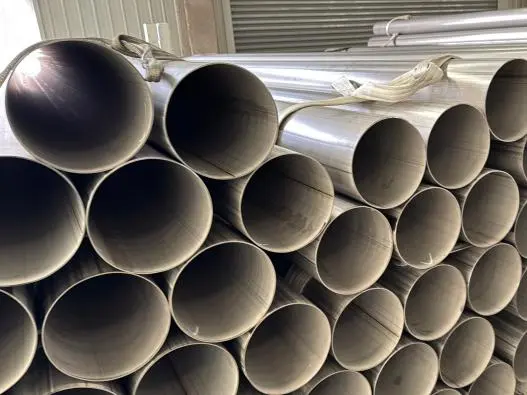
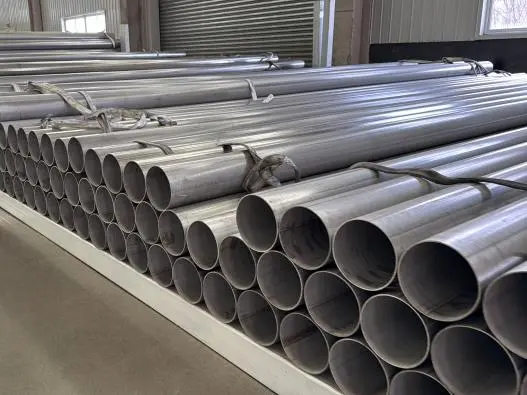
When engineers and procurement managers ask about the best pipe material for demanding oil projects, the answer often points to ASTM A928 UNS S31803 CL1 EFW pipe. This duplex stainless steel pipe is manufactured via Electric Fusion Welding under ASTM A928 standards, combining roughly 50% austenite and 50% ferrite in its microstructure. The result is a pipe that delivers tensile strength above 620 MPa, strong resistance to chloride-induced stress corrosion cracking, and a service life that consistently outperforms carbon steel and standard 316L stainless steel in offshore, subsea, and onshore oil environments.
|
|
|
Understanding ASTM A928 UNS S31803 CL1 EFW Pipe: Properties and Specifications
Chemical Composition and Duplex Microstructure
About 22% of UNS S31803 is chromium, 5% is nickel, and 3% is molybdenum. This chemistry, along with controlled nitrogen additions, creates the balanced dual-phase structure that makes the material strong and resistant to corrosion. The duplex structure gives the pipe about twice the yield strength of austenitic 316L. This means that engineers can ask for thinner walls without lowering the pressure ratings.
Mechanical Performance in Oil Service Conditions
The tensile strength of ASTM A928 CL1 pipes is at least 620 MPa, and the yield strength is at least 450 MPa. These numbers directly lead to less material being used on each job and lower prices for making things. The mechanical margin protects against fatigue loads from flow-induced vibration in high-pressure gathering lines and injection systems. This is a real worry for offshore pumps and undersea flowlines.
Corrosion Resistance Data
Independent tests show that S31803 duplex steel has a Pitting Resistance Equivalent Number (PREN) of about 34–36, while 316L stainless steel only has a PREN of about 24. When tested in seawater at 25°C with 3.5% NaCl for 1,000 hours, duplex S31803 didn't show any pitting, but carbon steel did show a lot of uniform corrosion in the first 200 hours. This resistance is not a nice-to-have in sour-service and offshore environments where H₂S is present; it is necessary for operations.
Comparison and Selection: Why ASTM A928 CL1 Over Other Pipe Types?
CL1 vs. CL2: What the Classification Difference Means
ASTM A928 says that CL1 is a single-seam weld that has been fully inspected by x-ray (RT) or ultrasound (UT). CL2 needs hydraulic testing, but the whole weld does not have to be X-rayed. For oil and gas uses where the integrity of the weld directly impacts safety and following the rules, CL1 offers a higher level of recorded guarantee. Most of the big oil companies require pressure-containing systems to have CL1 pipes as a minimum.
EFW vs. Seamless for Large-Diameter Applications
For sizes less than about 8 inches, seamless pipe production works well. When the range goes above that, smooth extrusion costs a lot and is hard to do correctly for twin grades. Using high-energy spark processes, EFW technology joins heavy-gauge plates together. The pipe is then heated in a solution and cooled in water to restore the balance of the two phases. This makes an ASTM A928 UNS S31803 CL1 EFW pipe with consistent wall thickness and weld properties from 114.3 mm to 2,500 mm in diameter, which is a range of diameters that can't be made with seamless methods at a reasonable price.
Duplex S31803 vs. 316L and Carbon Steel
Lifecycle cost, not buying price, is often what makes the difference. Carbon steel rusts quickly in places with a lot of salt, so it needs expensive coats or cathodic protection systems on the inside. Standard 316L stainless steel works better, but it can crack from stress corrosion above 60°C in chloride environments. At temperatures well above that level, S31803 duplex doesn't react with SCC, and it doesn't need any extra coats to protect it in most oil service settings. It is clear that the total cost of ownership for duplex piping is lower in corrosive service over a 20-year project lifecycle.
Procurement Insights: Buying ASTM A928 UNS S31803 CL1 EFW Pipes
Documentation You Should Always Request
Checking the quality of the pipes starts with papers. Before you buy ASTM A928 UNS S31803 CL1 EFW pipe from a reputable company, make sure they have Mill Test Certificates (MTC/MTR) in either 3.1 or 3.2 format, third-party inspection reports, Welding Procedure Specifications (WPS/PQR), Material Processing Specifications (MPS), and RT/UT examination records. Any supplier that won't give you these papers is a risk in the procurement process that should not be taken on by the project schedule or budget.
Pricing, Lead Times, and Order Flexibility
Because of the need to find plates and heat treat them, making duplex EFW pipes for oil projects usually takes longer than making normal carbon steel pipes. When planning your budget, you should allow two to four weeks for standard sizes to be made. But this can be cut down a lot by suppliers whose production lines and plate supplies are all connected. YOUFA has 15 production lines that make 50,000 tons of goods every year. Stocked things can be delivered to Tianjin Port in as little as 7 days. The MOQ is as low as one pipe, which lowers the risk for test sales and quick replacements.
Certifications That Signal Supplier Credibility
Look for suppliers that have ISO 9001 certification for quality management, PED certification for pressure equipment compliance, ISO 17025 certification for lab competence, and TÜV certification for safety. These credentials have been checked by a third party and show that quality controls are built in and not just an afterthought. Suppliers who have more than one certification for these standards show that they take a systematic approach to making sure their products are all the same.
Enhancing Oil Project Outcomes with ASTM A928 CL1 EFW Pipes
Corrosion Failures Are Expensive — and Preventable
According to figures from NACE International, failures in oil pipes caused by corrosion cost the U.S. business about $7 billion every year. Most of these failures happen in low-alloy and carbon steel systems that are exposed to produced water, CO2, and H2S. Many of these ways of failing are built out of ASTM A928 UNS S31803 CL1 EFW pipe. In similar service conditions, projects that switch from coated carbon steel to duplex EFW pipe have seen maintenance intervals grow from two to three years to ten years or more.
Real-World Performance in Offshore Installations
For more than twenty years, offshore companies in the Gulf of Mexico have used duplex stainless steel pipes for process lines, injection heads, and produced water systems on the topside. Less unplanned downtime and lower total inspection costs per working year have been found across all of these sites. The CL1 classification provides weld inspection records that help integrity management teams plan future inspections. This is helpful for more than just managing the pipe; it also helps with managing all assets.
Compliance With Safety and Environmental Regulations
Offshore standards from BSEE and U.S. government rules under 49 CFR Part 195 require pipeline systems to have records of material tracking and weld inspections. These needs can be met by ASTM A928 CL1 pipes that come with full paperwork sets that include MTC 3.1/3.2, WPS/PQR, and RT/UT reports. These pipes don't need to be tested further, which saves engineers time during pre-commissioning audits.
Making an Informed Decision: Why Choose ASTM A928 UNS S31803 CL1 EFW Pipe?
Aligning Pipe Specification With Operating Conditions
Make a picture of the pipe's service environment, including its working temperature, chloride concentration, H₂S partial pressure, and design pressure, before deciding on a material. S31803 duplex works successfully at temperatures as low as -50°C and under a wide range of pressures, so it can be used for most oil collection, injection, and process pipe uses. It is possible to get Super Duplex 2507 (UNS S32750) in the same EFW format for harsher environments like deep subsea or high-chloride brines.
Evaluating Supplier Credibility Before Purchasing
The track record of a source is just as important as the product specs. Check their list of past clients, the results of their production audit, and the scope of their certification. YOUFA is one of China's Top 500 companies and has more than 200 workers and fully approved production lines that can handle all of your stainless steel piping needs. YOUFA is a reliable long-term supply partner for oil and gas buying teams because of its large manufacturing scale, well-documented quality systems, and ability to accommodate different order amounts.
Trends Supporting Duplex Pipe Adoption
As oil companies develop new deepwater projects and extend the life of assets that are already in use, the demand for duplex stainless steel pipes keeps going up around the world. Because duplex grades have less nickel than austenitic grades, their prices are less likely to change when the nickel market does. As environmental rules get stricter and operators put asset integrity ahead of short-term material savings, it becomes even more important to use duplex EFW pipes.
Conclusion
The main problems that oil project pipes have to deal with are corrosion in aggressive media, mechanical demands under high pressure, and government rules that need proof of weld integrity. ASTM A928 UNS S31803 CL1 EFW pipe is designed to solve these problems. Its duplex microstructure gives it strength and resistance to weathering that regular austenitic grades and carbon steel can't match over a similar service life. This pipe type is a good, affordable option for buying teams and engineers choosing materials for chemical processing systems on land, at sea, or in the air. It is backed by decades of field performance data and clear technical standards.
FAQ
What does CL1 mean in ASTM A928?
CL1 means that the pipe has a single lengthwise weld seam that has been fully inspected by X-rays or ultrasound. This weld test requirement gives written proof of weld integrity, which is a normal need for oil and gas pipe systems that hold pressure.
What is the difference between UNS S31803 and UNS S32205?
The chemical formula for S32205 is different from that of S31803, and the minimum ranges for chromium, molybdenum, and nitrogen are smaller. The tighter chemistry makes S32205's PREN value a little higher. Most new pipes are approved to meet both requirements.
Why is EFW preferred over seamless for large-diameter duplex pipes?
If the width is bigger than 8 inches, it is technically impossible and too expensive to extrude duplex metals without any problems. EFW lets you make things with a wide range of outside diameters (up to 2,500 mm) while keeping the wall thickness and weld quality the same after solution annealing and water cooling.
Can S31803 pipes be used in sour service with H₂S?
Yes, NACE MR0175 and ISO 15156 say that S31803 duplex stainless steel can be used in sour service applications as long as the hardness stays within certain limits. Before accepting any batch for H₂S service, check the records of the heat treatment and the hardness test results.
What is the minimum order quantity for ASTM A928 UNS S31803 CL1 EFW pipe from YOUFA?
YOUFA can take orders as little as one pipe, and standard sizes can be delivered to Tianjin Port in as little as seven days.
Get a Quote from YOUFA — Your Certified ASTM A928 UNS S31803 CL1 EFW Pipe Supplier
Certified ASTM A928 UNS S31803 CL1 EFW pipe with ODs from 114.3 mm to 2,500 mm is made by Youfa Stainless Steel Pipe Co., Ltd., which has ISO 9001, PED, ISO 17025, and TÜV certifications to back up its work. Every oil project team can get help from us because we have 15 production lines, full paperwork packages, and a MOQ of just one pipe. To get a quote right away, email our team at info@youfass.com or go to youfass.com.
Online Message