
Aug 3, 2026
Why Is ASTM A358 Grade 321 Class 1 EFW Steel Pipe Used in High Heat Systems?
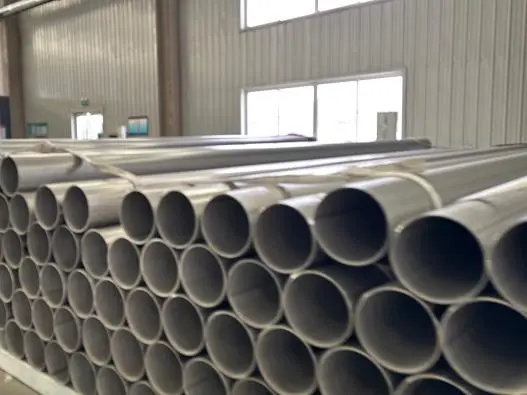
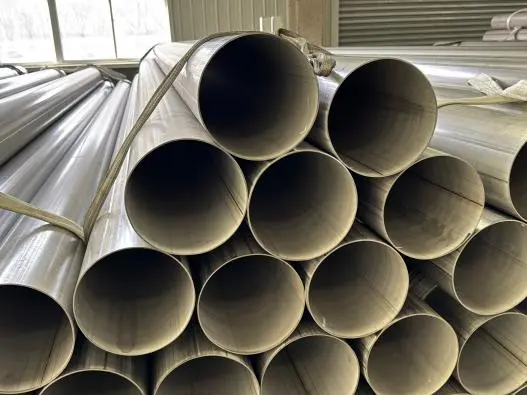
When engineers face demanding high-temperature applications, the choice of piping material can make or break system reliability. The ASTM A358 Grade 321 Class 1 EFW Steel Pipe stands out in these critical environments due to its titanium-stabilized austenitic structure, which prevents chromium carbide precipitation at grain boundaries during prolonged exposure to temperatures ranging from 800°F to 1500°F. This titanium stabilization mechanism eliminates intergranular corrosion risk, a common failure mode in conventional austenitic stainless steels. Manufactured through the Electric Fusion Welding process with 100% radiographic inspection, Class 1 pipes deliver exceptional weld integrity and joint efficiency, making them the preferred solution for power generation steam lines, petrochemical reactors, and fuel cell system components where thermal cycling and corrosion resistance are non-negotiable.
|
|
|
Understanding ASTM A358 Grade 321 Class 1 EFW Steel Pipe
This piping solution is based on three important technical pillars: the chemistry of the materials, the accuracy of the manufacturing process, and proof of performance. Grade 321 stainless steel usually has between 0.25% and 0.70% titanium, which is about five times the amount of carbon in the steel. This planned alloying method makes sure that titanium combines with carbon to form stable titanium carbides instead of chromium carbides. This keeps the corrosion-resistant chromium content in the steel matrix even after welding or long-term heat exposure.
Electric Fusion Welding Process Advantages
When compared to seamless pipes, these are different because the EFW manufacturing method allows for better control of dimensions across large diameters. Manufacturers start with a high-quality stainless steel plate that has to meet strict chemical makeup requirements. They then shape the plate into a cylinder and join the sides together using submerged arc welding and filler metal that works with the steel. This controlled welding setting makes sure that the penetration is uniform and that defects are kept to a minimum. Class 1 designates a building that is double-welded and includes filler metal on both sides of the joint. This is followed by 100% radiation testing to make sure the weld is sound.
Mechanical and Dimensional Specifications
To meet ASTM A358 standards, you have to stick to strict mechanical property standards. At room temperature, Grade 321 has a minimum tensile strength of 515 MPa (75 ksi) and a minimum yield strength of 205 MPa (30 ksi). These strengths stay the same even when the temperature changes. Outside diameters range from an impressive 114.3 mm to 2500 mm, so they can fit everything from small heat exchanger connections to huge industrial process lines. There are different wall thickness choices, from 3 mm to 50 mm, so they can be used for a wide range of pressure levels and structural needs. Each pipe goes through a solution annealing heat treatment at temperatures between 1900°F and 2100°F, followed by a quick quenching process to get the best microstructure and rust protection.
Why ASTM A358 Grade 321 Class 1 EFW Steel Pipe Excels in High Heat Systems
When used in high-heat situations, thermal stability is what sets good materials apart from great ones. The titanium-stabilized structure of Grade 321 fixes the main problem with regular austenitic stainless steels, which is that they become sensitive. Austenitic stainless steels can lose chromium and carbon atoms when they reach temperatures between 800°F and 1500°F during service or welding. These atoms can move to grain boundaries and form chromium carbides, leaving less chromium in the area around the carbides and making it more likely for rust to happen.
Superior Resistance to Intergranular Corrosion
The addition of titanium to Grade 321 completely stops this mechanism of degradation. Before chromium can react, the titanium atoms join with available carbon to form thermally stable titanium carbides that stay spread out in the microstructure without using up the chromium in the grain boundaries. This metallurgical advantage directly leads to longer service life in places like hydrogen production electrolysers, where harsh chemicals and high temperatures are present. Power battery makers who use thermal management systems can benefit from this rust resistance because the cooling lines stay intact even when the temperature keeps changing.
Performance Comparison with Common Grades
At room temperature, Grade 304 stainless steel provides good corrosion resistance, but above 800°F it may become sensitive if it is not properly heat-treated after welding. Although Grade 316 stainless steel has improved corrosion resistance due to the addition of molybdenum, it can still experience sensitisation after prolonged exposure to high temperatures. In contrast, ASTM A358 Grade 321 class 1 EFW Steel Pipe avoids these issues through titanium stabilisation, making it highly suitable for demanding applications where reliability is essential. The excellent thermal stability of ASTM A358 Grade 321 class 1 EFW Steel Pipe makes it a valuable choice for fuel cell stack manifolds, petrochemical catalyst support structures, and other industrial systems where maintenance is difficult, and equipment failure can cause significant losses. During production, controlled heat treatment processes further improve the performance of ASTM A358 Grade 321 Class 1 EFW Steel Pipe by ensuring complete carbide solution, consistent microstructure distribution, and enhanced resistance to high-temperature service conditions. As a result, ASTM A358 Grade 321 Class 1 EFW Steel Pipe provides long-term durability and dependable performance in challenging thermal environments.
Comparing ASTM A358 Grade 321 Class 1 EFW Steel Pipe with Alternatives
When choosing materials, you need to think carefully about technical skills, economic factors, and supply chain issues. When procurement teams know how ASTM A358 Grade 321 Class 1 EFW Steel Pipes stack up against other options, they can make smart choices that meet the needs of the project and stay within the budget.
EFW versus Seamless Construction
Seamless pipes made according to ASTM A312 have good uniformity in circumferential strength and don't have longitudinal weld joints, so they can be used for high-stress tasks in smaller sizes. Solid billets are pierced and then rolled or drawn to their final sizes as part of the making process. This method can't be used for widths larger than 16 inches because the tools aren't strong enough and moving the material is too complicated. Electric Fusion Welded pipes get around these problems by being made from plate stock, which makes it possible to make large pipes with diameters over 2500 mm OD at a low cost. The Class 1 welding standard and 100% radiographic inspection make sure that the quality of the weld is at least as good as the performance of seamless pipes in most situations. Manufacturers of hydrogen production equipment often use EFW pipes for connecting big electrolysers when seamless choices aren't available or would be too expensive.
Material Grade Trade-offs
When you look at Grade 321 next to options like 304, 316, and 347, you can see that they perform differently. Grade 304 has the best rust protection and the lowest cost, but it doesn't stabilise at high temperatures. Molybdenum is added to Grade 316 to make it more resistant to chlorides. This is useful in marine environments but not as important for dry high-heat uses. Instead of titanium, niobium is added to Grade 347 to make it more stable. It has the same sensitisation resistance but slightly different welding properties. For chemical processing and automotive battery thermal management systems that need long-term high-temperature performance, Grade 321 is the best choice because it has good heat resistance and moderate material costs. When choosing between these grades, people in charge of procurement should look at the working temperature ranges, the type of acidic media used, and how long the product is expected to last.
Pricing and Availability Dynamics
The price of materials changes depending on the type of alloy used. Titanium-stabilized grades usually cost 15–25% more than Grade 304, but they are still cheaper than highly alloyed grades like 317L or duplex stainless steels. For big sizes, the EFW method of production is much cheaper than seamless production, which makes up for some of the extra cost of the material. Lead times depend on how much an order there is and how skilled the maker is. Well-known sources like YOUFA keep common sizes in stock and can make changes to meet the needs of a particular project. Bulk buying leads to economies of scale, which lowers the cost of making each unit and improves operations. This is especially helpful for big projects like installing power plants or petroleum plants.
Procurement Guide for ASTM A358 Grade 321 Class 1 EFW Steel Pipe
Finding the right specification is only the beginning of successful buying. You also need to choose the right suppliers, check their quality, and coordinate transportation. By using a structured method, you can keep project plans and budgets on track while lowering the risk.
Supplier Evaluation Criteria
Reputable producers of ASTM A358 Grade 321 class 1 EFW Steel Pipe demonstrate consistent quality through comprehensive certifications and transparent quality control systems. ISO 9001 certification confirms that quality management processes for ASTM A358 Grade 321 class 1 EFW Steel Pipe are systematically implemented from raw material inspection to final product verification. Pressure Equipment Directive (PED) compliance shows that the products meet European pressure equipment requirements, while ISO 17025 laboratory accreditation proves the reliability and accuracy of in-house testing procedures. Third-Party Inspection (TPI) reports provide additional confidence for critical applications by offering independent verification of manufacturing quality. Manufacturers that supply complete documentation packages for ASTM A358 Grade 321 class 1 EFW Steel Pipe, including EN 10204 Type 3.1 or 3.2 Material Test Certificates (MTC), Welding Procedure Specifications (WPS), Procedure Qualification Records (PQR), and detailed Ultrasonic and Radiographic testing reports, demonstrate strong commitment to transparency, traceability, and quality assurance. By choosing a supplier with proven certification systems, buyers can ensure that ASTM A358 Grade 321 class 1 EFW Steel Pipe delivers reliable performance, consistent quality, and long-term value in demanding industrial environments.
When procurement teams look at possible providers, they should make sure they can meet their technical and output needs. Manufacturers with many production lines that make a lot of product each year, like YOUFA, whose 15 production lines make 50,000 tonnes of product each year, show that they can handle both small pressing orders and big project volumes. Flexibility in the minimum order number is very important. Suppliers that can handle orders as small as one pipe can meet the needs of prototype development and maintenance without requiring too much inventory investment. Delivery options, such as faster production and easy access to ports, have a direct effect on project timelines. YOUFA's fastest delivery to Tianjin Port in seven days is a great example of how efficient logistics can be when keeping building plans on track.
Customization and Technical Support
A lot of the time, high-performance piping systems need specs that aren't available in normal catalogues. Optimising wall thickness strikes a balance between the need for a high-pressure grade and issues of weight and cost. Custom length manufacturing reduces the problems of welding in the field and maintaining quality. Surface finish choices like pickling, passivation, and electropolishing affect how easy it is to clean and keep contaminants away. This is especially important for making medical devices and using semiconductors. End preparation customisation, such as simple ends, bevelled ends, or threading, speeds up the fitting process.
Technical consulting services are very useful because they help engineering teams make sure that specifications are best for each operating situation. Suppliers with a lot of experience can help you choose the right materials by taking things like the frequency of thermal cycling, the makeup of corrosive media, and legal compliance requirements into account. Recommendations for welding procedures make sure that the corrosion protection and mechanical qualities achieved during manufacture are maintained during outdoor installation. This application knowledge speeds up development times and cuts down on expensive design revisions for companies that build fuel cell systems and electrolysers.
Trusted Suppliers and Brand Reliability in ASTM A358 Grade 321 Class 1 EFW Steel Pipes
The reputation of the supplier has a direct effect on the long-term performance of the system and the project risk profiles. When you work with well-known manufacturers that have quality systems that have been tested, full certifications, and helpful customer service, you can avoid material failures, delivery delays, and gaps in documentation that could stop important projects in their tracks.
Certification and Quality Assurance
Leading manufacturers of ASTM A358 Grade 321 class 1 EFW Steel Pipe implement strict quality control programs that go beyond basic compliance by focusing on defect prevention, continuous improvement, and production consistency. ISO 9001 certification provides a strong foundation for quality management systems, while PED compliance demonstrates the ability of ASTM A358 Grade 321 class 1 EFW Steel Pipe suppliers to meet strict European pressure equipment safety requirements. TÜV approval adds another level of confidence because independent German technical inspection organisations verify manufacturing processes and quality control procedures. In-house ISO 17025-accredited laboratories allow ASTM A358 Grade 321 class 1 EFW Steel Pipe manufacturers to perform material verification and mechanical testing in real time without depending on external testing facilities. This approach improves quality confirmation speed, reduces inspection delays, and ensures that every ASTM A358 Grade 321 class 1 EFW Steel Pipe product maintains reliable performance standards for demanding industrial applications. By selecting suppliers with strong quality systems, buyers can secure ASTM A358 Grade 321 class 1 EFW Steel Pipe solutions with better traceability, consistency, and long-term reliability.
Through its multi-layered testing methods, YOUFA is a good example of this all-around approach to quality assurance. When getting raw materials, it's important to get steel that can be tracked back to known mills and whose chemical and mechanical qualities have been checked. In-process measurement checks and weld parameter recording are part of production tracking to make sure that all production runs are the same. As part of the final checking process, all welds are tested with ultrasound and X-rays, the stability of the pressure is checked with hydrostatic pressure testing, and compliance with specifications is confirmed by full mechanical and chemical analysis. YOUFA is one of China's top 500 companies because of this thorough verification process. The company has also become a trusted ASTM A358 Grade 321 Class 1 EFW Steel Pipe supplier to demanding industries around the world.
Value-Added Services and Project Support
In addition to making high-quality pipes, leading suppliers set themselves apart by offering a wide range of support services that make buying easier and speed up project execution. Technical consultation helps customers work through issues like developing specifications, choosing materials, and problems that are unique to their applications. The manufacturer's knowledge of how to weld, how to make heat treatments work better, and how to prove rust protection is helpful for engineering teams. On-site commissioning support makes sure that the installation and system startup go smoothly. This is especially helpful for complicated fuel cell installations or hydrogen production facilities where the performance of the materials has a direct effect on safety and efficiency.
Managing paperwork, clearing customs, and moving goods between countries is all taken care of by export logistics coordination. Manufacturers who have worked with global supply chains before know the rules that apply in different countries and can speed up shipments by working with carriers they already know. Expertise in packaging keeps big pipes safe while they're being shipped across continents. YOUFA's wooden box packaging, which can include an optional steel frame support, and hexagonal binding stops deformation and surface damage that could weaken the pressure integrity or need expensive repairs upon arrival.
Technical excellence, strict quality control, and full service support are what set trusted makers apart from commodity providers. When system reliability and project success are very important, taking the time to evaluate suppliers and build relationships with well-known companies pays off in the form of lower risk, easier procurement, and reliable long-term performance.
Conclusion
When choosing pipe materials for high-temperature applications, it is important to carefully consider mechanical properties, manufacturing quality, and supplier reliability. ASTM A358 Grade 321 class 1 EFW Steel Pipe delivers excellent performance in demanding thermal environments due to titanium stabilisation, which helps prevent intergranular corrosion, as well as advanced EFW manufacturing that supports large-diameter production with verified weld integrity. With strict inspection procedures and quality control systems, ASTM A358 Grade 321 class 1 EFW Steel Pipe provides consistent performance and dependable service for critical industrial applications. When procurement teams understand the advantages of ASTM A358 Grade 321 class 1 EFW Steel Pipe, evaluate supplier capabilities carefully, and utilise professional technical support, they can develop solutions that achieve the right balance of performance, cost efficiency, and long-term reliability. This makes ASTM A358 Grade 321 class 1 EFW Steel Pipe a suitable choice for industries such as power generation, petrochemical processing, fuel cell systems, and hydrogen production where durability and thermal resistance are essential.
FAQ
What temperature range can ASTM A358 Grade 321 withstand?
Grade 321 has great resistance to rust and good mechanical qualities even when it is used continuously at temperatures ranging from very cold (-196°F) to about 1,500°F (815°C). The titanium stabilisation works throughout this range, stopping sensitisation that would make corrosion resistance worse in austenitic grades that aren't stabilised.
Can Class 1 EFW pipes be field welded?
Of course. Grade 321 is very easy to weld using normal methods for welding austenitic stainless steel. Filler metals that match, like ER321 or ER347, keep the resistance to rust across weld gaps. Post-weld heat treatment is usually not needed because of the stabilisation device. This makes placement in the field easier than with grades that aren't stabilised.
How do I verify pipe authenticity from suppliers?
Manufacturers with a good reputation provide a lot of paperwork, like Material Test Certificates (MTC) according to EN 10204 Type 3.1 or 3.2, that show the chemical make-up and mechanical properties that can be linked to specific heat numbers. Ultrasonic and radiographic test reports confirm the quality of the weld, and mill markings on pipes show that they meet manufacturer and specification requirements. Asking a third party to inspect the goods and visiting the factories before placing large orders gives you more confidence.
Partner with YOUFA for Reliable High-Temperature Piping Solutions
Applications that are very specific need materials that are designed to work well and providers that are dedicated to doing a great job. Youfa Stainless Steel Pipe Co., Ltd. has 15 production lines that make 50,000 tonnes of steel every year. They also have strict quality systems in place, such as ISO 9001, PED, and TÜV certifications, as well as ISO 17025-accredited lab testing. Our team can help you choose the right material, make unique parts with sizes from 114.3 mm to 2500 mm, and place flexible orders starting with a single pipe. As a top ASTM A358 Grade 321 Class 1 EFW Steel Pipe maker, we offer full paperwork, fast transportation (seven days to Tianjin Port), and responsive support throughout the entire lifecycle of your project. Get in touch with us at info@youfass.com right away to talk about your high-heat system needs and see how the YOUFA difference in quality, dependability, and customer service can help you.
Online Message