
Sep 22, 2026
Why Choose EN 10217-7 Welded Stainless Steel Pipes for Projects?
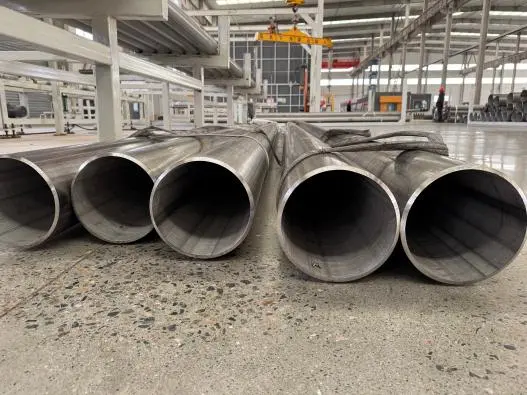
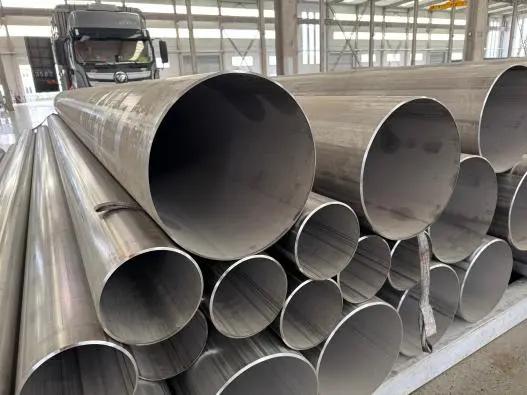
When sourcing stainless steel piping for pressure-related industrial applications, EN 10217-7 welded stainless steel pipes stand out as a technically sound and cost-efficient choice. This European standard governs welded circular tubes made from austenitic stainless steels, designed specifically for pressure service under corrosive and elevated temperature conditions. From chemical processing plants to power generation systems, these pipes deliver consistent mechanical performance, traceable certification, and broad grade availability—making them a preferred specification among procurement engineers working across demanding industrial sectors.
|
|
|
Understanding EN 10217-7 Welded Stainless Steel Pipes
What the Standard Actually Covers?
The European standard EN 10217-7 sets the technical delivery conditions for welded stainless steel tubes that are meant to be used for pressure. It includes grades that are austenitic and grades that are austenitic-ferritic. It also sets strict rules for chemical makeup, mechanical traits, dimensional limits, and inspection testing. The standard gives a joint factor of v=1.0, which means that a properly welded and heat-treated tube works just as well in pressure-rated applications as a seamless pipe.
Grades and Chemical Specifications
A lot of different types of materials are covered by the standard. Important grades include:
- 1.4301 / 1.4306 / 1.4307 — austenitic types that are the same as 304/304L and can be used in a wide range of acidic situations
- 1.4401 / 1.4404 — molybdenum-containing types that are the same as 316/316L and offer better protection against chlorides
- 1.4541 / 1.4571 — grades stabilized with titanium for use at high temperatures
- 1.4539 — high-alloy austenitic grade for harsh acidic settings
To meet the requirements for intergranular corrosion resistance, the amount of carbon, chromium, nickel, and molybdenum in each grade is limited in a certain way.
Manufacturing Process and Quality Controls
Longitudinal welding with TIG, laser, or plasma is used in the production of EN 10217-7 Welded Stainless Steel Pipes. After welding, the weld zone must be solution-annealed to recover its corrosion protection. After welding, heat treatment creates a uniform grain structure with G6 or finer grains, which gets rid of any remaining stress. Hydrostatic testing, eddy current or ultrasound testing (UT/RT), measurement checks, and tensile/hardness testing are all common ways to inspect something. From the raw material to the finished pipe, everything can be tracked thanks to the required paperwork, which includes MTC/MTR (3.1/3.2), WPS/PQR, and UT/RT reports.
Advantages of Choosing EN 10217-7 Welded Stainless Steel Pipes
Performance in Pressure and Corrosive Environments
These pipes are designed to work in tough conditions. After welding, the solution-annealed delivery condition restores full corrosion resistance. Grades that contain molybdenum, like 1.4404, have a high Pitting Resistance Equivalent Number (PREN), which means they can stop stress corrosion cracking (SCC) caused by chloride. Material integrity under EN 10217-7 stays strong over long service cycles, whether it's working with harsh chemicals, high-pressure steam, or hot brine.
Cost-Effectiveness Compared to Seamless Alternatives
Welded stainless steel pipes made to EN 10217-7 always have lower material costs than seamless counterparts made to EN 10216-5, without affecting performance in most pressure applications. The v=1.0 joint factor gets rid of the usual worry about weak spots in the weld. This means big savings for procurement teams in charge of big project budgets, especially for orders with bigger diameters or deals for high-volume supply.
Certifications and Compliance Documentation
Authorized sellers offer a full set of paperwork that includes:
- ISO 9001 quality management certificate
- PED (Pressure Equipment Directive) following the directive
- ISO 17025 accreditation for labs
- TÜV third-party approval
- Material Test Certificates (3.1/3.2), TPI records, and MPS
This set of documents makes it easy to get projects audited, regulatory submissions made, and end-user acceptance testing done.
EN 10217-7 Pipes vs Alternatives: Making the Right Choice
EN 10217-7 vs EN 10216-5 vs ASTM A312
For pressure reasons, EN 10216-5 covers seamless stainless steel tubes, which is a directly comparable but more expensive choice. The American standard, ASTM A312, covers both seamless and welded austenitic stainless pipes, but it has different rules for measuring and testing them. EN 10217-7 Welded Stainless Steel Pipes is the natural guideline for projects that need to meet European standards or those that need to comply with PED. ASTM A312 may be needed for projects that follow ASME codes or US legal systems. Figuring out this difference early on keeps you from having to make expensive material changes later on.
Welded vs Seamless: Decision Criteria
The choice between welded and seamless tubes relies on the needs of the project. Given the v=1.0 joint factor required by EN 10217-7, welded pipes can be used for most pressure system tasks. When extra wall integrity cushion is needed for very high pressure or high temperatures, seamless pipes may be the best choice. For most chemical, power, and industrial pipe systems, welded tubes work just as well and cost less per meter, especially when the diameter is up to 1219.2 mm (48").
Grade Selection: 304 vs 316 Family
The 304 family (1.4301, 1.4306, and 1.4307) works well in places where it won't be exposed to salt or strong acids. Adding about 2–3% molybdenum to the 316 family (1.4401/1.4404) raises the PREN and makes it suitable for use in marine, pharmaceutical, and chemical processing settings. Titanium-stabilized types 1.4541 and 1.4571 keep surfaces from becoming sensitive after being exposed to heat for a long time. The most important thing a procurement engineer can do is make sure that the grade is right for the service environment.
Applications and Industry Use Cases of EN 10217-7 Pipes
Chemical and Petrochemical Processing
Pipe systems move acids, caustic solutions, and high-temperature process fluids in chemical plants and factories. Grades 1.4404 and 1.4539 are often used for pipes in reactors, heat exchangers, and transfer lines where chloride stress corrosion is known to cause failure. The full set of traceability documents needed by EN 10217-7 is the same as what these industries need for process safety management (PSM).
Food, Beverage, and Pharmaceutical
For clean fluid movement, the internal surface finish of EN 10217-7 Welded Stainless Steel Pipes must be controlled, and the weld shape must be clean. The cleanliness standards for CIP (Cleaning-in-Place) systems are met by EN 10217-7 pipes that have been pickled and hardened on the outside. In the pharmaceutical industry, the 1.4404 (316L) grade is the norm. Engineers can choose the right internal shape for each job by using either bead-on or bead-off welding.
Power Generation and New Energy Systems
Pipes carry high-speed steam, pressurized water, and electrochemical process fluids in power plants and hydrogen production plants. The higher temperature resistance of grades 1.4541 and 1.4571, along with strict UT/RT inspection reporting, makes these pipes a good choice for connecting pressure vessels and process lines in both old and new energy infrastructure.
Procuring EN 10217-7 Welded Stainless Steel Pipes: What You Need to Know?
Evaluating Manufacturers and Certifications
Suppliers that you can trust must have ISO 9001, PED, TÜV, and ISO 17025 approvals. In addition to paper credentials, you should look at the company's production capacity, annual output, and ability to provide full documentation packages. Manufacturers who have their own testing labs can make UT/RT reports and MTC 3.2 certificates without having to wait for third parties, which speeds up delivery times.
Pricing, MOQ, Lead Times, and Logistics
YOUFA has a low MOQ of just one pipe, which is useful for testing samples or adding to small projects. Standard delivery from our site to Tianjin Port takes 7 days for sizes that are in stock. Prices change based on grade, OD, and wall thickness. The OD range is from 10.3 mm to 2,500 mm, and the wall thickness ranges from 0.8 mm to 40 mm. Lengths can be random or set. To protect the sides of pipes during sea freight, boxes made of wood with hexagonal joints and woven bags are used for packaging.
Customization and Supply Flexibility
YOUFA has 15 production lines that make 50,000 tons of goods every year. This means that we can handle both small orders on the spot and big project supply contracts. You can choose from different OD/WT combinations, end finishes (beveled or plain), and lengths. Because of this, project planners and procurement managers can get all the materials they need for a piping project from a single seller. This makes it easier to coordinate and makes the schedule more reliable.
Conclusion
EN 10217-7 Welded Stainless Steel Pipes are a cost-effective and technically sound way to connect pipes for projects that will be working under pressure and in corrosive environments. The standard covers a number of different austenitic grades and has strict documentation requirements. It also requires solution annealing and a v=1.0 joint factor. This gives procurement professionals a specification that they can defend, and that is in line with the law. If you buy from a certified manufacturer and match the right grade to the service environment, your system will be reliable for a long time, whether it's in chemical processing, power generation, food production, or new energy systems.
FAQ
How do I verify that EN 10217-7 pipes meet quality standards?
Ask for the full set of paperwork, which includes the MTC/MTR (3.1 or 3.2), UT/RT inspection reports, WPS/PQR, and TPI certificates for third-party inspection. Always make sure that the company that made the item has ISO 9001, PED, and TÜV certifications. An in-house lab that is ISO 17025-accredited gives even more trust in the accuracy of test results.
How does corrosion resistance compare between EN 10217-7 and ASTM A312?
Both standards cover austenitic grades that have about the same level of resistance to corrosion at the material level. The most important difference is between the tools for testing and documentation. EN 10217-7 requires a certain type of post-weld heat treatment and European test groups, while ASTM A312 tests things according to the rules set by ASME. Corrosion success is mostly determined by the grade choice, not the standard itself.
Are EN 10217-7 pipes suitable for high-pressure steam applications?
Yes. Grades 1.4541 and 1.4571 that are stabilized with titanium are made to work at high temperatures. With the v=1.0 joint factor and the need for required hydrostatic testing, these pipes can be used for steam plumbing within the EN standard's pressure-temperature limits.
What is the standard delivery condition for these pipes?
All EN 10217-7 pipes are delivered in a state called "solution-annealed." This makes the weld zone fully resistant to corrosion and makes sure that the pipe's mechanical properties are the same all the way along its length.
Partner with YOUFA for Certified EN 10217-7 Welded Stainless Steel Pipes
YOUFA is a company that makes EN 10217-7 Welded Stainless Steel Pipes and has 15 production lines that make 50,000 tons of steel every year. We have grades 1.4301 through 1.4571, ODs from 10.3 mm to 2,500 mm, and delivery to Tianjin Port in as little as 7 days. The minimum order quantity is one pipe. Visit youfass.com or email our team at info@youfass.com to get a quote or technical advice for your next project.
Online Message