
Oct 13, 2026
Why Choose ASTM A928 Super Duplex 2507 Weld Pipe for Offshore Use?
If you work in offshore engineering, you already know that material selection can determine whether a project succeeds or fails. The ASTM A928 Super Duplex 2507 Weld pipe is one of the few materials that consistently holds up under the combined pressure of deep-sea chloride exposure, mechanical stress, and cyclic loading. With a Pitting Resistance Equivalent Number (PREN) above 40, this EFW pipe grade outperforms conventional stainless steel alternatives in virtually every offshore performance category. For procurement teams sourcing piping for oil platforms, subsea risers, or offshore wind foundations, understanding what makes 2507 different is worth your time.
|
|
|
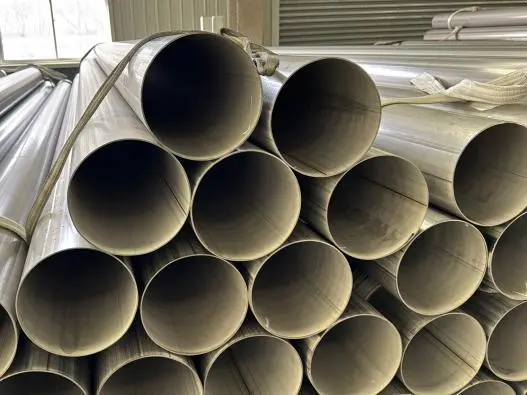
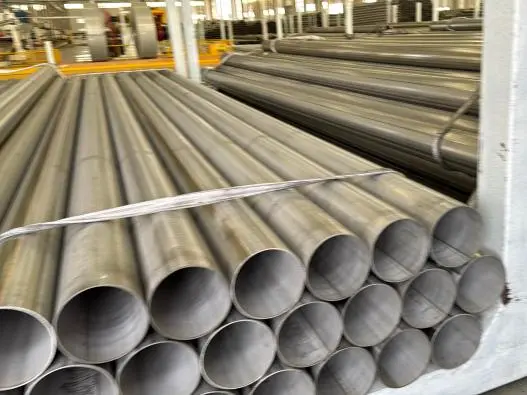
Understanding ASTM A928 Super Duplex 2507 Weld Pipe
Chemical Composition and What It Means in Practice
About 25% of Super Duplex 2507 (UNS S32750) is chromium, 4% is molybdenum, and 0.28% is nitrogen. This balance makes a two-phase microstructure with about 50% austenite and 50% ferrite, which gives the material both toughness and strength at the same time. The PREN formula (%Cr + 3.3(%Mo + 0.5%W) + 16%N) shows that 2507 has a number higher than 42, which is a lot higher than the normal PREN for Duplex 2205, which is 35. This difference is real and can be measured in seawater and other chloride-rich environments.
ASTM A928 Standard: EFW Process and Dimensional Range
The rules for Electric Fusion Welded (EFW) stainless steel pipe made with filling metal are set by ASTM A928. This is not the same as ASTM A790, which covers standard welded and seamless pipe. The EFW process can make large-diameter pipes (OD from 114.3 mm to 2500 mm) with wall thicknesses ranging from 3 mm to 50 mm. This makes it useful for underwater infrastructure where large-bore pipes are widespread. All the pipes are solution-annealed and water-quenched after welding to make the microstructure balanced again.
Certifications and Document Availability
Reliable offshore projects need all the paperwork. The 2507 EFW pipe we sell is made in a factory that is certified by ISO 9001, PED, ISO 17025, and TÜV. The papers that can be found are inspection reports for MTC/MTR (3.1/3.2), TPI, WPS/PQR, MPS, and UT/RT. This tracking package meets the audit needs of both large oil and gas companies and classification societies.
Performance Advantages of Super Duplex 2507 over Competing Materials
How 2507 Compares to Duplex 2205 and Austenitic Grades
A lot of projects start with 316L or 904L for corrosive service but cannot go any further. 316L has a PREN of about 24, which is much lower than what is needed for seawater pipes. Even though 904L works better, it is not as strong as twin types. Duplex 2205 is a good pick for most situations, but its PREN of about 35 is too low for high-chloride ocean splash zones. Each of these problems is directly fixed by Super Duplex 2507, which has a minimum yield strength of 550 MPa and is resistant to corrosion. Its tensile performance is about twice that of 316L.
Welded vs. Seamless 2507 Pipe: A Practical View
Seamless 2507 pipe works well in niche uses that need high pressure and high temperature and have smaller sizes. Larger ocean sizes, especially those greater than 300 mm OD, can only be made with ASTM A928 Super Duplex 2507 Weld pipe that is made to ASTM A928. Radiographic testing (RT) or ultrasonic testing (UT), hydrostatic testing, and mechanical and chemical analysis are all used to make sure the quality of the weld. The surface is pickled and annealed, and the ends can be left plain or beveled to fit standard flange and spool manufacturing processes.
Long-Term Cost Value
The following things affect the total cost of ownership for marine pipe material:
- Reduced replacement frequency: 2507's resistance to stress corrosion cracking and pitting means fewer unplanned shutdowns and replacement cycles in chloride environments, cutting lifecycle maintenance costs.
- Thinner walls for equal pressure rating: The higher yield strength of 2507 allows for reduced wall thickness compared to austenitic alternatives at equivalent pressure ratings, lowering material weight and installation costs.
- Lower inspection downtime: With documented corrosion resistance in seawater immersion tests, inspection intervals for 2507 systems tend to be longer than for lower-PREN alternatives.
Because of these things, 2507 is a good choice for remote installations throughout their whole service life, not just when they are first bought.
Critical Welding and Heat Treatment Techniques for ASTM A928 2507
Controlling Heat Input During Welding
Managing the heat input is the most important thing to think about when welding Super Duplex 2507. Too much heat leads to sigma phase precipitation, which is a brittle intermetallic substance that reduces hardness and resistance to rust. When there isn't enough heat input, the microstructure moves toward too much ferrite, which also hurts efficiency. For 2507 welding, the acceptable range of heat input is usually between 0.5 and 2.5 kJ/mm, and the temperature between passes should be less than 150°C.
Post-Weld Heat Treatment Requirements
After making the EFW, solution annealing at 1040–1120°C followed by rapid water cooling dissolves any phases that have formed again and returns the goal 50/50 ferrite-austenite balance. This step is necessary to keep the alloy's certified corrosion resistance in offshore service, so you can't skip it. This treatment is a normal part of our manufacturing process, and records of the heat treatment are part of the MPS paperwork.
Non-Destructive Examination and Weld Classes
Five types of welds are described in ASTM A928. The standard for marine pressure pipe is Class 1, which means it is double-welded and fully radiographed. Class 3 (fully X-rayed and single-welded) is also accepted in many subsea uses. As normal paperwork, we provide UT and RT reports that meet the NDE needs of most offshore project specs.
Application Scenarios of ASTM A928 Super Duplex 2507 in Offshore Industry
Oil and Gas Platform Piping and Risers
Pipes on offshore oil and gas platforms are exposed to fluids that contain hydrogen sulfide (H2S), produced water, and seawater injection. These conditions quickly break down lower-grade materials. A lot of people use ASTM A928 Super Duplex 2507 Weld pipe for injection heads, flexible riser systems, and topside saltwater piping. This standard is popular for North Sea, Gulf of Mexico, and Asia-Pacific offshore projects because it doesn't crack or split when exposed to sulfide stress.
Subsea Valves, Manifolds, and Structural Components
Subsea equipment has to work with high pressure from the outside, being submerged in water, and cathodic protection. Because it is strong and doesn't rust, 2507 can be used for valve bodies, trunk pipes, and structural tie-in spools. The wide OD range, which goes up to 2500 mm, includes both small instrument connections and big header pipes that go under the water.
Offshore Renewable Energy Infrastructure
Super Duplex 2507 is being used more and more in offshore wind and wave energy systems for J-tube pipes, monopile grouting connections, and inter-array cable protection pipes. For decades, these structures have been exposed to saltwater with limited access for upkeep. The long-term pitting resistance of 2507 directly lowers the risk of structural compromise over a 25-year design life.
Procurement Considerations for Buying ASTM A928 Super Duplex 2507 Weld Pipes
Supplier Credentials to Verify
If you want to buy Super Duplex 2507 EFW pipe, make sure that the company that makes it has at least ISO 9001 and PED certification. TÜV certification and ISO 17025 laboratory accreditation make sure that mechanical and chemical testing meets international standards that can be tracked. This is important for offshore projects that will be inspected by a third party. Ask for WPS/PQR paperwork to make sure that the manufacturer's standards for the welding process are only for Super Duplex types and not for all stainless steel.
Lead Times, MOQ, and Delivery
A lot of the time, project schedule is just as important as price when it comes to buying things. One pipe is our standard minimum order quantity, which works for test orders, replacement purchases, and small spool fabrication projects. The fastest shipping to Tianjin Port takes 7 days for stock items. For random or set custom lengths and widths, the lead time relies on the availability of plates and the production schedule, which our team confirms when we give you the quote.
Packaging and Export Standards
International shipping is often a part of offshore buying. For normal export packing, we use wooden boxes with steel frames as an option, hexagonal binding, and woven bag wrapping to protect your goods. This is good for both sea freight and laydown yard storage. Each package can be tracked back to the proper MTC/MTR paperwork.
Conclusion
It is technically sound and economically sensible to use ASTM A928 Super Duplex 2507 Weld pipe for offshore piping systems that need to work reliably in seawater, high pressure, and corrosive service conditions. Procurement engineers can be sure that it will work in platform, subsea, and offshore green uses because it has a high PREN, a balanced microstructure, and has been shown to meet international standards. With full paperwork and approved manufacturing, it gets rid of the doubt that causes project risk.
FAQ
What is the difference between ASTM A928 and ASTM A790 for Duplex 2507 pipe?
ASTM A790 covers seamless and standard welded pipe, while ASTM A928 governs Electric Fusion Welded pipe with filler metal. A928 is the applicable standard for larger-diameter 2507 piping and includes specific weld quality classes with defined NDE requirements.
Why is heat input so important when welding Super Duplex 2507?
Too much heat causes sigma phase precipitation, which reduces toughness and corrosion resistance. Too little heat produces excess ferrite. Both outcomes compromise offshore service performance, which is why heat input control and post-weld heat treatment are mandatory for certified 2507 pipe.
How do I verify the PREN of a supplied pipe?
PREN is calculated from the Mill Test Certificate chemical analysis using the formula: %Cr + 3.3(%Mo + 0.5%W) + 16%N. For Super Duplex 2507 (UNS S32750), the result should exceed 42.
Can Super Duplex 2507 pipe be used in cryogenic service?
While 2507 performs better than ferritic grades at low temperatures, it is generally limited to service above -50°C. For true cryogenic applications, austenitic grades are the standard specification.
What weld classes are available under ASTM A928?
Five classes exist. Class 1 is double welded and fully radiographed. Class 2 is double welded without radiography. Class 3 is single-welded and fully radiographed. Classes 4 and 5 involve varying levels of spot radiography and heat treatment requirements.
Source Your ASTM A928 Super Duplex 2507 Weld Pipe from YOUFA
Since 2017, Youfa Stainless Steel Pipe Co., Ltd. has run 15 production lines, making 50,000 tons of stainless steel pipe every year. The company is known as one of China's Top 500 businesses. You can buy approved ASTM A928 Super Duplex 2507 Weld pipes from us. The outside diameter ranges from 114.3 mm to 2500 mm, and you only need to order one pipe at a time. Visit youfass.com or email our technical team at info@youfass.com to get a quote and talk about the details of your project.
Online Message