
Oct 13, 2026
Why Choose ASTM A928 Duplex Stainless Steel EFW Pipes for Offshore Projects?
When engineers and procurement managers evaluate piping materials for offshore projects, material failure is never an option. ASTM A928 Duplex Stainless Steel EFW Pipes stand out as a proven choice for demanding marine and subsea environments. Manufactured through electric fusion welding and available in grades like Duplex 2205 and Super Duplex 2507, these pipes deliver a balanced combination of mechanical strength and corrosion resistance that carbon steel and standard austenitic grades simply cannot match in chloride-rich, high-pressure offshore conditions.
|
|
|
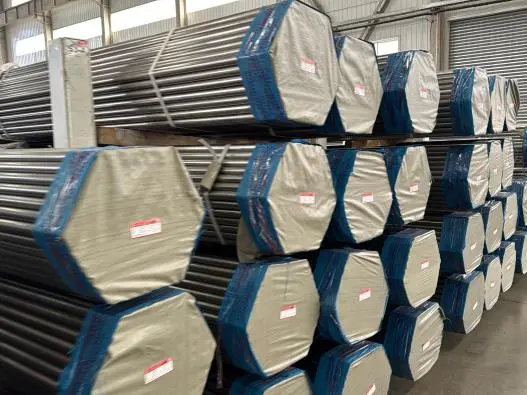
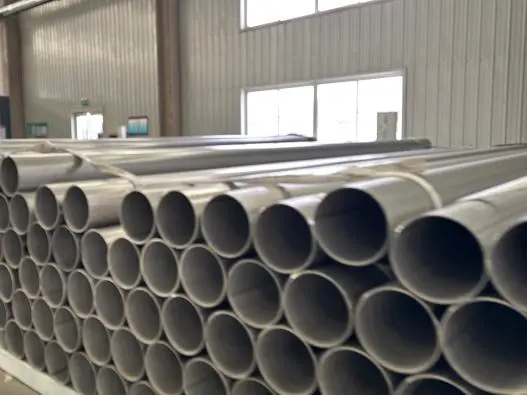
Understanding ASTM A928 Duplex Stainless Steel EFW Pipes
To choose the right pipe for offshore use, it's helpful to know what makes a product suitable for the job. Electric fusion welding, which uses filler metal to make heavy-wall pipes that are physically sound and can handle pressure, is used to make these pipes.
Chemical Composition and Microstructure
About 22% of Duplex 2205 (UNS S32205/S31803) is chromium, 5% is nickel, and 3% is molybdenum. This balanced mix creates a mixed austenitic-ferritic microstructure, which is what gives the grade its strength and resistance to rust. These numbers go up even more with Super Duplex 2507 (UNS S32750), which has a PREN (Pitting Resistance Equivalent Number) above 40, which is the standard for harsh seawater service.
Manufacturing Process and Dimensional Range
The EFW process under ASTM A928 Duplex Stainless Steel EFW Pipes is different from ERW in a big way: it uses filler metal and can handle thicker walls. The OD ranges from 114.3 mm to 2,500 mm, and the wall thickness goes from 3 mm to 50 mm. The pipes can be used for both subsea flowlines and large-diameter platform piping because they can be cut to fit different sizes.
Heat Treatment and Surface Condition
After being welded, every pipe goes through solution heating and then water cooling. Intermetallic phases can form during welding. This step breaks them down and restores the 50/50 phase balance between austenite and ferrite. The surface is pickled and annealed, and pipes can come with either straight or rounded ends, depending on the needs of the project.
Advantages of Using ASTM A928 Duplex EFW Pipes in Offshore Projects
Once engineers understand how the product is made, it's easier for them to figure out how well it works in real remote circumstances. These lines are a good choice for naval service because of the following main benefits.
- Chloride corrosion resistance: Pipes that are used offshore are exposed to saltwater, seawater, and hydrogen sulfide. Stress corrosion cracking caused by chloride is much less likely to happen in duplex 2205 than in 316L austenitic steel, which is known to break under long-term tensile stress in chloride environments above 60°C.
- Mechanical strength: Duplex 2205 has a minimum yield strength of 450 MPa, which is about twice as much as 316L stainless steel. This lets engineers choose smaller walls while keeping the same pressure ratings. This lowers the weight of buildings that are used offshore, where every kilogram is important.
- Long service life with lower maintenance: It costs a lot to do repairs offshore. According to a 2019 report from the Oil and Gas Authority (UK), corrosion is the main reason why pipelines fail to maintain their integrity. Compared to carbon steel options, duplex grades need fewer inspections and more service gaps.
- Compliance with offshore standards: ASTM A928 Duplex Stainless Steel EFW Pipes meet the standards of ASTM A928 Class 1, which say they must be double-welded with filler metal and go through a full x-ray check. There are full documentation packages that come with MTC/MTR (3.1/3.2), WPS/PQR, UT/RT reports, and TPI certificates. These meet the documentation needs of large oil and gas companies.
Because of these benefits, the total cost of ownership goes down. The extra cost compared to carbon steel is usually paid back within the first few years of use, thanks to fewer fixes for rust and less downtime.
Comparing ASTM A928 Duplex EFW Pipes with Alternatives
To pick the right pipe type, you need to directly compare it to other options. Each choice has a different set of performance characteristics.
Duplex EFW vs. Seamless Duplex Pipes
Seamless pipes are structurally sound because they don't have a weld gap. However, seamless production is limited when the diameter is big. When the outside diameter is more than 500 mm, EFW is the most practical way to make the part. ASTM A928 Duplex Stainless Steel EFW Pipes are a good choice for large-diameter offshore piping because they don't leak like seamless pipes do.
Duplex EFW vs. Austenitic Stainless Steel
Some grades, like 316L, don't rust very easily, but they can crack from stress corrosion in salt conditions. Because it has a higher yield strength, Duplex 2205 can handle the same environments without the same chance of failure and at higher working pressures.
Duplex EFW vs. Super Duplex and Carbon Steel
At a price of 20–30% more than 2205, Super Duplex 2507 offers better performance in very rough circumstances. For projects that will be moderately exposed to seawater, 2205 gives good performance at a better price. Carbon steel is the least expensive option, but it needs expensive coatings to protect it and needs to be inspected often, so it costs more over its lifetime in offshore service.
Procurement Considerations for Duplex Stainless Steel EFW Pipes
As important as the specification is, getting a steady supply of certified pipe is also very important. In overseas projects, mistakes in the procurement process can cause scheduling delays and compliance gaps that are hard to fix during installation.
Certification and Documentation
To begin with, every seller should have ISO 9001, PED, and TÜV approvals. As a general rule, offshore projects need MTC/MTR documents at the 3.1 or 3.2 level, as well as WPS/PQR records and UT/RT test reports. Check to see if the manufacturer has ISO 17025 lab accreditation. This will make sure that the mechanical and chemical testing done in-house is valid.
MOQ, Lead Times, and Logistics
When buying ASTM A928 Duplex Stainless Steel EFW Pipes for a project, make sure the source can handle both small and large orders without slowing down lead times. For replacement orders or test projects, it makes sense to have a minimum order number of one pipe. When it comes to shipping times, suppliers close to the port and who have already coordinated freight can ship from Tianjin Port in as little as seven days. This gives project schedulers a solid planning reference.
Supplier Vetting in Digital B2B Channels
Buying things online is fast and clear about prices, but it needs to be carefully checked. Ask for mill test reports with traceable heat numbers, make sure that third-party inspections are available, and look at how much the supplier can produce. A manufacturer with 15 production lines and 50,000 tons of yearly output has a different supply reliability profile than a selling company that doesn't have any control over production.
Application and Installation Guidelines in Offshore Projects
From underwater flowlines to platform chemical injection systems, these pipes are used for a lot of different things undersea. When engineers know the right application context, they can choose the right grade and pipe class.
Primary Offshore Use Cases
A lot of people use ASTM A928 Duplex Stainless Steel EFW Pipes in three different offshore situations. The grade's resistance to CO2 and H2S is good for subsea flowlines that deal with high-pressure hydrocarbons in salty environments. Chemical handling systems on platforms, like heat exchangers and salt pipes, need 2205 because it can handle high flows and doesn't react with chlorides. Large-diameter duplex pipe is also used in marine scrubber systems and desalination plants, where standard austenitic grades would need to be replaced too soon.
Welding Best Practices
To keep the phase balance when welding duplex stainless steel, the heat input needs to be carefully controlled. Use filler metals that are low in hydrogen and have the same chemistry or a little too much of it. The temperature between the passes should not go above 150°C. ASTM A928 says that after the weld, the solution must be annealed and the water must be quenched in order to recover corrosion resistance in the weld zone.
Pressure and Temperature Ratings
Duplex 2205 can be used in temperatures ranging from -50°C to around 300°C. Above 300°C, the formation of the sigma phase becomes a problem. For offshore uses, make sure the design pressure doesn't go over the pipe's rated schedule based on its real wall thickness. This is because the source plate standard determines the pipe's wall thickness.
Conclusion
ASTM A928 Duplex Stainless Steel EFW Pipes are a good choice for offshore pipe systems from both a scientific and financial point of view. Their two-phase microstructure stops the types of rust that happen most often in marine settings, and their mechanical strength lets them handle high-pressure service needs. The fact that ASTM Class 1 certification is needed, that a lot of documentation is available, and that the size range is flexible makes them a reliable specification for engineers who are in charge of offshore infrastructure that needs to be reliable for a long time.
FAQ
What is the difference between ASTM A928 Class 1 and Class 2?
Class 1 needs building that is double-welded with filler metal and a full x-ray of the weld line. Class 2 is also double-welded, but it doesn't need to be x-rayed. For critical pressure service, offshore projects usually ask for Class 1.
Can these pipes be used in sour service?
Yes, as long as they meet the standards of NACE MR0175/ISO 15156, which include limits on hardness and proof of solution annealing. The mill test record should be used to check the sour service standard.
Is a corrosion test required for every batch?
Yes, ASTM A923 or ASTM G48 testing is done on typical samples from each output batch to make sure that fabrication hasn't made the material less resistant to corrosion.
Are custom lengths and surface treatments available?
Pipes can be sent in either fixed or random lengths, and if needed, they can be finished with special treatments or finishings on the outside.
Why is post-weld heat treatment mandatory?
After welding, solution annealing breaks down intermetallic phases and restores the balanced microstructure. This makes sure that the corrosion resistance of the weld zone matches that of the base metal.
Partner with YOUFA for Certified ASTM A928 Duplex Stainless Steel EFW Pipes
Youfa Stainless Steel Pipe Co., Ltd. has been in business since 2017 and makes 50,000 tons of steel each year. It has 15 production lines. YOUFA is a manufacturer of ASTM A928 Duplex Stainless Steel EFW Pipes that is certified by TÜV, ISO 9001, PED, and ISO 17025. They offer full paperwork, a minimum order quantity of one pipe, and shipping in as little as seven days from Tianjin Port. You can get a quote from our technical team right now by emailing info@youfass.com or going to youfass.com.
Online Message