
Jul 27, 2026
Why Are ASTM A312 TP310 310S 310H Pipes Used in Furnaces?
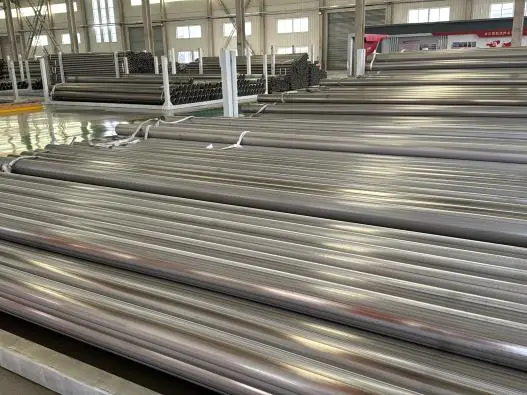
ASTM A312 TP310 310S 310H Stainless Steel Pipes excel in furnace applications because of their exceptional high-temperature oxidation resistance, thermal stability, and ability to maintain mechanical integrity in extreme environments reaching 1100°C (2010°F). The high chromium (24-26%) and nickel (19-22%) content creates a robust protective oxide layer that prevents scaling and corrosion in oxidizing atmospheres. These grades resist thermal cycling stress, offer superior creep-rupture strength, and withstand continuous exposure to furnace gases without premature failure, making them indispensable for radiant tubes, superheater tubes, and heat treatment equipment across petrochemical, power generation, and metallurgical industries.
|
|
|
Introduction
When engineering teams plan industrial furnace systems, choosing the right materials is one of the most important choices they have to make because it affects both the long-term revenue and the dependability of the system's operations. We have seen too many projects fail because the pipes were not strong enough and broke down when they were heated or corroded too quickly in hot places. This article looks at why the TP310 series has become the best choice for furnace use in many different fields. When choosing materials for places where temperatures regularly rise and fall above 800°C and thermal cycling causes mechanical stress that regular stainless steels cannot handle, procurement professionals and engineers face special challenges. When it comes to real-world performance, the difference between TP310, TP310S, and TP310H grades is very important. Knowing these differences helps you make smart purchasing choices that balance the original cost with the total cost over the product's life. This article gives people who make decisions the information they need to choose, get, and use these high-performance materials effectively in harsh furnace conditions by giving them detailed technical analysis and useful buying tips.
Understanding ASTM A312 TP310, 310S, and 310H Stainless Steel Pipes
The ASTM A312 Standard Framework
Chemical Composition and Microstructure Differences
The TP310 base grade has between 24 and 26% chromium and between 19 and 22% nickel. This makes an austenitic structure that stays solid at a lot of different temperatures. The 310S version limits the amount of carbon to 0.08%. This makes carbide precipitation much less likely to happen during welding and heat exposure. This controlled level of carbon stops sensitization, which would otherwise make ways for intergranular corrosion to happen in areas affected by heat. The 310H grade, on the other hand, calls for a carbon content of between 0.04% and 0.10%. This is done on purpose to keep the carbon levels high so that the creep-rupture strength is higher at high temperatures. This change in makeup has a direct effect on how the grain boundaries behave and how well the material will work in the long term when it is subjected to constant temperature stress.
Mechanical Properties Under Furnace Conditions
At room temperature, these materials have a minimum tensile strength of 515 MPa and a yield strength of 205 MPa. However, when they are heated, they show their real value. When temperatures get close to 1000°C, the austenitic structure stays tough and flexible. This is different from ferritic and martensitic steels, which quickly become weak or lose their strength. The thermal expansion coefficient is about 16.0 × 10⁻⁶/°C between 20°C and 100°C. This needs to be carefully thought out when designing the system so that it can handle changes in size during heating cycles. ASTM E112 standards control the grain size, which is a key part of creep resistance. This is especially true for 310H applications, where the strength of the grain boundary determines how long the system will work in high-pressure, high-temperature conditions.
Why ASTM A312 TP310 Series Pipes Are Ideal for Furnace Applications?
Superior Oxidation and Scaling Resistance
Oxidizing atmospheres are made in furnaces, which quickly break down regular steel pipes by scratching the surface and oxidizing the inside, and for ASTM A312 TP310 310S 310H Stainless Steel Pipes, the chromium-rich oxide layer forms rapidly at high temperatures and adheres tenaciously to the base metal, self-healing during service to prevent oxygen penetration and wall thinning, with tests confirming structural integrity during continuous dry air exposure up to 1100°C—significantly outperforming lower-alloy options—and the nickel content adds protection in fluctuating reducing-oxidizing environments. The chromium-rich oxide layer that protects TP310 series pipes forms quickly at high temperatures and sticks very well to the base metal. This oxide layer keeps growing back while it's in service, stopping oxygen from getting through and causing the wall to thin over time. Test results show that these grades keep their structure even when exposed to dry air continuously at temperatures up to 1100°C, which is a lot better than lower-alloy options. The nickel presence adds extra safety in changing atmospheres where cyclic reduction-oxidation situations happen.
Thermal Cycling Endurance
Industrial boilers don't usually run in a steady state. Starting up, stopping, and changes in the process cause thermal cycles, which cause pipes to repeatedly expand and contract. These grades' austenitic structure can handle this mechanical stress without microcracking or fatigue damage that leads to failure. During cooling cycles, the material shrinks evenly without changing phases. This means that it stays the same size over thousands of thermal cycles. We've seen TP310S pipes installed in heat treatment plants that have been used for over 10,000 heating rounds over the course of 15 years without needing to be replaced.
Dimensional Stability and Manufacturing Quality
The ASTM A312 standard sets very tight limits for the outside diameter, wall thickness, and straightness of ASTM A312 TP310 310S 310H Stainless Steel Pipes. These limits make sure that the pipes always work the same way in demanding situations. Tolerances in wall thickness of +15% to +22.5% on the positive side and -12.5% on the negative side are enough to maintain pressure containment while keeping flow characteristics predictable. Seamless manufacturing eliminates weld seams, which could become vulnerable areas for corrosion in furnace environments. However, welded versions are carefully checked for integrity through hydrostatic testing or nondestructive electric testing. Solution annealing followed by rapid water quenching improves the microstructure by removing carbides and creating a uniform austenitic matrix without harmful phases.
Comparing TP310, TP310S, and TP310H for Procurement Decisions
Mechanical Performance Analysis
When choosing between these grades for different boiler uses, the temperature range and stress conditions become very important. The standard TP310 grade works well in most high-temperature situations with moderate stress because it has good properties at a reasonable price. The 310S grade is better for welded fabrications because it lowers the risk of sensitization during fabrication and service. This makes it perfect for complicated setups that need a lot of field welding or parts that are exposed to acidic condensates when the system is shut down. In high-pressure, high-temperature systems like superheater tubes in power boilers or reformer tubes in petrochemical plants, where safe working life depends on creep-rupture strength, the 310H grade is a must. The high carbon content in 310H makes steady carbides at the edges of the grains that stop the grains from moving, which is the main way that creep deforms materials.
Corrosion Resistance Considerations
Due to similar amounts of chromium and nickel, all three grades have about the same corrosion protection in general. However, ASTM A312 TP310 310S 310H Stainless Steel Pipes have small differences that show up in certain situations. The low-carbon 310S grade is better at resisting intergranular attack in situations where the temperature needs to change quickly or where it is exposed to acidic sulfur-containing gases during furnace upsets. When standard TP310 and 310H grades are kept at temperatures between 425 and 815°C for long periods of time, carbides may form along the edges of the grains. This makes chromium-depleted areas more likely to be attacked. When engineers choose between grades, they have to think about whether the operating profile includes long periods of time in this critical temperature window.
Cost-Benefit and Supply Chain Factors
The prices for these special grades are usually based on the standard costs of nickel and chromium plus the difficulty of making them. Because they require more steps to make and cannot be made as quickly as welded pipes, seamless pipes are more expensive, but the lack of longitudinal weld seams makes them worth the extra cost in critical furnace applications. Lead times depend a lot on the size, schedule thickness, and manufacturing process. Standard configurations can be made in 4 to 6 weeks, but custom specifications may take 10 to 14 weeks. Procurement teams should check that sellers follow ASTM A312 by looking at material test reports (MTR) that list the chemical makeup and mechanical qualities of the goods. These reports should be certified to EN 10204 3.1 or 3.2 standards. Manufacturers with a good reputation keep their quality management systems up to date with ISO 9001, their pressure tools certified with PED, and their testing labs approved according to ISO 17025 standards.
How to Ensure Optimal Use of ASTM A312 TP310 Series Pipes in Furnaces?
Installation Best Practices
Surface contamination that could affect high-temperature performance can be avoided by handling the part correctly during installation, and for ASTM A312 TP310 310S 310H Stainless Steel Pipes, storage areas should be clean and dry with pipes kept away from carbon steel or other materials that could embed particles, while clean cutting tools made specifically for stainless steel must be used to prevent iron contamination that initiates surface rust, and stainless steel wire brushes or grinding wheels dedicated to stainless steel are required for beveling welded joints, with thread compounds or lubricants rated for high-temperature service to prevent carbonization that leads to galling or seizure during maintenance. The places where things are stored should be clean and dry, and pipes should not come into contact with carbon steel or other materials that could embed particles during handling. When cutting these lines, only use clean cutting tools made for stainless steel to avoid getting iron on them, which can cause surface rust to start. For beveling welded joints, you need to use stainless steel wire brushes or grinding wheels that haven't come in contact with carbon steel to make the surface smooth and free of oxides. When used on threaded connections, thread compound or lubricants must be rated for high-temperature service to keep them from carbonizing, which can lead to galling or seizure during future maintenance.
Welding Techniques and Heat Treatment
To successfully weld TP310 series pipes, you need to choose the right filling metal and keep the heat input under control so that the pipes keep their mechanical and rust resistance. For 310S base metal, use either ER310 or ER310H replacement metal, based on whether high-temperature strength or weldability is more important. Keep the temperature of the interpass below 150°C to lower the risks of heat-affected zone width and carbide precipitation. On the root side, purge gas protection stops internal oxidation that makes surfaces rough, which encourages turbulent flow and stress concentration. For austenitic stainless steels, post-weld heat treatment is usually not needed. However, full solution annealing at 1040–1150°C followed by rapid quenching can recover maximum corrosion resistance if welding caused too much carbide precipitation in thick-section parts.
Inspection and Maintenance Protocols
Regular inspection programs find early signs of wear and tear before they become too bad to fix. A visual check should show patterns of scaling on the surface, changes in color that mean the metal is too hot, or physical distortion that means it has been damaged by creep. Ultrasonic thickness testing done at set times keeps track of how much the walls are losing their strength. This lets maintenance plans be based on actual degradation rather than random time intervals. For important uses, periodic metallographic replication checks for microstructural changes like the formation of the sigma phase or too much carbide precipitation that weakens the material's ability to bend and resist corrosion. A petrochemical plant with ethylene cracking ovens started ultrasonic inspections on their TP310H radiant coil tubes every three months. This increased their service life by 30% by finding localized thinning early and fixing it instead of replacing the whole coil.
Procurement Guide: Where and How to Buy ASTM A312 TP310 310S 310H Pipes?
Supplier Evaluation Checklist
To find qualified suppliers, manufacturing capabilities and quality systems need to be evaluated in a planned way. First, make sure that the maker has the latest ASTM A312 production approval and any necessary pressure equipment certifications, such as PED for European markets or ASME for North American ones. Ask third-party inspection agencies to send you facility audit records that show your business meets foreign quality standards. Instead of relying only on mill certificates from steel suppliers, check the supplier's testing capabilities and make sure they do the necessary tests in-house or through accredited laboratories. Full documentation packages with material test reports, good material identification records, and nondestructive testing reports show that the company is mature and dedicated to traceability.
Pricing Structure and Negotiation Strategies
Pipe prices depend on many things, such as the cost of the base metal, the manufacturing process, the size requirements, and the number of pipes that are ordered. Seamless pipes in schedules 40S through 80S come in standard shapes and can be bought at low prices because they are mass-produced. But pipes in schedule 160 and higher have to be made in a special way, which makes them much more expensive per unit. The length specifications also have an effect on the price; material with random lengths costs less than material with fixed lengths, which makes more waste during production. Because volume agreements allow for better pricing, combining needs across multiple projects or working with other departments can give you more negotiating power. Ask for detailed quotes that break down the prices of materials, production, testing, and shipping so that you can find places to negotiate. Some suppliers protect your prices if you sign a long-term deal with them, which is helpful when the prices of nickel and chromium change a lot.
Logistics and After-Sales Support
Shipping large-diameter or heavy-wall pipes across international borders needs careful logistics planning to keep them from getting damaged and to cut down on delivery time. Protective end caps, hexagonal packing for shape stability, and weather-resistant wrapping that can be used for ship travel or long-term storage outside should all be used in packaging. Check with the supplier to see if they can deliver to where you need it, as some manufacturers only ship to major ports and leave it up to the buyer to arrange final delivery. Different manufacturers have different minimum order amounts. Some will accept orders for a single pipe, while others need minimum tonnages that may be too high for a small job. After-sales technical support is what sets excellent suppliers apart from transactional ones. Manufacturers who offer help with application engineering, developing welding procedures, or fixing add value beyond the physical product. Warranty terms usually cover problems with the way the product was made, not problems with how it was used. Make sure you know what the coverage includes and how to file a claim before you buy something.
Conclusion
This is because ASTM A312 TP310 310S 310H Stainless Steel Pipes have been proven to withstand extreme temperatures while maintaining structural integrity and corrosion resistance, and selecting the right grade—standard TP310, low-carbon 310S, or high-carbon 310H—requires matching the material to the specific temperature, stress, and fabrication requirements of each application, with attention to material specifications, supplier qualification, installation methods, and ongoing maintenance ensuring maximum service life and system performance. When choosing a grade, like standard TP310, low-carbon 310S, or high-carbon 310H, it's important to make sure it works well with the temperature, stress, and fabrication needs of each application. To get the most out of these materials over their full service life, it's important to pay attention to the right material specifications, supplier qualification, installation methods, and ongoing maintenance. If procurement teams know the technical differences between grades and judge suppliers on their manufacturing skills, quality systems, and customer service, their companies will have the best furnace system performance and dependability.
FAQ
What distinguishes TP310S from standard TP310 pipes?
The main change is the amount of carbon specified. The most carbon that can be in TP310S is 0.08%, while the most carbon that can be in normal TP310 is 0.25%. This lower carbon content keeps carbide from forming during welding and service exposure to temperatures in the sensitization range. This makes welded parts and uses that involve thermal cycles more resistant to intergranular corrosion.
Can TP310H pipes be used above 1100°C continuously?
The 310H grade has great resistance to oxidation up to about 1100°C in dry oxidizing atmospheres. However, continuous use above this temperature speeds up scaling and, depending on the environment, may lead to early failure. Applications that need temperatures to stay above 1100°C for a long time should look at other materials or protection coats made for ultra-high-temperature service.
How do I verify authentic ASTM A312 compliance from suppliers?
Ask for approved material test reports (MTR) that show the chemical makeup and mechanical qualities that were tested according to ASTM A312. Genuine sellers give MTRs that are certified to EN 10204 3.1 (manufacturer's test report) or 3.2 (report checked by an outside inspector). Check the heat numbers on the pipes against the MTR paperwork, and if you're ordering a lot of things, think About Using a third-party inspection service to make sure the materials are real through independent positive material identification tests.
Ready to Source High-Performance Piping for Your Furnace Systems?
YOUFA has a wide range of ASTM A312 TP310 310S 310H Stainless Steel Pipes that are made to strict standards and ready to meet your high-temperature pipe needs. We are a Top 500 Chinese company with 15 production lines and a yearly capacity of more than 50,000 tons. Our products are solid and come with ISO9001, PED, TÜV, and ISO 17025 laboratory certificates. Our method is flexible enough to handle orders as small as one pipe, making it possible for both large-scale commercial projects and specific prototyping needs to be met. We give B2B buyers the traceability they need by keeping records of full material test reports, welding procedure specifications, and nondestructive testing records. Get in touch with our technical team at info@youfass.com to talk about your unique furnace application needs and get personalized advice from an experienced ASTM A312 TP310 310S 310H Stainless Steel Pipes seller dedicated to the success of your project.
Online Message