
Oct 10, 2026
Where Can ASTM A928 Duplex 2205 Pipe Replace Conventional Steel?
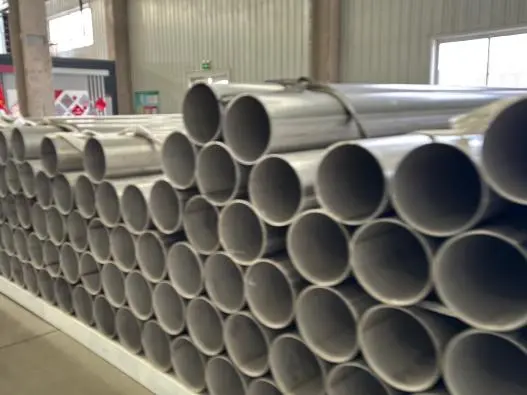
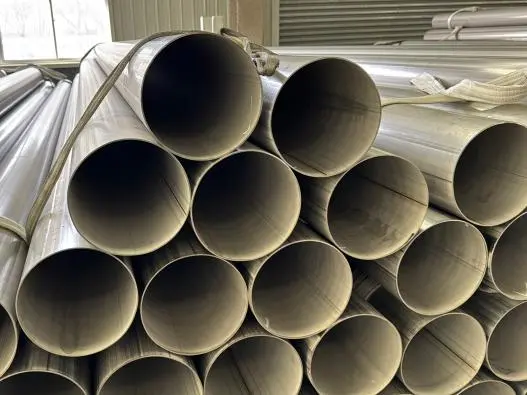
ASTM A928 Duplex 2205 EFW Steel Pipe can be used instead of regular carbon steel and standard austenitic types in any setting where salt, high mechanical stress, or harsh chemicals shorten the pipe's useful life. This pipe has a balanced ferritic-austenitic microstructure that gives it about twice the yield strength of 316L stainless steel. It was made according to the ASTM A928 standard using Electric Fusion Welding. It works in places where types like A53 carbon steel or 304 stainless steel just can't last long enough to be cost-effective, like offshore underwater flowlines and chemical processing headers.
|
|
|
Understanding ASTM A928 Duplex 2205 EFW Steel Pipe
What the Standard Actually Covers?
ASTM A928 sets the rules for electric-fusion-welded stainless steel pipe that had filler metal added during the welding process. It's not the same as ASTM A790, which covers regular pipe that is welded or not welded. The A928 standard divides pipes into classes (1–5) based on how they are welded, what kind of filler metal is used, and how often they need to be x-rayed. One example is that Class 1 needs a full RT inspection. This gives buying workers a clear quality standard that they can use to check the work.
Chemical Composition and Microstructure
ASTM A928 sets the rules for electric-fusion-welded stainless steel pipe that had filler metal added during the welding process. It's not the same as ASTM A790, which covers regular pipe that is welded or not welded. The A928 standard divides pipes into classes (1–5) based on how they are welded, what kind of filler metal is used, and how often they need to be x-rayed. One example is that Class 1 needs a full RT inspection. This gives buying workers a clear quality standard that they can use to check the work.
Key Technical Specifications at a Glance
You can get ASTM A928 Duplex 2205 EFW Steel Pipe in a lot of different sizes to fit big industrial projects.
- Duplex 2205 (UNS S32205/S31803) and Super Duplex 2507 (UNS S32750) are the grades.
- The OD range is from 114.3 mm to 2,500 mm.
- From 3 mm to 50 mm thick walls.
- Finish on the surface: pickled and heated.
- End Finish: Either a smooth or a bevelled end.
- RT/UT test, hydraulic test, mechanical test, and chemical test are the tests that were done.
- These files are the MTC/MTR (3.1/3.2), TPI, WPS/PQR, MPS, and UT/RT report.
With these specs, the pipe can be used in places where it needs to be able to handle high pressure and rust, like chemical processes, oil and gas, and underwater.
Why Replace Conventional Steel with Duplex 2205 Pipe?
The Hidden Cost of Carbon and 316L Stainless Steel
Carbon steel pipes rust quickly when chlorides or acidic process streams touch them. This means they need to be checked often and sometimes have to be shut down without warning. Even though Grade 316L stainless steel is better, it still breaks when it is stressed under water with salt above about 60°C. Both times, the money saved on supplies at the beginning is much less than the cost of maintenance. As soon as you switch to ASTM A928 Duplex 2205 EFW Steel Pipe, the real issue is fixed, not just the symptoms.
Mechanical Strength That Changes the Design Equation
When it comes to 0.2% proof strength, Duplex 2205 has at least 450 MPa, but 316L only has about 220 MPa. Engineers can ask for walls that are smaller but can still hold the same or more pressure because of this difference. When walls are thinner, they hold less material, take less time to make, and need smaller support structures. These savings add up quickly when working on big pipe projects in desalination plants or on platforms at sea.
Long-Term Total Cost of Ownership
Over the course of 25 years of service in remote settings, independent studies from both Stainless Steel World and the Nickel Institute show that duplex types are 20% to 40% less expensive to own than carbon steel with protective coats. There are fewer checks, replacement rounds, and care for the surface treatment, which is why the number is going down. The replacement case is now easy for buying teams that don't have a lot of money to spend on big projects to understand.
Comparing Duplex 2205 EFW Pipe with Conventional Alternatives
Duplex 2205 vs. 304 and 316L Stainless Steel
There is no molybdenum in Grade 304, so it can't be used in places where chloride is present. Grade 316L has an extra 2% to 3% molybdenum, but ASTM A928 Duplex 2205 EFW Steel Pipe is still stronger. Its Pitting Resistance Equivalent Number (PREN) is higher than 34, while 316L's is only about 24. This means that heat exchangers that work with saltwater or seawater must either use 316L with walls that are much stronger or be able to wear out faster. On a large scale, neither of these choices is a good deal.
Duplex 2205 vs. Carbon Steel A53/A106
Most pipes are made of carbon steel types A53 and A106 because they are cheap. Uncoated carbon steel, on the other hand, rusts and pits quickly in seawater, produced water, acidic condensate, or bleach solutions. Within years, the wall thickness is gone. When remote injection lines switched to Duplex 2205, check times went from once a year to five years or more, which directly cut down on running costs.
EFW vs. Seamless for Large-Diameter Applications
Because of the cost, it is not possible to make seamless pipes that are bigger than 600 mm OD. As per ASTM A928's EFW method, pipes with a width of up to 2,500 mm can be made from duplex plate that has been approved. X-rays or ultrasounds can be used to check the pipes' size and the strength of the welds. It is not possible to make large-diameter underwater heads, chemical plant pipes, or marine scrubber systems any other way; EFW is the only way to do it.
Practical Applications Where Duplex 2205 Pipe Excels?
Offshore Oil & Gas and Subsea Flowlines
Subsea flowlines carry high-pressure hydrocarbons mixed with CO2 and H2S in places where there is a lot of water. Standard steel can get general rust, SCC, and sulphide stress cracks all at the same time when these things happen. ASTM A928 Duplex 2205 EFW Steel Pipe, which is made of just one material, can handle all three risks. It doesn't need any cathodic protection systems or internal covering, which are more expensive and take longer to set up.
Chemical Processing, Desalination, and Heat Exchangers
There is enough salt in brine used by desalination plants to break down 316L heat exchanger tubes in two to three years. This much is always handled by duplex 2205, and because it is stronger, heat exchanger heads with smaller walls are allowed, which makes the system more thermally efficient. This type of steel is usually used in chemical plants that have sulfuric acid diluting systems, phosphoric acid production lines, or chlorine-based bleaching circuits. This is what the big tech firms say should be done.
Marine Scrubbers and Pulp & Paper Bleaching
The machines that clean marine exhaust gas, which are often just called "scrubbers," let sulphurous acidic vapours get into the pipes. A "white liquor" with a high pH and high temperature is moved through circuits that clean pulp and paper. That material needs to be able to handle acids and bases without getting holes in it. Duplex 2205 can stand up to these kinds of chemical attacks, and because it is so strong, the wall parts can be made thinner, which makes the tank lighter. This is very useful for ship repair jobs that need to carefully handle structure loads.
Procurement Considerations for Duplex 2205 EFW Pipe
Supplier Qualification and Certification Requirements
When getting ASTM A928 Duplex 2205 EFW Steel Pipe, sourcing teams should check that the company has ISO 9001, PED, and TÜV certifications, as well as an ISO 17025-accredited laboratory that can test metals and chemicals on its own. All of these qualifications show that the process is being watched, from picking the plates to checking the end weld. YOUFA has all four certificates, and all sales come with full paperwork packages that include reports for MTC/MTR (3.1/3.2), WPS/PQR, MPS, and UT/RT.
Volume, Delivery, and MOQ Flexibility
A lot of business-to-business buyers think that it takes a long time and needs a large minimum order number to order large-diameter twin pipe. YOUFA's 15-production-line factory makes 50,000 tons of steel every year. This gives them more stock and scheduling options than smaller mills can offer. As little as one pipe is needed to place an order, and it can be delivered to Tianjin Port in seven days at the fastest. These are fair delivery times for fixes or gaps in the project plan that procurement managers often have to deal with.
Documentation and Quality Assurance for Critical Projects
Most projects in the oil and gas, chemical, or marine sectors need a third-party inspection (TPI) and radiological test results before they can put in pipe. YOUFA automatically gives you RT/UT records, hydraulic test certificates, and the ability to keep track of all your materials. When pipe is shipped by water, it doesn't need to be packed in a separate box. It can be kept safe in steel-framed wooden boxes, triangular binding, or weaving bags.
Conclusion
That's why ASTM A928 Duplex 2205 EFW Steel Pipe can be used instead of carbon steel and regular austenitic grades when rust, mechanical stress, or service life are the most important things. Material that costs more is worth it many times over during the span of a project. This has been seen in the industrial, chemical, and marine industries. Duplex 2205 is the best choice for buying managers who need to replace something because it has clear specs, a range of sizes, and quality records that can be checked.
FAQ
What is the main difference between ASTM A928 and ASTM A790?
The ASTM A790 standard covers both seamless and standard welded stainless steel pipe. ASTM A928 is the standard for large-diameter duplex pipe made from plate because it covers electric-fusion-welded pipe where filler metal is added during welding.
Can Duplex 2205 pipe be used above 300°C?
No, Duplex 2205 can only be used in temperatures below 300–315°C. Long-term contact above this range can cause 475°C embrittlement, which makes the pipe much less tough and unfit for pressure service.
Does the EFW weld zone have lower corrosion resistance than the parent metal?
Not if it is heated the right way. Solution annealing followed by water cooling balances the ferrite-austenite in the weld zone and gets rid of any intermetallic phases like sigma that may have formed during welding. This heat treatment is done to all of YOUFA's pipes as a standard.
What filler metal is used for welding Duplex 2205?
Over-alloyed filler metals with 7–9% nickel are used. ER2209 is one example. The higher nickel content makes up for the faster cooling rates in the weld zone and makes sure that the right phase balance is reached.
Is Super Duplex 2507 available in the same EFW format?
Yes, YOUFA offers Super Duplex 2507 (UNS S32750) in the same OD range of 114.3 mm to 2,500 mm using the EFW process. This is for uses that need even higher PREN values above 40, like systems that lift water from the sea and harsh acid service.
Get a Quote from YOUFA — Trusted ASTM A928 Duplex 2205 EFW Steel Pipe Supplier
For your next important piping project, you should get materials that come with paperwork, have been tested in an ISO 17025 lab, and are shipped on time. You can check and trust YOUFA as an ASTM A928 Duplex 2205 EFW Steel Pipe maker. It is one of China's Top 500 companies and has 15 production lines that make 50,000 tons of steel every year. The minimum order quantity is one pipe. To get a datasheet or shipping price right away, email your requirements to info@youfass.com or go to youfass.com.
Online Message