
Nov 19, 2026
What Should Procurement Teams Check When Buying ASTM A249 TP317 Austenite Boiler Tube?
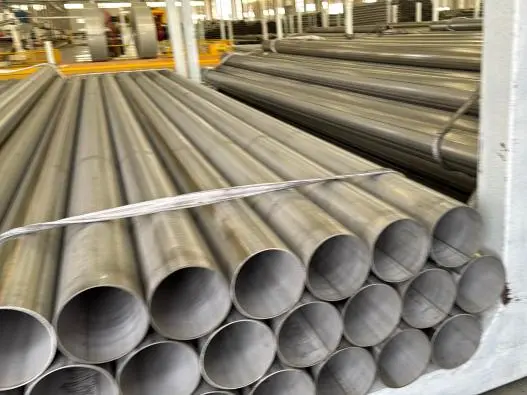
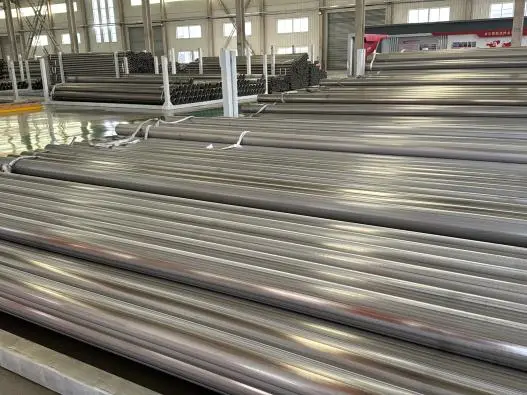
Before buying an ASTM A249 TP317 Austenite Boiler Tube, procurement teams should make sure they know the exact grade and standard edition, the dimensions and tolerances, the mechanical and pressure data, the heat treatment and weld quality, how well it fits with the corrosion environment, the test certificates that can be tracked, and the full delivered cost. The boiler, superheater, heat exchanger, and condenser tubes made of welded austenitic stainless steel are covered by ASTM A249/A249M. I also think you should find out if the supplier makes the tube or just sells it. A clear purchase order that covers these points cuts down on mistakes, shipping delays, and failures that happen early on. There is clear language below to explain each check, so you can compare quotes on the same level.
|
|
|
Confirm the ASTM A249 TP317 Specification, Size, and Strength
I start with the paper specification because that's where most mistakes in buying happen.
Confirm the Grade, UNS Number, and Standard Edition
On every question and order, write the full name: ASTM A249/A249M, grade TP317, UNS S31700, and the year of publication. TP317 is an austenitic stainless steel that contains molybdenum. The standard calls for 18.0 to 20.0 percent chromium and 3.0 to 4.0 percent molybdenum, while TP316L only calls for 2.0 to 3.0 percent molybdenum. On the mill test certificate, look for the heat chemistry. Then, compare the standard to chromium, nickel, molybdenum, carbon, and nitrogen. People in the US should also ask if the project needs ASME SA-249 materials, since it does for a lot of pressure-code work. Early on, you should decide if the lower-carbon version of TP317L is better for welding or sensitization. You should write down any approved alternatives so that the supplier can't use a different grade without your permission.
Check Dimensions, Tolerances, and Tube Configuration
When buying ASTM A249 TP317 Austenite Boiler Tubes, it's important to be clear about the tube-to-tube-sheet fit-up dimensions, heat transfer area, and installation needs. Give the length, number, measuring units, outside diameter, and wall thickness of the tube. These factors are very important because the wall thickness affects the choice of tube, the size of the inside, and how well it works under pressure. The ASTM A249 TP317 Austenite Boiler Tube specification also needs to take ASTM A1016/A1016M into account. This standard sets general requirements, like the amount of variation that is allowed in length, diameter, and wall thickness. Before placing an order, buyers should make a clear list of the size limits they need. Extra details about U-bent ASTM A249 TP317 Austenite Boiler Tube should include the bend radius, leg length, and the maximum wall thickness that is allowed. You should also spell out the end finishing requirements, such as whether the ends should be square-cut, deburred, or beveled. Before confirming an order, make sure that every measurement matches the engineering drawings and the method of joining that is being planned, such as expansion welding, orbital welding, or mechanical fitting. If you choose standard-size ASTM A249 TP317 Austenite Boiler Tube without checking to see if it will work with your sheet, you may have to pay more for machining and have trouble installing it. Giving full details from the start helps make sure that the tubes supplied meet the needs of the project.
Review Mechanical Properties and Pressure Performance
You should ask for test records that are specific to each lot instead of a general statement of compliance. When it comes to TP317 and ASTM A249. the lowest tensile strength is 515 MPa (75 ksi), the lowest yield strength is 205 MPa (30 ksi), and the lowest elongation is 35%. Compare these numbers to the edition that's listed on your order. The standard doesn't give each tube the same pressure rating. How much pressure is allowed depends on the diameter, the thickness of the wall, the temperature, the allowable stress, the quality of the weld, the corrosion allowance, and the design code. Before you place your order, I think you should have your design engineer sign off on the final wall thickness. And make sure the supplier is confident about the test type listed in the quote.
Check Manufacturing Quality and Corrosion Fit
After making sure the specs are right, check out how the tube is made and where it will go.
Heat Treatment and Weld Quality
When ASTM A249 tubes are welded, no extra filler metal is added, so the longitudinal seam needs extra care. The tube needs to be heated in a solution. The standard for TP317 says that the lowest temperature should be 1900°F (1040°C), and then it should cool down quickly. Check with the supplier to see how they shape and control the weld, as well as what tests they do and how they handle repairs. When your project needs them, ask for records of the furnace's temperature and cooling. The standard also calls for mechanical tests, like flattening, and either a hydrostatic test or an electric test that doesn't damage the tube. Unless your order says otherwise, the test is chosen by the manufacturer. Write down which test you want to use. Critical service may call for a third party to watch or for an extra weld inspection, like an eddy current or ultrasonic scan.
Surface Finish and Cleanliness
Corrosion resistance, heat transfer, and cleaning are all affected by the condition of the surface. Finishes like annealed and pickled, bright annealed, and polished are common choices. Pickling gets rid of the heat tint and surface iron that are left over from welding and annealing. ASTM A380 and ASTM A967 cover how to clean and passivate. Tell us what finish you want, how rough it can be, and if the inside surface needs extra care during the cleaning process. Find out how the supplier cleans, dries, and caps the tubes before packing them. Wetness and iron contamination can stain stainless surfaces with rust. Also, list the export packaging. During shipping, wooden cases or bundles with plastic protection keep things from getting damaged by bumps, scratches, and water. Before approving a large lot, look at a sample or some photos of it.
Match TP317 to Your Service Environment
People who want to buy ASTM A249 TP317 Austenite Boiler Tube should think about both the chemicals that make it up and how it will be used. There are many things that can change how rust works, such as temperature, acidity, sulfur content, oxygen levels, flow speed, and surface layers. To find the pitting resistance equivalent number (PREN), multiply chromium by 3.3 times molybdenum and nitrogen by 16 times. This will let you compare different grades of stainless steel. Based on typical composition ranges, TP317 has a higher PREN than TP316L because it has more molybdenum. This means that ASTM A249 TP317 Austenite Boiler Tube might be a good choice for tough jobs like flue gas desulfurization systems, cleaning equipment for pulp and paper, and chemical processing lines that work with chlorides or acidic materials. You might need duplex stainless steel or nickel-based metals for rougher jobs, while TP317L might be better for some welding parts. Before you buy ASTM A249 TP317 Austenite Boiler Tube, tell the seller a lot about the pressure, temperature, and amount of chloride in the process medium. Also, a corrosion engineer should look over the grade of material that was picked out and give their OK to make sure it meets the project's needs. Because it is made of the right stuff, ASTM A249 TP317 Austenite Boiler Tube will last longer and rust less often.
Audit the Supply Route, Documents, and Testing
Even with the right specs, you still need a supplier that can back up what it ships.
Choose Between Stock and Made-to-Order Production
Choose whether you need stock tubes or a production run for your project. Stock is good for quick replacements and standard sizes. Made-to-order production can handle odd-shaped holes, thin walls, long lengths, U-bends, and unique finishes. Find out the minimum order quantity, the number of tools needed, the production capacity, and the lead time. Also, ask for separate dates for manufacturing, inspection, packing, and shipping. Check the product standard as well. Tubes that are welded are covered by ASTM A249. Tubes that are not welded longitudinally are covered by ASTM A213. Check your papers before you decide which way to go because some designs, owner instructions, or code rules require one or the other. This can be done faster by a supplier who shapes, welds, heat treats, tests, finishes, and packs all in one step.
Certificates and Traceability
Need a mill test certificate that follows EN 10204 type 3.1 or something similar, and make sure it is linked to the tube's heat number. It should have the grade, standard, heat number, chemical makeup, mechanical results, heat treatment, dimensions, and the results of any hydrostatic or nondestructive tests. Make sure the heat numbers on the bundle tags, tubes, packing lists, and certificates are all the same. When a heat number doesn't match, the shipment should be held until the supplier can explain the difference. Find out what the tubes will be marked with, and ask for pictures of the bundles being packed up before they are sent. Having clear records cuts down on disagreements and makes it easier to settle any later replacement claims.
Inspection and Testing Options
Buyers can ask for more checks than just mill tests. Positive material identification checks the delivered tubes for alloy content, which is helpful when getting TP316L and TP317 mixed up would cost a lot. The weld and wall are checked with eddy current or ultrasonic testing. If your process makes intergranular attack a concern, ASTM A262 practices test for it. Hardness and metallographic checks confirm that the metal has been heat-treated. Before the goods are shipped, third-party inspectors can watch the tests and look over the paperwork at the factory. Add each test that is being asked for, along with its requirements and who will pay for it, to the purchase order. This is because adding tests changes both the price and the lead time. Fit the risk to the inspection plan. A heat exchanger in a stream that is corrosive needs more tests than a low-risk utility line.
Compare Quotes and Choose the Right Supplier
I'll talk about price, delivery, and the supplier after I'm done with the technical stuff.
Compare Quotations on the Same Basis
Make sure that all of the bids for ASTM A249 TP317 Austenite Boiler Tube are judged by the same business and technical standards when you compare prices. First, make sure that the price is given for a single piece, a kilogram, or a meter. Besides that, it should include testing, inspection, licensing, packing, cutting, and finishing the ends. People who want to buy ASTM A249 TP317 Austenite Boiler Tube should see how much it costs, how it is paid for, what currency is used, and what insurance options are available. All of these are important because they have a direct effect on how much something costs when it arrives at a US port or factory. You should compare both the amount of stock you have and the time it takes to make something new. Ask each seller to give you a written delivery plan that shows when the goods will be shipped and when they will be made. You should think about how much money you could lose if the product doesn't work when you look at ASTM A249 TP317 Austenite Boiler Tube suppliers. It can cost a lot more than the small price difference for a tube that leaks or a whole batch that fails the inbound check. In this case, the choice with the lowest price isn't always the best one. You should be able to get a good deal on ASTM A249 TP317 Austenite Boiler Tube that meets all of your needs in terms of material, size, quality, paperwork, delivery, and price.
Use a Pre-Order Checklist
A short list helps engineering, quality, procurement, and logistics stay on the same page. You should be clear about the standard, grade, size, length, quantity, finish, end condition, heat treatment, tests, operating conditions, and any needs for bending or polishing before you ask for quotes. Before you choose a supplier, you should look at their manufacturing status, project history, quality management system, ASTM A249 capability, traceability practice, and record of exports. Check the approved drawing, inspection plan, certificates, markings, packing, delivery schedule, and terms for nonconforming tubes before sending them out. Keep the finished checklist with the purchase order so that the next order can start from a solid base and there is a written record in case of a dispute.
Manufacturer or Stockist: Which Supplier Fits
A stockist is good for small orders, standard sizes, and quick replacements in the area. A direct manufacturer is best for large orders, repeat deliveries, custom sizes, U-bends, special finishes, and being able to track everything back to the source. Youfa Stainless Steel Pipe Co., Ltd. was established in 2017 and has 15 production lines that make 50,000 tons of stainless steel pipes every year. We make stainless steel heat exchanger tubes for boilers and heat exchangers. We make sure that the raw materials come from reputable steel sources that can be tracked, and we use special testing equipment to check the quality. We can also provide technical support, on-site commissioning, and project coordination from start to finish. Send us your requirements, and we'll be clear about what we can offer and let you know if there are any issues with grade, size, or testing before production.
Conclusion
Before you can buy an ASTM A249 TP317 Austenite Boiler Tube, you need to know exactly what you need. The order should list the edition, ASTM A249/A249M, grade TP317, UNS S31700, the sizes, tolerances, and finish that the equipment needs. Solution annealing, weld testing, hydrostatic or nondestructive electrical tests, and heat-specific mechanical data all show that the tube meets the standard. The design engineer then approves the pressure ratings. Process data determines whether TP317, TP317L, or another alloy is best for the job, even though TP317 has more chromium and molybdenum than TP316L. The delivered tube matches the order thanks to certificates, heat-number tracking, and extra inspection. Quotes should all cover the same things, like testing, packing, freight terms, and lead time. The supplier's production route should also match your needs for volume and documentation.
FAQ
What is an ASTM A249 TP317 Austenite Boiler Tube?
You can weld this austenitic stainless steel tube to ASTM A249/A249M standards. It is grade TP317 (UNS S31700). Compared to TP316L, the molybdenum added to it makes it more resistant to pitting and acids.
How does TP317 differ from TP316L?
3.0 to 4.0 percent of TP317 is molybdenum, and 18.0 to 20.0 percent of it is chromium. The molybdenum content in TP316L is 2.0 to 3.0 percent, and the chromium content is 16.0 to 18.0 percent. The carbon content is lower.
Does ASTM A249 cover tubes without a weld?
No, ASTM A213 covers tubes that aren't joined longitudinally. Check to see which standard your design or code needs.
Which documents should I request?
Ask for an EN 10204 type 3.1 certificate that has a list of heat numbers, chemistry, mechanical results, test results, and heat treatment results. If your project needs them, add inspection reports from a third party.
Can I order custom sizes?
Usually, yes, but it depends on the tools used, the amount, the tolerances, and the factory's ability to make the part. Send us your drawing to look over.
Request a Quote for ASTM A249 TP317 Austenite Boiler Tube from YOUFA
Want to find a company that sells ASTM A249 TP317 Austenite Boiler Tube? YOUFA at info@youfass.com with your grade, outside diameter, wall thickness, length, quantity, and testing needs. We look over each specification, let you know what we can do, and then send you a clear quote. YOUFA makes heat exchanger tubes out of stainless steel for boilers and heat exchangers. They offer technical support and control over their raw materials that can be tracked. For more information, go to youfass.com.
Online Message