
Nov 9, 2026
What Should Industrial Buyers Know About ASTM A249 TP304 Tubing?
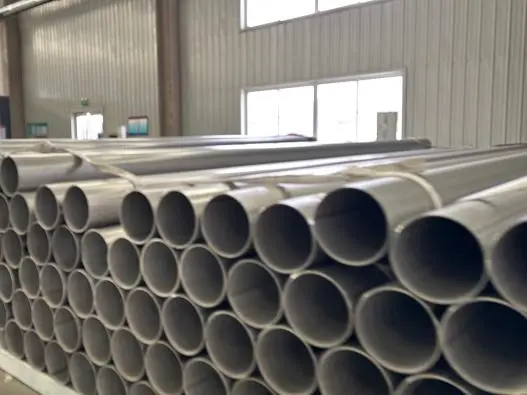
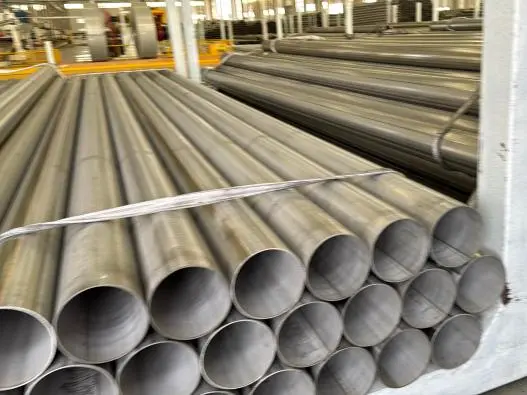
Industrial buyers should know that ASTM A249 TP304 Tubing is welded austenitic stainless steel tubing made for boiler, superheater, heat-exchanger, and condenser service, and that it differs from ordinary 304 tube. The specification sets chemistry, solution annealing, mechanical properties, and testing rules. Each purchase should therefore confirm grade, size, heat treatment, inspection, and documents. TP304 performs well in many clean water, steam, and mild process duties, yet chlorides can limit it. I recommend defining the fluid, temperature, pressure, and certificate needs before you ask for a quote.
|
|
|
Why ASTM A249 TP304 Tubing Matters to Industrial Buyers?
What the Specification Covers?
Following the rules set by ASTM A249. Type 304 austenitic steel is used to make ASTM A249 TP304 Tubing. In the boiler, superheater, heat exchanger, and condenser, ASTM A249 and A249M cover the tubes. Strong austenitic steel is used to make these tubes. That mark tells you more about the thing than just putting "304 tube" on it. Someone who only says "304 stainless tube" might use a different standard, accuracy table, or test plan. To be clear for YOUFA, questions should state the average, grade, size, and end use. That tells the mill how to make the parts and check them correctly for the order.
Why Compliance Affects Heat Transfer and Service Life?
The tubes that move heat can handle flows that don't stop and build up on the side of the tube. That's when the wall thickness of a tube is even, and the seam is a sound weld. All of these things change how the tube works inside a bundle. A building might need to be torn down too soon if a seam or wall isn't strong enough or isn't level. By following the rules in ASTM A249, engineers can write down these traits. This way, inspectors can be sure that the project meets a standard. This speeds up the process of getting approval. This can help you decide if the tubes can be used where you are making food, chemicals, energy, or electricity.
Define the Full Requirement Before You Request Quotes
This quote is only useful if it comes from a good question. Write down the outside diameter, wall thickness, length, finish, grade, tests, papers, shipping terms, and use conditions before you call providers. YOUFA sells walls that are between 0.015" and 0.320" thick and come in lengths of 1/8" to 12". We can quickly be sure that it's possible if you give us a clear drawing or list of tubes. It takes the most time to fill in each blank with a new question or guess that might be wrong. You can also compare deals' prices fairly with a full request.
ASTM A249 TP304 Tubing Specification: The Technical Fundamentals
Chemical Composition and Corrosion Behavior
18.0 to 20.0% of TP304 is austenitic, and 8.0 to 11.00% is nickel. Iron is used to make the thin oxide film that keeps things from rusting. Nickel makes this metal strong and also makes it easy to bend. When the carbon level is less than 0.08%, it changes how well it welds and how likely it is to become sensitive. For work that is heavily soldered, the carbon amount drops to a low of 0.035% in TP304L. The standard says that the heat analysis must follow these limits, so the mill test certificate should show that it did. If it says "304" on the label, that doesn't mean it has the right chemistry. Check the numbers that are written on it.
Mechanical Properties and Heat Treatment
The weakest point of TP304, according to ASTM A249, is 75 ksi (515 MPa), and the weakest point of its yield strength is 30 ksi (205 MPa). Some parts of the length must be less than 90 HRB, and at least 35% of the length must be spread. This shows that the metal is bendable and soft. To heat the tubes to at least 1900°F (1040°C), a solution is used. The tubes are then quickly cooled down. The chromium carbides are no longer there, so the area where the weld was made can't rust again. YOUFA sells tubes that have been either solution-annealed or bright-annealed. There is more than one thing that engineers should check besides the tensile strength. They should also check the design code to see what stresses are allowed.
Dimensions, Tolerances, and Traceability
You should learn about dimensions just as much as you learn about science. Find out how long it is, where it ends, how wide it is, how thick the walls are, and whether the measurements are in inches or millimeters. For pipes, YOUFA can make them with IDs from 1/8" to 12" (3.2–304.8 mm) and walls from 0.015" to 0.320" (0.4–8.1 mm). The length of the pipes can be set or shaped like a U. The buyer's limits are used to figure out what is okay if they don't set their own. Every package should come with a mill test record. It should have the heat number, chemistry, mechanical results, and the state of the heat treatment. The heat number lets you look at the test results for the tube after it has been put in place.
ASTM A249 TP304 Tubing Manufacturing and Quality Verification
How Welded Tubing Is Made
An ASTM A249 TP304 Tubing that has been soldered starts with a strip or coil of stainless steel. The mill rolls the strip into a circle, welds the seam along its length, treats the area where the seam meets, and melts the tube in hot water. It checks the item, cuts it, straightens it, and then sizes it. How well tubes don't leak is controlled by the quality of the weld, how well they fight rust is controlled by the heating, and how well they fit in tube sheets is controlled by the size. Also, be careful when you handle things because iron particles or oil on the surface can damage or stain certain areas while they are being used. The 15 lines at YOUFA make 50,000 tons of goods every year. These lines can handle both one-time jobs and orders that come in again and again.
Hydrostatic and Eddy Current Testing
Based on ASTM A249. Every tube must pass either a hydrostatic test or an electric test (like eddy current) that doesn't hurt the tube. A test called hydrostatic testing keeps water inside the tube at a certain pressure to show that it is pressure-tight. The eddy current test checks the wall and joint for holes, cracks, and breaks. Buyers usually let the maker pick what they want if they don't say. So, I suggest writing down the method you'd like to use in the purchase order. Find out if tests are done on every tube or just a few samples, and ask for the reports to be sent along with the box. YOUFA can also provide UT/RT reports.
Mechanical Tests and Third-Party Inspection
Welded tubes have to pass mechanical tests as well as tests for broken parts and leaks. As part of the testing process, the weld and base metal are bent to see if they will break. You should know that before you roll a tube into a tube sheet or bend it into a U. Both chemistry tests and stress tests show that the material is up to par. For buyers, a third-party inspection (TPI) adds extra peace of mind. The YOUFA company has ISO 9001, PED, and an ISO 17025 lab, as well as a TÜV review. It provides MPS, WPS/PQR, and MTC/MTR 3.1 or 3.2 documents. Know what things you need for your job before you start making them.
How to Select ASTM A249 TP304 Tubing and Compare Alternatives?
Match the Tube to the Application
ASTM A249 TP304 Tubing is usually found in heat exchangers, condensers, and boilers. It's also used in power plants, food preparation plants, and other places. When you need to make a choice, fluid chemistry, pressure, temperature, cleaning method, and tube-sheet design are all good places to start. The tools used to move heat in cooling loops in semiconductor, battery, and hydrogen plants are mostly the same, but each stream needs its own study. The TP304 works well with light chemicals, clean water, and steam. Not just the name of the application is used to make the final choice about whether it is suitable. This is especially true for jobs that need to deal with poisons, high temperatures, or high pressures.
Know the Chloride Limit
One thing that makes TP304 weak is chlorides. There are times when chloride ions can get through the passive film and damage the rock. This can happen when the water is still, under deposits, or in warm seas. Stainless steel is often told not to be exposed to chloride-containing water above about 60°F (140°C). In the same way, some cleaning chemicals, rough water for cooling, and salty water are all dangerous. Use TP316, TP316L, or a harder metal like S31254 if the chlorides in your fluid are important. All of these grades are made by YOUFA and are the same size, A249.
TP304 vs TP316, TP304L, Seamless, and A269
In some ways, each choice is better than the others. Between 2% and 3% molybdenum is added to TP316. This makes it less likely to pit in salt service. You can put a lot of TP304L parts together because it has less carbon and works well for that. Sometimes, a building code or a lot of use calls for seamless tubing. Welded tubing, on the other hand, is often cheaper and easier to find in heat exchangers. While ASTM A269 does cover general-use smooth and welded tubes, it shouldn't be used instead of A249. It's possible for rules about scope, testing, and approval to be different. You should look at more than just the price. You should also look at the grade, standard, production method, and test plan.
ASTM A249 TP304 Tubing Size, Cost, and Buying Guide
Select Outside Diameter, Wall Thickness, and Length
Find out what the flow area, design pressure, temperature, heat-transfer load, and equipment layout are that you need for ASTM A249 TP304 Tubing. Then choose the outside diameter, wall thickness, and length that work with how the tube sheet and stack are made. Thick walls can stand up to more stress and rust, but they are heavier, cost more to ship, and need more materials. Thick walls take up more room, but they cost less per meter. You need to say how far the U-bends need to be bent and if they need to be heated later. Take a look at the handling limits too. When long, thin tubes are shipped, they can bend.
Compare Quotes on an Equal Basis
Buyers may charge by the meter, the piece, the ton, or the group, which makes it hard to compare prices quickly. For every quote, make sure the weight, size, tolerances, heat treatment, and tests are all the same. There are also costs for testing, licensing, packing, freight, taxes, inspection, and the chance of having to buy something else. A low unit price is no longer useful if tubes need to be tested again or break on the job site. YOUFA lets you buy at least one pipe, which is useful for people who need samples, test runs, or small repair lots.
Evaluate a Supplier and Submit a Complete RFQ
The full RFQ includes the ASTM standard, TP304 grade, size, length, quantity, finish, heat treatment, testing, certificates, packaging, destination, Incoterms, and delivery date. If you want to judge a provider, you should look at their capacity, quality processes, test facilities, ability to help you with repeat orders, ability to trace, and export experience. The YOUFA company was founded in 2017 and is now one of the Top 500 companies in China. It produces all kinds of stainless steel pipes and has more than 200 workers. The fastest way to get to Tianjin Port is in seven days. To pack things, people use wooden boxes with or without a steel frame, square binding, and woven bags.
Procurement Risks and a Practical Buyer's Checklist
Specification and Chemistry Mismatches
A lot of people are wrong when they say that all 304 stainless steel tubes are the same. It's possible for a quote to only have the price and width, not the standard. The same hole leads to incorrect wall thickness, missing certificates, and fluid chemistry that doesn't work. Things like chlorides, acids, alkalis, crystals, weather, speed, and cleaning chemicals can shorten the life of TP304. On both the quote and the certificate, make sure that the exact standard and grade are written down. Also, make sure you can keep track of the heat numbers and look at each deal one at a time. Before you order it, have an engineer look it over if the science doesn't seem quite right.
Hidden Costs, Packaging, and Documents
The prices of tests, third-party inspections, and certificates are sometimes not included in the quotes, but are added on later as extras. Make sure you know what the cost includes. The packaging should also be handled with the same level of care. Tubes must be kept away from water, salt, forces that bend them, and strikes. Each bundle must have clear markings for grade, size, heat number, and standard. If you want, steel frames can be added to the wooden boxes that YOUFA comes in. The bags are made of cloth and are bound in octagonal forms. In addition to the compatibility certificate and the mill test certificate, make sure you have any TPI reports that the auditor asks for.
A Practical Buyer's Checklist
- Confirm the ASTM A249 TP304 Tubing designation, outside diameter, wall thickness, length, tolerances, finish, heat treatment, end condition, and whether it needs to be eddy current or hydrostatic.
- Check the heat numbers, the chemistry and mechanical results, the records of any nondestructive tests, and any reports from a third party. Also, look at the mill test certificate.
- Then, agree on the business terms, such as the amount, the unit of measurement, the low-order quantity, the need for cut-to-length items, the packing, Incoterms, payment terms, shipping schedule, and how to file a claim. When these checks are done, there is less chance of refusal, delay, and extra work.
Conclusion: Making a Confident ASTM A249 TP304 Tubing Decision
There is more to ASTM A249 TP304 Tubing than just 304 stainless steel tube. It should be looked at as a whole product specification. It talks about austenitic tubes that are bonded together and are used in heat exchangers, boilers, and condensers. It also talks about testing, chemistry, solution annealing, and mechanical limits. What the item is made of depends on its size, wall thickness, finish, test method, and certificates. TP304 is fine for some things, like clean water, steam, and light process work. But you might need TP316, TP304L, or a higher metal for chlorides, high temperatures, and places where nothing moves. When you compare prices based on the same specs and make sure the heat number can be tracked, you lower the chance of rejection, delay, and damage over the lifecycle.
FAQ
What is ASTM A249 TP304 tubing?
It is an austenitic stainless steel tube made to ASTM A249 in the TP304 grade and is forged. It is used in a lot of heat exchangers and condensers.
Where is TP304 tubing used?
It can be used in power plants, food processing plants, chemical plants, and in equipment that moves heat. You can also find ASTM A269 TP304 tubing in pipes and instruments.
Is ASTM A249 the same as ASTM A269?
There is no charge for the soldered tubes in the boiler, superheater, heat exchanger, and condenser. ASTM A249. In ASTM A269, seamless and soldered tubes for general use are discussed. The needs for the test and scope are not the same thing.
Is TP304 suitable for seawater?
Not very often; no. Chlorides can cause cracks and pits. If you want to use an alloy, think about TP316, S31254, or something else.
Request an ASTM A249 TP304 Tubing Quote from YOUFA
Let YOUFA know the project's length, width, number of tubes, grade, testing needs, and where the tubes need to go. Our team will then look it over. We make ASTM A249 TP304 Tubing and have 15 production lines. We are also certified by ISO 9001, PED, ISO 17025, and TÜV. We offer documents in MTC 3.1 and 3.2 and have a minimum order of one pipe. Send an email to info@youfass.com or visit youfass.com to get a quote, data sheet, sample certificate, and delivery schedule.
Online Message