
Nov 20, 2026
What Should Buyers Evaluate When Sourcing ASTM A249 S31254 Heat Exchanger Tubes?
People who want to buy ASTM A249 S31254 Heat Exchanger Tubes should think about seven things: the conditions of use, the chemical makeup, the mechanical and dimensional data, how the corrosion reacts in the real process, the quality of the welded tubes, the inspection records, and the supplier's technical and business terms. You should check them in that order because each one makes the one after it less likely. The tube might not work even if the chloride level and temperature on paper are the same if the certificate, weld quality, or ability to keep track of it is bad. We'll explain each check in simple terms below so that your team can quickly compare prices.
|
|
|
Start With the Application, Design Conditions, and Procurement Requirements for ASTM A249 S31254 Heat Exchanger Tubes
Define the Service Environment First
When someone wants to buy, they always start with the process, not the grade name. For each exchanger type, write down the fluids on the tube side and the shell side, the pressure, the temperature, the flow rate, the amount of chloride, and the amount of acid exposure. Also write down how often the unit starts and stops. Every time you heat and cool tubes and sheets together, the joints get stressed. That's why cycling is important. It's important to know how fast something is moving because still, slow places let deposits form, and deposits crack where pitting happens. Chemical processing, metallurgy, and making hydrogen through electrolysis all use water that is acidic or chloride-containing all the time. The technical review goes faster when you share a one-page process sheet with your suppliers. This takes the guesswork out of the process.
Set the Design Code and Purchase Requirements
The design code should then be looked at. In the US, most projects follow ASME rules. However, projects that are going to be sent abroad may need EN or PED rules. The code tells us which product specification to use (like ASTM A249 or ASME SA-249) and how much stress is okay. Then be careful when you write the deal to buy something. List the UNS S31254's outside diameter, wall thickness, length, finish, quantity, tolerances, tests that need to be done, documents that need to be sent, how it will be packed, and when it will be delivered. The short phrase "254 SMO tube" can mean more than one thing. All suppliers can give prices on the same item if there are full specifications. This makes it fair to compare prices and cut down on disagreements during the receiving inspection.
Decide Whether 254 SMO Is the Right Grade
Heat Exchanger Tubes made from ASTM A249 S31254 are made of a high-alloy austenitic stainless steel that has about 6% molybdenum in it. In harsh environments with chlorides and halides, this material works especially well. Regular 316L stainless steel might pit and crack under stress, but this material doesn't. When it comes to corrosion resistance, 316L usually has a PREN value in the low to mid-20s. On the other hand, S31254 can get a PREN value of about 43, which is much better at stopping localized corrosion. Buyers of ASTM A249 S31254 Heat Exchanger Tubes may also look at materials like 904L stainless steel, duplex stainless steel, and titanium, depending on how the tubes will be used. Some uses can't use duplex grades because of limitations in how they are made, how they work, or how they are designed. Even though titanium is very resistant to rust in seawater, you should also think about how much it costs and how it reacts with different acids. So, comparing the price per kilogram is not enough to choose ASTM A249 S31254 Heat Exchanger Tubes. Buyers should look at the system's working temperature, chloride content, possible leakage effects, and its total cost over its entire life. For less harsh environments, 316L might be enough corrosion resistance at a lower cost, while ASTM A249 S31254 Heat Exchanger Tubes might be a better buy for more demanding chloride-containing uses.
Verify Chemical Composition, Mechanical Properties, and Tube Design
Read the Heat-Specific Material Certificate
It is hard for S31254 to rust because the amount of alloy it has is controlled. This is first shown to you by the certificate. It is important to get data for chromium, nickel, molybdenum, nitrogen, and carbon that are linked to heat. Nickel should be 17.5% to 18.5%, molybdenum should be 6.0% to 6.5%, and chromium should be 19.5% to 20.5%. 0.020% is the very least amount of carbon that can be found. Pits are less likely to form when nitrogen is present. Make sure that the grade name, UNS number, and heat number all match on the order form, the certificate, the tube marking, and the packing list. Any difference between two documents is a red flag. Adding Cr, 3.3Mo, and 16N together gives you PREN. It's a quick way to compare things, but it's not for real-life testing.
Confirm Heat Treatment and Mechanical Data
The way heat is used is just as important as the chemicals. It is less likely that the material will become sensitive after solution annealing and fast cooling. You should also ask for a record of the furnace along with the card. As per ASTM A249.1, S31254 has a minimum tensile strength of 650 MPa (94 ksi) and a minimum yield strength of 300 MPa (44 ksi). Since shaping and welding happen before cooling, you should ask for results from the whole lot of tubes, not just data from the raw materials. In the report, you should also look over the values for length and hardness. Manufacturers will be able to tell how tubes will behave when they are stretched into tubesheets using numbers that are linked to a lot that can be tracked.
Review Dimensions and Mechanical Design
The measures are very important for how well things fit, seal, and last. When you send out the RFQ, you should include the outside diameter, length, ovality, straightness, and any other requirements. Then look at the design loads, which include pressure from inside and outside, vibration, erosion, or rust, as well as the shape of the tubesheet and how to clean it. Temp is just one part of a bigger scene. Things like temperature changes, localized hot spots, chloride level, phase stability, and code-based allowable stress can change the real limit. In other words, there isn't a single number that works for all units. About 14 W/m·K of heat moves through S31254 at 100°C. This number should help your thermal designer figure out how big the heat transfer surface needs to be.
Evaluate Corrosion Resistance and Industry Applications
Match Corrosion Risks to Real Conditions
As long as the real working conditions don't go beyond what the material can handle, ASTM A249 S31254 Heat Exchanger Tubes can handle harsh chemical processing and seawater settings. But people who are buying something and engineers should carefully think about how temperature, chloride concentration, oxygen levels, surface deposits, flow speed, and still spots affect different types of corrosion, such as general corrosion, erosion-corrosion, pitting, and stress corrosion cracking. It is important to pay close attention to tube-sheet cracks, tube supports, welded joints, and high-temperature zones when specifying ASTM A249 S31254 Heat Exchanger Tubes because this is where corrosion tends to form locally. As a result of having more molybdenum and nitrogen, S31254 is usually much more resistant to pitting and crevice corrosion than regular 316L stainless steel. Even so, ASTM A249 S31254 Heat Exchanger Tubes can only stand up to so much corrosion in very harsh conditions. Crevice corrosion can still happen in warm, filtered seawater, but it depends on how the structure is exposed and how it was built. Before choosing ASTM A249 S31254 Heat Exchanger Tubes, it's a good idea to have a corrosion engineer look over the system's design, operating temperature, and chlorination conditions to make sure the material chosen will protect it well over time.
Check Typical Applications
Engineers often look at S31254 heat exchanger tubes for ways to cool seawater, remove salt from water, use in marine systems, process chemicals, refine oil, remove sulfur from waste gas, and make pulp and paper. Every service comes with some risks. There is biofouling and chlorides that seawater units have to deal with. Flue gas desulfurization adds a chloride- and acid-filled slurry. Halide acids can mess up the process when they get into chemical plants. People who work with food and drugs care more about how clean and nice the surface looks. Don't copy what another plant does; instead, match the tube to the process risk that is the biggest for you. This is because even small changes in dust or temperature can cause the result to be different. It is also important to make sure that inspections can happen, since tubes that can't be inspected make it hard to keep up.
Weigh Seawater and Acid Service Carefully
To compare S31254 to titanium and duplex grades for saltwater and desalination, use the chance of leaks and the cost over the whole life of the system. If there is a break, the process fluid can get contaminated, which could cost more than the price of the tube. With acid service, you need to be even more careful. Rates of corrosion depend on how much acid is present, how hot it is, and whether there are any impurities like chlorides or oxidizing ions. A mixed acid can also react in different ways than an acid that is only acid. If the stream isn't normal, you might want to do a coupon test. You can get corrosion data or service links for similar cases. Also, make sure that the materials used to make the tubesheet are galvanically compatible. Putting metals together can speed up the attack at joints.
Compare Manufacturing Routes, Welded Tube Quality, and Inspection Records
Understand What ASTM A249 Covers
The tubes in a boiler, superheater, heat exchanger, or condenser that are made of welded austenitic steel are covered by ASTM A249. It tells you how to make something, test it, and how to heat-treat it. It also goes over how big it should be and how the surface should be. In the beginning, you should find out if your project needs ASTM A249 or ASME SA249. This is because the mill has to do what it says on the order. Each finished tube also goes through either a hydraulic test or a nondestructive electric test. Tell us which one you'd like. The acceptance criteria for the buyer, the mill, and the inspector are all the same when there is clear selection. This means that less work needs to be redone.
Compare Welded and Seamless S31254 Tubes
No matter what, you can use both welded and seamless tubes. Look at how much they cost altogether, how long it takes to get them, how consistent their sizes are, what kind of inspections they can undergo, and how much pressure they can handle. Most of the time, welded tubes made from strip can offer faster wait times and equal wall thickness. However, seamless tubes may be needed for very high pressure or if they are called for in the project notes. For welded tubes, find out how the mill controls the strength of the weld and how well the heat-affected zone works. This includes annealing in a solution after welding. When you look at the given tube, you should first think about your design pressure and the rules that go with it. Don't think that one way will win.
Build the Inspection and Documentation Checklist
There is no way to lose track of your materials or have them switched out if you have a written inspection plan. A common type of paperwork is a heat-specific material test certificate, chemical and mechanical results, heat-treatment records, a dimensional report, nondestructive test results, hydrostatic or pressure test records, and a packing list. Based on how dangerous the project is, you could add eddy current, ultrasonic, dye penetrant, positive material identification, or an inspection by a third party. Write down the names of the approved inspection firms, the requirements for approval, the report formats, and the language used for the paperwork. Heat numbers need to be able to be tracked from the raw material to the tests, production, packing, and shipping. Set guidelines for surface finish, straightness, cleaning, and passivation before the product is made. It's tough to fix these things after they've been sent.
Evaluate Suppliers, Commercial Terms, and a Buyer Decision Matrix
Check the Supplier's Capability
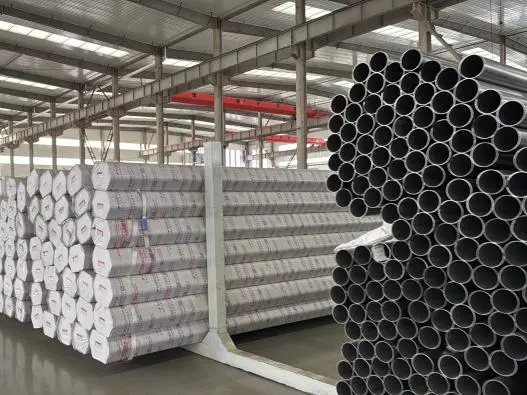
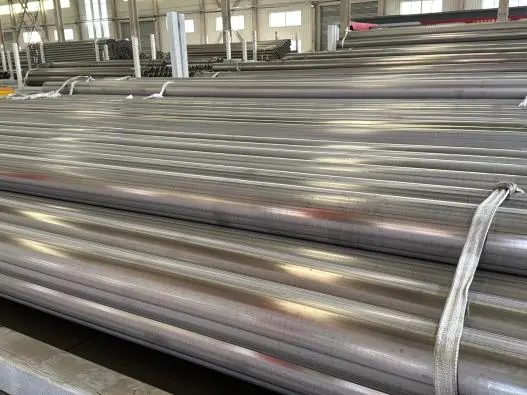
Price per kg doesn't always tell you everything you need to know about ASTM A249 S31254 Heat Exchanger Tubes. Before buying from a source, buyers should find out if the seller is a trading distributor, an integrated maker, or a specialty tube mill. Check with the company to see if they have worked on similar projects before when making S31254 welded tubes and ASTM A249 S31254 Heat Exchanger Tubes. Its ability to make things, the quality of its products, its experience exporting, its customer references, sample certificates, and its expert help are all strong signs that it can be trusted. YouFa has been in business since 2017 and has 15 production lines that produce 50,000 tons of stainless steel pipes every year. These pipes include stainless steel heat transfer tubes. When looking at ASTM A249 S31254 Heat Exchanger Tubes, buyers should also check to see if the raw materials come from reputable, traceable sources and if the company that makes the products uses special testing and inspection tools to make sure the quality of the products. These things help figure out if YouFa can consistently provide ASTM A249 S31254 Heat Exchanger Tubes that meet the needs of the project.
Standardize Quotes and Commercial Terms
Make sure that every price you get is for the same grade, size, testing, inspection, packing, shipping, and delivery terms. A low number could mean that tests are missing or that the packaging is lighter if it is not. Check to see if the item is in stock, how long it takes to make, if it can be made to order, the Incoterms, insurance, and the right way to package it for shipping by sea. People in the US should also check the port of entry, the time it will take to get to them, and see if the seller can help you look over the paperwork before they ship. Make a list of everything each provider won't do. It's easy to compare line by line when there is a clear list of things that don't belong in a quote.
Score Options With a Decision Matrix
The engineers, buying, quality, and operations teams can all use the same criteria to judge an offer. This is done with the help of a decision matrix. If the part doesn't meet ASTM A249, UNS S31254, ASME, or EN standards, measures, or how well they fit together, check that it does. Then, give it a score based on how well it stops corrosion caused by chlorides, acid, temperature, speed, crack risk, and cleaning chemicals. Add things that show quality, like NDT, pressure testing, heat treatment, certificates, and the ability to keep track of the product. Last, talk about the business side of things. This includes price, wait time, MOQ, stock, exporting choices, and customer service after the sale. As a way to compare them, add rows for 316L, 904L, duplex stainless steel, and titanium. This way, the final choice will take into account the total value and cost over time.
Conclusion
To find the best ASTM A249 S31254 Heat Exchanger Tubes, buyers should go from process conditions to paperwork in a clear order. Whether 254 SMO is better than 316L, 904L, duplex stainless steel, or titanium relies on things like the amount of chloride present, the amount of acid contact, the temperature, and the speed. It is important to check the certificate's tensile and yield values, as well as the required chemistry, solution annealing, and size and design loads to make sure the fit is right. If you want to keep your metal from rusting, pay extra attention to cracks, welds, and hot spots. For a mill to meet the standard, it must have test records, good welded tubes, and be able to trace the heat number. You can compare firms based on more than just price when the terms of the quotes are the same, and the supplier can do what they say they can do.
FAQ
Is S31254 suitable for seawater?
It usually works well to cool and desalinate seawater, but it depends on the temperature, how much chlorine is added, and any cracks or deposits that are there. To compare it to titanium or duplex grades, look at the risk of leakage and the cost over its whole life.
How do welded and seamless tubes differ?
Heat is added to a solution after the strips are welded together to make welded tubes. There is no weld seam on these tubes. Cost, wait time, sizes, testing scope, and pressure level are some of the things you should look at.
Which documents should a supplier provide?
You should get a heat-specific material test certificate, records of the heat treatment, NDT or pressure test results, reports on the dimensions, and a list of things that need to be packed. It is important to add third-party review releases when the project risk calls for them.
How do I verify supplier capability?
Ask for examples of paperwork, customer references, quality certifications, information about the mill's status, how much it can produce, and how long it has been exporting. Then put those answers next to the ones you gave them.
Request a Quote for ASTM A249 S31254 Heat Exchanger Tubes From YOUFA
Want to find a company that makes ASTM A249 S31254 Heat Exchanger Tubes? YOUFA at info@youfass.com with your grade, size, length, quantity, testing needs, where you want to send it, and the conditions of the process. We have 15 production lines, use raw materials that can be tracked, have special testing tools, and provide technical support. You can find out more at youfass.com and ask about sample documents, lead time, and the status of your stock.
Online Message