
Nov 12, 2026
What Should Buyers Check Before Ordering ASTM A249 Welded Tubes?
Before ordering ASTM A249 Welded Stainless Steel Tubes, I recommend checking nine points: the correct standard and edition, the grade, chemical and mechanical properties, dimensions and tolerances, testing methods, inspection certificates, application fit, supplier capability, and commercial and packaging terms. Choosing TP304L or TP316L is only the first step. A clear purchase order that covers every point helps prevent wrong substitutions, missing documents, and delivery delays. This guide explains each check in plain language for procurement managers, engineers, fabricators, and distributors who buy tubes for heat exchangers, boilers, and condensers.
|
|
|
Start With the Standard, Grade, and Material Properties
Confirm ASTM A249 Is the Right Standard
I always start with the standard because a good price can't hide bad specs. In the boiler, superheater, heat exchanger, and condenser, ASTM A249 and ASTM A249M cover the tubes. Strong austenitic steel is used to make these tubes. ASTM A269 covers everyday austenitic tubes. ASTM A213 says that tubes for boilers and heat exchangers that don't have a lengthwise weld must follow certain rules. You might find one of these in your project plan or design code. Put the choices that are welded and those that aren't next to each other and look at their prices, wait times, pressures, temperatures, and what they cost. There are many kinds of heat exchangers that can use tubes that have been welded together. However, the design pressure needs to take into account the weld running the length of the tube. Check the version that is already being used and get technical approval before making a change.
Select the Grade for the Real Process Environment
If you want to follow the grade instead of the unit price, YOUFA has ASTM A249 Welded Stainless Steel Tubes in TP304, TP304L, TP316, TP316L, S31254, TP321, TP321H, TP317, and TP310. In general, TP304 and TP304L are good at keeping rust away. TP316 and TP316L are stronger against chlorides because they have copper and molybdenum in them. TP317 has more molybdenum than TP316. The S31254 grade has a lot of molybdenum, is used for chloride service, and is tougher. However, TP321H has more carbon than TP321 because it needs to be able to handle higher temperatures. TP310 has a lot of chrome and nickel in it, so it can take heat well. Before you decide, check the pH, temperature, pressure, and cleaning products. You should then find out whether the delivery will be solution-annealed or bright-annealed.
Check Chemical Composition and Mechanical Properties
By heat number, get chemical and mechanical scores. Chrome, nickel, carbon, and molybdenum should all be checked to see how much there is. Don't forget to look at TP304L and TP316L's lower carbon limits. Check how the standard and the one you bought compare in terms of tensile strength, yield strength, and elongation. It's just as important that the weld is as good as the base metal when tubes are being bent, stretched, curved, or joined together to make tube sheets. YOUFA gives out WPS/PQR papers, UT/RT reports, and MTC/MTR certificates at the 3.1 or 3.2 level. After that, you can match each record to the exact tubes you get. Before starting full production on something important, I think you should make a model and see how it fits together.
Verify Dimensions, Testing, and Certification
Define Dimensions, Tolerances, and Finish
There are a lot of mistakes made when sorting because numbers aren't complete. In terms of units, please tell us the outside width, wall thickness, length, number of things, and whether the wall thickness is the smallest, normal, or largest. The walls of the tubes that YOUFA makes are thin (0.015" to 0.320" thick) and wide (1/8" to 12" or 304.8 mm) on the outside. Lengths can be set, all over the place, or in a U shape. For tubesheet fit-up, the baseline standards for diameter, wall, length, ovality, and straightness are not always enough. Check to see what the limits are for these things. Walls that aren't as dense save more weight and let more heat pass through them. Stronger walls can help with things like making things and applying pressure. Describe the surface, the ends of the tubes, and the need to smooth them out.
Agree on Testing and Inspection Before Production
Make the test plan for ASTM A249 Welded Stainless Steel Tubes before you start the mill. Based on ASTM A249, either a water test or an electrical test that doesn't damage the tube must pass. There are also physical tests in the standard, such as flattening tests. Know what kind of test your order needs. These days, testing needs clear rules for what is correct, what is covered, and what is accepted. You can add intergranular corrosion tests, positive material identification, or third-party inspection (TPI) to big jobs. Because their lab is ISO 17025-approved and works with TPI, people who buy from YOUFA can check the data themselves. The written test makes it easier for people to agree on what to do after the delivery. This is because all of the players know what the rules are.
Request Traceable Certificates and Quality Credentials
A certificate isn't very useful if it doesn't work with your tubes. The list of items to be packed, the bag tags, and the MTC/MTR should all have the same heat number. In order to follow EN 10204 rules, a 3.1 certificate must come from a person officially representing the maker. For a 3.2 certificate, on the other hand, it must be checked by either the buyer's agent or a named tester. Also, look into the supplier's past. Our business, YOUFA, has the ISO 9001, PED, and TÜV stamps on it. Projects that need them get WPS/PQR and MPS files from us. Don't buy something until you see model certificates that show you how it will look. Make sure the certificates meet your needs.
Match the Tube to the Application and the Supplier
Match Tube Selection to Service Conditions
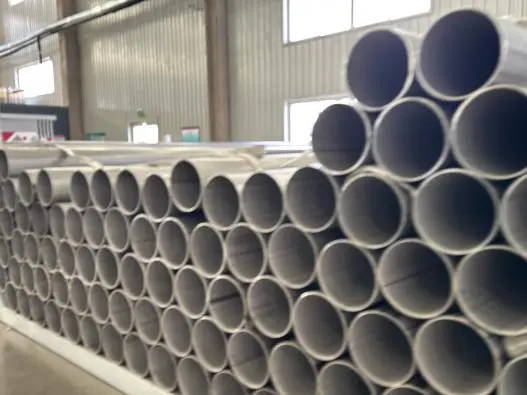
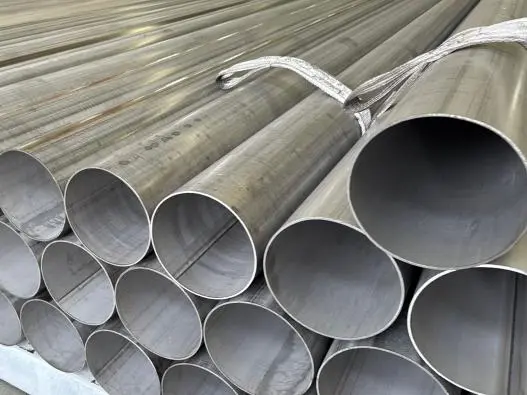
ASTM A249 Welded Stainless Steel Tubes like these are usually found in heat exchangers, boilers, and condensers that need to move heat quickly. Iron and steel making, new energy plants, and chemical processing all use heat transfer equipment, so the same checks need to be done in all of those fields. Find out what the fluid is made of, how hot or cold it is, how fast it flows, what chemicals are used to clean it, and how long it is supposed to last. For heat exchanger jobs, you need to know how to work with tube sheets, grow them in different ways, and weld them in different ways. Don't think that following ASTM standards is enough when it comes to pressure vessels; you should also follow the design code. We need to look at each risk on its own, like pitting, crevice corrosion, and salt stress corrosion cracking. This is because grade and temperature have various impacts on each one.
Confirm Whether A249 Fits Sanitary or Cryogenic Needs
In order to meet ASTM A249, work must move heat. ASTM A270 says that surfaces of devices that deal with food, drinks, or drugs must be clean. For example, a project that needs to be clean might need a different set of rules. Also, the standard doesn't say that effects tests have to be carried out. Check to see if extras like Charpy V-notch tests can be added to the order for equipment that works in very cold places. Asking these questions early on will let the supplier know what it can test and keep track of. Also, your tech can decide if ASTM A249 Welded Stainless Steel Tubes or a different standard is better for the job.
Evaluate Supplier Capability Before Comparing Prices
It doesn't matter how much different suppliers charge if they have different ways of checking quality. A trained ASTM A249 maker should clean, shape, longitudinally weld, heat treat, size, finish, check, and set up the strip. Ask the company what kind of business it is: a mill, an exporter, or a wholesaler. Also, you should find out who is 100% sure. YOUFA opened in 2017 and has 15 production lines that make 50,000 tons of goods every year. More than 200 people work there. In China, this company is one of the 500 largest. It sells all sorts of stainless steel pipes, such as heat exchanger tubes, thin-wall pipes for building services, and industrial welded pipes. Ask each seller what their MOQ is, how long the wait time is, what kinds of tests they use, what grades they have, and what sizes they have.
Compare Commercial Terms, Packaging, and Delivery
Look Beyond Price per Kilogram
A good quote tells you more than just how much something weighs. The grade, the alloy surcharge, the diameter, the wall thickness, the heat treatment, the finish, the testing, the packaging, the freight, the insurance, the duties, and the charges at the destination are some of the things that affect the total cost. In your RFQ, you should list the edition, grade, size, length, quantity, finish, testing, certification, delivery location, shipping terms, and due date so that people can compare your quotes. Find out if the goods are in stock or if they need to be made. Make sure you can also keep track of all the stock. The least amount of pipe that YOUFA will take is one, and the fastest way to get it to Tianjin Port is in seven days. Instead of just looking at the lowest price, look at the full landed cost.
Confirm Export Packaging and Traceability
ASTM A249 Welded Stainless Steel Tubes can still break even if the mill work is done well. YOUFA sends tubes in wooden boxes that can have a steel frame, an extra woven bag, and hexagonal binding added to them. Talk to any seller about end caps, covers, how to keep water out, and how to package things so that bright-annealed surfaces don't get damaged. Each bundle needs to have its grade, size, wall thickness, quantity, heat number, purchase order number, and bundle number written on it. Those marks also need to be on the tags and certificates. Make sure you have all the paperwork you need before you send something to the US. The commercial invoice, bill of lading, certificate of origin, and customs documents are all part of this. What else do you know for sure? Talk to your customs agent.
Avoid the Most Common Ordering Mistakes
Some mistakes show up in more than one RFQ. Some buyers write "stainless steel welded tubes" without the ASTM A249 number. Some people choose 304L or 316L based on price, give the diameter but not the wall thickness, think that all quotes include the same testing, or accept certificates that can't be tracked by heat number. People forget about things like taxes and packaging a lot of the time. People get the wrong material, the wrong fit, bad corrosion performance, lose inspection proof, and ship late when these things go wrong. Having a clear RFQ and purchase order that spell out the standard, grade, size, finish, tests, paperwork, shipping, packaging, and who is in charge of giving approval will help you avoid these problems before they happen.
Use a Practical Pre-Order Decision Process
Define the Application and Specification
Write down the use case first. This should include the type of fluid, the temperature, the pressure, the cleaning conditions, the service life, and the code that controls the whole thing. Next, write down the details, such as the standard version, grade, size, finish, tests, and certificates. It saves me a lot of emails because all of the providers can give the same thing. You should write down the tube ends you need and the lengths you need (random, set, or U-bent). If the plan calls for a grade like S31254 or TP310, be clear from the start. This is because supply can change based on wall thickness and size.
Screen Suppliers and Compare Quotations
Talk to your suppliers about how they handle things like quality control, lab equipment, product knowledge, and helping you export. To sort the prices, add up the landed cost, the MOQ, the stock, the wait time, and the document package. Most of the time, a low unit price that doesn't come with certificates or a long production line costs more in the long run. For projects that need heat exchanger tubes and other pipes at the same time, YOUFA is a great place to get them all in one place. That way, it will be simple to check how each provider answered.
Approve Samples and Record Terms
Check and approve samples, drawings, certificate forms, marks, and packing before a lot of them are made. Then, list any changes, requirements for acceptance, warranty terms, and ways to make a claim that were agreed upon in the purchase order. The smallest amount that YOUFA will accept as an order is one pipe, so you can place a small test order. So, your team can see how well it fits and how the inspection went before committing to a bigger order. These documents should be kept with the order file so that they can be quickly used for checks and reorders in the future.
Conclusion
To safely order ASTM A249 Welded Stainless Steel Tubes, you need more than just the grade name. The piece said that the standard had to be shown to be better than others, such as ASTM A269, ASTM A213, and ASTM A270. It had to be matched to the fluid and temperature as well. The heat number had to be used to check both chemical and mechanical records. Other things that had to be agreed upon were tests and EN 10204 certificates, size, tolerance, and finish goals, and comparing suppliers based on process control rather than price. After the MOQ, the plan goes over tracking, total landed cost, and total landed cost. All of these things should be written down in the RFQ and buy order so that there aren't any mistakes with replacements, paperwork gaps, or shipping delays.
FAQ
What are ASTM A249 welded stainless steel tubes used for?
They are mostly used in boilers, heat exchangers, and condensers that need to move heat slowly.
Can ASTM A249 tubes replace ASTM A213 tubes?
Yes, most of the time when heat exchangers are used. The long weld needs to be taken into account in the design pressure. The change should be fine with your expert.
Does ASTM A249 require impact testing?
Not automatically. For cold service, stricter rules might require Charpy V-notch testing.
Do ASTM A249 tubes come with inspection certificates?
You can provide proof of MTC/MTR 3.1 or 3.2 along with reports on mechanical, eddy current, and hydrostatic tests.
Is ASTM A249 suitable for food and beverage use?
It's made to move heat around. As for surface finish requirements for clean uses, ASTM A270 is the right thing to use.
Request ASTM A249 Welded Stainless Steel Tubes From YOUFA
Send an email to info@youfass.com with the grade, OD, wall thickness, length, quantity, and destination of the goods. Because we sell ASTM A249 Welded Stainless Steel Tubes, we can confirm the delivery times, the minimum order quantity (1 pipe), and papers such as MTC 3.1/3.2 and TPI. For instance, we can get things to Tianjin Port in no more than seven days. Visit youfass.com for details.
Online Message
YOU MAY LIKE