
Jul 23, 2026
What Pressure Limits Apply to ASTM A312 304 Stainless Steel Pipes?
Before you choose the materials for pipes that will be used under high pressure, you should make sure you know the exact pressure limits. ASTM A312 304 stainless steel pipes are the standard for use in harsh environments with high temperatures and acids. Their pressure capacity, on the other hand, changes a lot based on the pipe schedule, the temperature exposure, and the thickness of the wall. However, the main goal is still to make sure that the pressure limits for TP304 versions are clear. The most pressure that can be put on a Schedule 40, NPS 2-inch TP304 pipe at room temperature is about 3,700 psi, according to ASME B31.3 process plumbing rules. When the temperature goes up to 800°F, though, this number goes down a lot. Chemical processing plants, fuel cell hydrogen transport systems, and steam production tools are less likely to break down badly if you know these facts. When things go wrong here, even small mistakes can put people and things at risk.
|
|
|
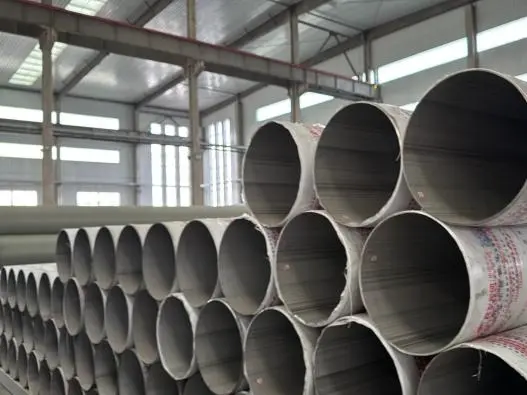
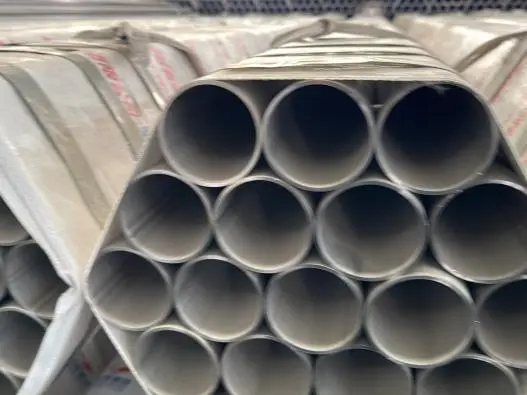
Understanding ASTM A312 304 Stainless Steel Pipe Specifications
The first step in finding out the pressure limit is to know what materials are needed for ASTM A312 304 stainless steel pipes. These pipes are made to the ASTM A312/A312M-22 standard. It talks about austenitic stainless steel pipes that are meant to be used at high temperatures. These pipes can be seamless (SMLS), welded (WLD), or highly cold-worked (HCW).
Chemical Composition and Mechanical Properties
The TP304 grade contains enough chromium (18–20%), nickel (8–12%), and carbon (0.08% or less). The austenitic structure may flex at 205 MPa (30,000 psi) and rip apart at 515 MPa (75,000 psi). Solution-annealed at 1040°C and immediately cooled in water, the chromium-nickel matrix resists oxidation and intergranular rust. This heat treatment prevents grain sides from generating chromium carbide. If this happens, bonded portions will have trouble keeping their form.
New energy companies, notably electrolysis and hydrogen production equipment manufacturers, require TP304 because it doesn't rust while conveying pure hydrogen at high pressures. Fuel cells need the material because it can withstand repeated pressure. Hydrogen purity and system life impact cell performance.
Dimensional Standards and Wall Thickness
The wall thickness of an NPS 6-inch Schedule 80 pipe is 0.432 inches, whereas a Schedule 40 pipe with the same thickness is 0.280 inches wide. The Schedule 80 variant holds roughly 40% more air at the same temperature. Procurement teams must follow strategies to stay within budget when automobile and gadget batteries require a constant pressure supply to stay cool.
International Certifications and Compliance
Our factories are ISO 9001, PED, and TÜV-approved. An ISO 17025-certified lab conducts chemical and mechanical testing for the firm. Every pipe package has EN 10204 3.1 or 3.2 Mill Test Certificates (MTC). Chemical changes with heat are presented, coupled with tension and hydraulic pressure results. These OKs ensure the item respects Asian, European, and North American laws. Working with different nations makes buying foreign goods easier.
More documentation, such as TPI reports, WPS, PQR, and ultrasonic or radiographic testing reports, makes things simpler to view. Medical device and aerospace firms that require accurate and trackable parts need this.
Pressure Limits and Temperature Resistance of ASTM A312 304 Pipes
A lot of things need to be thought about in order to find the right pressure limits for ASTM A312 304 pipes. These include the pipe schedule, width, temperature, and safety factors that are needed by code. The ASME B31.3 standard tells us how to figure out MAWP, which is based on how much the strength of a material drops at high temperatures.
Maximum Allowable Working Pressure Calculations
Per ASME B31.3, pressure is calculated as P = (2 × S × E × t) / (D - 2 × t × Y), where P is pipe pressure, S is allowable stress, E is weld joint efficiency, t is wall thickness, D is outside width, and Y is a temperature coefficient. Room temperature (below 100°F) TP304 can withstand 20,000 psi. At 800°F, this figure lowers 21% to 15,700 psi, affecting pressure capacity.
See this Schedule 40, NPS 4-inch seamless TP304 pipe—ASTM A312 304 Stainless Steel Pipes. Walls are 0.237 inches wide. MAWP is estimated at 2,100 psi at ambient temperature. At 600°F and 1000°F, this peak reduces to 1,850 and 1,400 psi, respectively. This is crucial in power plants and industrial processing facilities where steam temperatures exceed 900°F.
Temperature-Dependent Strength Reduction
Because heat rearranges austenitic grains, temperature and pressure capacity are connected. Temperature increases the atom speed. That makes the material less stable when loaded. ASME Boiler and Pressure Vessel Code Section II, Part D lists TP304-acceptable stress values. Temperature affects these values. Strength decreases over 700°F.
Electrolytic cell and high-temperature reactor users in chemistry and metalworking may prevent pressure issues by understanding this relationship. This hydrogen factory requires 80°C, 30 bar alkaline electrolyzers. Planning the pipes must consider how acidic potassium hydroxide is and how little the temperature will climb. Even though 80°C isn't hot, heat and chemical contact need Schedule 40 or higher walls.
Pressure Derating Guidelines
Pressure limits should be established using safety factors and derating curves in business. With 1.5–2.0, most safety factors are excellent. This range prevents quick pressure fluctuations, corrosion thinning, and unplanned loads. Engineering systems for transferring hydrogen in fuel cells or cooling batteries in electric automobiles must include pressure spikes and temperature changes when valves shut fast.
Comparing ASTM A312 304 vs ASTM A312 306 Stainless Steel Pipes: Pressure and Performance
Check the chemical makeup, mechanical performance, and cost-effectiveness of each stainless steel type to satisfy application objectives. ASTM does not currently recognize ASTM A312 306 Stainless Steel Pipes. Most often, TP304, TP304L, TP316, and TP316L are utilized. However, the comparative structure may reveal how makeup affects compression strengths and corrosion.
Chemical Composition Differences
TP304 contains 18–20% chromium, 8–12% nickel, and 0.08% carbon. However, TP316 includes 2–3% molybdenum to reduce salt corrosion. ASTM A312 306 Stainless Steel Pipes would be altered to strengthen at high temperatures or reduce rusting. Adding molybdenum to TP304 and TP316 raises their pitting resistance equivalent numbers (PREN) from 18 to 24. This affects steel durability in saline or marine conditions.
For electronics and semiconductor businesses that need ultra-pure water distribution systems, TP316L (low carbon type) is preferable because it prevents hot regions from rusting and becoming sensitive during welding. This feature is crucial when carrying deionized water at pressures exceeding 150 psi via cleanroom pipe networks because rust products may seep into the pipes and make IC packing tougher.
Pressure Rating Comparisons by Schedule
Mechanical strength doesn't vary much across classes when the pressure limitations are at room temperature. TP304 and TP316 have 515 MPa tensile strength. This implies MAWP figures are similar for similar layouts and sizes. varying materials degrade at varying rates when exposed to high temperatures or damaged.
At 70°F, Schedule 80, NPS 3-inch ASTM A312 304 Stainless Steel Pipes can accept the same pressure as TP304 pipe. Because they can take acidic air or salty water, TP316 pipes of the same size survive longer under the same pressure. TP316 lasts 40–60% longer than TP304 in power plant boiler feedwater, where dissolved oxygen and chlorides accelerate pitting. This reduces lifetime expenses while costing 15–20% extra.
Corrosion Resistance and Application Context
They stand out because they don't rust under strain. General acidic acids, organic compounds, and alkaline solutions mix well with TP304. This means it can be used to create medications, process food, and develop water systems. Over time, saltwater, chlorinated cold water, or sulfuric acid exceeding 10% weakens pressure-bearing walls.
Chemical processing firms that employ hydrochloric acid or ferric chloride solutions must include TP316 or higher metals like TP317 (more molybdenum) to prevent stress corrosion fractures under high pressure. Internal pressure and chloride pitting cause tension stress. In the same circumstances, TP304 breaches through walls in months, yet TP316 lasts years. This difference is crucial in copper processing and electroplating systems, where pressure pipes are constantly in 40–60°C acidic solutions.
Application Areas: Where Do ASTM A312 304 Pipes Excel Under Pressure?
It's easier to understand theoretical pressure limits when you think about how they are used in business. ASTM A312 304 stainless steel pipes are used in many places because they are reasonably priced, don't rust, and are strong too. This is especially true in places where standards for cleaning and pressure testing meet.
Chemical and Petrochemical Processing
TP304 lines transport volatile intermediates, solvents, and corrosive solutions at 150–600 psi while producing medications, specialized chemicals, or polymers. A rare chemical company creates lithium-ion battery electrolyte additives using Schedule 40 TP304 pipes. These pipes handle lithium salts and organic carbonates at 250 psi and 80°C. Strong austenitic structure prevents metal-damaging substances from getting between grains. Pressure integrity is constant throughout batch processing despite temperature fluctuations.
Petrochemical plants employ TP304 in reformer, desulfurization, and hydrogen supply networks. These sites have 800–1,200 psi pressures. A naphtha-fueled catalytic reforming machine uses hydrogen refill rings at 900°F and 450 pressure. Sigma phase weakness cannot be prevented by standard TP304. Schedule 80 titanium-stabilized TP321H is needed. However, downstream sections that cool and separate when temperatures drop below 600°F utilize TP304 Schedule 40. Cost and performance demands are combined.
Food, Beverage, and Pharmaceutical Manufacturing
Safe pipe systems in food-preparation areas must manage pressure and be clean. We employ electropolished ASTM A312 304 Stainless Steel Pipes (TP304L) with Ra surface finishes less than 0.4 micrometers in HTST pasteurization systems for dairy products at 280°F and 80 pressure. Because chromium carbide has little carbon, it doesn't form upon heating. Rust resistance is maintained in high-pressure areas like soldered parts.
Pharmaceutical companies that create safe injectables require CIP/SIP pipe systems. Biotech plants clean using 15 bar (217 psi) pure steam at 130°C in TP316L lines. It adapts to 6-bar fluids. Though operating forces are minimal, temperature and pressure variations need walls at least 10S thick. Thermal stress and pressure fatigue accelerate cracking in thinner walls.
High-Temperature Steam and Boiler Systems
Industrial boilers and steam networks may be the worst sites for austenitic stainless steels due to temperature and pressure. A cogeneration facility produces 600 psig full steam at 489°F. Primary steam lines are TP304 Schedule 80 pipe. We believe the wall thicknesses can manage pressure spikes during startup transients, when pressure may reach 20% over steady-state values.
It becomes worse when superheated steam is utilized at over 750°F. When under constant pressure, ASTM A312 304 Stainless Steel Pipes slowly change form, hence larger plans or stable kinds like TP321H or TP347H are required. Schedule 160 TP321H is needed for a 20-year steam turbine exit that handles 850°F steam at 900 psi. In 5–7 years, TP304 would have too much creep strain if nothing changed.
New Energy and Hydrogen Economy Applications
The new hydrogen economy requires pressure lines to perform specific tasks. Green hydrogen is produced at 30 pressure (435 psi) using 30% potassium hydroxide liquids at 80°C. In alkaline environments, TP304 pipes operate well, but hydrogen molecules may escape via microscopic spaces; seal closure and flange are crucial. You can trust ASME Class 300 Schedule 40 pipes with spiral-wound coverings and raised-face flanges to not leak.
Procurement Best Practices for ASTM A312 304 Stainless Steel Pipes
For smart buying of pressure pipes, it's not enough to just compare prices. You should also check out how skilled the suppliers are, how well they can help with technical problems, and how stable the supply chain is. We've worked with clients from all over the world, and we know that projects that go well balance the need for certain things with how well suppliers do their jobs and how well processes work.
Supplier Certification and Quality Assurance
Checking the maker's background is the greatest approach to prevent low-quality items. The pipe's manufacturer, standard (ASTM A312), grade (TP304), heat number, and size labels (NPS and Schedule) are stenciled on it consistently. For European sales, our sites have PED certification, ASME code stamps for North American projects, and TÜV clearance for Asian users. This ensures smooth cross-border collaboration.
ISO 17025-recognized lab skills distinguish competent buyers from commodity dealers. In-house spectrometric analysis checks chemical composition, and stress tests on sampling samples establish mechanical qualities. All medical device materials should undergo Positive Material Identification (PMI) testing, not only batch samples. Biocompatibility must be evaluated on surgical instrument tubing. Extra inspections like this keep manufacturing moving, so non-standard items don't have to be halted, which is expensive.
Pricing Dynamics and Bulk Purchasing
The auto industry signs annual contracts with quarterly delivery schedules that work with plant ramps to acquire battery heat management systems for electric vehicles. This strategy maintains prices constant and ensures just-in-time product handling in uncertain markets. Price modifications related to London Metal Exchange nickel quotations were negotiated. These protect both parties from large price swings.
Custom Fabrication and Value-Added Services
Pipe firms become solution providers when they provide production services. We can cut to length, sharpen for welding, thread for mechanical connections, and test hydrostatically to the user's pressures. A semiconductor tool manufacturer requires 2.5 meters of sharpened ends and 0.3 micron electropolished surfaces. Combining processes reduces effort and pollution.
Support after the transaction is more important than shipping. To ensure pipe layouts meet pressure demands, obtain professional guidance during planning. This keeps costs low and safety high. Our technical staff helps you calculate ASME B31.3 pressures, choose flanges, and update materials if rust testing indicates they're incompatible. Comparing this combined strategy to price-only supplier negotiations shortens project times by 15–25%.
Conclusion
To find out how much pressure ASTM A312 304 stainless steel pipes can handle, you need to make a decision framework that takes into account the features of the material, how changes in temperature affect them, and the needs of the application. The pressure capacities of these pipes vary a lot depending on their schedule. Schedule 5S pipes with thin walls have low capacities, while Schedule XXS pipes have high capacities. This is still a very important thing to keep in mind because acceptable stress values drop a lot above 700°F, which has a direct effect on MAWP projections. Some types compare to ASTM A312 306 Stainless Steel Pipes, but the performance data for the common grades (TP304, TP304L, TP316, and TP316L) can help you pick a good material. A lot of different fields, from making drugs to hydrogen, need accurate pressure rates. They keep things safe and make sure they last a long time. This is why knowing the source and getting clear approval are so important for buying success.
FAQ
What is the maximum pressure rating for ASTM A312 304 pipes at ambient temperature?
Based on the plan and width, the highest working pressure that can be used changes. About 3,700 psi can be put on a Schedule 40, NPS 2-inch TP304 pipe that is cold. Another size with the same diameter that is on Schedule 80 can handle about 5,800 psi. Because the hoop stress is higher for the same wall diameter, the pressure numbers are lower for wider lengths.
How does temperature affect pressure capacity in TP304 pipes?
Hard austenitic steels can't handle as much force when the temperature goes up. At 800°F, TP304 can only handle about 15,700 psi of stress instead of 20,000 psi. This means it can hold about 21% less weight. When the temperature goes above 900°F, stable types like TP321 or TP347 should be used to maintain long-term creep resistance.
In ASTM A312 304 pipes, what kinds of approvals should I look for?
A well-known company has quality control certifications like ISO 9001, PED approval for pressure tools, and ISO 17025-approved testing labs. Each box must have a Mill Test Certificate according to EN 10204 3.1 or 3.2 that shows chemical testing and mechanical testing, along with a record of a hydraulic test that shows the pressure stays stable.
Can ASTM A312 304 pipes be used for hydrogen service?
When hydrogen is present at low temperatures and pressures, like in alkaline electrolyzers and low-pressure delivery lines, TP304 can work with it. However, hydrogen embrittlement can happen when it is stored at high pressures above 350 bar or high temperatures above 200°C. This means the material needs to be looked at, and higher nickel alloys or other materials might need to be named.
Partner with YOUFA for Certified ASTM A312 304 Stainless Steel Solutions
It's just as important to pick the right partner for your stainless steel pipe job as it is to pick the right pieces. YOUFA has 15 lines that can make 50,000 tons of ASTM A312 304 and grades like it every year. These scores can all be kept track of and are proven to meet all the standards. With ISO 9001, PED, and TÜV licenses and an ISO 17025-accredited lab, we make sure that every pipe meets the highest quality and pressure standards. Our expert team is here to help you from the time you give them the specs until the products are delivered. This is true whether you need smooth pipes for high-pressure hydrogen systems, welded versions for pharmacy clean utilities, or custom-built solutions for battery cooling circuits.
We sell and make ASTM A312 304 Stainless Steel Pipes and have a good reputation for doing so. Our prices are low without lowering the quality. We can get your order to Tianjin Port faster than anyone else, and you only need to order one pipe to start. We make it easy for projects in all kinds of fields, from aerospace to new energy, by giving them our full paperwork package that includes MTC/MTR 3.1/3.2 certificates, WPS/PQR welding qualifications, and UT/RT testing records. You can talk to our engineering team about your pressure pipe needs at info@youfass.com. They will show you how YOUFA's combined production skills and quick service make the buying process more than just a transaction.
Online Message