Oct 29, 2026
What Performance Benefits Does EN 10217-7 1.4404 Welded Steel Pipe Offer in Corrosive Environments?
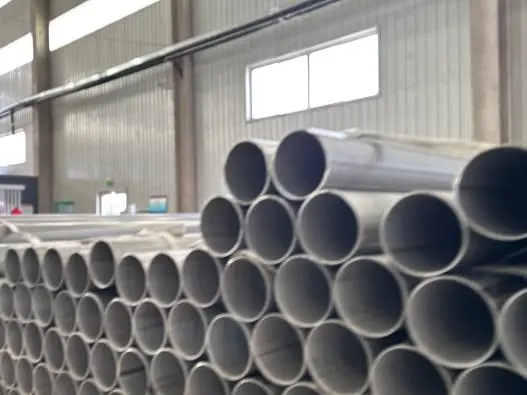
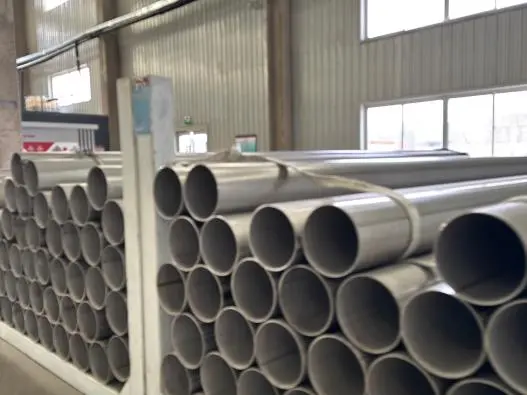
EN 10217-7 1.4404 welded steel pipe is very resistant to rust in tough industrial settings. Chrome, nickel, and molybdenum make this type of stainless steel the same as 316L stainless steel. Together, these metals form an oxide layer that protects against pitting and chlorine attack. This pipe has been used for a long time and is still structurally sound in industries that work with harsh chemicals, seawater, or fluids at high temperatures. When purchasing managers and engineers look at materials for acidic conditions, the 1.4404 grade is the best choice because it has the best mix of long-term cost performance, chemical stability, and mechanical strength.
|
|
|
Understanding EN 10217-7 1.4404 Welded Steel Pipe Specifications
EN 10217-7 says that pressure lines made of welded stainless steel that are used in harsh and hot places need to meet certain requirements. One of the most important grades in this standard is 1.4404, which is often thought of as 316L stainless steel in Europe.
Chemical Composition That Drives Performance
Chrome makes up about 16–18% of grade 1.4404, nickel about 10–14%, and molybdenum about 2–3%. It's not the same as other kinds of 304 because it has molybdenum in it. This means that things that are high in salt don't hurt the steel as much as they used to when the PREN number goes up. It is less likely that someone will catch fire while cutting or making something because the carbon level is kept below 0.03%.
Mechanical Properties Built for Industrial Loads
The pipe must be able to handle at least 515 MPa of tension and 220 MPa of yield in order to meet EN 10217-7. These numbers are still good, even if the pressure and heat stress change. Machines won't be able to break it because it can stretch a lot after it breaks. This is a good trait to have for pipes that have to deal with shaking or sudden changes in pressure.
Manufacturing and Quality Assurance Process
Pipes made to EN 10217-7 must go through certain welding processes, measurements based on EN ISO 1127, and non-destructive testing (NDT) such as hydraulic or eddy current testing. Each batch has an EN 10204 3.1 inspection certificate that lets you keep track of all the parts, from the raw steel heat to the finished pipe. For chemical plants, hospitals, and businesses that have to follow rules, this line of paperwork is very important.
Performance Benefits of EN 10217-7 1.4404 Pipes in Corrosive Environments
It's clear why 1.4404 pipes are better in real life when you see how well they work where other grades fail.
Resistance to Chloride-Induced Corrosion
Chloride attack is a main reason why pipes break in places like chemical plants, food processing plants, and the ocean. 1.4404 usually has a PREN number above 25, while grade 1.4301 has one around 18. This is because 1.4404 has more molybdenum than grade 1.4301. This is a big difference in real life. Studies on corrosion engineering have shown over and over that grades with a PREN above 24 work better in seawater and chlorine-based cleaning products.
Strength Retention Under Chemical Exposure
If you expose EN 10217-7 1.4404 Welded Steel Pipe to acids, alkalis, and oxidizing agents for a long time, it doesn't lose most of its mechanical strength like carbon steel or lower-grade stainless alloys do. Carbides can't form at the ends of grains because there isn't much carbon in the material. If they did, they would weaken it over time. What this means is that the pipe's structural load capacity doesn't slowly go down over time. It stays the same.
Long-Term Reliability Through Heat Treatment
Solution annealing is a way to even out the texture of steel after it has been made and welded. It is used in industry. There is no more stress in the pipe after this process, and the final pipe fully shows the rust resistance built into the alloy chemistry. This means that procurement teams will have to replace things less often and spend less on upkeep over the next 10 to 20 years.
Comparing EN 10217-7 1.4404 Welded Pipes with Alternative Standards and Grades
When choosing between grades of stainless steel pipe, you should carefully weigh the differences in performance against the total cost.
1.4404 vs. 1.4301: What the Molybdenum Difference Means
Most stainless steel in the world is Grade 1.4301, also known as 304 stainless, but it doesn't have molybdenum in it. 1.4301 works well in places that are slightly acidic. When chlorides, weak sulfuric acid, or phosphoric acid are used, on the other hand, the lack of molybdenum speeds up pitting corrosion. If these things happen, grade 1.4404 always works better than 1.4301, and it can often make a pipe last twice or even three times as long.
EN 10217-7 vs. ASTM A312: Standard Differences for Global Projects
Under ASTM A312 in the US, austenitic stainless steel pipes can be either seamless or welded. Both EN 10204 and EN 10217-7 accept 316L chemistry, but EN 10217-7 needs tighter limits on sizes and a well-organized paperwork path that leads to approval. European projects and suppliers that work with EU-regulated industries must follow EN 10217-7. It is not a choice.
Welded vs. Seamless Construction in Corrosive Service
For pipes that meet EN 10217-7 standards, they are solution-annealed and go through strict NDT. This makes the weld seam less likely to be a weak spot. Welded construction works just as well as seamless construction for most uses of corrosive fluids, such as chemical dosing lines, heat exchanger heads, and process water systems. It also costs less per meter. If there are very high pressures or loads on the pipes, seamless pipes are still the best choice.
Procurement Considerations for EN 10217-7 1.4404 Welded Steel Pipes
You need to think about more than just the price per kilogram when you buy custom steel pipe.
What to Look for in Supplier Certification?
When a supplier you can trust sends EN 10217-7 1.4404 Welded Steel Pipe, it should come with EN 10204 3.1 mill certificates. It says on these papers that the chemical makeup and engineering test results are up to code. For certain uses, you also need to meet the EN ISO 1127 size requirements and show proof of NDT results. Ask for sample papers and make sure you can keep track of the steel's heat before you place your order.
Pricing Factors and Order Quantities
When metal prices change, the amount of nickel and molybdenum in 1.4404 grade pipe changes too. This makes it cost more than 1.4301 grade pipe. People who buy a lot of something can usually get better unit prices and more open delivery times. It may cost more for smaller project orders, so finding out if a pipe wholesaler has what you need in stock or has to make it to order changes both your plans for wait time and cost.
Customization and Lead Time Planning
A lot of companies offer custom cutting, special end preparations, and OEM marking to meet your needs. Most of the time, certified mills can get standard sizes in 1.4404 to you in 4 to 8 weeks. However, this depends on how many orders they have and how busy the mills are at the moment. Project-based buyers should plan for the time it takes to make the goods and ship them, as well as the time it takes to fill out the paperwork.
Practical Applications and Industry Use Cases of EN 10217-7 1.4404 Pipes
This type of pipe is used in many areas because its science works well with many real-life issues.
The 1.4404 welded pipe has been shown to work well in the following places:
1.4404 pipes are used by chemical processing companies to move salty process streams, chlorinated solvents, and acidic solutions. Within 12 to 18 months of use, 304-grade pipes start to crack and break. Pipes used in hydrogen production and fuel cell devices that come into contact with deionized water and weak alkaline electrolytes must be this grade. It is important that these pipes don't rust and stay stable for a long time.- Food, drink, and drug facilities need 1.4404 for CIP (clean-in-place) lines that are flushed with hot caustic and acidic cleaning agents on a regular basis. The surfaces can't rust or get into the product stream and make it dirty.
- Chemical processing plants use 1.4404 piping for transferring acid solutions, chlorinated solvents, and salt-containing process streams, where 304-grade pipes show early pitting failure within 12–18 months of service.
- Hydrogen production and fuel cell systems depend on this grade for electrolyzer piping that contacts demineralized water and dilute alkaline electrolytes, requiring both corrosion resistance and long-cycle stability.
- Food, beverage, and pharmaceutical facilities specify 1.4404 for CIP (clean-in-place) lines that are regularly flushed with hot caustic and acid cleaning agents, demanding surfaces that neither corrode nor contaminate the product stream.
But there is one thing they all have in common: the pipe has to keep working the same way for years without having to be changed. Every time, 1.4404 is the best grade because it has the right amount of molybdenum, is made in a way that meets EN 10217-7 standards, and has low carbon chemistry.
Conclusion
Grade 1.4404 welded pipe under EN 10217-7 1.4404 Welded Steel Pipe offers a well-documented and technically sound solution for corrosive industrial applications. Its molybdenum-enhanced chemistry delivers measurably better resistance to pitting, crevice corrosion, and chloride attack compared to standard 304-type grades. Combined with certified manufacturing, mechanical strength retention, and broad industry acceptance, it presents a strong lifecycle value proposition for procurement teams in chemical processing, new energy, food and beverage, and related sectors. Selecting a supplier who provides full EN 10204 3.1 certification and traceable quality records is as important as the material grade itself.
FAQ
Why is grade 1.4404 particularly suited for corrosive environments?
Grade 1.4404 contains 2–3% molybdenum, which raises its pitting resistance significantly compared to standard 304 stainless. This element stabilizes the passive oxide layer in chloride-rich media, making the steel resistant to the localized attack that causes most stainless pipe failures in chemical and marine environments.
How does EN 10217-7 guarantee consistent pipe quality?
The standard mandates dimensional verification per EN ISO 1127, 100% NDT of the weld seam via eddy current or hydrostatic methods, and mechanical tests including flattening and drift expansion. Each batch ships with an EN 10204 3.1 inspection certificate that confirms the heat analysis and mechanical results match the 1.4404 specification.
Can these pipes be customized for specific project needs?
Yes. Manufacturers typically offer custom lengths, special end finishes, surface conditions (such as W1 pickled/passivated), and OEM documentation packages. Buyers should confirm the required outer diameter, wall thickness tolerance class, and certification level at the inquiry stage to avoid delays during order processing.
Is 1.4404 the same as 316L stainless steel?
Functionally, yes. Grade 1.4404 is the European material number equivalent to UNS S31603 (316L). Both designations describe a low-carbon, molybdenum-bearing austenitic stainless steel with essentially identical chemical composition and performance characteristics.
Request a Quote from YOUFA — Your Trusted EN 10217-7 1.4404 Welded Steel Pipe Supplier
Steel grade 1.4404 in EN 10217-7 1.4404 Welded Steel Pipe has 2–3% molybdenum in it, which makes it much less likely to pit than steel grade 304. In places with a lot of chloride, this element keeps the inactive oxide layer steady. Because of this, the steel is protected from the type of attack that breaks most stainless steel pipes in chemical and sea environments. To get a price that works for your project, go to youfass.com or email our team at info@youfass.com.
Online Message