
Aug 3, 2026
What Makes ASTM A358 304L Welded Steel Pipe Reliable for Harsh Environments?
The reliability of ASTM A358 304L Welded Steel Pipe in harsh environments comes down to three fundamental characteristics: its low-carbon stainless steel composition prevents weld sensitization during fabrication, the electric fusion welding process creates robust longitudinal joints capable of handling high-pressure service, and the chromium-nickel alloy matrix delivers exceptional resistance to corrosive chemicals and elevated temperatures. These attributes make 304L welded pipe a dependable choice for industries facing aggressive operating conditions, from chemical processing plants to hydrogen production facilities.
|
|
|
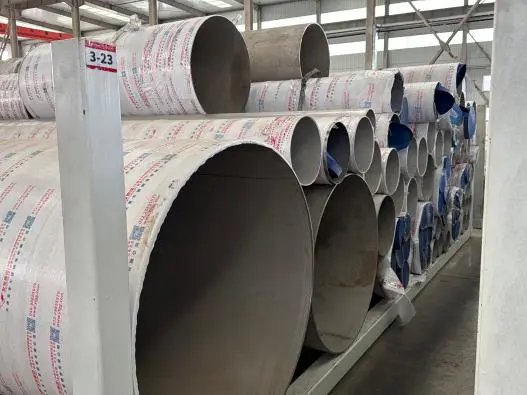
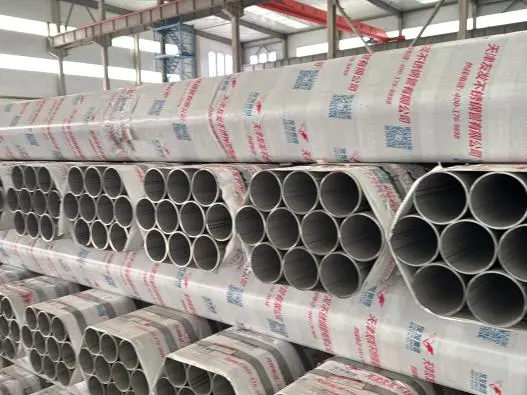
Understanding ASTM A358 304L Specifications and Material Properties
The ASTM A358 standard sets the rules for electric fusion-welded stainless steel pipe that is made for use in harsh environments with high temperatures and corrosion. In this specification, the 304L grade is different because its chemical makeup is carefully managed. For example, the carbon content is kept below 0.030%, while normal 304 allows up to 0.08% carbon.
Chemical Composition and Its Impact on Performance
The basic strength of 304L stainless steel comes from its well-balanced alloy composition. Between 18 and 20 percent chromium makes an inactive oxide layer that forms when it gets harmed and keeps the metal below it from rusting. A nickel content of 8–12% makes the metal more flexible and keeps its austenitic structure even when the temperature changes. The low carbon level is very important because it stops chromium carbide from forming during the slow cooling cycles that are normal for making large-diameter welded pipes. It is called sensitization when chromium carbides form along the edges of grains. These carbides remove chromium from the areas around them, leaving them open to intergranular corrosion. By keeping the amount of carbon very low, 304L keeps its rust resistance even in areas that have been heated up next to welds.
Mechanical Properties That Support Structural Integrity
YOUFA's manufacturing process makes sure that 304L welded pipe meets strict mechanical requirements needed for pressure service. The minimum tensile strength of the material is 485 MPa (70,000 psi), and the minimum yield strength is 170 MPa (25,000 psi). This means that it can support the weight of industrial pipe systems. Values above 35% elongation show that the alloy can bend without breaking, which is an important safety feature when systems experience sudden changes in pressure or temperature. These mechanical qualities don't change much at all, so they can be used reliably from very cold temperatures (below 0°C) up to about 425°C (800°F) in settings that don't react with oxygen.
Dimensional Precision and Surface Quality Standards
The ASTM A358 standard sets strict limits for dimensions that have a direct effect on the stability of the system. Outside widths range from 114.3 mm to 2500 mm, and wall thicknesses range from 3 mm to 50 mm. This means that our production lines can meet a wide range of industrial needs, from medium-flow process lines to heavy-duty gearbox pipes. For uniform pressure ratings along pipe runs, wall thickness tolerances are based on measurement tables that get tighter as the diameter goes up. You can choose a surface finish like pickled and annealed or solution annealed. Both of these treatments get rid of heat tint and surface contamination while making the metal more resistant to corrosion. The smoothness of the internal surface affects how fluids move and how to clean them. This is especially important for clean applications in the food and drug processing industries.
Key Factors That Ensure Reliability in Harsh Environments
ASTM A358 304L Welded Steel Pipe is very reliable in harsh industrial conditions because of a number of engineering and manufacturing factors that work together. Knowing about these things helps buying teams choose the right products and make sure suppliers can do what they say they can do.
Superior Corrosion Resistance Mechanisms
304L stainless steel doesn't rust because it forms an inactive film, which is a chromium oxide layer that is only a few nanometres thick but is very protective. Many industrial chemicals, such as organic acids, mineral acids that have been diluted, alkaline solutions, and many chloride-containing conditions at normal temperatures and concentrations, can't damage this inactive layer. Because it doesn't contain much carbon, the low-carbon specification keeps the protective ability even after welding processes heat up the material. This material's natural resistance to corrosion is directly beneficial for industries that work with caustic chemicals, acidic process streams, or outdoor exposure to atmospheric corrosion. Compared to carbon steel alternatives, it means longer service life and fewer maintenance needs.
Advanced Electric Fusion Welding Technology
When ASTM A358 pipes are made with the EFW method, lengthwise seam welds are made that have mechanical properties that are the same as or better than the base material. During production, a precision-rolled stainless steel plate is shaped into a cylinder, and the edges that touch are joined together using controlled heat and the right filler metal. Unlike resistance welding, EFW uses filler material that is chosen to match the makeup of the base metal. This makes sure that the weld zone stays strong and doesn't rust. At YOUFA, we control the welding factors like heat input, trip speed, and the makeup of the shielding gas to get full fusion and the right shape of the weld bead with the least amount of distortion. Solution annealing is a type of post-weld heat treatment that breaks down any carbides that may have formed and evens out the microstructure. This makes the pipe's cross-section more resistant to corrosion.
Comprehensive Quality Control and Testing Protocols
To be reliable in harsh settings, manufacturing must have no flaws and strict testing methods must be used. We use radiographic testing (RT) and ultrasonic testing (UT) on all welded seams to find any internal flaws, like holes, slag inclusions, poor fusion, or cracks, that could weaken the pressure integrity. Hydrostatic testing makes sure the structure is strong by applying pressure to each pipe part above its normal working pressure. This proves that the construction is leak-proof. Standard examples are used for mechanical testing to confirm the tensile strength, yield strength, and elongation characteristics. Chemical analysis is then used to make sure that the alloy's composition meets the requirements of the specification. Our ISO 9001 quality management system, PED certification, and ISO 17025-certified laboratory all provide proof of conformance, which is what global procurement teams need when they're looking for parts for important infrastructure.
These quality standards handle common concerns in the business about the dependability of welded pipes. Third-party inspection services can watch the testing take place, and we offer a wide range of paperwork, such as Material Test Certificates (MTC) according to EN 10204 3.1 or 3.2, Welding Procedure Specifications (WPS), Procedure Qualification Records (PQR), and full RT/UT reports. This ability to track down documentation helps with regulatory compliance and project quality assurance programs in many countries.
Comparing 304L Welded Pipe with Alternative Piping Materials
To get the best results from a project, material selection includes weighing technical ability against cost factors. Knowing how ASTM A358 304L Welded Steel Pipe stacks up against other options makes it clear when this material is the best choice.
304L Welded Versus Seamless Stainless Steel Pipe
Seamless pipe made to ASTM A312 standards has some benefits, such as not having longitudinal weld seams and being able to be made in smaller sizes with tighter limits for size. For applications with a diameter of more than 400 mm, however, welded pipe construction is more useful and cost-effective. The EFW process makes it possible to make widths up to 2500 mm that would be technically difficult or too expensive to make without any seams. Modern welding technology and quality control methods make sure that welded joints are just as strong and resistant to corrosion as seamless pipe bodies. This is especially true for low-carbon grades like 304L that don't become sensitized. When looking at costs, welded construction is usually the best choice for big pipes. This is especially true when project budgets have to balance performance needs with budget limits. Most of the time, the decision between welded and seamless relies on the diameter needs, the pressure ratings, and the need to follow certain codes, not on the differences in how reliable the materials are.
Stainless Steel Versus Carbon Steel for Corrosive Service
While carbon steel pipes with coatings or corrosion limits are cheaper at first, stainless steel is often better for tough areas when looking at lifetime costs. Regular maintenance for carbon steel includes renewing the coating, keeping an eye on corrosion, and eventually replacing the steel as the wall thickness decreases. Rust and corrosion products can get into the process and cause quality control problems in many fields, especially those that make drugs, food, and electronics. The 304L metal doesn't need any protective coats, doesn't need any corrosion allowances, and its internal surface conditions stay the same over its service life. When working with high-purity fluids, in wet or chemically active settings, or in places that need to be clean, stainless steel is required, not recommended. Despite having higher initial material costs, stainless steel often has a lower total cost of ownership than carbon steel alternatives. This is because it requires less maintenance, lasts longer, and doesn't pose the risk of contamination.
Performance in High-Temperature Applications
Different materials are used to make electricity, handle chemicals, and heat factories based on their temperature capabilities. Up to about 425°C in non-oxidizing environments, the 304L grade keeps its strength and resistance to oxidation well, making it a good choice for many moderate-temperature process uses. If projects need to work at higher temperatures, other grades within the ASTM A358 specification offer better performance. Grades 309S and 310S offer better resistance to oxidation and strength retention above 500°C, while grades 321 and 347 contain stabilizing additions of titanium and niobium to prevent sensitization at high temperatures. This grade freedom within the same manufacturing standard lets engineers choose the best material for a given temperature range while keeping the same standards for manufacturing and quality control.
Industrial Applications Across Critical Sectors
You can use ASTM A358 304L Welded Steel Pipe successfully in fields where dependability is important, and failure has bad results because of its technical properties.
Chemical Processing and Petrochemical Industries
304L pipes are used by chemical companies for process lines that contain organic chemicals, weak acids, alkaline solutions, and different types of solvents. The material's wide range of chemical compatibilities makes it easier to keep track of, and its resistance to rust keeps it from getting contaminated, which could hurt the quality of the product or the performance of the catalyst. Large-diameter 304L pipe is used in petrochemical plants for process water systems, condensate return lines, and some hydrocarbon service uses as long as the temperature and sulphur level stay within the alloy's range of capabilities. For large-bore transfer lines and vessel interconnections where seamless pipe isn't practical, electric fusion-welded pipe is the best choice because it can handle high pressures, can be welded, and doesn't rust.
Hydrogen Production and Fuel Cell Manufacturing
As the hydrogen economy grows, there is a need for pipe materials that don't break down when exposed to hydrogen and can still work with high-purity gas streams. Austenitic stainless steels, such as 304L, don't get damaged by hydrogen very easily when they are heated and pressed at normal levels. These conditions are common in many electrolysis systems and fuel cell factories. The low-carbon makeup stops carbides from forming, which could make it easier for metals to rust in wet hydrogen settings. The makers of electrolysers use 304L for water feed systems, caustic circulation lines, and hydrogen collection pipes because it is a pure material that doesn't rust and works well with other materials. As part of our work with manufacturers of hydrogen equipment, we provide documentation that helps with the quality control and tracking of materials needed for clean energy applications.
Power Battery and Electronics Manufacturing
Electronics and battery production need very clean environments. Corrosion in the pipe system could bring in contaminants that lower the quality of the products or the amount that can be made. Stainless steel pipes don't produce the particles and ions that come from carbon steel piping when it corrodes. This meets the strict cleaning requirements of making semiconductors, sealing battery electrodes, and making electronic parts. Solution-annealed 304L pipe has a smooth inner surface that makes cleaning easier and keeps the fluid flow characteristics that are needed for accurate chemical dosing systems. Process equipment makers in the electronics industry like the material because it is stable in size, which is important for precise alignment in automated production environments, and it doesn't rust, which means it will last for a long time in systems that distribute ultrapure water and speciality chemicals.
Food, Beverage, and Pharmaceutical Industries
For food processing, beverage production, and pharmaceutical manufacturing, sanitary piping systems need materials that don't rust, stop bacteria from growing, are easy to clean, and don't pose a risk of contamination to food and drinks. When paired with the right surface finishes and end preparation, the ASTM A358 304L standard meets these needs. Our pipe can be used in process applications that need hygiene design because it has internal surface finishes that are suitable for clean-in-place (CIP) and sterilize-in-place (SIP) procedures and bevelled ends that are ready for sanitary welding. The low-carbon makeup makes sure that the heat-affected areas next to field welds keep the same level of corrosion resistance as the pipe body. This stops crevice corrosion that could grow microorganisms or release metal ions into process streams.
Procurement Guide: Sourcing High-Quality 304L Welded Pipe
When buying important materials for pipes strategically, you need to look at more than just price when comparing suppliers. There are a number of things that determine how often a manufacturer can deliver products that meet technical requirements and project deadlines.
Manufacturer Qualification Criteria
Verification of approval should be the first step in qualifying pipe sources. The ISO 9001 quality management certification shows that quality control is done in a planned way, and the PED (Pressure Equipment Directive) certification shows that European pressure vessel standards are met, which can be used for many projects around the world. An ISO 17025-accredited testing laboratory means that the manufacturer uses calibrated test equipment and qualified workers who follow standard procedures to make sure the validity of the test results. When project deadlines are tight, manufacturing capacity is important. Our 15 production lines, which can each produce 50,000 tonnes per year, provide supply security for big projects while still being able to meet urgent needs. When project deadlines required quick production, we were able to get pipes to Tianjin Port in as little as seven days. This is a skill that sets experienced manufacturers apart from trading companies that deal in common goods.
Documentation and Traceability Requirements
Professional industrial providers are different from common vendors because they have a lot of paperwork. Material Test Reports according to EN 10204 Type 3.1 or 3.2 give approved information on the chemical make-up and mechanical properties of materials that can be linked to particular heat lots. This helps with quality control and material verification programs. Welding Procedure Specifications (WPS) and Procedure Qualification Records (PQR) show that welding methods have been created and tried to make parts that are strong and meet code standards. Instead of just believing what the manufacturer says, full RT and UT reports with interpretations by certified inspectors show proof of the quality of the weld. When the project requirements call for independent verification, third-party inspection (TPI) services can watch the manufacturing and testing. This is a service we offer regularly for international projects with strict quality oversight needs. This set of paperwork helps with insurance requirements, regulatory approvals, and the end of a project. It also gives sophisticated procurement organisations the traceability they need.
Commercial Terms and Logistics Considerations
Project costs and schedules for ASTM A358 304L Welded Steel Pipe are influenced by practical procurement considerations. Minimum order quantities can affect purchasing flexibility, while suppliers that support single-pipe orders for ASTM A358 304L Welded Steel Pipe allow customers to maintain additional inventory for trial projects, system expansions, and emergency replacements. Pricing for ASTM A358 304L Welded Steel Pipe should be based on actual manufacturing costs rather than unclear market positioning, with transparent explanations of how factors such as wall thickness, diameter, length, and inspection requirements influence the final unit price. Reliable lead time commitments are also essential when purchasing ASTM A358 304L Welded Steel Pipe. We provide realistic production schedules based on current factory capacity, raw material availability, and manufacturing plans, then maintain these commitments through effective production management. For international procurement of ASTM A358 304L Welded Steel Pipe, strong logistics capabilities are important. Our location near Tianjin Port supports efficient container loading and documentation processing, while our export experience helps ensure smooth customs clearance. Payment terms, warranty policies, and technical support services are also important elements that strengthen long-term supply partnerships for ASTM A358 304L Welded Steel Pipe and help customers achieve reliable project execution.
Conclusion
The durability of ASTM A358 304L Welded Steel Pipe in tough industrial settings comes from the way the material is made, how it is inspected, and how well it works overall. The low-carbon austenitic metal is very resistant to rust and keeps the weld from becoming sensitive. With electric fusion welding, strong longitudinal joints are made that match the properties of the base material. Comprehensive testing protocols make sure that the structure is sound and that the chemicals used are correct. Because of these qualities, 304L welded pipe is a reliable choice for making hydrogen, processing chemicals, making electronics, and other tough jobs. To be successful in procurement, you need to work with makers that have certified quality systems, full paperwork, and a history of on-time delivery.
FAQ
What distinguishes ASTM A358 from ASTM A312 pipe specifications?
For high-temperature and high-pressure use, ASTM A358 covers electric fusion-welded pipe made from plate. These pipes usually have bigger widths, and filler metal is added during the welding process. ASTM A312 sets the rules for seamless and welded pipe with smaller sizes. These pipes are usually joined automatically without adding filler metal. For heavy-wall, large-diameter pressure piping applications, the ASTM A358 304L Welded Steel Pipe specification has more specific rules about how to weld and treat steel with heat.
Why choose 304L over standard 304 grade?
The low-carbon version of 304L keeps the weld from becoming too sensitive. This is especially important for thick-walled pipes, where slow cooling rates could lead to the formation of chromium carbide. This keeps the corrosion protection the same across weld zones without the need for a post-weld heat treatment. This makes manufacturing easier while still making sure the product works well in corrosive environments.
Can 304L pipe handle chloride-containing environments?
304L has a mild resistance to chloride at room temperature and low concentrations, making it good for drinking water and many commercial uses. Stress corrosion cracking is more likely to happen in places with more salt, higher temperatures, or no movement. To make metals like 316L more resistant to pitting and crevice corrosion, molybdenum must be added.
Partner with YOUFA for Reliable Stainless Steel Piping Solutions
Picking the correct ASTM A358 304L Welded Steel Pipe provider can affect the success of the project, the dependability of operations, and the total cost of ownership. YOUFA has a wide range of manufacturing skills, quality systems that are approved by ISO 9001, PED, and ISO 17025, and a track record of meeting the needs of demanding industrial uses around the world. With 15 production lines, we can make 50,000 tonnes of steel every year and still ship single pipes to Tianjin Port in as little as seven days. We give you all the paperwork you need to support your quality assurance needs, such as MTC/MTR, WPS/PQR, and full RT/UT reports. As a well-known manufacturer instead of a trading middleman, we have control over the production process, make sure that materials can be tracked, and guarantee the performance of our products. Get in touch with our technical team at info@youfass.com to talk about your unique pipe needs and find out why procurement professionals around the world choose YOUFA as their source for stainless steel pipes for important building projects.
Online Message