Nov 13, 2026
What Makes 1.4306 Welded Stainless Steel Pipes Suitable for Process Equipment?
EN 10217-7 1.4306 Welded Stainless Steel Pipes suit process equipment because they pair a low-carbon austenitic chemistry with a European standard written for pressure service. The 0.030% maximum carbon limit protects weld zones from sensitization, so fabricators can join the pipe into skids, heat exchangers, and utility lines with sound results. Controlled dimensions support automated and orbital welding. The 18–20% chromium and 10–12% nickel content gives dependable resistance to general corrosion. Suitability still depends on the fluid, chloride level, temperature, pressure, and design code, so we explain how to check each factor below.
|
|
|
What Is EN 10217-7 1.4306 Welded Stainless Steel Pipe?
How does 1.4306 relate to 304L?
The EN list number for X2CrNi19-11 is 1.4306. You can find it in EN 10088-1. People in the U.S. usually call it 304L, which is also its AISI name and UNS number. The two scores are not exactly the same. According to EN 10088-1, 1.4306 should have 18.0 to 20.0 percent chromium and 10.0 to 12.0 percent nickel. According to ASTM A240, 304L should have nickel levels of 8% to 12%. That’s why you shouldn’t use a drawing from one grade for the other without first checking the written rules. We check the project papers to see what name they use when they get a question. After that, we go with that name and match the chemistry and license.
What does EN 10217-7 cover?
"Stainless Steel Tubes" is the name of Part 7 of EN 10217-7. It is made up of welded steel tubes that are used for pressure. Some of the technical conditions that must be met before delivery are testing, labeling, chemical analysis, and material strength. TC1 and TC2 are the names of two different kinds of tests. In TC2, more tests that don't damage the weld are added. It covers steel tubes that don't need to be joined together. Its name is EN 10216-5. To put it another way, the two papers cover various types of goods. Before you place your order, write down the standard version, test category, delivery situation, and size. The engineer, the auditor, and the service provider can all read the same thing after that.
Typical Manufacturing Route
It is made from a flat piece of stainless steel that has been welded together. The mill turns the strip into a tube and welds the ends together along the length of the tube. When you size the pipe, you get its end width. After heat treatment, scale forms. Pickling gets rid of this scale, and solution annealing breaks down carbides to make the weld and heat-affected area rust-proof again. The mill then checks the pipe's size and tests it based on the group that was picked. After that, prizes are given out. It is possible to buy EN 10217-7 1.4306 Welded Stainless Steel Pipes from YOUFA. The pipe has been solution-annealed, and the surface has been pickled and annealed. Our ISO 17025 lab is where we can test things.
Key Properties That Make 1.4306 Suitable for Process Equipment
Low-Carbon Chemistry and Weld Behavior
Iron in austenitic stainless steel makes it weak when it is welded. When the temperature is between 450 and 850 °C, which is about the temperature of a weld, chromium can mix with carbon to make carbides around the edges of grains. In close areas, there isn't enough chromium, so the grains can rust together. The carbon cap for 1.4306 is 0.030% in EN 10088-1, and the carbon cap for 1.4301 is 0.07%. Now there is less risk. Solution annealing is an extra defense. You should still use the right protective gas, filler metal, and clean up after the join. A lack of carbon won't make up for bad shooting skills.
Strength, Temperature, and Corrosion Limits
Because it forms a thin film, chromium in EN 10217-7 1.4306 Welded Stainless Steel Pipes doesn't rust easily in water, food, and many weak chemicals. Nickel keeps the austenitic structure stable, which makes the metal strong even when it's cold outside. There are limits in EN 10217-7 on how much something can yield, stretch, and be compressed. Engineers need to look at these limits and see how they compare to the temperature that was planned. You can find out more about stress than just the grade. These things are important: the design code, the temperature, the width, the wall thickness, the quality of the weld, and the rust limit. There is only so much you can do. It is possible for chlorides to cause austenitic grades to split and crack when they are used in warm places above 60 °C.
Dimensional Control and Fabrication Fit
Since EN 10217-7 1.4306 Welded Stainless Steel Pipes are made from flat strip, the walls are always the same thickness. When the outside diameter is steady, oval, and straight, it is easier to do orbital welding, tube-to-fitting joints, and automated assembly. People who make heat exchangers, process skids, and tank pipes like it when the pipes fit together well. You can pickle, anneal, polish, or make the surface germ-free. 1.4306 often costs less than types that have molybdenum added to them, like 1.4404, if you don't need strong resistance to salt. This is because molybdenum is an expensive alloying element that isn't added to 1.4306.
Comparing EN 10217-7 1.4306 With Alternative Pipe Options
1.4306 Versus 1.4301
304 is the same as 1.4301 (X5CrNi18-10). The highest amount of carbon that can be in EN 10088-1 is 0.07%, which is higher than the maximum of 0.030% in 1.4306. When you weld thick walls or can't anneal after production, it gives you an extra 1.4306 inches of space. Some people say that 1.4301 is good for light service, and if you soften the weld zone, it might be in your price range. YOUFA also has a low-carbon grade of 1.4307. Match the grade to the way it will be made and the material before writing your choice on the order form.
1.4306 Versus 1.4404 (316L)
According to EN 10088-1, adding 1.4404 (X2CrNiMo17-12-2), which is 2.0% to 2.5% molybdenum, to the metal makes it stronger. Molybdenum makes it less likely for fluids to pit or corrode in cracks when chloride is present. That's why 316L is often chosen by manufacturers for places with saltwater or the sea and some cleaning products. It also costs more. 1.4306 might work and cost less if your medium doesn't have a lot of salt in it. If you use hot chloride solutions to clean or if the pipe is near saltwater, move it up to 1.4404. YOUFA also has 1.4571 and 1.4539 that are approved by EN 10217-7 1.4306 Welded Stainless Steel Pipes standards for tougher use.
Welded Versus Weld-Free Pipe
In pressure devices, you can use both welded and unwelded pipe. When it comes to bigger sizes, welded pipe is usually cheaper, and you can tighten control over the wall thickness. It also comes in a wide range of wall thicknesses. Sometimes you need a thick wall or a lot of pressure, or the owner doesn't want a weld seam. Weld-free pipe can work well for those situations. EN 10216-5 is used for the weld-free form, and EN 10217-7 is used for the soldered form. According to design codes such as ASME B31.3, welded pipe in your test group is dealt with in a certain way. Check your code to see how it handles welded pipe. In the size range of 1219.2 mm (48 inches), YOUFA sells welded pipe. Welded building is popular in this size range.
Technical Specifications and Compliance Checklist
Dimensions and Delivery Condition
This is a list of the grades of EN 10217-7 1.4306 Welded Stainless Steel Pipes that YOUFA makes. The numbers are 1.4301, 1.4306, 1.4307, 1.4401, 1.4404, 1.4541, 1.4539, and 1.4571. It’s 1219.2 mm wide on the outside, which is 48 inches. The EN standard says that the thickness of the walls should be between 0.8 mm and 40 mm. Pipe can come in random or set lengths, and the ends can be round or straight. During shipping, the pipe is heated with a solution, and on the surface, it is cleaned and heated. A full purchase specification also says whether the pipe is round or straight, and if there are any minimum wall requirements. These are important things to think about when deciding if the pipe will fit in your orbital welding setup or not.
Certification and Documents
YOUFA has an ISO 17025 lab, is certified by TÜV, and is also approved by ISO 9001 and PED. You can find MTC/MTR (3.1/3.2), TPI, WPS/PQR, MPS, and UT/RT reports, among other things. A 3.1 certificate from a maker-authorized agent links the chemical and mechanical data to the heat number. Proof from a third party, like the buyer's agent, is added by a 3.2 certificate. For U.S. projects, ask the person in charge of the code if EN 10217-7 material is okay based on ASME B31.3 or the main code, and make sure you have proof that it was reviewed.
Packaging, Capacity, and Delivery
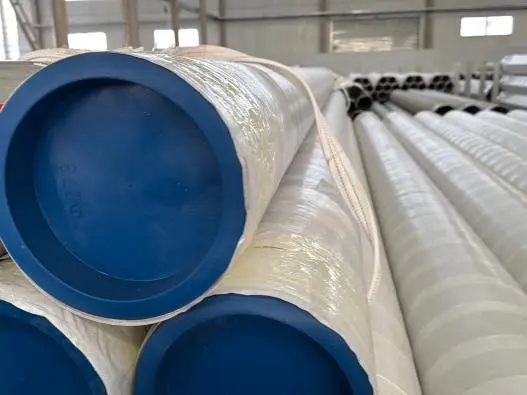
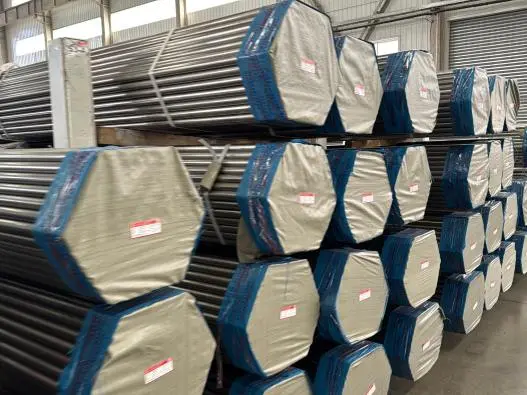
The YOUFA company has been around since 2017 and is one of China's Top 500. They have a lot of different options for stainless steel pipes. When we’re done, we can add a steel frame to the wooden boxes that hold the pipe. We use hexagonal binding and weave bags to protect the ends and surfaces while they are being shipped. Our 15 production lines make 50,000 tons of goods a year, and more than 200 people help move, check, and make the goods. One pipe is the least you can buy, which is fine for small projects and test runs. The fastest way to get to Tianjin Port is in 7 days. Orders to export should include labels, packing lists, invoices, and the place where the goods are going.
Applications, Supplier Selection, and Ordering Workflow
Where 1.4306 Pipe Works Well?
EN 10217-7 1.4306 Welded Stainless Steel Pipes can be used for lines that carry food, drinks, or medicines. You can also use them for process skids, utility lines, instrument systems, heat exchanger parts, tanks, and chemicals that are moving around. EN 10217-7 pipe is also used for lines in power plants, chemical plants, pressure vessels, and other places where rust or high heat is not an issue. If the grade is right, 1.4306 can be used for water lines and process water in plants that make batteries, hydrogen, etc. Pay extra attention to the quality of the internal welds, the sharpness of the surface, passivation, and the drainable plan if you want clean lines. Medicine projects can have proof records, orbital welding, and electropolishing added to them.
When Another Grade Makes Sense?
Austenitic stainless steel can only do so much. Salt water, fluids high in chlorine, and warm brines can damage 1.4306 through pitting, crevice corrosion, and stress corrosion cracking. Hydrochloric acid that is hot or strong can damage standard austenitic grades. It’s also important to check plating pools that have chlorides or fluorides in them for rust. We need to learn more about severe weathering and rust, as well as heavy stress loads. In this case, a metal grade of 1.4404, 1.4571, 1.4539, or higher might be better. All of these grades are in our EN 10217-7 range. To help you make a choice, our skilled staff can check your medium and temperature.
How to Choose a Supplier and Place an Order?
It’s not enough to just look at a supplier’s unit price. You should also look at their technical know-how, paperwork, availability, and cost. YOUFA uses known steel sources and management that can be monitored to keep an eye on and handle raw materials. It is important to find out from any supplier how they weld, check seams, heat treat, pickle, and how long they’ve been exporting. After that, just follow an easy way of order. Put down on paper the type of fluid, the amount of salt in it, the pressure, the temperature, the cleaning agents, and how long it will be used. Second, make a list of the EN 10217-7 test type, grade 1.4306, NDT, hydraulic test, and build code. Third, add the end of preparation, the finish, the passivation, and the measurements. Fourth, do not start making the product until you have looked over the samples, certificates, and inspection plan. Check the order against the markings, heat numbers, sizes, surfaces, and certificates when it gets there.
Conclusion
There is a carbon limit of 0.030% in EN 10217-7 1.4306 Welded Stainless Steel Pipes, which makes it good for process equipment. The nickel and chromium content keeps the joints safe, and the carbon limit keeps the pipe from rusting in general. EN 10217-7 tells us how to deliver, test, and label things for pressure service. When the sizes are controlled, fabricators can weld, put it together, and connect it with results they can count on. It lets you weld with more space than 1.4301. It costs less than 1.4404 but doesn't have molybdenum, so media that have a lot of salt need a higher grade. Also, it's not quite the same as 304L, so engineers should compare the chemical composition to their code. How well it fits depends on the medium, the temperature, the pressure, the design code, the tests that have been recorded, and clear directions.
FAQ
Can I treat 1.4306 as 304L?
Almost the same, but not quite. According to EN 10088-1, between 10.0 and 12.0 percent of nickel can be in 1.4306 and between 8.0 and 12.0 percent can be in 304L. Find out what title the project needs from the person who owns the code.
Does EN 10217-7 give a pressure rating?
No. Tests are part of the technical conditions for delivery that are set by the standard. Designers use the design code, the thickness of the wall, the temperature, and the weld factor to figure out how much pressure is safe for EN 10217-7 1.4306 Welded Stainless Steel Pipes.
What does a 3.1 certificate show?
The heat number, chemical analysis, and mechanical results are all on it, and it was given to me by a manufacturer representative. Proof from a third party, like the buyer’s agent, is added by a 3.2 certificate.
Get a Quote for 1.4306 Welded Pipe From YOUFA
EN 10217-7 1.4306 Welded Stainless Steel Pipes are sold by YOUFA. They need to know your grade, the outside diameter, the wall thickness, the length, and the test group. We are an ISO 9001, PED, ISO 17025 lab, and TÜV-certified factory with 15 production lines. We also have a one-pipe MOQ and the fastest delivery to Tianjin Port in 7 days. All of these things will help your project. Email info@youfass.com or go to youfass.com to get a price and look over the paperwork.
Online Message