
Oct 10, 2026
What Benefits Do EN 10217-7 Welded Pipes Provide for Buyers?
For businesses that need pressure-rated pipes that can handle high temperatures and toxic chemicals, EN 10217-7 welded stainless steel pipes are a useful and high-performance choice. These pipes are made to a European standard that is standardized, and they have good mechanical strength, accurate measurements, and proven weld integrity. They also cost less than seamless options. Whether you work in chip manufacturing, power generation, chemical processing, or hydrogen production, knowing what this standard offers can directly improve how you buy things.
|
|
|
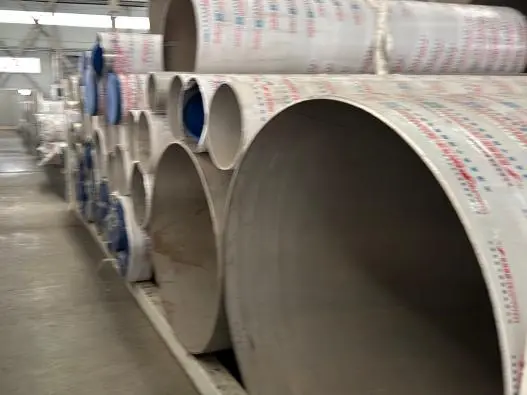
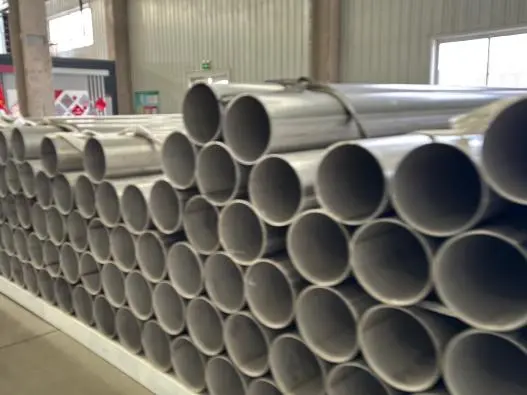
Understanding EN 10217-7 Welded Stainless Steel Pipes
EU standard EN 10217-7 talks about welded circular tubes made from certain types of austenitic stainless steel that are meant to be used under pressure. The standard says how the goods must be delivered, how good the welds must be, and what tests must be carried out. Part 7 of the EN 10217 series only talks about types of stainless steel that have a joint coefficient of v=1.0. This means that the weld zone is treated as being mechanically the same as the base material. Some of the other parts of the series talk about carbon or stainless steel.
Covered Material Grades
It comes in grades such as 1.4301 (304), 1.4307 (304L), 1.4401 (316), 1.4404 (316L), 1.4541 (321), 1.4539, 1.4571 (316Ti), and 1.4306. The amount of chromium, nickel, and molybdenum in each grade determines its choice. This tells us how well it can stand up to different acids, temperatures, and mechanical stresses.
Welded vs. Seamless in the EN 10217 Framework
To make pipes that meet EN 10217-7, they are welded along their length with TIG, laser, or plasma welding, and then they are solution annealed to make the weld zone resistant to rust again. But smooth lines are much more expensive and don't have a weld gap. Most of the time, EN 10217-7 soldered pipes are cheaper per unit and can do the same work as pressure pipes.
Heat Treatment and Dimensional Control
After being solution-annealed, all pipes that meet this standard are released. Once the welding is done, this heat treatment gets rid of the carbide precipitation. This makes the material once again resistant to rusting between the grains. Very close specs for the pipes make sure they work with standard fittings and meet project needs. Outside sizes range from 10.3 mm to 2500 mm, and wall thicknesses range from 0.8 mm to 40 mm.
Key Benefits of EN 10217-7 Welded Pipes for Buyers
These lines are always chosen by businesses of all types because they're cheap, don't rust, and are easy to get. You should know about these main benefits of sourcing before you decide to do it.
- Less expensive per unit with the same pressure rating: Welded pipes have a v=1.0 joint factor and cost a lot less than smooth pipes because they use less raw material and go through fewer processing steps. For jobs with a lot of work, this means tangible cost savings without lowering quality.
- Corrosion resistance in harsh media: Molybdenum-containing types such as 1.4404 and 1.4571 have a high Pitting Resistance Equivalent Number (PREN), which means they don't crack easily when exposed to chloride, which is a typical way for chemical plants and purification facilities to fail. Grade 1.4539 works well in settings that are either very acidic or have a mix of acids.
- Wide range of sizes for project flexibility: ODs from 10.3 mm to 2500 mm and wall thicknesses up to 40 mm mean that buyers can get everything from instrument lines to large-bore pressure tanks from a single seller, which makes it easier to work with multiple vendors.
A lot of people have trouble getting things in areas like new energy, scientific processes, and making medical products with EN 10217-7 Welded Stainless Steel Pipes. These perks make it easier to do those things. These properties are useful, not just descriptive, because they help you decide what to buy by taking into account things like safety on the job site, lifetime costs, and compliance standards.
Comparing EN 10217-7 Welded Pipes with Other Standards
As well as EN 10217-7, buyers often look at ASTM A312 and ASME B36.19M. Everyone has their own favourite standard. Which one is used depends on where the project is being done, what it needs to do, and where it will be used in the end.
EN 10217-7 vs. ASTM A312
lot of projects in North America use it. On the other hand, EN 10217-7 has a better-organized system for weld process qualification (WPS/PQR), the heat treatment that must be done after welding, and records that can be read, such as MTC/MTR 3.1/3.2 and UT/RT reports. For projects that need to follow the Pressure Equipment Directive (PED), EN 10217-7 is a better choice.
Welded vs. Seamless Under EN 10217-7
Most basic needs for pressure and fluid transfer can be met by welded pipes that meet the same standard. When there are big changes in pressure or when the law says they have to be built without any welds, seamless pipes are generally the best choice. For electrochemical systems, hydrogen equipment, and pipes in chemically aggressive settings, the welded version under EN 10217-7 is better from a scientific point of view and from a business point of view as well.
Cost and Long-Term Value Comparison
Studies done by people outside the plumbing business have shown that welded stainless steel pipes are 20–35% less expensive than smooth stainless steel pipes. It costs less to own something that meets EN 10217-7 because it has approved quality management and paperwork that can be tracked. This is because there are fewer failures in the field and fewer inspection rounds. For most business-to-business deals, this makes it the better choice.
Practical Applications and Industry Use Cases
People use EN 10217-7 stainless steel pipe grades in places where they need to protect chemicals and keep pressure under control.
Chemical and Petrochemical Processing
Grade 1.4404 (316L) is used in heat exchangers and reactor pipe systems because it doesn't react with chloride and works well in places where the temperature stays above 300°C. Process lines don't get dirty because the surface has been treated and hardened.
Power Generation and Hydrogen Systems
Electrolysis systems and bipolar plate assemblies are two types of equipment used to make hydrogen. They need EN 10217-7 Welded Stainless Steel Pipes that can handle high pressure and fluids that are either charged or neutral. Grades 1.4539 and 1.4571 can meet these needs, and the full weld documentation package (WPS/PQR, UT/RT) helps with safety compliance in planned settings.
Electronics, Medical, and Precision Industries
Particles can't get into pharmaceutical fluid transfer systems, semiconductor cooling systems, or electrode probe assemblies because the inside of solution-annealed welded tubes has a controlled surface finish. Grade 1.4307 has a low carbon content, which makes it good for uses that need to be very pure and keep the risk of intergranular corrosion as low as possible.
Procurement Guide: How to Source EN 10217-7 Welded Stainless Steel Pipes?
The first step in buying is to find sellers who are qualified. An ISO 9001, PED, and TÜV-approved company that makes EN 10217-7 pipes should also have an ISO 17025-approved testing lab. These credentials not only show who you are, but they also let a client or a third party check the pipe documentation you get.
What to Request from Suppliers?
You should ask for the MTC/MTR (3.1 or 3.2 based on your project needs), the MPS, the WPS/PQR for weld approval, and the UT/RT inspection records. These papers, which are not the same as what the seller says, check the chemical composition, mechanical properties, and weld stability.
Minimum Order and Lead Time Considerations
For some suppliers, the MOQ is very high, which makes it hard to do R&D projects or place replacement orders. YOUFA can send as little as one pipe in seven days to Tianjin Port, which is the fastest route. Being able to change these things helps procurement teams stick to tight project schedules or try out new requirements before placing a big order.
Customization and Packaging Options
Pipes come in odd or even lengths, and the ends can be smooth or shiny. You can ship them in wooden boxes, steel frames that can be added, hexagonal binding, and woven bags. These are all meant to keep the finish safe during ocean freight.
Conclusion
For pressure lines in tough industrial settings, EN 10217-7 welded stainless steel pipes are a scientifically sound and cost-effective choice. The standard's structured weld qualification requirements, required solution annealing, and wide range of grades, from standard 1.4301 to high-alloy 1.4539, give procurement teams the confidence to be very specific in their requests. When rust resistance, tracking, and compliance are important, these pipes are a reliable choice that has been used for a long time and is still useful at the end of a project.
FAQ
What industries use EN 10217-7 welded stainless steel pipes most often?
The most common end-use sectors are chemical processing, electricity generation, hydrogen production, semiconductor manufacturing, pharmaceutical fluid systems, and making medical devices. A possible fit is any situation that needs pressure-rated, corrosion-resistant pipes with proven weld stability.
Why does solution annealing matter for pipe quality?
The heat-affected zone can get carbide precipitation after welding, which makes it less resistant to rust. Solution annealing gets rid of these carbides and brings back the stainless steel's original mechanical properties. This makes sure that the weld area works as well as the base material does in service.
Can these pipes handle both low and high temperatures?
Yes. EN 10217-7 pipes can work in a lot of different temperatures, depending on the grade that is chosen. Grade 1.4541 can handle high temperatures of up to about 550°C, while low-carbon grades like 1.4307 and 1.4404 can be used in both cold and atmospheric conditions.
What documentation comes with the pipes?
Reports on MTC/MTR (3.1/3.2), WPS/PQR, MPS, TPI, and UT/RT are all standard. These include chemical make-up, mechanical tests, weld qualification, and the results of a non-destructive examination.
Get a Quote from YOUFA — Certified EN 10217-7 Welded Stainless Steel Pipe Supplier
YOUFA has 15 production lines that make more than 50,000 tons of stainless steel pipe every year. The company is certified by ISO 9001, PED, TÜV, and ISO 17025. To get EN 10217-7 Welded Stainless Steel Pipes from us, all you need is one pipe, and we can send it to Tianjin Port in seven days. Visit youfass.com or email our team at info@youfass.com to get a price or technical advice that is specifically made for your project.
Online Message