
Jul 21, 2026
What are ASTM A312 GR TP316Ti Stainless Steel Pipes and How Do You Choose the Right Grade?
ASTM A312 GR TP316Ti Stainless Steel Pipes represent a titanium-stabilized variant of the molybdenum-bearing 316 austenitic grade, specifically engineered to prevent intergranular corrosion in high-temperature environments. The titanium addition acts as a stabilizing element, binding with carbon to prevent chromium carbide precipitation at grain boundaries during welding or prolonged exposure to temperatures between 425°C and 815°C. Choosing the right grade involves evaluating your operational temperature range, corrosion exposure, mechanical strength requirements, and budget constraints to ensure optimal performance and lifecycle value.
|
|
|
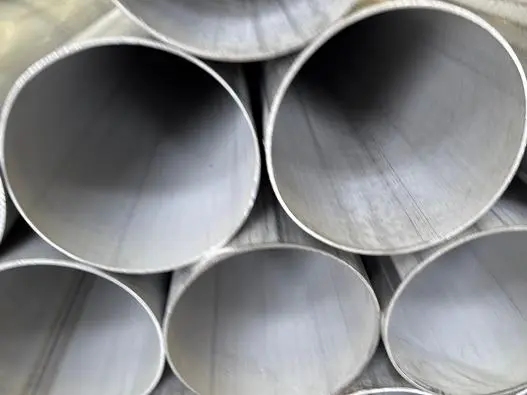
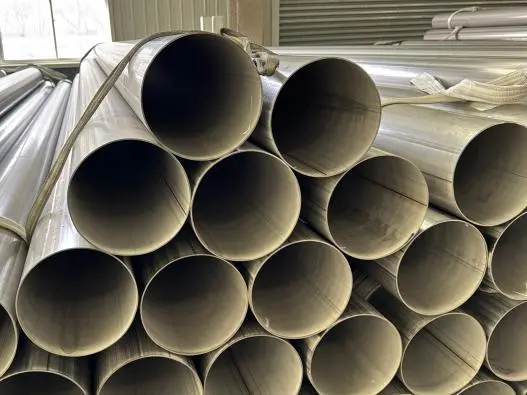
Understanding ASTM A312 GR TP316Ti Stainless Steel Pipes
When evaluating materials for critical industrial applications, understanding the foundational specifications becomes essential. The ASTM A312 standard governs seamless, welded, and heavily cold-worked austenitic stainless steel pipes designed for high-temperature service and corrosive environments.
What Makes TP316Ti Unique?
ASTM A312 GR TP316Ti Stainless Steel Pipes: TP316Ti distinguishes itself through its carefully balanced chemical composition. The grade contains 16.0-18.0% chromium for oxidation resistance, 10.0-14.0% nickel for austenite stability, and 2.0-3.0% molybdenum for enhanced pitting resistance in chloride environments. The defining characteristic is its titanium content, calculated at five times the combined carbon and nitrogen content (minimum) up to 0.70% maximum. This precise titanium addition prevents sensitization, a phenomenon where chromium carbides form at grain boundaries, depleting the surrounding matrix of chromium and creating pathways for corrosion attack.
At YOUFASS, our production lines manufacture pipes conforming to ASTM A312/A312M-22, offering sizes from NPS 1/8" to 48" (DN6–DN1200) with wall thickness ranging from Schedule 5S to XXS. Each pipe undergoes solution annealing and water quenching heat treatment, ensuring uniform metallurgical structure and optimal corrosion resistance.
Mechanical Properties That Matter
The mechanical performance of titanium-stabilized pipes directly influences their suitability for demanding applications. TP316Ti exhibits a minimum tensile strength of 515 MPa (75 ksi) and yield strength of 205 MPa (30 ksi), providing robust structural integrity under pressure and mechanical stress. The material maintains adequate elongation properties, typically exceeding 35% in standard testing, which translates to excellent formability and resistance to brittle failure.
These properties remain stable across temperature fluctuations, making the grade particularly valuable in thermal cycling applications such as power generation equipment and chemical reactors. The titanium stabilization also enhances creep resistance, allowing sustained performance under continuous high-temperature loading without dimensional distortion or premature failure.
Corrosion Resistance in Harsh Environments
Industries dealing with acidic media, chloride exposure, and elevated temperatures benefit significantly from the corrosion characteristics of stabilized stainless steel. The Pitting Resistance Equivalent Number (PREN) for TP316Ti typically exceeds 24, indicating superior resistance to localized corrosion compared to unstabilized grades. This mathematical value, calculated from chromium, molybdenum, and nitrogen content, serves as a reliable predictor of performance in chloride-containing environments.
Typical Applications Across Industries
New energy manufacturers rely on ASTM A312 GR TP316Ti Stainless Steel Pipes for hydrogen production equipment, particularly in electrolysis systems where high-purity water at elevated temperatures contacts pipe surfaces. The material's resistance to stress corrosion cracking and pitting ensures long-term reliability in these critical applications. Power battery manufacturers utilize the grade in processing systems handling corrosive electrolytes and thermal management circuits, where failure could compromise production quality.
The petrochemical sector employs these pipes in refineries for transporting hot phosphoric acid, acetic acid, and other aggressive chemicals that would attack conventional stainless steels. Marine applications benefit from the grade's chloride resistance in seawater-cooled systems and offshore platform piping. Pharmaceutical manufacturers value the material's cleanability and resistance to chemical cleaning agents, maintaining product purity in sterile processing environments.
Comparing TP316Ti with Other Stainless Steel Grades
Making informed material selection requires understanding how different grades compare across critical performance dimensions. The stainless steel pipe market offers numerous alternatives, each with distinct advantages depending on application requirements.
TP316Ti Versus TP316L
ASTM A312 GR TP316Ti Stainless Steel Pipes are commonly compared within the 316 family due to their different stabilization approaches. While both grades belong to the 316 family, their stabilization mechanisms differ fundamentally. TP316L achieves resistance to sensitization through low carbon content (maximum 0.035%), whereas TP316Ti employs titanium stabilization while allowing higher carbon levels (maximum 0.08%). This distinction creates practical implications for procurement and application. TP316L generally costs less and offers easier weldability without requiring post-weld heat treatment for most applications. However, in prolonged high-temperature service above 425°C, TP316Ti provides superior stability because titanium stabilization remains effective even after extended thermal exposure, while low-carbon grades may experience some carbide precipitation over time.
For hydrogen production equipment operating continuously at elevated temperatures, the titanium-stabilized variant delivers better long-term reliability. Conversely, cryogenic applications or moderate-temperature pharmaceutical processing may find TP316L more cost-effective without performance compromise.
TP316Ti Compared to TP321
Both grades employ stabilization strategies, but with different elements. TP321 uses titanium stabilization applied to the basic 304 composition (without molybdenum), whereas TP316Ti adds stabilization to the molybdenum-bearing 316 base. This means TP316Ti offers both the pitting resistance advantages of molybdenum and the intergranular corrosion protection of titanium stabilization. In chloride environments or where pitting corrosion presents concerns, TP316Ti outperforms TP321 significantly.
The cost differential typically favors TP321 due to the absence of molybdenum, a relatively expensive alloying element. Procurement professionals should evaluate whether their application truly requires the enhanced corrosion resistance of molybdenum. Exhaust systems in dry, high-temperature environments may function adequately with TP321, while chemical processing in acidic chloride solutions necessitates the superior performance of TP316Ti.
Performance Against TP304 and Duplex Grades
TP304 represents the most economical austenitic grade, suitable for mild corrosive environments and moderate temperatures. ASTM A312 GR TP316Ti Stainless Steel Pipes are a molybdenum-bearing grade that provides enhanced corrosion resistance and improved high-temperature stability compared with TP304. Its lower nickel and absence of molybdenum reduce material costs substantially. However, TP304 lacks the chloride resistance and high-temperature stability required for demanding applications. Automotive exhaust systems and architectural applications often specify TP304 successfully, but chemical processing, marine environments, and new energy applications typically require the enhanced performance of molybdenum-bearing grades.
Duplex stainless steels offer higher strength and superior stress corrosion cracking resistance compared to austenitic grades, potentially allowing reduced wall thickness and material cost savings. However, duplex grades present fabrication challenges, require careful heat treatment control, and exhibit reduced toughness at low temperatures. The choice between duplex and TP316Ti depends on specific mechanical loading, temperature range, and fabrication capabilities available to the end user.
How to Choose the Right Grade of Stainless Steel Pipe for Your Needs
Selecting appropriate piping material, such as ASTM A312 GR TP316Ti Stainless Steel Pipes, involves a systematic evaluation of operational parameters against material capabilities. Procurement professionals can follow a structured decision framework to optimize both performance and cost.
Assessing Operating Conditions
Temperature constitutes the primary selection criterion. Applications operating continuously above 425°C require stabilized grades (either titanium or niobium-stabilized) to prevent sensitization. Intermittent exposure to this temperature range may tolerate low-carbon grades depending on total exposure duration. Pressure requirements translate directly to wall thickness specifications, with the ASME B31.3 Process Piping Code providing calculation methods based on allowable stress values for each grade and temperature combination.
Evaluating Mechanical Requirements
Beyond basic pressure containment, consider whether the piping system experiences thermal cycling, vibration, or mechanical loading from external forces. Fuel cell manufacturers may require pipes that maintain dimensional stability through repeated heating and cooling cycles. Automotive component suppliers need materials that withstand vibration without fatigue failure.
Understanding Certification and Compliance
Quality assurance begins with verification of material test reports (MTR) conforming to EN 10204 Type 3.1 or 3.2 standards. These documents provide chemical analysis, mechanical test results, and heat treatment confirmation for each production lot. At YOUFASS, we maintain ISO 17025-accredited laboratory capabilities, ensuring test result reliability and traceability.
Industry-specific certifications may apply depending on your sector. Pressure Equipment Directive (PED) compliance becomes mandatory for European pressure vessel applications. TÜV certification provides additional third-party validation of manufacturing quality systems. Medical device manufacturers should verify that surface finishes meet cleanability requirements for pharmaceutical processing.
Balancing Cost and Performance
Material selection ultimately balances performance requirements against budget constraints. While TP316Ti costs more than TP304 or TP316L, the total lifecycle cost calculation should include installation, maintenance, and potential failure consequences. A premature pipe failure in a chemical processing plant may generate downtime costs far exceeding the incremental material investment in a superior grade.
Procurement Guidance for ASTM A312 TP316Ti Stainless Steel Pipes
Effective procurement requires understanding supply chain dynamics, pricing structures, and supplier evaluation criteria. The global ASTM A312 GR TP316Ti Stainless Steel Pipes market presents numerous sourcing options, each with distinct advantages.
Supplier Selection Criteria
Manufacturing capability assessment should examine production equipment, annual capacity, and quality control infrastructure. YOUFASS operates 15 production lines with 50,000 tons annual capacity, ensuring reliable supply availability and consistent delivery schedules. This scale supports both large project requirements and ongoing supply relationships without capacity constraints.
Certification portfolios indicate commitment to quality standards and process discipline. ISO 9001 certification demonstrates systematic quality management, while PED approval confirms compliance with European pressure equipment regulations. Laboratory accreditation under ISO 17025 validates testing competency and result reliability, providing confidence in material certification documentation.
Understanding Pricing Dynamics
Wall thickness tolerance specifications influence pricing, as tighter tolerances require additional quality control and potentially higher rejection rates during production. ASTM A312 permits wall thickness tolerance of +15% to +22.5% and -12.5%, providing flexibility that reduces manufacturing costs compared to more restrictive tolerance specifications.
Logistics and Delivery Considerations
International procurement involves the coordination of production scheduling, quality inspection, documentation preparation, and shipping logistics. Lead time expectations should account for production duration, pre-shipment inspection if required, and ocean freight transit. Our streamlined processes deliver standard specifications to Tianjin Port within seven days, providing a competitive advantage for time-sensitive projects.
Packaging quality directly affects product condition upon arrival. We employ wooden box packaging with optional steel frame reinforcement, hexagonal binding, and woven bag protection to prevent surface damage during handling and transportation. Proper end protection prevents thread damage on beveled pipe ends, eliminating costly field repairs during installation.
Building Long-Term Supply Relationships
Strategic suppliers provide value beyond transactional product delivery. ASTM A312 GR TP316Ti Stainless Steel Pipes technical support capabilities assist with material selection, specification interpretation, and application troubleshooting. Our engineering team offers consultation on piping system design, material compatibility, and fabrication practices to optimize project outcomes.
Consistent quality and reliable delivery build trust that enables streamlined procurement processes. Established relationships reduce administrative burden through standardized documentation, pre-negotiated pricing frameworks, and simplified ordering procedures. Volume commitments may unlock preferential pricing, priority production scheduling, and dedicated inventory management support.
Why Choose ASTM A312 TP316Ti Stainless Steel Pipes: Benefits and Future Prospects
Investment in premium piping materials delivers tangible advantages across multiple performance dimensions while positioning organizations to meet evolving industry demands.
Immediate Performance Advantages
Titanium stabilization eliminates sensitization concerns in welded structures, reducing fabrication complexity and post-weld treatment requirements. This translates to lower installation costs and faster project completion compared to materials requiring stress relieving or solution annealing after welding. The grade's superior corrosion resistance minimizes maintenance requirements and extends service life, reducing the total cost of ownership despite higher initial material investment.
Operational reliability improves through the material's resistance to multiple corrosion mechanisms, including pitting, crevice corrosion, and intergranular attack. Process uptime increases as unplanned maintenance decreases, directly impacting production efficiency and profitability. Safety performance benefits from reduced risk of corrosion-related failures that could release hazardous materials or interrupt critical processes.
Industry Trends Driving Demand
Semiconductor manufacturing growth drives demand for ultra-high-purity piping systems where surface finish quality and corrosion resistance directly impact product yield. The industry's rigorous cleanliness standards require materials that withstand aggressive cleaning protocols without degradation. Similarly, pharmaceutical manufacturing expansion, especially in biologics production, requires piping materials meeting strict purity and cleanability requirements.
Quality Assurance Evolution
Manufacturing technology advances enable more consistent material quality and tighter dimensional tolerances. Modern production facilities employ automated inspection systems, real-time process monitoring, and statistical process control to minimize variation and defect rates. At YOUFASS, our integrated quality management system encompasses raw material verification, in-process inspection, and final product testing to ensure specification compliance.
Non-destructive testing capabilities have expanded beyond basic visual and dimensional inspection to include ultrasonic testing, eddy current examination, and positive material identification for critical applications. These advanced testing methods detect subsurface defects and verify chemical composition with greater reliability than traditional approaches, reducing the risk of field failures and warranty claims.
Strategic Supplier Partnership Value
Selecting suppliers based on capabilities rather than price alone generates long-term competitive advantages. Partners offering comprehensive documentation packages, including material test reports for ASTM A312 GR TP316Ti Stainless Steel Pipes, weld procedure qualifications, and non-destructive testing reports, simplify project approval processes and regulatory compliance. Our ability to provide EN 10204 Type 3.2 certification, third-party inspection coordination, and complete traceability documentation supports customers navigating complex approval requirements.
Technical support services add value throughout the product lifecycle, from initial material selection through installation guidance and operational troubleshooting. Access to engineering expertise helps optimize specifications, avoid over-engineering that unnecessarily increases costs, and ensure material properties align with actual service conditions rather than theoretical worst-case assumptions.
Conclusion
Selecting optimal piping materials requires balancing performance requirements, cost considerations, and supplier capabilities. ASTM A312 GR TP316Ti Stainless Steel Pipes, titanium-stabilized stainless steel pipes deliver proven reliability in high-temperature, corrosive environments across diverse industries, including chemical processing, new energy equipment, and marine applications. The material's resistance to sensitization, superior pitting resistance, and mechanical strength justify the investment for demanding service conditions. Effective procurement evaluates operating parameters systematically, verifies supplier certifications thoroughly, and considers total lifecycle costs rather than initial purchase price alone. Partnering with established manufacturers offering comprehensive quality documentation, technical support, and reliable delivery schedules optimizes project outcomes while minimizing supply chain risks. The growing adoption of hydrogen energy and advanced manufacturing technologies positions titanium-stabilized austenitic stainless steel as an increasingly important material choice for forward-looking industrial applications.
FAQ
What is the main difference between TP316 and TP316Ti?
The primary distinction lies in sensitization resistance at elevated temperatures. TP316Ti contains titanium stabilization (five times the carbon plus nitrogen content minimum), which prevents chromium carbide precipitation at grain boundaries during welding or prolonged exposure to 425-815°C. Standard TP316 lacks this stabilization and may experience weld decay in high-temperature service, creating susceptibility to intergranular corrosion. TP316Ti costs moderately more but eliminates post-weld heat treatment requirements in many applications, potentially reducing total fabrication costs while ensuring long-term reliability.
Can TP316Ti be used in high-temperature chemical processing?
Yes, the grade specifically targets high-temperature chemical processing applications. The titanium stabilization maintains corrosion resistance even after extended exposure to sensitizing temperatures, making it ideal for reactors, heat exchangers, and process piping handling corrosive chemicals at elevated temperatures. The material's PREN value exceeding 24 provides strong resistance to pitting in chloride-containing environments, while the molybdenum content enhances performance in reducing acids.
How do I verify supplier certifications for ASTM A312 pipes?
Request material test reports conforming to EN 10204 Type 3.1 or 3.2, which document chemical analysis, mechanical testing, heat treatment, and dimensional verification for each production lot. Verify ISO 9001 certification for quality management systems and industry-specific certifications such as PED or TÜV as applicable. Independent laboratory testing of sample materials provides additional verification when procuring for critical applications or establishing new supplier relationships.
Partner with YOUFASS for Certified Titanium-Stabilized Stainless Steel Pipes
Securing a reliable supply of ASTM A312 GR TP316Ti Stainless Steel Pipes requires partnering with an experienced manufacturer committed to quality and customer success. YOUFASS combines modern production capabilities, comprehensive testing infrastructure, and responsive technical support to meet your most demanding piping requirements. Our ISO 9001, PED, and TÜV certifications demonstrate adherence to international quality standards, while our ISO 17025-accredited laboratory ensures test result accuracy and traceability. Whether you need a single pipe for prototype development or an ongoing supply for large-scale production, our flexible approach accommodates projects of any scale. Contact our team at info@youfass.com to discuss your specifications, request detailed technical documentation, or obtain a customized quote from a trusted ASTM A312 GR TP316Ti Stainless Steel Pipes supplier dedicated to delivering quality materials that protect your operational integrity.
Online Message