
Nov 2, 2026
What Applications Can EN 10217-7 1.4541 Stainless Steel Pipe Support in Industrial Projects?
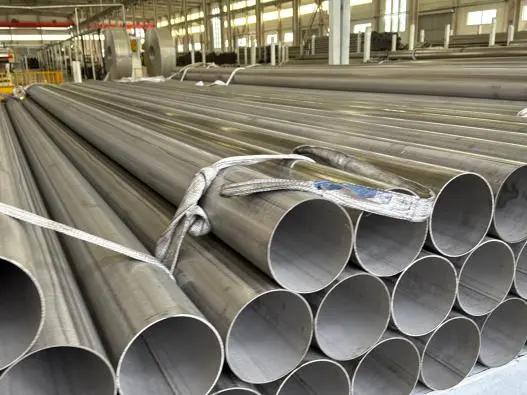
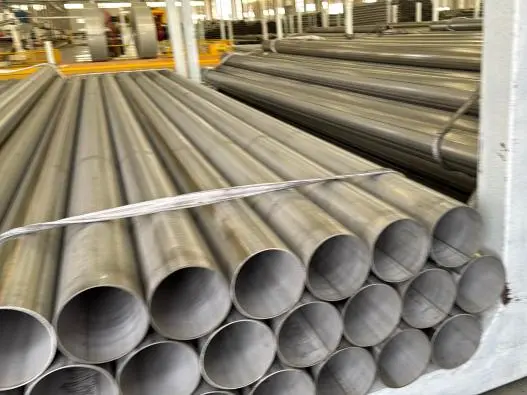
EN 10217-7 1.4541 stainless steel pipe is an austenitic grade that has been stabilised with titanium and is often used in demanding industrial settings. It has a minimum yield strength of 205 MPa and a tensile strength between 500 and 700 MPa. It is the same as AISI 321. Its titanium stabilisation keeps it from becoming sensitive during welding, and its chromium-nickel base (17–19% Cr, 9–12% Ni) keeps it from corroding at a wide range of temperatures. This grade meets the safety and durability needs of engineers and procurement teams working on long-term industrial projects, from making electricity to processing food.
|
|
|
Understanding EN 10217-7 1.4541 Stainless Steel Pipe Specifications and Properties
To choose the right pipe grade, it's important to know what the numbers really mean.
Chemical Composition and Mechanical Performance
Grade 1.4541 has 17–19% chromium, 9–12% nickel, and titanium added at a carbon content of at least 5 and no more than 0.70%. Down below 0.08%, carbon is kept. In this case, the minimum 0.2% proof strength is 205 MPa, and the elongation at break is at least 40%. This gives the material the flexibility needed for high-stress cast or welded parts.
Corrosion Resistance Advantage Over 316 and 1.4404
Adding titanium makes carbides more stable, so they don't move to the edges of grains when heated. After welding, this makes 1.4541 much less likely to rust between the grains than normal 304 or even 316L (1.4404). This difference really matters in oxidising acid service or high-temperature steam lines, where it means fewer early breakdowns and less upkeep.
EN 10217-7 Manufacturing and Quality Controls
Welded pressure tubes made to test types TC1 and TC2 make up the pipes that are provided under EN 10217-7. TC2 includes testing the weld seam without damaging it. This is done with a seam factor of v = 1.0, which shows that the weld zone works just as well as the parent metal. This level of inspection discipline and being able to track down materials is what sets EN-certified material apart from regular stainless tube in high-risk situations.
Core Industrial Applications of EN 10217-7 1.4541 Stainless Steel Pipe
This type is useful in many areas because it doesn't rust and stays stable at high temperatures. This is where it makes a difference.
High-Temperature Energy and Power Systems
The temperature must be above 500 °C for boilers, heat recovery steam generators, and superheater circuits to keep working. Grade 1.4541 stays strong up to about 800 °C because it has a high creep strength. It's better than grades that aren't stable because those grades weaken and carbide forms. This is not the first time that US power plant managers have asked for titanium-stabilized 321-equivalent tubes. Why? Because plants that have to close down quickly lose a lot of money.
Petrochemical and Chemical Processing Lines
Things like diluted sulphuric acid, process streams with chloride, and high-pressure vapours can be very rough on pipes in chemical plants and factories. The EN 10217-7 1.4541 Stainless Steel Pipe grade doesn't change much when it's heated and cooled, so it can be used for strong welds in heat exchanger shells, reactor feed lines, and process transfer pipes. How does this work? It instantly meets the needs of electroplating plants and metals firms that make electrolytic cells for rust resistance.
Food, Pharmaceutical, and Hydrogen Processing
For lines that make food and drugs to be clean, the surfaces must be able to keep germs from spreading and have been chemically cleaned more than once. These needs can be met by EN 10217-7 welded tubes, which can have a smooth inside finish. People use electricity to make hydrogen, and the pipes that carry it must be able to handle both wet hydrogen and base electrolyte. Grade 1.4541 meets this need and also helps fuel cell and electrolyser operators get long service lives.
Automotive Exhaust and Sensor Component Systems
Catalytic converter housings, exhaust pipes, and EGR tubes are all parts of an engine that work to get rid of high temperatures that come and go. In this setting, Ti-6Al4V stainless steel weighs less than regular 304 stainless steel. A very thin stainless tube is also used in NEV battery module assemblies for heat control circuits. It's important to protect against rust, but the quality of the surface and the fact that the sizes are all the same are also very important.
Comparing EN 10217-7 1.4541 with Alternative Pipe Grades
To get the right grade, you need to know where each choice works well and where it doesn't.
1.4541 vs. 1.4404 (316L): When Stabilization Beats Molybdenum
For better pitting resistance (PREN ≈ 23–26), grade 1.4404 adds 2.0–2.5% molybdenum. Intergranular corrosion can still happen in the heat-affected zone, though, unless post-weld solution annealing is done. Titanium stabilisation in Grade 1.4541 gets rid of this need, making it better for welded assemblies that will be exposed to long-term thermal loads without a post-weld heat treatment. When there is a lot of chloride in the environment, 1.4408 is the better choice. When there is a high risk of oxidation or sensitisation at high temperatures, 1.4541 is the better choice.
EN 10217-7 vs. ASTM A249/A269 Standards
People from the United States sometimes want to know if EN 10217-7 material can be used in place of ASTM A249 or A269 tubes. The answer is that they are mechanically similar, but they don't have the same certification requirements. ASTM standards use different hydrostatic or eddy-current test regimes, while EN 10217-7 lists test categories with clear NDT protocols. Cross-referencing material certificates and making sure dual-certification or equivalent testing is the right way to buy things for U.S. projects that use ASME pressure vessel codes.
Cost-Performance Balance for Procurement Teams
Titanium-stabilized grades cost a little more than regular 304, but they often have cheaper total costs of ownership in situations where the temperature is above 400 °C or where there are a lot of welds. When buying things for boilers or heat exchangers, procurement teams should think about how 1.4541 can save them money on post-weld treatment costs and allow them to go longer between inspections.
How to Identify and Procure Authentic EN 10217-7 1.4541 Pipes?
There is a real risk in the supply chain when steel pipe is fake or has the wrong label. To protect your project, the first thing you should do is make sure the vendor is qualified.
Key Verification Steps on Delivery
The real EN 10217-7 1.4541 Stainless Steel Pipe material has a mill test certificate (MTC) that lists the standard, heat number, chemical analysis, and mechanical test results. Check to see if the titanium level is near 5oC. There should be a grade number, a heat number, and the name of the company that made the pipe on it. Get XRF guns to check the source of the supply for PMI (positive material identification) if it's new or not known to be valid.
Selecting a Qualified Supplier
They should be ISO 9001 certified, have records of where their raw materials come from, and be able to show you inspection records that meet EN 10217-7 TC1 or TC2 standards. How much do you need to order? How long does it take to get? Does the supplier offer project-specific cut lengths or custom dimensions? Giving professional help after the sale is one way to make your business stand out. This could mean providing proof of agreement with ASME or PED standards.
Smart Procurement for Bulk and Project Orders
When you buy in bulk from a mill, you can save money on markups added by brokers. Before you place a full order, learn about the MTCs. Vertically integrated companies often send more than one type of pipe in the same package. This saves U.S. buyers money on freight costs and makes it easy for them to fill out customs paperwork.
Ensuring Optimal Performance and Longevity
It's not enough to just buy the right materials. Taking care of it and treating it correctly will see it through the whole project lifecycle.
Installation, Cutting, and Welding Best Practices
Lay pipes out flat on padded racks to keep them clean and away from carbon steel. Cut with stainless-steel-only tools to keep iron particles from getting embedded. To keep the rust protection in the weld zone high, use low-heat TIG or plasma methods and AWS ER321 or ER347 filler wire. The chromium oxide layer is fixed after welding by cleaning or passivation in places where discolouration can be seen.
Routine Maintenance and Inspection Intervals
In places with a lot of salt, you should check the outside surfaces visually once a year. Every so often, test welded parts for pressure according to EN 13480 or ASME B31.3. Ultrasonic thickness measurements at high-stress elbows and fittings find walls that are getting thinner before they become a risk of failure.
Long-Term Compatibility with Evolving Project Demands
The titanium-stabilized 1.4541 grade is already listed in the PED (Pressure Equipment Directive) and ASME Section II Part D allowable stress tables. This means that it will still be a legal material choice even as rules get stricter. It can also be recycled, which helps with sustainability reporting goals that industrial buyers are becoming more aware of.
Conclusion
It's important for industrial pipes to have a grade that can stand up to high temperatures, keep welds from becoming weak, and work the same way mechanically everywhere. That's what EN 10217-7 1.4541 Stainless Steel Pipe does. Because of its unique properties, it is used to make electricity, cook food and medicines, run hydrogen systems, and make car parts. That way, projects will keep going as planned for as long as you buy from suppliers that you can keep track of. Engineers and procurement teams need to know the grade's confirmed specs and be able to honestly compare it to other choices.
FAQ
Why is the 1.4541 grade preferred for high-temperature service?
Titanium stays solid as TiC when heated above 425 °C. It does not let chromium carbide form around the grains. This stops the process that would make it worse, such as welding or long-term heat service, which would make it more likely to rust. For that reason, this grade is often used in superheaters and boiler tubes. It has good creep strength up to about 800 °C.
How do I verify that pipes genuinely meet EN 10217-7?
Ask for the full mill test certificate that lists the heat number, chemical make-up (including titanium content), mechanical test results, and test group (TC1 or TC2). Ti should have a temperature of at least 5oC. A new supplier checks a piece from a batch with PMI to make sure it is the right grade before it is used to make something.
What is the practical difference between 1.4541 and 1.4404 in service?
Adding molybdenum to Grade 1.4404 (316L) makes it less likely to pit when salt is present. Titanium stabilisation is used in Grade 1.4541 to keep riveted parts together when they are fired for a long time. When you need to work with media that is high in chloride at room temperature, 1.4404 is usually better. 1.4541 is the better choice if it needs to be bonded and then used at high temperatures without first being tempered.
Source: Your EN 10217-7 1.4541 Stainless Steel Pipe Through YOUFA
Since 2017, YOUFA, which does business as YOUFASS Stainless Steel Pipe Co., Ltd., has made products for stainless steel pipes. A lot of steel is made there every year—50,000 tons on 15 lines. Our company is a trustworthy provider of EN 10217-7 1.4541 Stainless Steel Pipe. We offer traceable MTCs, quality controls backed by ISO 9001, and quick project delivery to industrial buyers in the U.S. Email our team at info@youfass.com or visit youfass.com right away to get a price for your job.
Online Message