
Oct 12, 2026
Super Duplex UNS S32750 Welded Steel Pipe for Energy Infrastructure
When energy infrastructure projects demand materials that hold up under extreme pressure, corrosive fluids, and chloride-rich environments, the ASTM A928 UNS S32750 welded steel pipe consistently stands out as the preferred choice among engineers and procurement professionals across the U.S. and globally. This article walks through everything you need to know — from metallurgy to sourcing — so you can make a well-informed decision for your next project.
|
|
|
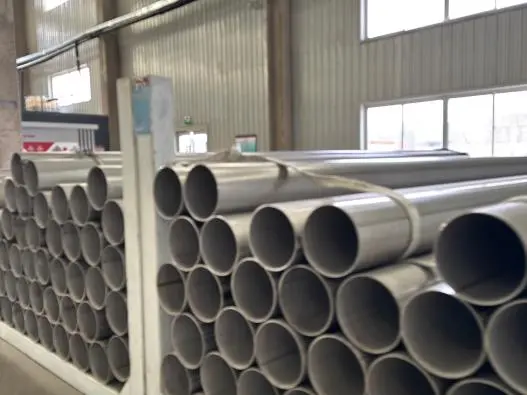
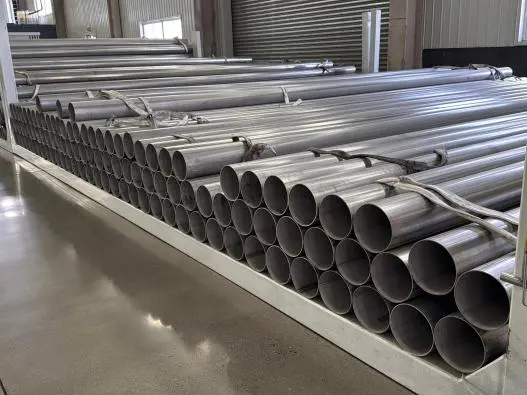
Understanding ASTM A928 UNS S32750 Welded Steel Pipe
Super duplex stainless steel UNS S32750, also known as Duplex 2507, belongs to a high-alloy family with a balanced ferritic-austenitic microstructure. It is different from regular duplex grades because it has higher amounts of chromium (25%), molybdenum (4%), and nitrogen (0.28%). This gives it a Pitting Resistance Equivalent Number (PREN) of ≥42, which is much higher than the 35 level that defines super duplex performance.
Mechanical Properties That Matter
The mechanical performance of S32750 is truly amazing. Based on the requirements of ASTM A928, this grade provides:
- Tensile strength: 800 MPa or more
- Yield strength (0.2% offset): ≥550 MPa
- Elongation: ≥15%
- Hardness: ≤32 HRC
These numbers are almost twice as high as those for 316L stainless steel (tensile ≈515 MPa). This means that smaller wall sections can hold the same amount of weight, which lowers the cost of the project and the weight of the materials.
Heat Treatment for Peak Performance
The pipe goes through solution heating at 1080°C–1100°C and then rapid water cooling after electric fusion welding (EFW). This process gets rid of any sigma phase or carbide precipitation that forms during welding. This restores the ideal balance of 40–60% ferrite-to-austenite and confirms that the metal is fully resistant to corrosion.
Corrosion Resistance Compared
The difference in rust resistance between S32750 and other popular options is big. In ASTM G48 Method A ferric chloride pitting tests, S32750 can handle temperatures above 50°C before it starts to pit, whereas UNS S32205 (PREN ≥35) fails around 35°C, and 316L (PREN ≈24) fails below 15°C. This difference is very important for operations in marine, chemical processing, and irrigation settings.
Key Applications of UNS S32750 Welded Steel Pipe in Energy Infrastructure
The mix of high mechanical strength and excellent corrosion protection makes super duplex 2507 pipe useful in a number of severe energy applications.
Oil & Gas and Offshore Platforms
High-pressure sour gas and chloride-filled seawater create an environment in underwater and offshore pipeline systems that breaks down normal stainless steel in just a few years. On offshore sites, ASTM A928 UNS S32750 Welded Steel pipes with an outside diameter (OD) of 114.3 mm to 2500 mm and a wall thickness of 3 mm to 50 mm are used for topside piping, injection lines, and process valves. Their ability to prevent stress corrosion cracking (SCC) when exposed to hydrogen sulfide is a known benefit in systems that meet NACE MR0175 standards.
Power Plants and Petrochemical Facilities
In thermal power production and petrochemical refining, high-pressure steam and harsh, acidic condensates are widespread. These situations can be handled by Duplex 2507 welded pipes, which also cut down on repair times. The material can withstand temperatures up to 300°C without losing its mechanical integrity, which is a well-known benefit. This temperature range covers most mid-temperature process piping in refinery settings.
Hydrogen Production Equipment
The U.S.'s hydrogen energy infrastructure is growing quickly. To keep up, electrolysis equipment like bipolar plates, electrode stacks, and process pipes needs materials that can withstand both chemical attack and mechanical wear. Welded S32750 pipe works well in alkaline and PEM electrolysis environments, while weaker alloys would break down quickly in concentrated KOH solutions or acidic membranes.
Comparing ASTM A928 UNS S32750 with Other Pipe Grades
Choosing the right pipe grade is rarely straightforward. I'll break down the main similarities so you can see how they fit with your project needs.
UNS S32750 vs. UNS S32205 (Duplex 2205)
Both types have a duplex lattice, but S32750 is much stronger and less likely to rust. The PREN for S32205 is about 35–38, which is good for slightly corrosive settings. The PREN for S32750 is ≥42, which is better for more active chloride service. As long as the budget is tight and the risk of moderate corrosion is acceptable, S32205 is still a good choice. However, the efficiency advantage of S32750 makes up for the higher price for offshore, underwater, or high-chloride process piping.
UNS S32750 vs. 316L Stainless Steel
316L is commonly used for industrial pipes, but its PREN of about 24 makes it unsuitable for high-pressure or chloride-rich environments. 316L has a yield strength of about 205 MPa, which is less than 40% of S32750. In important energy applications, switching from 316L to S32750 is not just an improvement; it is often a safety requirement.
Welded (ASTM A928) vs. Seamless (ASTM A790)
ASTM A790 seamless duplex pipes don't have a lengthwise weld seam, which some standards like for high-pressure use. Still, ASTM A928 EFW lines that go through full ultrasonic testing (UT) and 100% radiographic testing (RT Class 1) have weld quality that is about the same. EFW fabrication can also make bigger widths (up to 2500 mm OD), which isn't possible with seamless making. ASTM A928 UNS S32750 Welded Steel pipe is the most practical and cost-effective choice for large-diameter uses.
Procurement Insights: Sourcing UNS S32750 Welded Steel Pipes
When purchasing super duplex 2507 welded pipe, teams have to deal with a market where fake or low-quality goods are common. Here's what you should put first.
Certifications and Documentation
You should only do business with providers of ASTM A928 UNS S32750 Welded Steel pipe who give you all of the paperwork you need, like Mill Test Results (MTR 3.1/3.2 per EN 10204), WPS/PQR records, UT/RT test results, and MPS. Check to see if the company has ISO 9001 quality management certification, PED compliance for pressure equipment, and the ability to have a third-party inspection (TPI). Manufacturers who are TÜV-certified add an extra layer of independent proof to your supply chain to keep it safe.
MOQ, Lead Time, and Pricing Variables
One useful benefit of buying from a manufacturer with enough production capacity is that you can be flexible with your needs. MOQ as low as one pipe lets you order less for smaller projects without having too much on hand. When buying in bulk, which happens a lot in the supply chains of EPC contractors, consolidated orders lower unit prices and make logistics easier. Lead times of 7 days to port dispatch are possible for manufacturers who keep stock and have more than one production line.
Distribution Channels for U.S. and European Projects
For American buying teams, make sure the supplier can give you customs paperwork, port-of-origin certificates, and full tracking from the heat number to the finished product. Reliable manufacturers with a history of sending goods to the U.S. and Europe lower the risk of customs delays and changes to project schedules.
Best Practices for Welding and Handling UNS S32750 Pipes
Careful process control is needed when welding super duplex stainless steel. If you do it wrong, you can throw off the balance between ferrite and austenite, which can make the rust protection below what is required.
Welding Techniques and Consumable Selection
For S32750 pipe joints, GTAW (TIG) is the best way to do the root pass. For thicker walls, GMAW or SAW is used for the fill pass. To make up for dilution and keep PREN ≥42 in the weld deposit, use over-alloyed filler metals like ER2594. To keep the sigma phase from forming in the heat-affected zone (HAZ), don't let the interpass temperatures go above 150°C.
Post-Weld Treatment and NDT
To bring back the chromium oxide layer on the weld cap and HAZ, passivation or pickling paste should be used on S32750 field welds. Solution annealing followed by water quenching restores the full microstructural integrity of welds that were made in a mill. NDT procedures should include a full X-ray (RT) check for Class 1 according to ASTM A928 and a hydraulic pressure test. Charpy V-notch impact testing of the weld and HAZ confirms that they are tough at low temperatures, which is important for use in the Arctic or other cold places.
Storage and Handling
Keep ASTM A928 UNS S32750 Welded Steel pipe lines away from carbon steel to keep iron from getting into them. When you lift something, use nylon slings instead of steel chains. Keep the ends of pickled and annealed pipes covered to keep the insides from getting dirty before installing them.
Conclusion
When normal stainless types don't work well for energy systems, ASTM A928 UNS S32750 Welded Steel pipe is a good choice. It is ideal for offshore, oil and gas, hydrogen production, and petrochemical systems because it is very strong, doesn't pit or crack when exposed to chloride, and can be made in large diameters through EFW manufacturing. With the right soldering techniques and buying skills, project teams can make sure that the parts will last a long time and cost less over their entire life.
FAQ
Why does S32750 outperform 316L in energy applications?
The PREN for S32750 is ≥42, while the PREN for 316L is about 24. It has almost three times the yield strength. In environments with a lot of salt or high pressure, 316L will pit or crack while S32750 will stay strong.
Can UNS S32750 welded pipe be customized for specific project dimensions?
Yes. When making EFW, the OD can be anywhere from 114.3 mm to 2500 mm, and the wall thickness can be anywhere from 3 mm to 50 mm. Length can be random or set, and the ends can be plain or beveled, based on how they will be installed.
How do I verify supplier quality before purchasing?
Ask for MTR 3.1/3.2 paperwork, WPS/PQR records, and inspection reports from a third party. Check that they are certified to ISO 9001, PED, and TÜV. Ask for ASTM G48 corrosion test results and RT/UT reports that are specific to the batch that was made.
Is ASTM A928 EFW pipe acceptable for high-pressure service?
Yes, ASTM A928 EFW pipe meets the integrity requirements for pressure service, such as most oil and gas and petrochemical specifications, when it is made to Class 1 standards and fully tested hydrostatically and with radiographs.
What is the standard heat treatment for this grade?
Following solution annealing at 1080°C to 1100°C and then rapid water quenching is the standard method according to ASTM A928. This method makes sure that the ferrite-austenite microstructure is correct and gets rid of any unwanted secondary phases.
Get a Quote for ASTM A928 UNS S32750 Welded Steel Pipe from YOUFA
YOUFA operates 15 production lines that make 50,000 tons of stainless steel pipe every year. These lines are approved to meet ISO 9001, PED, ISO 17025, and TÜV standards. As a trusted ASTM A928 UNS S32750 Welded Steel pipe seller, our MOQ is just one pipe. We can deliver to Tianjin Port in as little as seven days. Visit youfass.com or email our technical team at info@youfass.com right now to get product specifications, MTR documentation, or a cheap bulk price.
Online Message