
Oct 13, 2026
Super Duplex 2507 Weld Pipe Provides Strength in Marine Applications
The stakes are very high for engineers and supply managers who have to choose pipe materials for use in coastal settings. Poor materials can be destroyed in just a few months by saltwater, high pressure, and chemicals. The ASTM A928 Super Duplex 2507 Weld pipe immediately addresses these issues. This pipe is made according to UNS S32750 standards using Electric Fusion Welding (EFW). It has a minimum tensile strength of 800 MPa and a Pitting Resistance Equivalent Number (PREN) greater than 42, which makes it one of the most corrosion-resistant welded pipe grades for marine and offshore use today.
|
|
|
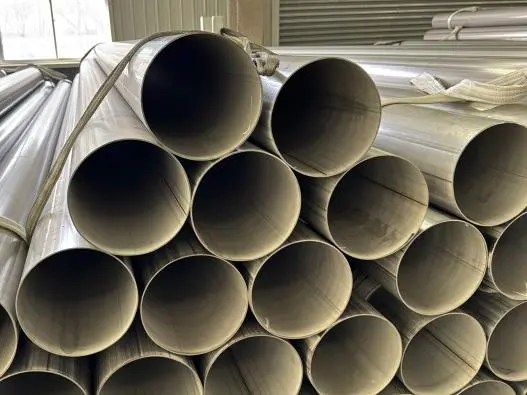
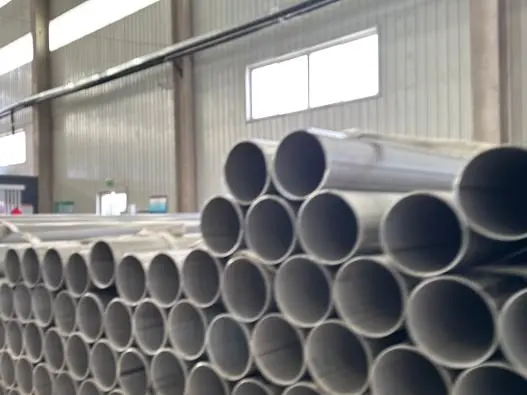
Understanding ASTM A928 Super Duplex 2507 Weld Pipe
What the ASTM A928 Standard Actually Requires?
ASTM A928 specifies the rules for EFW stainless steel pipe made with added filler metal. It has five weld quality classes, ranging from fully radiographed double-welded (Class 1) to spot-radiographed types. The standard for Super Duplex 2507 (UNS S32750) calls for a microstructure that is a balance of austenite and ferrite, with about 40–60% ferrite. This makes the material stronger and less likely to break when stressed in places with a lot of salt.
Chemical Composition and Microstructural Integrity
Chrome makes up about 25% of Super Duplex 2507. Nickel makes up 7%, molybdenum makes up 4%, and nitrogen makes up 0.27%. Its high PREN value comes from this mix, which makes it different from other duplex types. Because austenite and ferrite exist together in a two-phase microstructure, chloride-induced cracks don't spread. This is a problem that single-phase stainless steels like 316L often have in military service.
Mechanical Properties and Heat Treatment
After welding, solution annealing at 1,080°C followed by water cooling evens out the grain and stops the growth of intermetallic phases like sigma that are bad for the metal. This creates a pipe with a Charpy impact value low enough to work at -50°C and a minimum yield strength of 550 MPa. Because of these things, the UNS S32750 weld pipe is the best choice when there are both structural loads and acidic media.
Comparing Super Duplex 2507 Weld Pipe with Alternatives
Picking the right metal grade isn't always simple. I'll show you how Super Duplex 2507 weld pipe stacks up against the other choices that buying teams seek.
Super Duplex 2507 vs. Duplex 2205
The PREN for duplex 2205 (UNS S32205) is about 35, which is good enough for many industrial settings. But there is a big gap between the pipes when they are fully buried in water or when they are used offshore where chlorine is present. Super Duplex 2507 has a tensile strength 15–20% higher than 2205 and a PREN above 42. This means that walls don't have to be as thick and the structure as a whole is lighter, which is great for designing structures for offshore environments.
Super Duplex 2507 Weld Pipe vs. Seamless 2507
When you make pipes this way, there is no joint gap, which can be useful for high-pressure uses with very small sizes. For ODs greater than 400 mm, ASTM A928 Super Duplex 2507 Weld pipe is the best and most cost-effective choice for bigger diameters. It is not possible for seamless production to cover the OD range of 114.3 mm to 2,500 mm that YOUFA's EFW Super Duplex 2507 pipe has.
Super Duplex 2507 vs. 316L Stainless Steel and Carbon Steel
Stainless 316L has a PREN of only about 25, which means that it can pit in seawater above 25°C. Outside treatment and cathodic protection are needed for carbon steel, which raises the chance of failure and costs for maintenance. The total cost of owning Super Duplex 2507 consistently goes down over the course of 20 years, even though it costs more at first. Because it doesn't need as many checks and replacements, as it doesn't rust as often.
Key Application Areas of Super Duplex 2507 Weld Pipe in Marine Industry
If you need a pipe that works well in tough coastal and offshore environments, Super Duplex 2507 is the way to go. In terms of service, these are the main places where this grade always does a good job:
- Offshore oil and gas platforms: saltwater cooling lines, fire control systems, and topside process pipes often use Super Duplex 2507 because it doesn't rust or pit in areas where saltwater stays still for a long time, and the temperature can reach over 40°C.
- In seawater desalination plants, pipes are put through high pressure, concentrated brine, and changing temperatures in reverse osmosis (RO) systems and multistage flash (MSF) desalination units. Because it doesn't crack under salt stress, Super Duplex 2507 is a good choice for both feed and reject lines.
- Shipbuilding and marine structures: Large ships' ballast water treatment systems, propeller shaft housings, and seawater intake ports benefit from the alloy's high strength and long-term salt protection without the extra weight of options with wider walls.
This group of applications all have one thing in common: failure can be very bad and cost a lot of money. If you choose the right material for your pipes, you will have less operating risk for the whole life of the asset.
Fabrication and Welding Best Practices
Super Duplex 2507 welding needs a small amount of heat, normally between 0.5 and 2.5 kJ/mm, to keep the ferrite-austenite balance in the weld zone. It's best to use filler metal that is the same as UNS S32750 or a slightly alloyed version of it. ASTM A928 says that after the join, pressure-service parts must go through solution annealing and water cooling.
Inspection and Testing Protocols
Ultrasonic testing (UT) and radiography testing (RT) are both ways to find breaks below the surface and make sure that welds are strong. Testing with hydrostatic pressure proves that it can hold pressure. Checking the Mill Test Certificate (MTC) chemically and mechanically makes sure that every batch of pipes meets the required PREN and strength values before they are shipped.
Procurement Considerations for ASTM A928 Super Duplex 2507 Weld Pipes
Certifications and Documentation You Should Require
If you need ASTM A928 Super Duplex 2507 Weld pipe for a naval project, you must send at least an MTC/MTR to 3.1 or 3.2 level according to EN 10204, WPS/PQR records that show qualified welding processes, UT/RT reports, and a Material Process Sheet (MPS). Getting certifications from ISO 9001, PED, ISO 17025-accredited labs, and TÜV gives people even more peace of mind when they decide what to buy.
Pricing, Lead Times, and MOQ Factors
Super Duplex 2507 raw plate costs three to four times as much as 316L stainless steel because it has more alloys. For business-to-business buyers, YOUFA only requires a single pipe as a minimum order quantity. This makes it less likely that smaller project packages will run out of stock. Delivery to Tianjin Port can happen as quickly as seven days after the order is accepted for sizes that are in stock. This is very helpful for projects that need to get things set up quickly.
Supply Chain Transparency and After-Sales Support
Coordinating third-party inspections (TPIs), being able to track heat numbers, and having export paperwork ready are all normal parts of a supply chain that works. If someone is buying something for a naval project in another country, they should make sure that the seller can work with TPI agencies, translate papers, and answer technical questions after delivery, especially ones that have to do with getting the welding process approved.
Ensuring Quality and Technical Support
Welding Procedure Qualification
A properly approved WPS/PQR package for Super Duplex 2507 EFW pipe lists the range of heat that can be used, the type of filler, the lowest temperature that can be reached between passes (usually below 150°C), and the heat treatment factors that can be used after the welding process. Before they will let the pipe be installed, most marine owners and classification bodies need these papers.
Testing Standards Applied at YOUFA
In YOUFA's ISO 17025-accredited lab, each batch of products goes through RT, UT, hydraulic testing, tensile testing, and chemical analysis. With this in-house feature, test results can be produced faster than when testing is done by someone else. This speeds up delivery without impacting the data's accuracy.
Maintenance Monitoring for Long-Term Service
Everything, even Super Duplex 2507, should have regular checks. It is recommended to keep an eye out for crevice corrosion at the sides of flanged joints and gaskets, especially in areas where saltwater pools. Once a year, visual and ultrasonic inspections of high-risk joints help offshore safety management systems meet regulatory requirements and extend the time it takes for joints to fail.
Conclusion
Pipes that are used in the ocean need to be made of strong materials that will last. For projects in offshore, desalination, and ships, ASTM A928 Super Duplex 2507 Weld pipe made to ASTM A928 standards with EFW technology and solution-annealed finishing is the best way to protect against rust, make structures strong, and keep records. Because it has a high PREN value, a wide diameter range (up to 2,500 mm OD), and strict inspection rules, it is a good buy. This grade consistently shows that it meets the needs of procurement teams that have to balance performance with total cost when they need to buy marine pipes.
FAQ
What is the difference between ASTM A928 and ASTM A790 for Super Duplex 2507?
ASTM A790 covers seamless and standard welded pipe, while ASTM A928 specifically governs EFW pipe produced with filler metal addition, typically for larger diameters. A928 also defines five weld quality classes based on radiographic examination requirements, giving engineers more granular control over inspection levels for pressure service applications.
Why is heat input critical during welding of Super Duplex 2507?
Excessive heat input promotes sigma phase precipitation, which reduces toughness and corrosion resistance. Insufficient heat input causes excessive ferrite content, also harming performance. Controlling heat input between 0.5 and 2.5 kJ/mm, combined with interpass temperature limits below 150°C, maintains the correct austenite-ferrite balance in the weld zone.
How do I verify the PREN of supplied pipe?
PREN is calculated from the MTC chemical analysis using the formula: %Cr + 3.3(%Mo + 0.5%W) + 16%N. For Super Duplex 2507 (UNS S32750), the minimum acceptable PREN is 42.5. Always request a 3.1 or 3.2 level MTC and cross-check the calculation independently before accepting material for critical service.
Can Super Duplex 2507 EFW pipe be used in cryogenic service?
Super Duplex 2507 maintains adequate toughness to approximately -50°C, which covers most offshore operating conditions. For true cryogenic applications below this threshold, austenitic grades such as 304L or 316L are the standard choice due to their superior low-temperature impact properties.
What weld classes are available under ASTM A928?
Class 1 is double-welded and fully radiographed. Class 2 is double-welded without radiography. Class 3 is single-welded and fully radiographed. Classes 4 and 5 involve spot radiography at different percentages. Class 1 is the most common specification for offshore and marine pressure piping where full weld integrity verification is required.
Request a Quote for ASTM A928 Super Duplex 2507 Weld Pipe from YOUFA
Youfa Stainless Steel Pipe Co., Ltd. is a company that makes ASTM A928 Super Duplex 2507 Weld pipe. It has 15 production lines and makes 50,000 tons of pipe every year. We offer pipe with full MTC, UT/RT, and WPS/PQR documentation. The OD ranges from 114.3 mm to 2,500 mm. The MOQ is just one pipe, and it can be sent to Tianjin Port in as little as seven days. Visit youfass.com or email us at info@youfass.com to talk about the needs of your project.
Online Message