
Sep 23, 2026
Selecting ASTM A928 UNS S31803 CL1 EFW Pipe for Industrial Piping Systems
When engineers and procurement managers search for a pipe material that holds up under corrosive, high-pressure conditions, duplex stainless steel consistently rises to the top of the list. The ASTM A928 UNS S31803 CL1 EFW pipe is a welded large-diameter duplex pipe manufactured to one of the most demanding pressure piping standards in the industry. It combines the strength of ferritic steel with the toughness of austenitic steel, giving buyers a material that resists chloride-induced stress corrosion cracking, pitting, and crevice corrosion far better than standard 304 or carbon steel alternatives. This guide walks you through specifications, comparisons, applications, and purchasing decisions so you can source with confidence.
|
|
|
Understanding ASTM A928 UNS S31803 CL1 EFW Pipe: Specifications and Properties
Chemical Composition and Mechanical Strength
UNS S31803 has about 22% chromium, 5–6% nickel, 3% molybdenum, and controlled amounts of nitrogen. This process makes a matrix with two phases: about half austenite and half ferrite. The minimum yield strength is 65 ksi (450 MPa), and the minimum tensile strength is 90 ksi (620 MPa). This is a lot better than 304 stainless steel, which has a yield strength of about 30 ksi. When systems are working at high pressures, these numbers are most important because wall thickness directly affects how much the system costs and how much it weighs.
Duplex Advantages Over Conventional Stainless Steel
Many engineers who switched from 316L or 304 to duplex grades say that the time between service is much longer in chloride environments. The Pitting Resistance Equivalent Number (PREN) for duplex S31803 is about 34–36, while the PREN for 316L is about 24. In real life, this means better performance in work with salt, brine, and acidic chemicals. Even though carbon steel is cheaper at first, it needs to be coated regularly and usually starts to corrode within two to five years in harsh environments. Duplex piping, on the other hand, usually lasts twenty years or more.
EFW Manufacturing Process and Heat Treatment
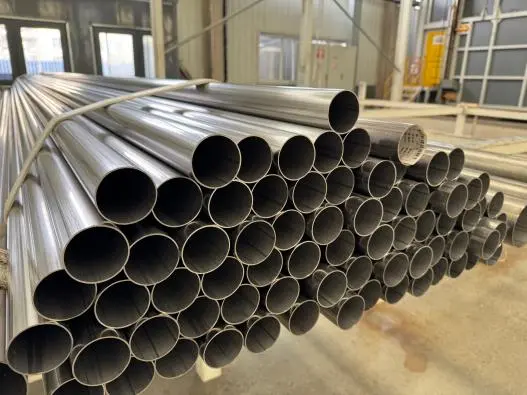
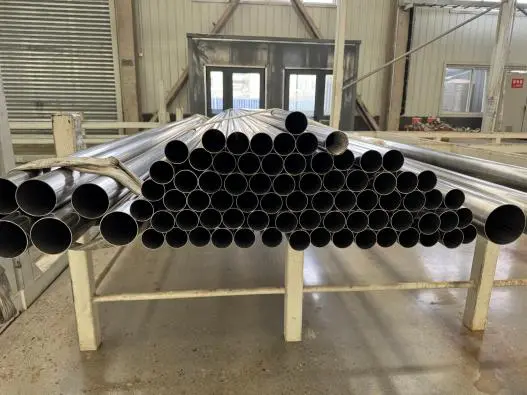
Electric Fusion Welding uses a high-energy arc to join heavy-gauge plate with filler metal to make pipes with widths from 114.3 mm to 2500 mm, which is bigger than what can be made cheaply with seamless manufacturing. Each pipe goes through solution heating and then rapid water cooling after it has been welded. This heat treatment gets rid of harmful intermetallic phases like the sigma phase. This restores the balanced duplex microstructure and makes sure that the material's ability to bend is not affected. Before they are sent out, YOUFA's EFW lines are put through RT/UT, hydrostatic tests, and mechanical and chemical analysis.
Comparing ASTM A928 UNS S31803 CL1 with Other Duplex Stainless Steel Pipes
S31803 vs. S32205: What Changes?
Technically, S32205 is a limited chemistry form of S31803, which means that the minimum numbers for chromium (22%), molybdenum (3.0–3.5%), and nitrogen (0.14–0.20%) are stricter. Modern pipes are usually approved to both UNS numbers when they are bought. For most industrial uses, the difference in corrosion resistance isn't very big, but specifying S32205 minimum chemistry adds a measurable safety margin for chloride service that is very harsh. Following the rules of ASTM A928 for welded pipes, ASTM A928 UNS S31803 CL1 EFW pipe is acceptable.
ASTM A928 vs. ASTM A790: Knowing the Standard
ASTM A790 governs duplex stainless steel pipes that are seamless or welded and are used for general service. ASTM A928 governs EFW pipes that are meant for pressure use and has tighter standards for weld inspection. Under A928 standards, CL1 refers to a single-weld seam pipe that has been X-rayed to confirm that the weld is complete and solid. Because of this, A928 CL1 is the best option for pressure-rated systems that need weld quality paperwork because it is required by contract or code.
EFW vs. Seamless vs. ERW
Here is a direct comparison of the three ways that duplex pipe can be made:
- EFW (ASTM A928): Best choice for large diameters above 8 inches. Uses filler metal, full RT/UT inspection, solution annealed post-weld. Suitable for pressure-rated service and critical industrial systems.
- Seamless: Available in smaller diameters; no weld seam but more expensive per meter at larger sizes and often limited in availability above 12 inches in duplex grades.
- ERW (Electric Resistance Welded): No filler metal; weld zone is heat-affected parent material. Generally not favored for aggressive corrosive service due to potential microstructural inconsistency at the weld line.
ERW stands for "Electric Resistance Welded." There is no replacement metal; the parent material in the weld zone has been changed by heat. Because of the chance of microstructural variation at the weld line, it is usually not recommended for strong corrosive service.
Practical Applications and Industry Use Cases of ASTM A928 UNS S31803 CL1 EFW Pipe
Oil & Gas and Offshore Environments
Because it is always exposed to seawater, duplex stainless steel is often used for both subsea and topside pipes in offshore bases. An ASTM A928-rated EFW bidirectional pipe can handle both the mechanical loads from waves and the electrical attacks from high-chloride seawater without the need for extra coating systems. Flowlines, injection headers, and lines that handle produced water are common places to use them.
Chemical Processing and Power Generation
In chemical plants, process lines that move acids, chlorides, or mixed-phase fluids need a material that doesn't rust everywhere. Duplex S31803 works well in places with phosphoric acid, organic acid, and bleach nearby. These pipes are used in flue gas desulfurization (FGD) systems at power plants. In these systems, sulfur-containing condensates and chlorides produce harsh conditions that destroy carbon steel and test normal austenitic grades.
New Energy and Hydrogen Applications
Equipment for making hydrogen, like electrolysis systems and bipolar plate assemblies, needs ASTM A928 UNS S31803 CL1 EFW pipe that can handle electrochemical attack in salty electrolyte environments. The high molybdenum content in S31803 gives these systems the perfect resistance to crevice corrosion. This makes EFW duplex pipe a good choice for hydrogen infrastructure where long service life keeps operations running smoothly.
Procurement Considerations for ASTM A928 UNS S31803 CL1 EFW Pipe
Certifications and Documentation to Request
Before making an order, buyers should make sure that the seller is certified by ISO 9001, PED, and an ISO 17025 laboratory. To make sure of the quality of the weld, ask for WPS/PQR records along with the Material Test Certificate (MTC 3.1 or 3.2). Third-Party Inspection (TPI) reports and UT/RT test records show that the integrity of the weld has been checked by a third party. This is very important for projects that follow ASME B31.3 or similar pressure piping codes.
Pricing, MOQ, and Lead Times
How much a large-diameter duplex EFW pipe costs depends on its outside diameter (OD), wall thickness, and market nickel/molybdenum fees. YOUFA lets you place an order with as little as one pipe, so you don't have to commit to a large amount of work for smaller projects or test orders. Standard wait times depend on whether the item is in stock or being made in small batches. The fastest shipping time is 7 days to Tianjin Port. The thickness of the walls can be anywhere from 3 mm to 50 mm, and the lengths can be set or chosen at random, depending on the needs of the project.
Packaging and Logistics
Pipes are shipped in wooden boxes, and a steel frame can be added for heavy-wall sections if needed. The boxes are bound with triangular bands and wrapped in woven bags to protect the surfaces during shipping. The surface is pickled and annealed, and the ends can be finished with a plain or beveled edge to fit the way they will be welded in the field.
How to Choose the Right ASTM A928 UNS S31803 CL1 EFW Pipe for Your Needs?
Define Your Service Conditions First
First, write down what the fluid is made of, what its operating temperature is, what its highest working pressure is, and if there are any cyclic loading conditions. Duplex S31803 works best between -50°C and +250°C. Above that temperature range, intermetallic phase precipitation starts to happen, which is not good. For use in cold environments below -50°C, certain impact tests must be done on duplex types to make sure they are tough.
Match Pipe Dimensions to System Design Pressure
To figure out the wall thickness of a pipe according to ASME B31.3, you need to know its minimum bending strength. Because S31803 has almost twice the yield strength of 304 steel, engineers can often ask for a thinner wall, which lowers the weight of the material and the cost to buy it. Instead of guessing what the lowest running pressure should be, use the actual certified mechanical test values from the MTC.
When CL1 Is the Right Call
If your project code, the client's specifications, or your insurance company say that an X-ray of the weld seam is needed, choose CL1. For gravity-flow or fluid transport systems that don't use pressure, CL3 (no radiography) might be fine. But for any pressure-rated line above 150 psig in acidic service, CL1 is the only choice that makes sense.
Conclusion
Selecting the right pipe material for pressure and corrosive work is one of the most important decisions in any industrial plumbing job. It has been proven that ASTM A928 UNS S31803 CL1 EFW pipe has a high mechanical strength, a strong weld, and is resistant to the corrosion processes that make carbon steel and standard austenitic grades wear out faster. Duplex stainless steel keeps showing how valuable it is over time in places like chemical plants, hydrogen production facilities, and platforms in the ocean. Follow the steps, comparisons, and choice criteria in this guide to be sure you're on the right track.
FAQ
What is ASTM A928 UNS S31803 CL1 EFW pipe?
This is a big duplex stainless steel pipe made by Electric Fusion Welding that meets the ASTM A928 pressure plumbing standard. CL1 means a single weld crack that needs to be inspected with X-rays. The duplex alloy chemistry is named UNS S31803, which is made up of about 22% Cr, 5% Ni, and 3% Mo. It is very strong and doesn't rust.
What is the difference between S31803 and S32205?
The chemistry of S32205 is tighter than that of S31803, and it has higher minimum amounts of chromium, molybdenum, and nitrogen. These days, most duplex pipes are certified to both UNS numbers. The PREN difference isn't very big, but S32205 has a slightly better start in chloride conditions that are very harsh.
Is post-weld heat treatment mandatory for EFW duplex pipe?
Yes, solution annealing followed by rapid water cooling is needed to get rid of the sigma phase and other intermetallic compounds that form when metals are welded together. If you skip this step, the weld heat-affected area will have brittle spots that will break under stress or cycle loads.
Where is duplex S31803 pipe most commonly specified?
Most of the time, it is used in oil and gas, offshore, chemical processing, power generation FGD systems, hydrogen production equipment, and naval pipe systems. Any system that is exposed to chloride and works under pressure is a good choice.
Can these pipes be used for hydrogen production piping?
Yes. The molybdenum and nitrogen in S31803 make it resistant to the electrochemical corrosion that happens in electrolysis settings. This grade is good for building infrastructure for making and handling hydrogen.
Get a Fast Quote on ASTM A928 UNS S31803 CL1 EFW Pipe from YOUFA
YOUFA is a producer that is TÜV and ISO 9001 approved. They have 15 production lines that make 50,000 tons of steel every year. They stock ASTM A928 UNS S31803 CL1 EFW pipe with an outside diameter (OD) of 114.3 mm to 2500 mm. YOUFA ships with full 3.1/3.2 MTCs, RT/UT reports, and TPI paperwork because they are a reliable ASTM A928 UNS S31803 CL1 EFW pipe provider. The minimum order quantity is one pipe. To get a quote right away, email our technical team at info@youfass.com or go to youfass.com.
Online Message