
Jul 16, 2026
Performance Advantages of ASTM A312 GR TP316 Stainless Pipes
ASTM A312 GR TP316 Stainless Steel Pipes deliver exceptional corrosion resistance through their molybdenum-enriched composition, typically containing 16.0-18.0% chromium, 10.0-14.0% nickel, and 2.0-3.0% molybdenum. This alloy combination provides superior pitting and crevice corrosion resistance in chloride-bearing environments, outperforming standard austenitic grades. With a minimum tensile strength of 515 MPa and a yield strength of 205 MPa, TP316 pipes excel in high-temperature and chemically aggressive applications across chemical processing, marine installations, pharmaceutical manufacturing, and oil and gas operations where material integrity directly impacts operational safety and lifecycle economics.
|
|
|
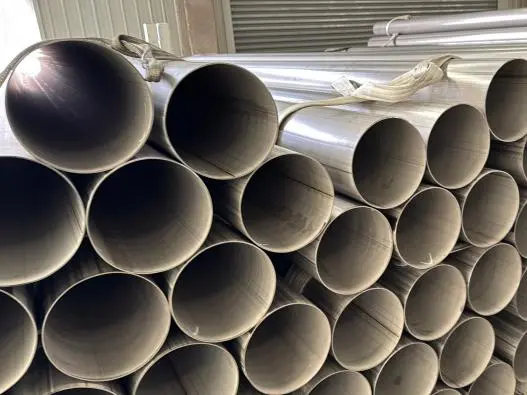
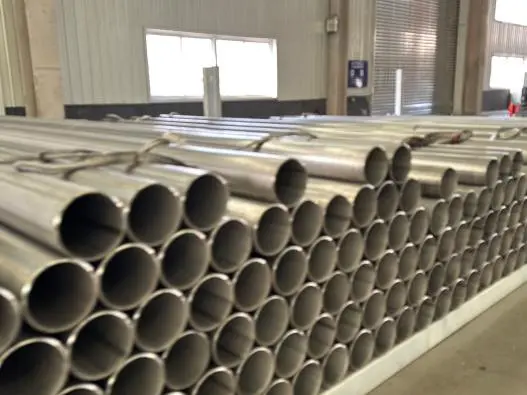
Understanding ASTM A312 GR TP316 Stainless Steel Pipes
ASTM A312 establishes the benchmark specification for austenitic stainless steel piping used in high-temperature and corrosive service conditions. The standard governs seamless, welded, and heavily cold-worked pipes, ensuring consistent quality across manufacturing processes. Grade TP316 occupies a critical position within this specification family due to its balanced mechanical properties and enhanced chemical resistance.
Chemical Composition and Alloying Strategy
The alloying philosophy behind TP316 focuses on creating a stable austenitic structure while maximizing corrosion resistance. Molybdenum addition—the distinguishing feature from TP304—significantly improves resistance to localized corrosion mechanisms. This element forms protective surface layers that prevent chloride ions from penetrating the passive chromium oxide film. Nickel content maintains the austenitic structure across temperature ranges, providing excellent toughness even at cryogenic temperatures down to -196°C.
Mechanical Properties and Dimensional Standards
Tensile strength requirements under ASTM A312 ensure TP316 pipes withstand operational pressures in demanding service environments. The minimum 515 MPa tensile strength and 205 MPa yield strength provide adequate safety margins for systems operating under cyclic loading or thermal expansion stresses. These mechanical properties remain stable across the typical service temperature range of -196°C to 425°C, making TP316 versatile across thermal conditions.
Manufacturing Process Options
Three primary manufacturing routes produce ASTM A312 pipes: seamless (SMLS), welded (WLD), and heavily cold-worked (HCW) processes. Seamless pipes exhibit uniform grain structure without longitudinal weld seams, offering superior strength and reliability in critical applications such as high-pressure hydrogen service or subsea installations. The absence of weld zones eliminates potential weak points susceptible to preferential corrosion or mechanical failure.
Performance Advantages Over Competing Grades and Pipes
Material selection decisions significantly impact project lifecycle costs, operational reliability, and maintenance requirements. Understanding performance differentiators between austenitic grades enables procurement professionals to optimize specifications based on actual service conditions rather than conservative over-engineering.
TP316 Versus TP304: Corrosion Resistance Enhancement
ASTM A312 GR TP316 Stainless Steel Pipes are distinguished by the molybdenum content, which separates TP316 from the widely used TP304 grade and creates measurable performance improvements in chloride-containing environments. In marine atmospheres, chemical processing plants handling brackish water, or pulp and paper mills using chlorine-based bleaching agents, TP316 demonstrates substantially longer service life. Pitting resistance equivalent number (PREN) calculations—incorporating chromium, molybdenum, and nitrogen content—quantify this advantage, with TP316 scoring approximately 24–26 compared to TP304's 18–20.
ASTM A312 GR TP316 Stainless Steel Pipes are widely used in coastal installations and offshore platforms that face continuous salt spray exposure, which rapidly degrades TP304 piping through localized pitting. TP316 maintains passive film integrity under these conditions, reducing maintenance interventions and unplanned shutdowns. Chemical plants processing acidic streams containing chloride ions similarly benefit from TP316's superior resistance to crevice corrosion in flanged connections, valve bodies, and threaded fittings where stagnant solutions concentrate.
TP316L: Low-Carbon Solution for Weldability
TP316L modifies the standard grade by restricting carbon content to 0.035% maximum, virtually eliminating sensitization risk during welding operations. This low-carbon variant proves invaluable for fabricated piping systems requiring extensive field welding without post-weld heat treatment capabilities. The austenitic structure remains stable, preserving corrosion resistance in the weld heat-affected zones.
Seamless Versus Welded Pipe Performance
Seamless TP316 pipes command premium pricing but deliver unmatched reliability in critical service. The absence of longitudinal welds eliminates potential failure initiation sites, particularly important in sour gas service, hydrogen-rich environments, or applications involving thermal cycling. Ultrasonic testing detects internal defects more reliably in seamless pipes since weld echoes don't complicate inspection signals.
Practical Applications and Industry Use Cases
Real-world performance data validates TP316's reputation across diverse industrial sectors. Understanding application-specific requirements helps procurement teams specify appropriate grades, schedules, and surface finishes.
Chemical Processing and Petrochemical Operations
Chemical plants handling organic acids, chlorinated solvents, or sulfate solutions rely extensively on TP316 piping systems. Acetic acid production facilities, for instance, experience aggressive corrosion conditions combining elevated temperatures with acidic media. TP316 maintains structural integrity where carbon steel would suffer rapid dissolution, and even TP304 would develop localized attack.
Petrochemical refineries use ASTM A312 GR TP316 Stainless Steel Pipes in fluid catalytic cracking units, hydroprocessing sections, and sulfur recovery units. These environments combine high temperatures exceeding 400°C with sulfur compounds and trace chlorides from crude oil processing. The molybdenum content provides critical resistance to sulfidation and chloride stress corrosion cracking, failure mechanisms that plague lesser alloys.
Marine and Offshore Engineering
Desalination plants converting seawater to potable water operate in the most chloride-intensive industrial environment imaginable. TP316 piping transports concentrated brine solutions at elevated temperatures without the rapid pitting that destroys TP304 systems. Multi-stage flash distillation and reverse osmosis plants worldwide depend on TP316 for economical long-term operation.
Offshore oil and gas platforms face compounded corrosion challenges from saltwater spray, process fluids containing hydrogen sulfide, and structural loads from wave action. In this context, ASTM A312 GR TP316 Stainless Steel Pipes used in topside facilities and subsea applications provide reliable service measured in decades rather than years. The combination of corrosion resistance and mechanical strength justifies the material investment through reduced maintenance and enhanced safety margins.
Food, Beverage, and Pharmaceutical Manufacturing
Sanitary process piping in breweries, dairy plants, and pharmaceutical manufacturing requires materials that withstand aggressive cleaning regimens without product contamination. TP316L pipes with bright annealed or electropolished surface finishes meet stringent hygiene standards. Clean-in-place (CIP) systems using hot caustic solutions and acidic sanitizers would rapidly degrade lesser materials, but TP316L maintains surface integrity through thousands of cleaning cycles.
Pharmaceutical manufacturing operates under current Good Manufacturing Practice (cGMP) requirements, demanding materials such as ASTM A312 GR TP316 Stainless Steel Pipes that don't leach metallic ions into product streams. TP316L's chromium-rich passive layer remains stable in contact with purified water, buffered solutions, and active pharmaceutical ingredients across pH ranges, ensuring product purity.
Quality Verification and Certification Requirements
Procurement teams must implement rigorous acceptance protocols to ensure delivered pipes meet specification requirements. Material test reports (MTR) conforming to EN 10204 3.1 or 3.2 standards provide traceability to heat chemistry and mechanical properties. Positive material identification (PMI) using X-ray fluorescence spectroscopy verifies alloy composition at receiving inspection, detecting substitution errors or grade mix-ups.
Procurement Considerations for Global B2B Clients
Strategic sourcing of TP316 piping materials requires balancing quality assurance, delivery timelines, and total cost of ownership. Experienced procurement professionals recognize that the initial purchase price represents only one component of lifecycle economics.
Supplier Qualification and Certification
Reputable manufacturers maintain comprehensive quality management systems certified to ISO 9001 standards, demonstrating commitment to consistent production processes. European Pressure Equipment Directive (PED) certification proves particularly important for piping destined for European Union installations, ensuring compliance with stringent safety requirements. ISO 17025 accredited testing laboratories provide credible verification of material properties and dimensional conformance.
Manufacturing capacity influences delivery reliability, particularly for large project requirements. Facilities operating 15 production lines with annual output reaching 50,000 tons demonstrate the capability to fulfill substantial orders without compromising quality or extending lead times. Companies employing 200+ specialized personnel possess the technical depth to address complex specifications and provide engineering support throughout procurement and installation phases.
Pricing Dynamics and Order Optimization
Global logistics coordination significantly impacts delivered cost, particularly for large-diameter or heavy-wall pipes with substantial freight expenses. Suppliers located near major ports such as Tianjin minimize inland transportation costs and reduce damage risk during handling. Delivery lead times as short as seven days from order to port departure enable responsive project planning, though strategic buyers place advance orders to secure optimal pricing during periods of high market demand.
Documentation and Traceability Requirements
Complete documentation packages for ASTM A312 GR TP316 Stainless Steel Pipes, including Mill Test Certificates (MTC), Welding Procedure Specifications (WPS), Procedure Qualification Records (PQR), and non-destructive testing reports, provide essential traceability for regulated industries. Pressure vessel code compliance requires welding procedures qualified according to ASME Section IX or equivalent standards, documentation that qualified suppliers routinely provide.
Manufacturing process sheets (MPS) detailing heat treatment parameters, surface finishing operations, and quality inspection results enable end-users to verify production conformance. This documentation becomes particularly important for nuclear applications, aerospace components, or medical device manufacturing, where regulatory agencies audit material pedigrees.
How to Choose the Right ASTM A312 TP316 Pipe for Your Project
Successful material selection aligns technical requirements with operational realities, balancing performance needs against budget constraints. A systematic evaluation process prevents costly specification errors while avoiding unnecessary over-engineering.
Defining Performance Requirements
Operating pressure and temperature establish baseline mechanical property requirements, determining appropriate schedule (wall thickness) selections. The relationship between internal pressure, pipe diameter, and wall thickness follows established engineering calculations, with safety factors incorporated per applicable codes such as ASME B31.3 for process piping or ASME B31.1 for power piping.
Corrosive media characteristics guide grade selection between TP304, TP316, TP316L, and higher-alloyed variants like TP317, including ASTM A312 GR TP316 Stainless Steel Pipes. Process engineers should evaluate chloride concentrations, pH levels, operating temperatures, and exposure to oxidizing versus reducing conditions. Laboratory corrosion testing using actual process fluids eliminates guesswork when published corrosion data proves insufficient.
Surface Finish and End Preparation Specifications
Surface finish requirements vary dramatically between sanitary applications demanding electropolished interiors and industrial process piping, where a pickled and annealed finish proves adequate. Bright annealed finishes provide smooth surfaces that minimize bacterial colonization in food processing, while passivated surfaces enhance corrosion resistance through optimized chromium oxide formation.
Value-Based Supplier Selection
Total cost of ownership extends beyond purchase price to encompass quality consistency, technical support, and supply reliability. Suppliers providing responsive engineering assistance help optimize specifications, potentially identifying opportunities to reduce material costs without compromising performance. Access to technical resources proves particularly valuable during design phases when pipe routing, support requirements, and thermal expansion calculations demand materials expertise.
Conclusion
ASTM A312 GR TP316 Stainless Steel Pipes represent a proven solution for demanding industrial applications requiring superior corrosion resistance and mechanical reliability. The molybdenum-enhanced composition delivers measurable performance advantages over standard austenitic grades, particularly in chloride-bearing environments spanning chemical processing, marine installations, and food production facilities. Understanding the technical distinctions between manufacturing processes, grade variants, and quality verification protocols enables procurement professionals to specify materials that optimize lifecycle value rather than simply minimizing initial cost. Strategic supplier partnerships with qualified manufacturers provide access to comprehensive product ranges, technical expertise, and reliable delivery essential for successful project execution in competitive industrial sectors.
FAQ
What makes TP316 superior to TP304 for corrosive applications?
TP316 contains 2.0-3.0% molybdenum, which TP304 lacks. This molybdenum addition significantly enhances resistance to pitting and crevice corrosion in chloride-rich environments such as marine atmospheres, chemical processing plants, and coastal installations. The higher pitting resistance equivalent number (PREN) of TP316 translates to longer service life and reduced maintenance in aggressive conditions.
Can TP316L pipes handle cryogenic temperatures?
Yes, the austenitic microstructure of TP316L maintains excellent toughness at cryogenic temperatures down to -196°C. This makes it suitable for liquid nitrogen service, LNG processing, and other ultra-low temperature applications where ferritic stainless steels would become brittle and fail catastrophically.
How do I verify pipe authenticity upon delivery?
Request Material Test Certificates (MTC) conforming to EN 10204 3.1 or 3.2 standards and perform positive material identification (PMI) testing using XRF spectroscopy. Verify the carbon content is ≤0.035% for L grades and check that molybdenum content falls within the 2.0-3.0% specification range. Reputable suppliers provide complete traceability documentation, including heat numbers and test results.
What's the difference between seamless and welded TP316 pipes?
Seamless pipes lack longitudinal weld seams, offering uniform strength and superior reliability in high-pressure or corrosive service. Welded pipes provide cost advantages for large diameters but require proper heat treatment and non-destructive testing to ensure weld integrity matches parent material properties. Application severity and budget determine the optimal choice.
Ready to Optimize Your Piping System Performance?
YOUFA delivers exceptional TP316 stainless steel piping solutions backed by ISO 9001, PED, and TÜV certifications, ensuring compliance with international quality standards. As a trusted ASTM A312 GR TP316 Stainless Steel Pipes supplier with 15 production lines and 50,000-ton annual capacity, we offer competitive pricing, flexible MOQ starting from a single pipe, and seven-day rapid delivery to major ports. Contact our technical team at info@youfass.com today to discuss your project specifications, request detailed material certifications, or obtain customized quotations aligned with your procurement timeline and performance requirements.
Online Message