
Oct 28, 2026
Is EN 10217-7 1.4541 Stainless Steel Pipe Suitable for Petrochemical Process Systems?
Yes — the EN 10217-7 1.4541 stainless steel pipe is well-suited for petrochemical process systems. This grade is the European equivalent of AISI 321 stainless steel, stabilized with titanium to prevent carbide precipitation during welding or high-temperature service. With a chromium content of 17–19% and nickel at 9–12%, it delivers solid corrosion resistance and maintains structural integrity at temperatures up to 800°C. For petrochemical operations involving heat exchangers, reactor lines, and pressure vessels, 1.4541 offers a technically sound and cost-conscious material choice.
|
|
|
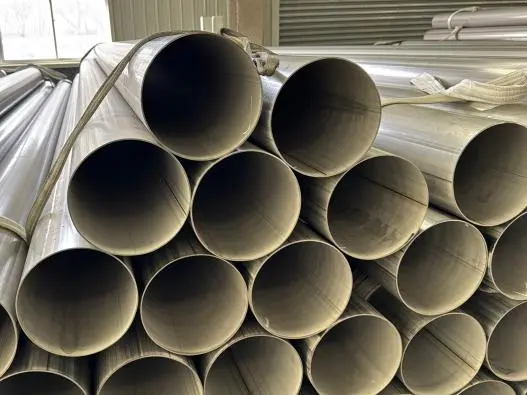
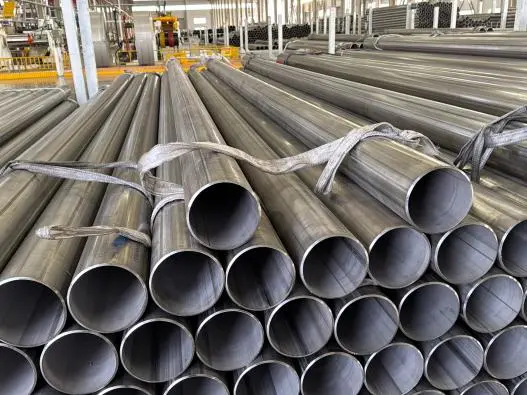
Understanding EN 10217-7 1.4541 Stainless Steel Pipe in Petrochemical Applications
Chemical Composition and Mechanical Properties
In the 1.4541 grade, there is 17–19% chromium, 9–12% nickel, and titanium stabilization between 5 C (min) and 0.70% (max). Tensile strength (Rm) is between 500 and 700 MPa, and yield strength (Rp0.2) is at least 190 MPa. The pipe is stable enough to be used in industrial plumbing networks where stress changes often and the pipe needs to hold pressure.
High-Temperature and Corrosion Performance
This grade stands out because it does well in hot conditions. Titanium stabilization stops chromium carbide from forming at the edges of grains. This is a flaw in metalworking known as sensitization. This means that 1.4541 pipes can be used in places where welding or repeated heat cycles take place. It works steadily up to 800°C when it is in creep conditions.
Compliance with EN 10217-7 Standard
There are two tests, called TC1 and TC2, that pipes made to EN 10217-7 must pass. Tests must be done on TC2 weld seams that don't damage them, and the weld seam factor must be v=1.0. Because of this method to keep track of and check the quality of the pipes, engineers often choose EN 10217-7 compliant pipes for chemical plants and refineries.
Performance Comparison: 1.4541 vs Other Stainless Steel Grades for Petrochemical Use
1.4541 vs 304 (1.4301)
Not having titanium to stabilize grade 304 means that it can become sensitive in places where it has been welded. When buying pipes that will be welded at a refinery, 1.4541 makes the welds more reliable in a way that can be measured. The price of both grades is about the same, but 1.4541 is more stable over time in systems that are under a lot of strain from heat.
1.4541 vs 316 / 1.4404
Grade 316 and its low-carbon form 1.4404 both have molybdenum (2.0–2.5%) in them. This makes them much less likely to pit or crack when they come into contact with salty media. In oil and gas streams that are very acidic or high in chlorides, 316L works better than 1.4541. 1.4541 is the better and more affordable choice for uses that need to resist thermal cycles more than chloride attack, such as boiler feed lines or exhaust gas pipes.
1.4541 vs Duplex Grades
A lot more money is spent on making duplex stainless steels, but they are stronger and less likely to pit (PREN > 30). We don't need to put extra stress on the budget by choosing duplex grades for normal petroleum service conditions that don't involve very hard chloride situations. EN 10217-7 1.4541 Stainless Steel Pipe can be used in a lot of different situations without costing more than duplex alloys as long as the service conditions are carefully planned out by process engineers.
It is clear that the chemistry, temperature range, and project budget should all be taken into account when picking the right grade. 1.4541 is right in the middle of a clear performance range that a lot of industrial systems are in.
Practical Applications of EN 10217-7 1.4541 Pipes in Petrochemical Process Systems
Heat Exchangers and Boiler Tubing
There are a lot of heat exchanger tubes made of 1.4541 in chemical companies and factories. The grade is reliable in tube bundle uses where fluids go through big temperature changes since it is stable at high and low temperatures and doesn't rust between the grains after cutting. On the other hand, it is used in boilers, where the exhaust side is often over 600°C.
Reactor and Process Piping Networks
The materials used for pipes in reactors need to be able to handle both high temperatures and chemicals that react with them. With all of these pressures, the nanoscale of 1.4541 that is held together by titanium does very well. Since this grade is a good mix of price and function, it is often used for industrial process lines that move hydrocarbons, steam, or weak acids.
Seamless vs Welded Fabrication
You can get both seamless and welded versions under EN 10217-7. When the pressure is high and the weld can't be broken, seamless pipes work better. For delivery lines with less pressure, soldered pipes work well, especially ones that have been checked for TC2. It depends on the budget, the amount of work that needs to be done, and how important the system is. It makes sense to break it down like this:
- Seamless 1.4541 pipes suit high-pressure reactor feeds and critical pressure vessel nozzles where zero-defect weld zones are required.
- Welded 1.4541 pipes (TC2) are appropriate for secondary process lines, heat exchanger headers, and utility piping where NDT-verified weld quality is sufficient.
If you pick the right way to fabricate early on in the engineering phase, you won't have to make pricey changes to the specs during procurement.
Procurement Insights for EN 10217-7 1.4541 Stainless Steel Pipes
Certification and Quality Verification
For industrial use, people who buy 1.4541 pipes should make sure that the mill test certificates (MTC) they get are in line with EN 10204 3.1 or 3.2. Records of the chemicals used, the results of mechanical tests, and the heat treatment are backed up by these papers. For important process uses, you shouldn't work with providers who can't give you MTCs that can be tracked.
Evaluating Suppliers and Lead Times
The market for EN 10217-7 1.4541 Stainless Steel Pipe has suppliers from both inside and outside of Europe. Some of the most important things that are used to judge a company are its production capacity, the number of products that have EN approval, its track record of deliveries, and its technical knowledge. People who are buying big projects should ask for plant audit reports or the chance for a third party to look over them. Lead times range from 4 to 12 weeks, but they change based on the pipe size and the order size.
Price-Performance Considerations
What makes the material for 1.4541 price different is the spot price of nickel and titanium, the size of the pipe, and the number of things that are bought. When buying EN 10217-7 1.4541 Stainless Steel Pipe, it is generally better to buy from a company that handles everything, from raw materials to finished pipes. This is because the company can keep prices stable and cut wait times. For projects that will last a long time, negotiating blanket orders for multiple deliveries can also bring down the price per unit.
Making the Decision: Is EN 10217-7 1.4541 Pipe the Best Choice for Your Petrochemical Project?
What the answer is depends on how you did it. If your system needs to handle high temperatures, welding on-site, moderately acidic media without a lot of chloride, and other related things, 1.4541 is a good pick. Top petrochemical contractors often use this grade because it reliably meets those needs in building refineries and upgrading chemical plants.
When there is a lot of chloride in the air or when engineers need to work with high pressure, they should look at 316L or duplex steel. In most cases, though, 1.4541 is the best choice for petroleum pipe because it is the best balance of cost and value.
Conclusion
The EN 10217-7 1.4541 Stainless Steel Pipe is good for petrochemical systems because it is mechanically strong and has corrosion resistance that is stabilized by titanium. It has also been tested and found to meet EN 10217-7 standards. When used in real life, it works about the same as standard austenitic grades and higher-alloy options. There should be a lot of thought put into 1.4541 when purchasing teams and process engineers look at parts lists. This is especially true for pipes in heat exchangers, boilers, and reactors, where the most important design factors are stable temperature and strong welds.
FAQ
How does 1.4541 differ from 316 stainless steel pipe?
Grade 1.4541 is titanium-stabilized and equivalent to AISI 321, optimized for high-temperature resistance and weld stability. Grade 316 (1.4401) contains molybdenum, which improves chloride and pitting resistance. Choose 1.4541 for thermally cycled systems; choose 316 for chloride-heavy chemical environments.
Can 1.4541 pipes resist aggressive petrochemical fluids?
Yes, within defined limits. The grade performs well against mild acids, steam, and hydrocarbon media. It is not recommended for concentrated chloride solutions or strong oxidizing acids where higher-alloy grades are more appropriate.
What inspection standards apply when receiving 1.4541 pipes?
Buyers should verify EN 10204 3.1 mill certificates, dimensional checks per EN 10217-7, hydrostatic or eddy current testing records, and visual/surface inspection reports. TC2-classified pipes must include NDT weld seam records.
Is 1.4541 available in both seamless and welded forms?
Yes. EN 10217-7 covers welded austenitic pipes, and equivalent seamless specifications are available. Fabrication type should match operating pressure and criticality requirements of the application.
Partner with YOUFA for Your EN 10217-7 1.4541 Stainless Steel Pipe Needs
Since it began in 2017, YOUFA (YOUFASS Stainless Steel Pipe Co., Ltd.) has 15 production lines that make 50,000 tons of stainless steel pipes every year. As a reputable supplier of EN 10217-7 1.4541 Stainless Steel Pipe, we provide project contractors and industrial buyers with mill certifications that can be tracked, technical support that is tailored to each application, and organized delivery plans. You can email our team at info@youfass.com or visit youfass.com to get project details or a quote.
Online Message