
Jul 27, 2026
How to Select ASTM A312 TP347 347H Stainless Steel Pipes?
Selecting the right ASTM A312 TP347 347H Stainless Steel Pipes requires careful evaluation of your operating environment, particularly temperature ranges and corrosion exposure. These columbium-stabilized austenitic pipes excel in high-heat applications between 427°C and 815°C, preventing intergranular corrosion that weakens standard grades. The 347H variant offers enhanced creep strength through higher carbon content, making it ideal for petrochemical and power generation systems. When choosing between grades, match the pipe's mechanical properties—including tensile strength exceeding 515 MPa—to your specific pressure requirements, and verify supplier certifications align with ASTM A312/A312M-22 standards to ensure long-term reliability in demanding industrial environments.
|
|
|
Understanding ASTM A312 TP347 and 347H Stainless Steel Pipes
When purchasing teams are having trouble finding pipes for high-temperature uses, it's important to know the basic differences between types of stabilized stainless steel. The material science behind these pipes' materials has a direct effect on how safe they are to use and how long the equipment lasts.
What Defines TP347 and 347H Grades?
The pipes made of ASTM A312 TP347 347H Stainless Steel Pipes are austenitic chromium-nickel alloys that are kept stable with columbium (niobium) and tantalum. The chemical composition includes between 17 and 19% chromium and 9 to 13% nickel. The columbium amount must be at least ten times the carbon level minimum. This stabilization stops chromium carbide from forming when the metal is welded or heated and cooled. The designation 347H means that it has a controlled higher carbon range of 0.04-0.10%, which is designed to keep the grain boundaries intact at high temperatures. This change fixes the major problem of weld decay that happens when unstabilized grades are heated to temperatures between 800°F and 1500°F.
Key Mechanical and Chemical Properties
These grades are different from standard 304 or 316 choices because of how they work mechanically. TP347H keeps its minimum tensile strength at 515 MPa and its minimum yield strength at 205 MPa. At temperatures above 538°C, it can handle much higher stresses than 304L. The stabilization of columbium makes it very resistant to polythionic acid stress corrosion cracking, a typical way for things to break in sulfur-containing situations when they are turned off and on again. Solution annealing at least 1040°C followed by fast water cooling is a way to heat treat materials to make sure they have the best microstructure. The results of tests show that these pipes keep their structural integrity in oxidizing conditions up to 870°C, making them better for long-term use than titanium-stabilized options.
Manufacturing Standards and Size Specifications
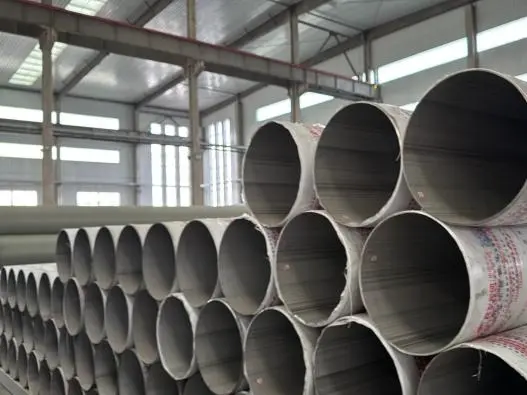
The manufacturing process is based on ASTM A312/A312M-22 standards, which set the limits for size variations and quality requirements. There are different ways to manufacture pipes, such as seamless (SMLS), welded (WLD), and heavily cold worked (HCW). Each one works best with a certain mix of diameter and wall thickness. They come in sizes ranging from NPS 1/8" to 48" (DN6 to DN1200, or 10.3 mm to 1219 mm in diameter). You can choose wall thicknesses from Schedule 5S to Schedule XXS. Standard tolerances according to ASTM A312 are +15% to +22.5% on the positive side and -12.5% on the negative side. These rules make sure that the pipes work with ASME B36.19M systems and can handle different flow rates and pressure levels in industry settings.
Critical Factors in Selecting the Right Stainless Steel Pipe
There's more to procurement choices than just matching the material specification to a job. As part of the selection process, operational factors must be compared to material capabilities, and economic and supply chain facts must also be taken into account.
Application-Specific Requirements Assessment
More than anything else, operating factors determine the choice of material. During the system's lifetime, temperature profiles show if normal TP347 is enough or if the higher creep resistance of 347H is needed. When high-purity water, high temperatures, and electrical potential come together in new energy uses like electrolysis to make hydrogen, they create special corrosion processes. Manufacturers of fuel cells put a high priority on stable electrochemical performance, which means they need pipes that can keep the passive film integrity even when the thermal load changes. The higher creep breaking strength that 347H offers through its controlled grain structure is needed for petrochemical hydrocracker units that work above 500°C and with hydrogen partial pressures above 1500 psi. When working with hot nitric acid or organic synthesis reactions in a chemical processing environment, ASTM A262 Practice E intergranular corrosion testing must be done to make sure that the stabilization is good.
Comparative Analysis with Alternative Grades
Understanding performance trade-offs between grades helps you avoid making mistakes that cost a lot of money, and for ASTM A312 TP347 347H Stainless Steel Pipes, the columbium stabilization provides more thermodynamic stability than titanium-stabilized TP321, reducing the risk of "gas-up" during welding and maintaining chromium availability at grain boundaries to prevent sensitization and localized corrosion in heat-affected zones, with a price premium of 15–25% over TP304L justified by extended high-temperature service life. Unlike TP304 and 316 grades, the 347 series keeps chromium available at the edges of grains. This stops sensitization, which can lead to terrible localized corrosion in heat-affected areas. The difference in price is usually between 15 and 25 percent more than TP304L. This is because it lasts longer in high-temperature service. For companies that make aircraft parts and need high-temperature coating surfaces, 347H has better thermal expansion coefficient and oxidation protection than TP321H in tests that go beyond 10,000 cycles. Medical devices usually don't need to pay the extra money unless they are autoclaved more than 500 times a year, in which case the stabilization stops rust in steam sterilization settings.
Market Dynamics and Procurement Strategy
Supply chain issues affect both the availability of materials and the total cost of the project. Base material costs change every three months because of changes in the prices of nickel and columbium around the world. For large-volume purchases, it is better to negotiate long-term contracts. Because suppliers can't always make seamless pipes with bigger diameters (above NPS 24"), lead times are often longer than for welded alternatives. This means that key path project components need to be planned ahead of time. Distributors with relationships with mills and stock positions can help reduce the risk of supply disruptions. This is especially helpful for companies that make new energy vehicles and use just-in-time production schedules. When figuring out the total cost of ownership, you need to include the cost of installation. Seamless pipes are lighter, while welded pipes are cheaper for standard diameters. Certification requirements, such as Material Test Reports that meet EN 10204 3.1 or 3.2 standards, raise the cost of verification but make sure that products can be tracked, which is necessary to meet pressure vessel code requirements.
How ASTM A312 TP347 and 347H Pipes Are Manufactured and Tested?
The quality of the manufacturing process decides whether pipes work as expected after decades of use. The production and verification methods show what the provider can do and how committed they are to quality.
Production Methods and Process Control
To make seamless pipes, solid round billets are heated to the right temperature for forging. The billets are then pierced and rolled to get them to the right size without any longitudinal welds. For high-pressure uses in power generation, where concerns about weld integrity justify higher prices, this process works well. Welded pipe production takes strips or plates of material and shapes them into cylinders. The edges are then joined using TIG or plasma arc welding. Heavy cold working after welding improves the mechanical properties, making the performance gap between welded and seamless options smaller. Solution annealing, which involves heating to a minimum of 1040°C and then quickly cooling in water, breaks down carbides and achieves a uniform austenitic structure. There are different ways to finish the surface of an object. Pickling gets rid of heat scale, bright annealing makes installations look nice, and passivation treatments make things more resistant to corrosion by creating controlled oxide layers.
Quality Verification and Testing Protocols
Comprehensive inspection programs are used by manufacturing facilities to make sure that products meet standards. Chemical analysis using optical emission spectroscopy checks the composition, paying special attention to columbium-to-carbon ratios that are higher than the 10:1 minimum requirement. As part of mechanical testing, tensile specimens are used to confirm minimum strength values and elongation percentages. Hardness measurements are also used to make sure the right heat treatment was done. Positive Material Identification with mobile XRF analyzers lets you check the grade without damaging the item during the receiving review. Pressure boundary integrity is confirmed by hydrostatic pressure tests up to 1.5 times the standard working pressure. Subsurface discontinuities are found by non-destructive study using eddy current or ultrasonic methods. The most important test for stabilized grades is intergranular corrosion testing according to ASTM A262 Practice E. Samples are put in hot nitric acid and then the grain boundary attack is looked at under a microscope. Flattening and flaring tests make sure that formed sections are flexible and have good welds. This is especially important for bent pipe applications in heat exchanger tube bundles.
Certifications and Documentation Requirements
Recognized certificates show that a company has quality control methods in place, and for ASTM A312 TP347 347H Stainless Steel Pipes, ISO 9001 certification demonstrates fundamental quality management principles, PED compliance permits sale of pressure-containing products in Europe, and TÜV inspection services provide independent third-party verification that increases trust for risk-averse procurement organizations. Being certified with ISO 9001 shows that you follow basic quality management principles, and being compliant with the Pressure Equipment Directive (PED) lets you sell pressure-containing products in Europe. TÜV inspection services offer third-party proof by an independent party, which gives procurement organizations that don't like taking risks more trust. Laboratories that meet the requirements of ISO 17025 make sure that tests are accurate and that results are recognized around the world. Material Test Reports (MTR) or Mill Test Certificates (MTC) that meet EN 10204 Type 3.1 include manufacturer certification. Type 3.2 adds validation from an independent inspection body. Process control is shown by supporting documents like Procedure Qualification Records (PQR), Welding Procedure Specifications (WPS), and Manufacturing Process Specifications (MPS). Reports from ultrasonic and radiographic tests keep lasting records of the results of non-destructive tests, which are necessary for code construction documentation packages.
Best Practices for Evaluating and Procuring ASTM A312 TP347 and 347H Pipes
Technical review and strategic ties with suppliers are both important for successful procurement. This method is very different from commodity purchasing, and it needs special knowledge and ways to check things.
Supplier Assessment and Qualification
Reputable manufacturers show their skills in more than one way, not just through marketing claims. Verifying production capacity through facility checks shows if claimed output aligns with physical infrastructure. This stops situations of overcommitment that cause deliveries to be late. YOUFASS has been running 15 production lines with an annual capacity of 50,000 tonnes since 2017. This is the size that is needed to make sure that big projects can get what they need. Certifications like ISO 9001, PED approval, ISO 17025 accredited laboratories, and TÜV validation make sure that the quality system works the way it should. Professional businesses can provide full paperwork packages that include MTC/MTR reports that meet 3.1 or 3.2 standards, Third Party Inspection reports, WPS/PQR records, MPS documentation, and UT/RT test results. Minimum order quantity flexibility, shown by the availability of a single pipe, allows for prototype development and small-batch specialty uses. Being close to important ports, like being able to send to Tianjin Port in seven days, lowers the cost of keeping inventory and makes supply chain management more responsive. Referrals from customers in similar fields confirm a company's success history and technical support skills.
Effective Quote Evaluation Strategies
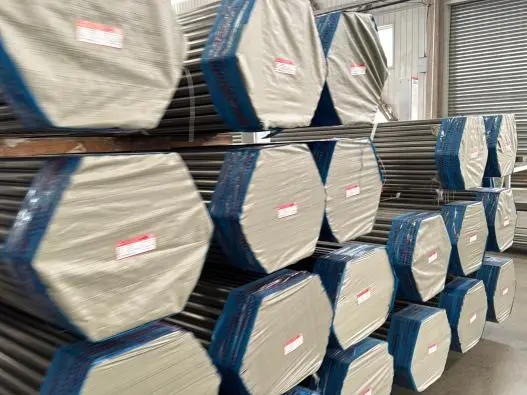
To compare quotes, you need to do more than just look at unit prices. A careful look at the specifications makes sure that all the quotes come from suppliers who meet the same technical standards. These standards include heat treatment certification, surface finish requirements, dimensional tolerance compliance, and end preparation standards. Structures of payment terms have an impact on cash flow and project financing. Letters of credit offer security for international deals. When delivery schedules are in sync with project critical paths, building delays don't happen, which saves money and makes dependability metrics more valuable than small price benefits. Using wooden boxes with available steel frames, hexagonal bundling, and protected woven bags to package pipes protects their integrity while they are being shipped internationally and stored on the job site. Volume pricing structures encourage consolidated orders, which makes it easier for procurement administrators to do their jobs. When figuring out the total cost of ownership, you have to add up the costs of testing, inspection, inland shipping, import taxes, and keeping inventory. Warranty terms and performance guarantees show that the supplier trusts the product and give customers a way to get their money back if there are problems with the materials during production or installation.
Real-World Application Case Studies
Industry examples illustrate successful procurement outcomes. For use in superheaters and reheater tubes at 580°C and 25 MPa steam pressure, an ultra-critical power plant project called for 347H pipes. When choosing seamless Schedule 160 pipes in NPS 2" through 4" sizes, the engineering team gave the most weight to data on creep rupture strength that increased estimates for 100,000 hours of service. As part of the supplier approval process, the grain size was measured according to ASTM E112, which confirmed that the structure had to be No. 7 or coarser for it to work at high temperatures. In order to replace fluid catalytic cracking unit transfer lines as part of a petrochemical expansion project, welded ASTM A312 TP347 347H Stainless Steel Pipes were chosen for use at 400°C and rapid thermal cycling during regeneration. The plan for buying things focused on intergranular corrosion test results and chose providers who would give Practice E certification with every production batch. A hydrogen production facility that made electrolysis systems needed very high-quality surfaces to keep high-purity applications from getting contaminated. They asked for bright annealed and electropolished finishes with roughness values below 0.8 micrometers Ra. These examples show how to match the properties of a material and the abilities of a supplier to the needs of a specific application.
Conclusion
To choose the right stainless steel pipes for tough industrial uses, you have to weigh technical specifications against practical buying factors, and for ASTM A312 TP347 347H Stainless Steel Pipes, the stabilized grades solve critical intergranular corrosion problems in high-temperature settings, outperforming non-stabilized alternatives, and successful procurement requires understanding chemical composition effects on performance, mechanical property requirements, and manufacturing process implications, while carefully evaluating supplier production capabilities, quality certifications, documentation practices, and transport reliability. The stabilized grades TP347 and 347H solve important intergranular corrosion problems in high-temperature settings, working better than alternatives that aren't stabilized. Knowing how the chemical makeup affects performance, what the mechanical properties need to be, and how the manufacturing process affects things helps you choose the right material. Procurement risks can be reduced by carefully checking suppliers' production capabilities, quality certifications, documentation practices, and transport dependability. Successful projects make sure that the pipe specs are exactly right for the working conditions and build relationships with qualified makers who can provide consistent supply and technical support for the whole duration of the equipment.
FAQ
What distinguishes 347H from standard TP347 grade?
The designation 347H means that the carbon content is higher than the standard TP347's maximum of 0.08%. It is controlled to be between 0.04% and 0.10%. When this extra carbon is mixed with solution annealing at high temperatures, it makes the grains coarser, which makes the creep strength and stress rupture qualities better above 500°C. The 'H' grade is designed for uses where long-term exposure to high temperatures needs better resistance to changes in size when loaded continuously.
Why choose columbium stabilization over titanium-stabilized TP321?
Columbium forms thermodynamically more stable carbides than titanium, which means that they stay less likely to rust even after being heated and cooled many times. Titanium-stabilized grades can absorb hydrogen during welding, which can cause "gas-up" defects, especially in multi-pass welds. Columbium stabilization works better in field fabrication settings where precise interpass temperature control might be hard to achieve. This lowers the number of rejected parts and the cost of rework.
Can these pipes serve cryogenic applications despite high-temperature optimization?
Even though austenitic 347 types are mostly made for use at high temperatures, they still have great hardness at temperatures below zero without becoming brittle. The face-centered cubic crystal structure stays steady over a wide range of temperatures. This means that these pipes can be used in situations where they will occasionally be exposed to cryogenic temperatures. However, TP304L is usually a better choice for dedicated cryogenic service that does not involve high temperatures.
How do I verify proper stabilization during receiving inspection?
Material Test Reports should show that the amount of columbium and tantalum is at least ten times the minimum level of carbon. Positive Material Identification using XRF analysis lets you quickly check the main alloying elements. For tough jobs, you might need to use ASTM A262 Practice E intergranular corrosion testing, which involves looking at metallographic pieces that have been exposed to hot nitric acid to make sure there is no grain boundary attack that would mean the heat treatment or stabilization wasn't done right.
Partner with YOUFA for Your Stainless Steel Piping Requirements
YOUFASS offers complete solutions for industrial pipe systems that need to be very reliable and perform very well technically. Through 15 dedicated production lines, we can make up to 50,000 tons of seamless and welded steel every year, in sizes ranging from NPS 1/8" to 48". We offer full documentation, such as MTC/MTR 3.1 and 3.2 certificates, third-party inspection reports, and all necessary testing records. Our laboratory is ISO 17025 accredited and has ISO 9001, PED, and TÜV certifications. Our team can help you choose the best materials for your project, whether it's for new energy systems, petrochemical facilities, power generation equipment, or difficult aerospace applications. Single-pipe minimum order quantities can be met for prototyping and specialty needs, and seven-day expedited delivery to Tianjin Port supports urgent project schedules. Contact our engineering team at info@youfass.com to talk about your ASTM A312 TP347 347H Stainless Steel Pipes requirements and discover why leading manufacturers trust YOUFA as their preferred provider.
Online Message