
Nov 12, 2026
How to Select ASTM A249 Welded Stainless Steel Tubes for Boilers?
To select ASTM A249 Welded Stainless Steel Tubes for boilers, I begin with the service conditions: temperature, pressure, water or process chemistry, and chloride exposure. Next, I match the grade, such as TP304L, TP316L, TP321H, or S31254, to those conditions. Then I confirm the outside diameter, wall thickness, weld quality, heat treatment, test reports, and certificates. Finally, I compare supplier capacity, documents, MOQ, and lead time, not only price. Following this order reduces the risk of a mismatch between the tube, the design code, and the boiler's expected service life. The sections below walk through each step with practical checks.
|
|
|
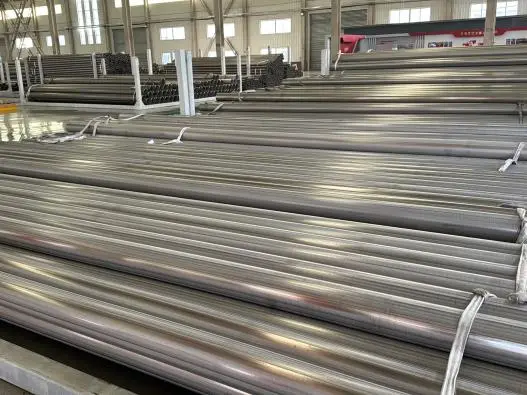
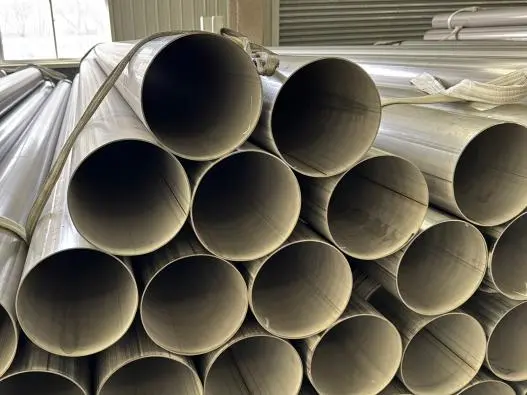
Match Service Conditions and Stainless Steel Grade to Your Boiler
Document the Operating Conditions First
The first thing that needs to be thought about is what the tool is supposed to do. Overhead heaters, economizers, condensers, feedwater heaters, and waste-heat units are some of the parts of the water wall that have different pressures, temperatures, and thermal cycles. When someone buys something, they are asked to write down the pH, salt level, dissolved oxygen, and any other pollution that might be in the process. Another thing that's important to know is the steps that go into making something, since bends, tube-sheet expansion, and header welding all need parts that are bendable and can be made in different sizes. Often, metal and chemical plants add acidic or salty process streams to this list. When they have a written duty sheet, both the mill and the engineer know what to do. This way, grade changes don't happen after the fact.
Choose the Grade by Corrosion and Temperature
Nine grades of ASTM A249 Welded Stainless Steel Tubes are available: TP304, TP304L, TP316, TP316L, TP317, TP321, TP321H, TP310, and S31254. For the price, TP304 and TP304L are good at keeping rust away in general. Molybdenum is added to TP316 and TP316L to make them stronger against chlorides and many process poisons. TP317 adds even more molybdenum. TP321 and TP321H don't become sensitive after being heated for a long time because titanium is stable. The H form has a bigger range of carbon, which makes it stronger. TP310 doesn't get too hot and scale up because it has more nickel and chromium than TP310. There is 6% molybdenum in S31254, which makes it good for being around a lot of chloride. Between 800°F and 1,500°F (425°C to 815°C), chrome carbides can form at the edges of grains. You might see this when you join or leave metal heated for a long time. This is why I always check the chloride levels in austenitic steels that are hotter than 140°F (60°C).
Check Low-Carbon and Stabilized Options
Sensitization makes the metal around the weld more likely to rust. ASTM A249 says that 0.035% carbon is the most that can be in TP304L and TP316L. This makes parts that are welded together safer. In stable grades like TP321, carbon is bound to titanium. There are pros and cons to each way. Some types, like low-carbon ones, become less strong when they get hot. Stable rates, on the other hand, are better for long-term heat. On the mill test certificate, I ask that the heat number and chemical analysis be written for each grade I suggest. What's written on the paper will now match what's in the tube I'm holding.
Confirm Dimensions, Weld Quality, and Heat Treatment of ASTM A249 Tubes
Specify Diameter, Wall, and Length Clearly
Size changes how heat moves, how much pressure is put on something, and how well it fits. YOUFA's ASTM A249 Welded Stainless Steel Tubes come in lengths and sizes from 1/8" to 12" (3.2 to 304.8 mm) and have walls that are 0.015" to 0.320" (0.4 to 8.1 mm) thick. You can get lengths that are set, random, or in the shape of a U. Kindly let me know what kind of ASTM A249/A249M it is and whether the wall is minimum or average. In real life, they will give you different thicknesses. No matter the job, something should not be too wide, too long, too straight, or too oval. Not just nominal sizes are not enough. You should also keep inspection records and calibrated gage readings. It is very important to have tight control over tube-sheet joints, mechanical expansion, orbital welding, and replacement tubes that need to slide into current bundles.
Inspect the Longitudinal Weld
ASTM A249 Welded Stainless Steel Tubes are made from strips that are automatically welded together without the need for filler metal. The standard also says that the weld should be worked on while it is cold before the final heat treatment. When I look at a tube, I look for cracks, holes, gaps, and any other sign that the joints are out of place or haven't fused together. As the flow goes through heat exchangers, it's important that the bead stays smooth and clean. This stops erosion in the area. When design engineers figure out the pressure, they should also remember that tubes that have been welded often have a weld joint factor. Before you choose the wall thickness, check the governing rule to see what the highest allowable stress is.
Define Heat Treatment and Surface Finish
If you weld and shape something, then heat treat it to make it resistant to corrosion and able to bend again. Some tubes that YOUFA sells have already been solution-annealed. If you want a clean, smooth surface, you can also get them bright-annealed. Through solution annealing, harmful carbides are broken down, and they stay in solution even after the metal cools quickly. In the purchase order, write down what needs to be done to clean the inside, get rid of scale, and prepare the ends of the tubes. This is very important for tubes that fit into small holes in tube sheets. If you heat treat U-bent tubes after they have been bent, the bending will add stress that is already there. Checks of hardness and grain size show that the annealing process worked. The hardest grade of many austenitic metals is around 90 HRB, and any number higher than that means the annealing process wasn't done right.
Verify Mechanical Properties, Testing, and Documents
Check Strength and Hardness Against the Grade
The minimum tensile and yield strengths for each grade are set by ASTM A249. TP304 needs 30 ksi (205 MPa) of yield strength and 75 ksi (515 MPa) of tensile strength. But TP304L needs 70 ksi (485 MPa) of stress and 25 ksi (170 MPa) of yield strength. There are also limits for length and hardness that show if the steps of annealing and cold work were done right. There's no need to believe a general statement of safety. Instead, look at each line of the test report and compare it to the specification. I didn't use the same TP304 numbers for each order because other metal grades, like S31254, have different values. I read the grade table instead.
Choose Hydrostatic and Nondestructive Tests
As per ASTM A249 Welded Stainless Steel Tubes requirements, every tube must either pass a hydraulic test or an electric test that doesn't damage the tube, which is usually eddy current. The tester has to pick the test if the buyer doesn't say which one they want. In the buy order for important boilers, I write down the method, the pressure, the acceptable criteria, and the rules for testing again. You can work with heavy walls and high-stakes situations with more confidence after getting an ultrasonic and X-ray test. The weld can be bent or curved with the help of flattening and flange tests. Buyers can also ask for tests to check for intergranular corrosion and for the material to be positively identified for heavy-duty use. It's easy to avoid problems after production if you name tests early on. Also, quotes from different providers will stay the same.
Request Traceable Certificates
The tube really is what it says it is. If you need third-party inspection reports, WPS/PQR, MPS, UT or RT records, or MTC/MTR in form 3.1 or 3.2, please let YOUFA know. In line with EN 10204, there are two kinds of certificates. A person who is not involved in production checks a 3.1 certificate and is authorized to do so by the manufacturer. A 3.2 certificate is also checked by either an outside inspector or the buyer's agent. Pick the type of file that goes with the contract and the code. There should be a match between the heat numbers on the certificate and the marks on the tube. Keep the records in the file for the equipment in case auditors need them.
Compare ASTM A249 with Other Stainless Steel Tube Standards
A249, A269, and A270
When you weld austenitic boiler, superheater, heat-exchanger, and condenser tubes, you use ASTM A249 Welded Stainless Steel Tubes. Austenitic tubes in ASTM A269 can be welded or not welded, and they can be used for work at high or low temperatures and to stop corrosion in general. ASTM A270 talks about clean tubes and rules for the finish on the outside that can be used in dairy and food. The tests and rules for getting in are different, even though the grade names look the same. A269 tube might look good on paper, but it might not work in a boiler. These standards are like different tools for me, and I will never use a different one without first getting permission from the design engineer.
A249 Versus A213 and A688
ASTM A213 says that these tubes are made without a joint line. A boiler, a superheater, or a heat converter can use them. Austenitic feedwater heater tubes that are welded or not welded are both covered by ASTM A688. To save money and keep the wall thickness the same, A249 is used in many heat exchanger designs. This is because the lengthwise weld is taken into account in the pressure estimate. Even when the price is very low, or the owner or code says so, some buyers still want A213. Make sure that the job calls for A688 when it comes to feedwater heaters. It's not a matter of habit; the design code and owner specifications tell you what to do. For quotes to stay the same, ask the design engineer to write down in the purchase documents the allowed tube standard.
Decide When A249 Fits
ASTM A249 Welded Stainless Steel Tubes are what you should use on a boiler, heat exchanger, or condenser that needs austenitic tubing to move heat in harsh conditions and the design code allows welded tubes at a certain stress. It's not good for job sites that need tubes without a weld seam or for sanitary pipe (A270). It's important to check with the design expert that the grade and temperature match the code. This code could be ASME SA-249 in Section II, Part A of the Boiler and Pressure Vessel Code.
Evaluate Suppliers, Apply a Selection Process, and Avoid Common Mistakes
Evaluate Supplier Capacity and Proof
A skilled provider of ASTM A249 Welded Stainless Steel Tubes is just as important as the grade. Check the range of sizes, output, control for welding, records of heat treatment, testing tools, and experience shipping. YOUFA is one of China's Top 500 companies. It opened in 2017 and has 15 production lines with more than 200 workers who make 50,000 tons of goods every year. You can come to us for all of your stainless steel pipe needs. Our labs are ISO 9001, PED, TÜV, and ISO 17025 approved. When we use known steel sources and management that can be tracked, we can keep an eye on the raw materials. Before you place a test order with a seller, make sure you see their credentials and papers. Claims aren't as trustworthy as proof.
Compare Quotes by Total Cost
The price per kilogram doesn't tell you everything about the cost. You should compare tests, certificates, packaging, freight, Incoterms, setup fees, lead time, and more. YOUFA's MOQ is only one pipe, so a buyer only needs to order one if they need test samples or new tubes. At our fastest, it takes us 7 days to get to Tianjin Port. To ship tubes, they are put in wooden boxes that can have a steel frame added afterward. They are also held together with woven bags and hexagonal bands. These keep the tubes dry and protect the surfaces from damage while they are being shipped. To make the choice more objective, a simple table that lists things like compliance, weld quality, inspection scope, MOQ, lead time, and expert support can be used to compare them.
Follow a Selection Process and Avoid Errors
How I choose is made up of four steps. Writing down the standard version, grade, size, finish, heat treatment, tests, paperwork, marking, and packing is the first thing you should do. Second, make sure that the grades are right for the service level. Third, mark up a grid and give each provider a score. Fourth, for big projects, add third-party approval, sample approval, and inspection of the first article. People often make the mistakes of choosing a grade based only on price, believing that ASTM A249, ASTM A269, and ASTM A270 are all the same, not caring about the minimum wall thickness, picking TP304 when chlorides require TP316L or S31254, and being okay with not being able to fully trace the steel. An in-depth plan and records that have been looked over are safer for the project than a low-cost quote at first.
Conclusion
If you're going to buy ASTM A249 Welded Stainless Steel Tubes for boilers, you should write down the service conditions. The grade is based on the temperature, pressure, level of chloride, and thermal cycling. For general duty and chloride duty, TP304L and TP316L work well. For heat or corrosion duty, TP321H, TP310, and S31254 work well. The part is checked for quality of the weld, minimum or average wall thickness, and measurements to make sure it fits well and will last. The tube meets the needs based on its mechanical features, tests for hydrostatic or electric forces, and EN 10204 certificates. As you can see, A249 is not the same as A269, A270, A213, or A688. You should not use one standard instead of another without first getting permission from a professional. You should have a written plan and have the source review it based on proof, total cost, and delivery terms.
FAQ
What are ASTM A249 welded stainless steel tubes used for?
If you need to reliably move heat in corrosive conditions, ASTM A249 Welded Stainless Steel Tubes are the ones you need. They are used in superheaters, boilers, heat exchangers, and condensers. When used in this way, ASTM A249 covers welded austenitic tubes for these services.
Are ASTM A249 tubes corrosion resistant?
Yes. Some types of austenitic stainless steel don't rust or scale at high temperatures. Also, molybdenum grades like TP316L and S31254 handle chlorides better than TP304. What grade to use should depend on how much chloride is in the system and how hot it is.
Do ASTM A249 tubes come with inspection certificates?
Yes. The tests we do include mechanical, hydrostatic, and eddy current tests. We also give you MTC/MTR certificates in either 3.1 or 3.2 format. You can also get a third-party review.
Can A249 tubes replace ASTM A213 tubes?
Yes, in many cases where heat exchangers are used. As long as the design pressure takes into account the longitudinal weld and the governing code allows welded tubes, A249 provides a uniform wall thickness and low cost.
What should a quotation request include?
Send the grade and standard, the length, the number, the amount, the testing needs, the certificates, the packing, the location, the Incoterms, and the service conditions. After that, we look over the grade and respond with a quote.
Get ASTM A249 Welded Stainless Steel Tubes from YOUFA
Are you planning to build a stove or heat exchanger? YOUFA is a business that makes ASTM A249 Welded Stainless Steel Tubes. They offer nine types, such as TP304, TP316L, and S31254. They have a one-pipe MOQ, MTC/MTR 3.1/3.2 papers, and can deliver to Tianjin Port in as little as seven days. Send your grade, size, number, and service requirements to info@youfass.com to get a quote and a review of your specifications. youfass.com has more details.
Online Message