Nov 11, 2026
How to Evaluate Suppliers of EN 10217-7 1.4306 Welded Pipes?
To evaluate suppliers of EN 10217-7 1.4306 Welded Stainless Steel Pipes, check five things in order: standard and grade compliance, weld quality and testing, manufacturing capability, a complete quotation, and a scored comparison of all candidates. Ask for sample certificates, weld procedure records, and inspection reports before you discuss price. Confirm that the mill controls welding, annealing, pickling, and testing on its own site. Then compare quotes on the same scope, including grade, dimensions, test category, documents, packaging, and delivery terms. This guide helps buyers in the United States and other markets make that decision with confidence.
|
|
|
Start With Standard and Grade Compliance
Standard-Compliant Pipe vs. General Stainless Steel Pipe
It's not clear what the "304L welded pipe" sign means. It is called EN 10217-7, and it tells you how to deliver welded stainless steel tubes that are used for pressure. It tells us what to do with test groups, limits, inspection records, and chemical and mechanical properties. The person who takes your order has to write down everything that it says. Before you do anything else, I think you should ask two things: what number does the mill use? Also, what kind of test does the quote cover? That's because auditors look over every certificate, so people who work on chemical, power, and pressure vessel projects need to be clear. It saves weeks of work not having them.
Risks of Choosing the Wrong Supplier
There are three kinds of risks. The grades might be different, the metal tests might not be strong enough, or the shipping conditions might not be the same as what was asked for. A business faces risks like orders being turned down, repair costs, and delivery teams that don't show up. Some risks in logistics are missing ship dates and losing paperwork. Let's say a plant in the US gets pipe that doesn't have any heat rates written on it. It's asked for a new lot, the due date moves back, and the incoming inspection stops. It's possible for intergranular corrosion to happen after welding if the heat gets too high. This is yet another issue with low-carbon types. This is checked out in writing before payment, which finds these problems.
Verify the 1.4306 Grade and Its Documents
1.4306 (X2CrNi19-11 in EN 10088-1) is a low-carbon austenitic grade that has no more than 0.030 percent carbon. Nickel makes up 11.0% of it, and chromium makes up 18.0%. To find the right heat number, you must first compare these limits to the science on the mill test document. You should pay close attention when you compare the yield strength, tensile strength, and solution-annealed condition to the standard. Get a type 3.2 or type 3.1 record from EN 10204 if other people need to see the tests. If you don't give written permission, you can't use 1.4301 or 1.4307 instead.
Check Weld Quality and Testing Capability
Assess the Welding Process
A well-thought-out plan is the first thing that makes a good weld. Getting the WPS and PQR from the supplier will show you how the welding method was approved. After that, check out the welder's background, how well they control the protective gas, and how the weld is finished. Because these pipes are made from strips that are welded together and then heated in a solution, it is important to keep track of both the welding and the heating. Find out who checks the heaters and how often. If a supplier responds with papers instead of general comments, it means that they run their business well. People who want to buy something can look over the WPS/PQR and MPS papers that YOUFA gives them first.
Verify Non-Destructive and Pressure-Related Testing
You can't just look at something's size to tell how well it works when it's stressed. That's why test scope is important. EN 10217-7 says that there are different types of tests. TC2 checks the metal more thoroughly than TC1, but it doesn't damage it. Which types of tests do they use? For example, ultrasound, eddy current, X-rays, or hydraulic tests? Also, find out what the requirements are for each lot they'll take. Look at some UT/RT reports and be sure you know which lab did the tests. It is safe to believe lab reports that follow ISO/IEC 17025. The ISO/IEC 17025 lab at YOUFA can give you UT/RT reports, help with MTC/MTR (3.1/3.2), and TPI records. Before you buy, get your expert to sign off on the test group.
Check Dimensions, Surface, and Quality Records
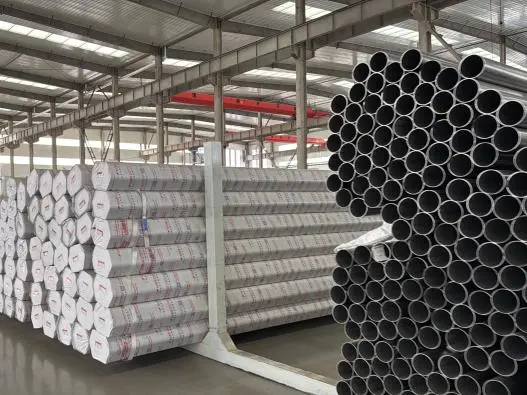
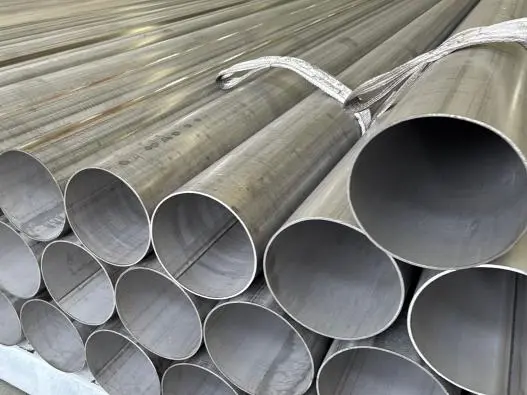
Get as many measurements as you can for EN 10217-7 1.4306 Welded Stainless Steel Pipes before the pipe shows up. Look at the order to compare the outside width, wall thickness, straightness, and length. Look at the outside, too. If you pickle or anneal pipe, it should be smooth afterward, with no scale or joint spatter. Find out how big the marked boxes are and look at an example of an MTC from a previous sale. The supplier does a good job every day, not just for the show. YOUFA sells lengths that aren't even or odd, and the ends can be straight or bent. You can use steel frames for wooden boxes or hexagonally-shaped woven bags if you'd like.
Compare 1.4306 With Alternative Products
1.4306 vs. 1.4301 and 1.4307
In real life, these scores don't match up, even though they do on paper. Carbon levels can range from 0.03% in 1.4306 and 1.4307 to 0.07% in 1.4301. Chromium carbide can't form in the heat-affected zone when there isn't enough carbon. This helps bonded parts stay strong against intergranular corrosion. There is between 8.0% and 10.5% nickel in 1.4307 (X2CrNi18-9) and between 10.0 and 12.0% nickel in 1.4306. Pick the score that makes your drawing look its best. Before accepting a different grade deal from a seller, it's important to get written permission from engineering. You can save time or money this way.
1.4306 vs. 304L Stainless Steel Pipe
There are a lot of people in Europe who think that 1.4306 is the same as 304L. ASTM A240 tells us that 304L has 18.0 to 20.0% chromium and 8.0 to 12.0% nickel. To put it another way, the places are like each other but not the same. In the US, many people who want to buy pipe make sure it meets the ASTM A312 TP304L rule. First, check to see if your idea meets the requirements of EN 10217-7. You should get proof that it meets the EN standard if it does. There are two kinds of heat, but the seller has to prove it. See if what people say about "equivalent" matches up with test papers.
EN 10217-7 vs. EN 10216-5
What is EN 10216-5 for pressure tubes that don't have a weld seam? EN 10217-7 is for tubes that do have a weld seam. Since wrought tubes start out as strips, mills can make them in a lot of sizes, even ones with wide widths, and they can usually do it faster. When the building code says they have to be, suitcase tubes that don't have joints are used. Not the price, but the specifics of your job. To make welded things follow the rules, you need to know how to count the welded parts. Wedged EN 10217-7 pipe from YOUFA comes in grades 1.4301, 1.4306, 1.4307, 1.4401, 1.4404, 1.4541, 1.4539, and 1.4571. The OD sizes run from 1.2 mm to 48 inches.
Review Manufacturing Capability, Certifications, and Quotations
Confirm Who Controls Production
Before you talk to someone, find out if they trade, hold stock, make things, or export goods. Some of the steps are done in-house, such as testing, cutting, heating, cleaning, welding, and annealing. Get the correct ISO 9001 certification for the business and the item. You should also ask for PED and TÜV documents when your project needs them. Check out their 15 production lines to see how much steel Youfa Stainless Steel Pipe Co., Ltd. makes every year. Over 200 people work for us and follow the rules set by TÜV, ISO 9001, PED, and an ISO/IEC 17025 lab. These kinds of claims can be checked by having a third party audit or review the site.
Check Traceability, Capacity, and Stock
You should be able to keep track of the raw coil of EN 10217-7 1.4306 Welded Stainless Steel Pipes until it is shipped. For each certificate, look for a heat number, bundle tags that match it, and group records. That person can get these for you if you ask. Next, find out how many items they can hold, how much they have in stock, how much you need to order, and how long the wait times really are. These points can help with both spreading out goods over time and return sales. People who want to try before they buy can do that. YOUFA sets a minimum order quantity of one pipe. In order to keep our standard high, we have to keep an eye on the raw materials we use. You can find out where our steel comes from and who runs our business. We also use special testing tools and clear ways to check everything from start to finish.
Compare Quotations, Lead Times, and Export Support
Things can only be compared if their ranges are the same. The grade, OD and wall thickness, test group, surface finish, certificates, packing, Incoterms, and freight terms should all be put in the right order. It costs a certain amount of money to make the goods and ship them to the customer, as well as the certification type and size. Next, make a list of important dates from the time you confirm the order until it ships. If you buy it from YOUFA, it can get to Tianjin Port in just 7 days. Look at more than just the price of the products. See how much the whole job will cost and how well the work is promised.
Build a Scorecard and Make the Final Selection
Use a Weighted Scorecard
What does a scorecard do? It gives your team numbers to talk about their ideas. A few of the things that must be met are certifications, traceability, the ability to make, delivery, help with exporting, and commercial value. Grade verification, weld quality, dimensional control, and standard compliance are some of the other things that are done. You can use examples of check answers, badges, and inspection records to give each provider a score from 1 to 5. After that, give each job a value. Testing and records might be given 40% of the weight in pressure equipment, but making sure the sizes stay the same might be given more weight by an OEM. Make sure everything is fair by setting the weights before the bids come in.
Avoid Common Selection Mistakes
There are a lot of things that can go wrong if you buy from a supplier without a backup plan: think of 1.4306 and 1.4301 as automatic swaps, accept generic certificates instead of batch records, don't pay attention to weld and surface requirements, and don't know what the pressure and temperature conditions are. It's simple to fix all of them in writing. Find out how the seller handles batches that are turned down, not having enough materials, and having to replace things right away. That's why any changes that were okay should be put on the order. The plan and the budget will be safe if you do these things.
Run a Three-Stage Approval
Professional prequalification is the first step. This means getting licenses, following standards, and checking the grade. This is the second step, "commercial review." This is where you look over full prices, wait times, Incoterms, payment terms, and operations. The third step is to write down confirmation of the payment. In the written order, you should list the material's name, its measurements, any tolerances, finish, any tests or certificates, packaging, and delivery terms. Do a pre-production review, place a test order, or look over a sample for a job with a lot of risk or a new source. During the whole process, pick the reputable service provider whose price, proof, and history of service pose the least risk.
Conclusion
If you want to find soldered pipes that meet EN 10217-7 1.4306 Welded Stainless Steel Pipes standards, you should look at proof before price. First, make sure you're at the right level and grade. It's because 1.4301 and 1.4307 have a different carbon limit and chemistry than 1.4306, and it needs to be shown that they are equal in 304L. Look at the pipe's test groups, weld methods, and inspection records to see if it's right for the job it needs to do under pressure. When you compare 1.4306 to other grades and EN 10217-7 to EN 10216-5, the choice stays true to what the project needs. There is a difference between a good maker and a simple supplier. A good maker has good production control, can keep track of their products, has certificates, and can give you quotes for similar products. This is a choice that takes cost, quality, and delivery risk into account. It is made with a written order, three levels of approval, and a weighted evaluation.
FAQ
Is EN 10217-7 1.4306 the same as 304L stainless steel pipe?
Not really. There are differences between 1.4306 and 304L that shouldn't be taken into account. Check your test and specification sheets to see if they match up.
What certificates should I request when buying EN 10217-7 1.4306 welded pipes?
If your project needs them, ask for an EN 10204 3.1 or 3.2 certificate, WPS/PQR records, UT/RT records, and ISO 9001 and PED papers.
How can I verify whether a supplier is an actual manufacturer?
Make sure the licenses match the production page. You can do this yourself or have a third party do it. You can also ask for proof of what happened.
Are welded 1.4306 pipes suitable for pressure applications?
That is possible only if the grade, test category, and design code all allow it. To be sure, talk to your professional or a review group.
What affects the price of EN 10217-7 1.4306 welded pipes?
How much it costs depends on the size, the wall thickness, the type of tests, the level of certification, how it is packed, and how easy it is to get to the site.
Can a supplier provide custom-size 1.4306 welded pipes?
Most of the time, yes. YOUFA will tell you what they can do based on EN 10217-7 if you tell them your size, length, and wall thickness.
Get a Quote for EN 10217-7 1.4306 Welded Stainless Steel Pipes From YOUFA
Want to buy EN 10217-7 1.4306 Welded Stainless Steel Pipes from a business that checks its claims? You need to tell YOUFA how thick the wall is, how many you want, the test category, the finish, and the place where you want the product to go. Our team will call you back and give you rates, a sample MTC, a wait time, and a time to come in for a review. There is a one-pipe MOQ and 15 production lines that can make 50,000 tons of steel a year. This means that we can handle both project orders and trial orders. You can visit youfass.com or email info@youfass.com about it.
Online Message