
Oct 8, 2026
How Does UNS S31803 CL1 EFW Pipe Perform in Corrosive Conditions?
Corrosion resistance is usually one of the first things engineers and buying teams look at when choosing pipe materials for harsh working conditions. To meet that need, the ASTM A928 UNS S31803 CL1 EFW pipe is a strong option. This pipe grade is made from duplex stainless steel, which has a composition that is about half austenite and half ferrite. It is much better at resisting pitting, crevice corrosion, and stress corrosion cracking caused by salt than standard austenitic grades like 304 or 316L. It is used in oil and gas, chemical processes, and remote pipe systems where rust failure can have bad results because its PREN (Pitting Resistance Equivalent Number) is usually above 34.
|
|
|
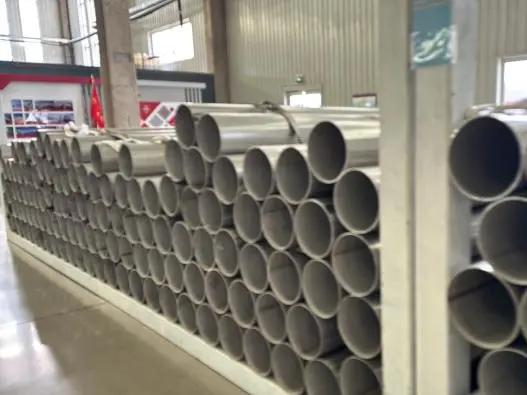
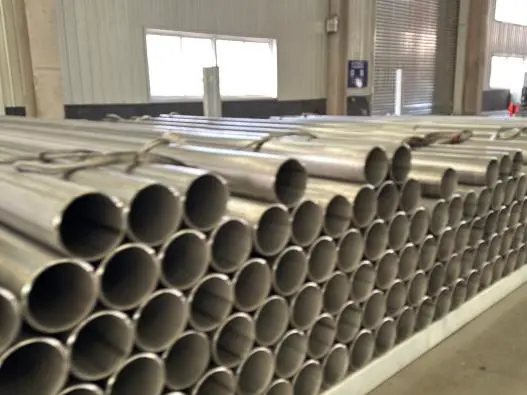
Understanding UNS S31803 CL1 EFW Pipe and Its Corrosion Resistance
Chemical Composition That Works Against Corrosion
The way that S31803 is made is what makes it resistant to rust. Nickel (4.5% to 6.5%), molybdenum (2.5% to 3.5%), and nitrogen (0.08% to 0.2%) make up the rest of the metal. Chrome on the surface forms a stable inactive oxide sheet. When media are high in chloride, molybdenum makes them less likely to crack. Nitrogen helps the PREN even more and makes the austenite phase fixed. Because of this, the metal works really well in seawater and salty process streams.
Mechanical Strength Beyond Corrosion
The minimum yield strength of S31803 is 65 ksi (450 MPa), and the minimum tensile strength is 90 ksi (620 MPa). This makes it about twice as strong as regular 316L austenitic pipe. The walls don't have to be as thick because they are mechanically tough and don't rust. This saves money on materials without shortening the service life. As long as the temperature stays between -50°C and 300°C, the pipe works well.
What CL1 Means and Why It Matters?
As per ASTM A928, CL1 says that x-rays or ultrasounds must be used to check the weld joint, but not the extra mechanical tests that are needed for CL3 or CL4. For pressure service, CL1 is usually the check level. The hydrostatic test is an extra step in CL2. You can pick CL1 if your project needs x-rays to make sure the weld is solid. This is the group that is used most often in business buying.
Comparing ASTM A928 UNS S31803 CL1 EFW Pipes with Alternative Duplex Stainless Steel Pipes
A lot of the time, procurement teams have to choose between several types of twin pipe. Knowing where each choice fits in helps you avoid over-specification and poor performance.
CL1 vs. CL2: Inspection Scope
The standards for RT/UT weld testing are met by ASTM A928 UNS S31803 CL1 EFW pipe. Because CL2 pipes have an extra hydrostatic pressure test, they can be used in situations where the project code specifically calls for pressure containment verification. For most chemical and marine pipe systems, CL1 offers enough protection at a more reasonable cost. The choice is made based on the client's requirements and the design rule that applies.
EFW vs. Seamless Manufacturing
Electric Fusion Welded (EFW) pipe is made by rolling a heavy plate and using high-energy arc processes to join the seams together with filler metal. This makes it possible to make pipes with diameters from 114.3 mm to 2500 mm OD, which isn't possible with smooth extrusion. Seamless pipes have a microstructure that is uniform, but they are much more expensive to make for diameters larger than 8 inches. For corrosive service uses with big bores, EFW is the best choice from both a scientific and financial point of view.
S31803 vs. S32205: A Close Relationship
S32205 is a form of S31803 that has stricter minimum limits on chromium, molybdenum, and nitrogen. This gives it a slightly higher PREN of 36+. The vast majority of current duplex pipes have been approved as both S31803 and S32205. If you need the highest pitting resistance in the 2205 family for your application, specifying dual certification is an easy step that usually doesn't cost extra.
Application Scenarios of UNS S31803 CL1 EFW Pipes in Corrosive Environments
S31803 EFW pipe has been proven to work well in a number of tough environments. Here are the main areas of use where this information consistently proves useful:
- Oil and gas pipelines: S31803 resists wet H₂S and CO₂-containing process streams, where standard carbon steel corrodes rapidly. Its high strength also supports higher operating pressures with thinner walls.
- Seawater desalination systems: With chloride concentrations in seawater exceeding 19,000 ppm, standard austenitic grades suffer pitting within months. S31803 maintains passive film integrity at ambient seawater temperatures, making it a proven choice for reverse osmosis and multi-stage flash systems.
- Chemical processing plants: Concentrated acids, caustic solutions, and mixed solvent streams demand both chemical inertness and mechanical integrity. S31803 performs well across a wide pH range and withstands process temperatures that would accelerate attack on lower-alloy materials.
- Offshore and marine structures: Splash zone piping and subsea manifold components face constant chloride exposure combined with mechanical fatigue. The duplex microstructure resists both corrosion and stress simultaneously.
These uses of ASTM A928 UNS S31803 CL1 EFW pipe all have one thing in common: they are used in places where a single material failure could cause unexpected downtime or safety incidents. During production, solution annealing and water cooling are used to get rid of harmful intermetallic phases. This keeps the balanced duplex microstructure that allows all of the above performance.
Procurement Considerations for ASTM A928 UNS S31803 CL1 EFW Pipes
Just making sure the material specs are correct is only a part of the buying job. The company that made the pipe is just as important.
Certifications and Documentation
Reliable suppliers have ISO 9001 quality management certification as well as product-specific approvals from groups like TÜV and PED (Pressure Equipment Directive). As per EN 10204, full paperwork packages should have MTC/MTR records (3.1 or 3.2), WPS/PQR records, UT/RT inspection reports, and hydraulic test results. These papers aren't just for show; they're proof that the material meets your requirements and can be tracked.
Sizing and Lead Time
These are the standard sizes: OD ranges from 114.3 mm to 2500 mm, wall thickness ranges from 3 mm to 50 mm, and widths can be random or set. The finish on the surface is pickled and heated. You can choose a plain end or a beveled end for the end finish. Delivery can happen as quickly as seven days from the port if you have a good supplier. This is important when project deadlines are tight.
Minimum Order and Pricing Flexibility
If you work with a manufacturer that takes a MOQ of one pipe, you can get parts for small repair jobs or pilot projects without having to commit to full production amounts. This gives you more options, which lowers the risk of your goods while still letting you get approved materials.
Maintenance and Best Practices to Maximize Corrosion Resistance
Scheduled Inspection Protocols
In high-chloride or high-temperature service, visual and non-destructive inspections should be done at least once a year. UT thickness measurements find wall thinned-out problems before they get too bad. If you notice a limited attack early on, you can target the attack and fix it instead of replacing the whole pipe.
Cleaning and Surface Care
The inactive film can become damaged by iron particles, weld spatter, or cleaning products that are not right for the job. The protective layer is fixed by pickling and passivation after any field welding or mechanical damage. Do not use cleaning products that contain salt, and make sure to rinse with clean water after coming into touch with chemicals.
Managing Environmental Stressors
Corrosion kinetics are greatly affected by operating temperature. Keeping service temperatures below 300°C stops sigma phase precipitation, which makes the material less tough and resistant to rust. Periodic stress analysis helps find places where corrosion fatigue could start in situations where pressure or vibration changes over time.
Conclusion
ASTM A928 UNS S31803 CL1 EFW pipe has been shown to work well in harsh industrial settings. Its duplex microstructure, alloy chemistry, and strict post-weld heat treatment all work together to keep it from pitting, crevice attack, and stress corrosion cracking in situations where lower-quality materials would fail sooner. In places like chemical plants and offshore platforms, this material works well because it is both strong and resistant to corrosion. It's just as important for procurement teams to choose a certified source who can provide full paperwork and a range of sizes as it is to specify the material itself. When they are both lined up, the pipe system works consistently for the length of time it was meant to.
FAQ
What is the difference between CL1 and CL2 in ASTM A928?
CL1 says that the weld seam needs to be x-rayed or sonically scanned. CL2 adds a hydraulic pressure test to the RT/UT check. Most industry pressure piping rules can be met with CL1. When exact pressure containment proof testing is needed, CL2 is used.
Is S31803 EFW pipe suitable for seawater service?
Yes. If the PREN is higher than 34, S31803 doesn't pit in normal saltwater. It is used a lot in marine piping systems and to remove salt from water. For use in seawater above 25°C, super duplex grades like UNS S32750 might be a good choice.
Why does EFW pipe require filler metal in the weld?
To make up for the change in makeup that happens during solidification, the filler metal is over-alloyed, usually with more nickel. This keeps the 50/50 balance of austenite and ferrite in the weld zone, which is important for keeping the corrosion resistance across the whole cross-section of the pipe.
Does S31803 EFW pipe need post-weld heat treatment?
Yes, you have to do solution annealing first and then rapid water cooling. This gets rid of weak intermetallic phases like the sigma phase that form during welding and brings back the balanced duplex microstructure that is needed for toughness and corrosion resistance.
What is the minimum operating temperature for S31803?
Standard impact tests show that S31803 can withstand temperatures as low as -50°C. Below that point, austenitic grades or duplex alloys that have been specially tested for impact are better options.
Request a Quote for ASTM A928 UNS S31803 CL1 EFW Pipe from YOUFA
YOUFA has been making duplex stainless steel pipes since 2017. They have 15 production lines that make 50,000 tons of steel every year. As a maker of ASTM A928 UNS S31803 CL1 EFW pipes that is approved by ISO 9001, PED, and TÜV, we back up every order with full MTC/MTR paperwork and RT/UT reports. To get a quote and start the buying process right away, email our team at info@youfass.com or go to youfass.com.
Online Message