
Nov 12, 2026
How Does TP304L Welded Steel Pipe Perform in Corrosive Environments?
ASTM A249 TP304L Weld Stainless Steel Pipe performs well in freshwater, humid air, nitric acid, organic acids, and alkaline media. Its low carbon content, 0.035% maximum, limits carbide precipitation near the weld, so the heat-affected zone retains its corrosion resistance. A chromium-rich passive film protects the surface as long as it stays clean. The grade has limits, though. Chlorides, stagnant flow, deposits, and temperatures above roughly 140°F (60°C) can trigger pitting, crevice corrosion, or stress corrosion cracking. In those conditions, TP316L usually protects better. Weld quality, heat treatment, and documentation decide the final result.
|
|
|
What Is ASTM A249 TP304L Weld Stainless Steel Pipe and Why Does It Matter in Corrosive Service?
What Does ASTM A249 Cover?
In the boiler, superheater, heat exchanger, and condenser, ASTM A249 and A249M cover the tubes. Welded austenitic steel is used to make these tubes. When tools are made for the Boiler and Pressure Vessel Code in the U.S., they are often called ASME SA-249. A flat piece of metal is turned by the mill into a circle. Two ends are joined together with a long weld. We heat the part and then do either a nondestructive electric test or a hydrostatic test. Now, the sizes are checked. The standard can be used in places where liquid on both sides of the wall can damage metal because it is made to move heat. That's what makes it different from other pipe standards. ASTM A249 TP304L Weld Stainless Steel Pipe fits this standard perfectly.
Why Does Low Carbon Matter for TP304L?
Standard TP304 can let up to 0.08% carbon in, but TP304L can only let up to 0.035% in. When stainless steel is between 800°F and 1500°F, like next to a weld, carbides can form at the ends of its grains. It's called sensitization, and it leaves the surrounding metal without enough chromium. This makes it easy to crack between the grains. There isn't enough carbon for it to happen. TP304L also keeps the chromium level between 18.0 and 20.0%, which makes the film that is not active. If you want to weld tubes, this is a better place to start than TP304.
Where Do Buyers Use This Tubing?
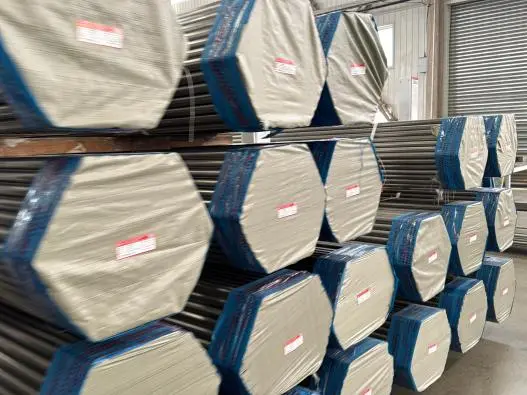
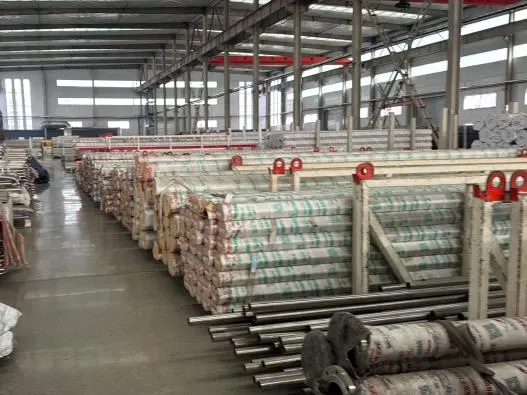
As the standard is about moving heat in places that are likely to rust, it is mostly used in heat exchangers, condensers, and boilers. Engineers in electronics, new energy, and chemical processing also use welded steel tubes for cooling and process lines where it's important to keep rust from forming. With ends that are 1/8" to 12" OD (3.2 to 304.8 mm) and walls that are 0.015" to 0.320" thick (0.4 to 8.1 mm), YOUFA has ASTM A249 TP304L Weld Stainless Steel Pipe for you. You can mix the lengths up, set them, or make a U-form with them. Before it can be sent, it needs to be bright annealed or solution annealed.
How Does TP304L Perform in Different Corrosive Environments?
Freshwater and Atmospheric Moisture
When oxygen in damp air or clean fresh water comes in contact with TP304L, a thin layer of chromium oxide forms on it. If the film gets scratched, it can fix itself. This is why the grade is good for things that are used inside, like lines for food or drugs and clean, cold water. When the water doesn't move, bad things happen. Some cracks in the film can't get oxygen because of scale, deposits, and places where the flow is low. The tube is safe as long as it has a steady speed and good drainage. Since the air near the water is salty, outdoor projects that are close to the water need to be given more thought. ASTM A249 TP304L Weld Stainless Steel Pipe provides reliable service in these conditions.
Acids and Alkalis
When the temperature is room temperature, TP304L works well with nitric acid and most other organic acids and alkaline liquids. They're not the same thing. Check out the public rust rates first. Resistance is very different when temperature and concentration are changed. Even small amounts of hydrochloric acid can damage 304L, so stay away from that grade. Hot, concentrated acid can also cause austenitic steels to crack when they are stressed. Acids like nitric acid help make the film that doesn't do anything. Certain acids can help get rid of it. Chemicals are mixed with a working fluid. You can look for a deal or have a materials expert look over the whole subject.
Chlorides and Elevated Temperature
The main thing that can hurt ASTM A249 TP304L Weld Stainless Steel Pipe is a chloride. They damage the passive film and make pits and crevices in places where the rock is weak. The risk goes up as the temperature and concentration do. When they are under tensile stress above about 140°F (60°C), austenitic types can break. Chloride stress corrosion can make this happen. People who work with seawater, brine, and cooling towers that have a lot of chloride need alloys like S31254 that are stronger. Molybdenum is added to TP316L, which is why it is often used. After being in heat and light for a long time, TP304L needs to be checked against the design code to make sure it doesn't rust at high temperatures.
Which Standards, Welds, and Surface Conditions Control Service Life?
Chemistry, Heat Treatment, and Testing
Proven science is the first step toward making something resistant to rust. The heat number, carbon, chrome, nickel, and other things written on the mill test paper show that the tube is TP304L. Solution annealing breaks down the chromium carbides and makes the metal rust-proof again after it has been shaped and welded. They also test each tube with electricity or water that doesn't hurt it. When engineers test a weld to see how bendy it is, they flare it and flatten it. Strong things don't rust. ASTM A249 TP304L Weld Stainless Steel Pipe can be pulled apart by at least 70 ksi (485 MPa), but it can't be stretched by more than 25 ksi (170 MPa). On the other hand, a tube with a bad weld can pass pressure tests but still pit early. With ASTM A262 Practice E, you can check for intergranular rust in critical job situations.
Weld Quality and Surface Finish
It's most likely that something will go wrong at the weld seam. Heat tint is an oxide layer that has less chromium than the base metal. It can happen if you trim, don't fuse, or put in too much heat. Rust and pits can also form on iron from tools. The mill is in charge of these things because it has proper welding processes and records for workers, like WPS and PQR. The heat tint is now over. Following ASTM A967 or A380 for passivation gives you back the clean, chromium-rich surface. The surface is clean and smooth after being heated up brightly. This finish doesn't leave any buildup and works well in heat-transfer tubes.
Maintenance That Extends Service Life
Even good tubes need to be watched. Watch the temperature, pH, and salt level of the working fluid. Something safe can go bad with just a few small changes. Chemical cleaners that are left over are worse for the tubes than most people think. Clean the tubes, then rinse and drain them. In order to find rust cells, surfaces that are dirty should be cleaned often. When you check with an eddy current, you can find wall loss before a leak does. Another way to see how quickly the walls break down over time is to check their thickness on a regular basis. Note down each reading, and then look at the early mill data and see how they match up. There is no need to buy a new bundle of tubes too soon if you want to save money.
How Does TP304L Compare with Other Options, and How Do You Choose Dimensions?
TP304L vs. TP316L and TP304
TP316L has between 2% and 3% molybdenum, which makes it less likely to pit or corrode in cracks when salt is present. It only makes sense to use it where chlorides are present because it costs more everywhere else. It costs less and works well in places with food, fresh water, and small chemicals. If you don't need to anneal the welds again, the low-carbon grade is better than TP304 because it doesn't feel weak. If your fluid is clean and doesn't have anything in it, ASTM A249 TP304L Weld Stainless Steel Pipe will do the same job for less money most of the time. If chlorides go up, you might want to look at TP316L, TP317, or S31254. All of these types are made by YOUFA to meet ASTM A249.
ASTM A249 vs. ASTM A312, Welded vs. Non-Welded
The tubes that are used in heat exchangers, condensers, and heaters are ASTM A249 TP304L Weld Stainless Steel Pipe. A1016 tells us how wide and high something can be. A312 covers pipes that are used for general high-temperature and corrosive piping. If you mix them up, they won't match up with the right sizes. Before being joined together to make a tube, the strip is rolled to a certain size. This doesn't change how thick the wall is. There are times when you should use a tube without a lengthwise weld and times when you shouldn't. Our welded tubes can handle most heat-transfer jobs as long as they pass the weld tests.
Choosing Dimensions and Quality Level
Size changes the pressure rating, how heat moves, and how it is installed. How much pressure can be put on the wall and how much rusting can happen depend on its width. Heat moves more slowly through walls that are thicker than they are wide. This is because heat has a harder time getting out when the wall is thicker. It's important that the outside diameter matches the outside diameter of the holes in the tube sheet. Before you place an order, you should describe the form, length, end state, and ovality. You should also think about how fast the fluid moves, how easy it is to clean, and how much pressure drop. They have ODs ranging from 1/8" to 12" and walls ranging from 0.015" to 0.320" in lengths that are random, set, or U-shaped. On the order form, you can write either "solution-annealed" or "bright-annealed" delivery. We can figure out what you want with this.
How Do You Verify a Supplier, Request a Quote, and Avoid Costly Mistakes?
Verifying a Supplier
Look at the papers first, then the plant that made them. A mill test certificate (MTC/MTR) should have the sizes, the test results, the chemicals, the heat treatment, the mechanical results, and the heat number written on it. Ask for EN 10204 3.1 or 3.2 and add third-party inspection (TPI) or positive material identification if the application is very important. Check to see if the lab is certified by TÜV, ISO 9001, PED, or ISO 17025. YOUFA is one of the top 500 companies in China. It was founded in 2017. It has 15 production lines that work together to make 50,000 tons of goods every year. More than 200 people work there. We have information on TPI, MPS, UT/RT, WPS/PQR, and MTC/MTR 3.1/3.2 for ASTM A249 TP304L Weld Stainless Steel Pipe.
Requesting an Accurate Quotation
An in-depth look into something can save days. Please list the grade and standard, the outside diameter, the wall thickness, the length or U-bend, the number, the surface finish, the heat treatment, the test and proof requirements, and the location where the goods are to be sent. Experts can make sure TP304L does the job by adding the fluid, temperature, and pressure that will be used. Nickel prices depend on the market, the size, the number of orders, the scope of the inspection, and the freight. To get the best prices, don't just look at the unit price. You should also look at the tolerance, certificates, wait time, validity, and total landing cost. We only need one pipe to meet our MOQ, and the fastest way to get it to Tianjin Port is in seven days. There are woven bags, wooden boxes with a steel frame, and other ways we pack tubes.
Common Mistakes and a Final Decision Check
People fail most of the time because of what they bought, not because of their grade. The most common mistakes people make are mixing up A249 and A312 and thinking that TP304L can be used for any fluid. They also forget to check the welds, the surface, and the salt level or temperature. When you only look at price, you don't think about how much it costs to fix leaks, shut down for repairs, and replace things. Before you buy, think about these four things. Is the fluid's chemistry right for 304L? Do the temperature and pressure stay within what the code says? Are you pleased with the surface and weld? Does the paper line up with the heat? You should switch to TP316L or a higher alloy if you see chlorides, seawater, or strong reducing acids.
Conclusion
ASTM A249 TP304L Weld Stainless Steel Pipe doesn't rust in freshwater, wet air, nitric acid, organic acids, or alkaline media because it has a passive film that is high in chromium and a low carbon content (up to 0.035%). Heats above about 140°F (60°C), chlorides, and coatings can stop the grade from going higher. When that happens, metals like S31254 or TP316L work better. How long something lasts isn't just based on its grade name; solution hardening, sound welds, clean surfaces, and regular checks are also important. There isn't much difference between A249 and A312; however, buyers should make sure that the standard they choose fits the tools they are buying. It is made sure that a tube meets the standards by making sure it has the right measures, licenses, and records of its tests before it is used.
FAQ
Can TP304L handle seawater or brine?
I believe you should not do it. When there isn't much flow or the temperature is high, the chlorides in seawater and brine cause cracks and pits in TP304L. For heavy chloride service, pick at least TP316L or a stronger metal like S31254.
Why should you pick TP304L over TP304?
When the carbon level is 0.035% or higher, carbide doesn't form near the welds. This lowers the risk of intergranular rust in welded parts. Being able to heat the assembly after it has been made is the most important reason for this.
How does ASTM A249 differ from ASTM A312?
A249 covers the welded tubes in the boiler, superheater, heat exchanger, and condenser. A312 covers pipes that will be used in hot and acidic places. Check out the standard against what you already have before you order.
Which documents come with a shipment?
YOUFA tells people about MTC/MTR 3.1/3.2, TPI, WPS/PQR, MPS, and UT/RT if they ask.
Can YOUFA produce custom sizes?
Yes. Wall thicknesses range from 0.015" to 0.320", and outside diameters start at 1/8" and go up to 12". Lengths can be random, set, or U-shaped. The smallest amount that can be ordered is one pipe.
Contact YOUFA for ASTM A249 TP304L Weld Stainless Steel Pipe Quotes
Want to find a good business that sells ASTM A249 TP304L Weld Stainless Steel Pipe? Email us at info@youfass.com with the grade, size, amount, type of fluid, and temperature of your order. Our team makes sure the fit is right and checks the quotes and licenses. One pipe is the least you can buy, and it can be sent to Tianjin Port in as little as seven days. YOUFA has 15 production lines, is TÜV certified, and has an ISO 17025 lab, so every order comes with proof. To find out more, go to youfass.com.
Online Message
YOU MAY LIKE