
Oct 14, 2026
How Does Super Duplex 2507 Weld Pipe Perform in Saltwater Systems?
Material choice is not just a formality when engineers define pipes for offshore platforms, desalination plants, or marine chemical systems; it has a direct impact on safety, downtime, and the total cost of ownership. The PREN (Pitting Resistance Equivalent Number) for ASTM A928 Super Duplex 2507 Weld pipe (UNS S32750) is above 40, which puts it well above normal duplex and austenitic types. When you combine its Electric Fusion Welded construction with solution annealing and water cooling, you get a pipe that doesn't crack or pit from chloride, even after being exposed to seawater for a long time. This is a standard that many other alloys find hard to meet.
|
|
|
Understanding Super Duplex 2507 Weld Pipe and Its Core Properties
The Duplex Microstructure and ASTM A928 Classification
There are about equal amounts of austenite and ferrite in Super Duplex 2507. It is made up of two phases. ASTM A928 sets the rules for Electric Fusion Welded (EFW) pipe made with filling metal. Many times, it's made for bigger sizes, between 114.3 mm and 2500 mm OD. Standard welded pipe and seamless pipe are both in ASTM A790, but they are not the same standard. The A928 weld class system (Classes 1 through 5) tells you what you need to do for x-rays and heat treatment. This helps buying experts set clear goals for quality before they place orders.
Alloying Elements That Drive Performance
The chemicals that make up UNS S32750 are what make it special. Chromium makes up about 25% of the metal, molybdenum 4%, nickel 7%, and nitrogen 0.3%. Chromium and molybdenum make up the inactive oxide layer that stops chlorine attacks. When it's hot, nitrogen evens out the grain structure and keeps the austenitic phase stable. The average PREN for these parts is 35, which is a lot lower than the average for the Duplex 2205, which is 41 to 43.
Manufacturing Process and Heat Treatment
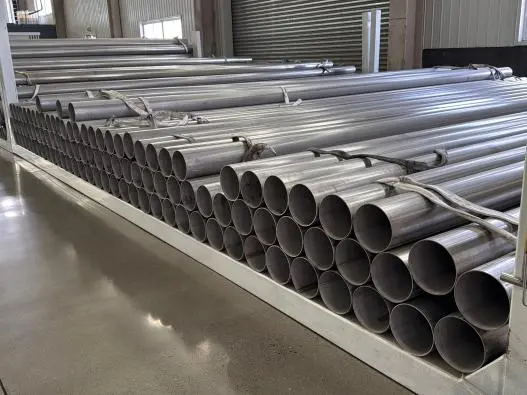
The EFW method is used by YOUFA to make this pipe. It involves solution annealing at 1040–1100°C and cooling right away in water. This heating cycle gets rid of any intermetallic precipitates that formed while welding and restores the balance of the goal phase. The walls are 3 mm to 50 mm thick, and the outside is finished with pickling and annealing. There are two kinds of end styles for field fit-up: plain end and curved end. Every pipe is fully checked mechanically and chemically, and it is also CT/UT scanned and tested hydraulically before it is sent out.
Performance Analysis in Saltwater Systems
Resistance to Chloride-Induced Corrosion
The amount of chloride in seawater can be anywhere from 18,000 to 35,000 parts per million. Normal 316L stainless steel can get pits when it gets above 25°C and these amounts are used. Even though Duplex 2205 works better, it can rust in cracks if it stays in salt water for more than 30°C. As an example, Super Duplex 2507 stays stable up to 80°C in chloride-filled environments. This makes it the best grade for cooling lines in seawater, injecting produced water, and piping systems that are underwater.
Weld Integrity Under Corrosive Conditions
Weld zones are the places in any pipe system that are most likely to rust. Using the wrong amount of heat during welding can either create the sigma phase or throw off the balance between the ferrite and austenite phases, which makes the metal less tough and less resistant to rust. The EFW process used by YOUFA for ASTM A928 Super Duplex 2507 Weld pipe is based on qualified WPS/PQR documentation, and solution annealing after the weld restores full corrosion resistance across the weld metal and heat-affected zone. With every order, buyers can get third-party inspection reports (TPI) and UT/RT records, which make it easy to track.
Real-World Application Evidence
Super Duplex 2507 pipe has been used in offshore sites in the North Sea, desalination plants in the Middle East, and underwater umbilical systems. A 2018 study in the journal Corrosion Science revealed that UNS S32750 did not show any pitting after being submerged in artificial seawater at 60°C for 12 months. This performance profile means that buyers in the oil and gas, chemical processing, and marine infrastructure sectors will have to do less maintenance and pay less over the course of their lifetime compared to 316L or even Duplex 2205 in harsh chloride environments.
Comparing Super Duplex 2507 Weld Pipe with Alternative Materials
Super Duplex 2507 vs. Duplex 2205
Duplex 2205 is a good, inexpensive choice for places with mild salt levels. Its PREN of about 35 is good for many industrial uses, but it's not enough to protect deep seawater systems or lines that inject high-chloride chemicals. Because it has more molybdenum and nitrogen, Super Duplex 2507 is clearly better in these situations. Even though 2507 costs more to buy up front, it has a lower total cost of ownership over a 10–20 year service life because it doesn't fail as often due to rust and doesn't need as many pipe repairs.
Super Duplex 2507 vs. 904L and Inconel
High-alloy options like Inconel 625 and 904L are very resistant to corrosion, but they are much more expensive to buy—often two to four times as much as Super Duplex 2507. For most saltwater system uses in chemical processes or oil and gas, 2507 works just as well against rust as the alloy but costs a lot less. Because 2507 has a maximum service temperature limit, inconel is usually only used in places with very high or low temperatures or a lot of acid.
ASTM A928 vs. ASTM A790
ASTM A790 covers both seamless and welded duplex pipe, and it is often used for normal pressure service with a smaller diameter. The ASTM A928 standard is only for EFW pipe with filler metal. It has five weld quality classes. Class 1, which requires two welds and full x-rays, has the highest level of integrity. For big, high-pressure saltwater systems, A928 Class 1 pipe sets a clear quality standard that can be checked by purchase experts and project managers.
Procurement Guide for ASTM A928 Super Duplex 2507 Weld Pipe
Certification and Document Verification
Before confirming an order for ASTM A928 Super Duplex 2507 Weld pipe, buyers should always ask for all the paperwork they need. This is what you need to get Mill Test Certificates (MTC 3.1/3.2), WPS/PQR records, UT/RT inspection reports, hydraulic test results, and third-party inspection certificates for Super Duplex 2507 EFW pipe. YOUFA has certifications from ISO9001, PED, ISO 17025, and TÜV, which means that buyers can check the quality of the products through independent channels. Using the formula %Cr + 3.3(%Mo + 0.5%W) + 16%N to check the PREN from the MTC chemistry is a useful way to make sure the metal is solid before it is installed.
Supplier Evaluation and Order Planning
When choosing a Super Duplex 2507 EFW pipe source, these are the most important things to think about:
- Production capacity and lead time: YOUFA operates 15 production lines with an annual output of 50,000 tons. Standard delivery to Tianjin Port is achievable in as few as 7 days for in-stock dimensions.
- MOQ flexibility: MOQ starts at 1 pipe, which benefits project contractors managing tight material schedules or replacement orders.
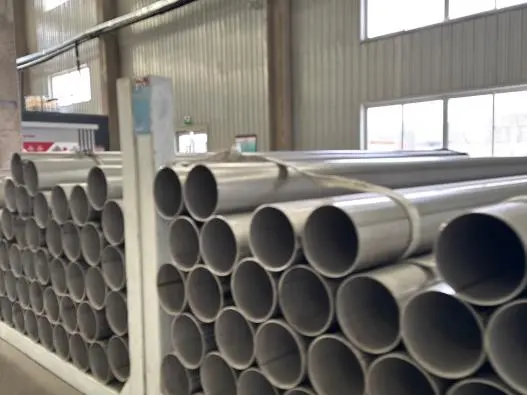
- Custom dimensions: OD from 114.3 mm to 2500 mm, wall thickness from 3 mm to 50 mm, in random or fixed lengths, with packaging in wooden boxes or steel-framed crates with hexagonal binding and woven bags.
YOUFA is a good choice for both big project sales and smaller extra purchases because it has these different ways to buy things. It is a good idea to protect the integrity of the project by asking for a sample from a new source along with full MTC paperwork and proof from an independent lab.
Maintaining and Maximizing Service Life
Welding and Post-Weld Treatment in the Field
To keep the sigma phase from forming during field welding of Super Duplex 2507, the heat input must be carefully controlled. Usually, it needs to be between 0.5 and 1.5 kJ/mm. The temperature between passes should stay below 100°C. If it's not possible to do a post-weld heat treatment in the field, solution annealing should be done in a controlled oven. It is important to use the right filler metal grade (like ER2594); using the wrong fillers lowers the weld's rust resistance to a level well below that of the base metal.
Non-Destructive Testing and Corrosion Monitoring
Advanced NDT techniques, such as phased array ultrasonic testing (PAUT) and radiography testing (RT), find problems with welds before a pipe is put into service. Monitoring electrochemical noise and corrosion coupon programs during operation give early warning of localized attack. By scheduling checks every six months for high-chloride systems, maintenance teams can find wall thinning or cracking before it gets too bad, which extends the system's life and keeps it from shutting down without warning.
Recognizing Early Signs of Degradation
Surface discoloration at welds that can be seen, unexplained drops in pressure across pipe sections, or spots of wall thinning found during UT inspection are all early signs of corrosion. Taking care of these problems right away, either by replacing sections or applying protective coats at support touch points, will keep the whole system in good shape. Keeping accurate maintenance logs that are linked to the original MTC traceability records makes it easier to change parts and helps with compliance checks in industries that are regulated.
Conclusion
ASTM A928 Super Duplex 2507 Weld pipe performs at a level that standard stainless grades simply cannot match in saltwater systems. Its high PREN, balanced microstructure, and proven EFW manufacturing process make it a sound specification for offshore, marine, and chemical applications where chloride corrosion is a daily reality. When paired with proper welding practices, documented heat treatment, and periodic NDT inspection, this material consistently delivers long service life with predictable maintenance requirements. For procurement engineers sourcing to ASTM A928, the combination of material performance and verifiable documentation makes 2507 a defensible and cost-effective choice.
FAQ
What is the difference between ASTM A928 and ASTM A790 for Duplex 2507?
ASTM A790 includes duplex pipes for general pressure service that are either seamless or standard welded. ASTM A928 is only for Electric Fusion Welded pipe made with filler metal. It has five classes of weld quality. Class 1 is the best standard for large-diameter, high-pressure saltwater systems because it needs double welding and a full radiographic check. It is also the highest level of integrity.
Why is heat input critical when welding Super Duplex 2507?
When you add too much heat, the sigma phase precipitates, which makes the material much less tough and resistant to rusting. Too little heat makes ferrite retain too much, which also lowers efficiency. The right balance of austenite and ferrite is kept by keeping the interpass temperature below 100°C and controlling the heat input between 0.5 and 1.5 kJ/mm.
How do I verify the PREN of a supplied pipe?
Use the formula %Cr + 3.3(%Mo + 0.5%W) + 16%N to get the PREN straight from the Mill Test Certificate science. The answer for UNS S32750 should be more than 40. The material does not meet the Super Duplex 2507 specification if the MTC shows a PREN below this level.
Can ASTM A928 Super Duplex 2507 pipe be used in cryogenic service?
In general, this type can be used down to about -50°C. Austenitic stainless steel types are better at withstanding impacts at low temperatures, making them the best choice for true cryogenic uses below this level.
What weld classes are available under ASTM A928?
In Class 1, the metal is double-welded with full radiography; in Class 2, it is double-welded without radiography; in Class 3, it is single-welded with full radiography; and in Classes 4 and 5, the metal is heat-treated in different ways and with different amounts of spot radiography.
Get a Quote for Super Duplex 2507 EFW Pipe from YOUFA
YOUFA makes ASTM A928 Super Duplex 2507 Weld pipe and is certified by TÜV and ISO9001. It has 15 production lines and makes 50,000 tons of pipe every year. We give full paperwork, like MTC 3.1/3.2, WPS/PQR, UT/RT records, and TPI, with every sale. MOQ is just one pipe, and it can be sent to Tianjin Port in as little as seven days. To get specifications, certifications, or a project quote, email our technical team at info@youfass.com or go to youfass.com.
Online Message