
Oct 19, 2026
How Does S32205 Stainless Steel Pipe Improve Pipeline Durability?
ASTM A928 Duplex S32205 stainless steel pipe improves pipeline durability by combining a balanced ferritic-austenitic microstructure that delivers twice the yield strength of standard 316L stainless steel, alongside a Pitting Resistance Equivalent Number (PREN) exceeding 34. This dual-phase structure resists pitting, crevice corrosion, and chloride-induced stress corrosion cracking — three of the most common causes of premature pipeline failure. In oil & gas, chemical processing, and marine environments, operators report significantly extended service intervals and reduced lifecycle costs when switching from conventional stainless grades to S32205 duplex pipe.
|
|
|
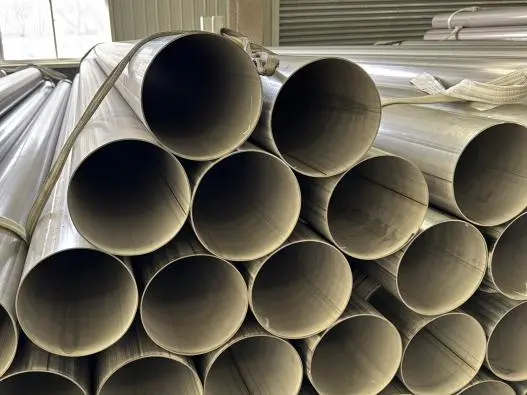
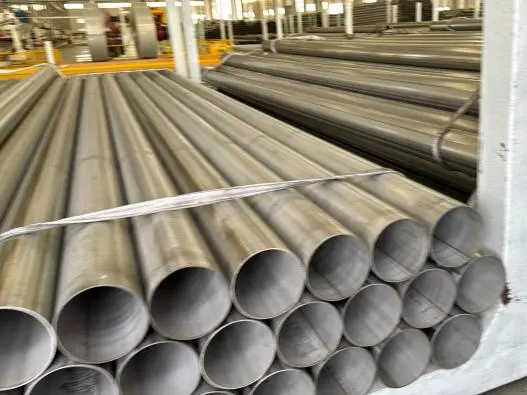
Understanding the Core Properties of ASTM A928 Duplex S32205 Stainless Steel Pipe
Because of how the materials in S32205 are made, they always work better than other choices in tough pipe systems. It is mostly made up of chromium (22%), nickel (5%), and molybdenum (3%). Its texture is about 50/50 made up of ferrite and austenite phases.
Mechanical Strength That Handles Real Pressure
You can stretch S32205 as little as 65 ksi (450 MPa), and it can hold its shape as tightly as 95 ksi (655 MPa). These are the rules that ASTM makes. This means that engineers can pick wall pieces with thinner walls that still have the same pressure grades as carbon steel pipe that is heavier. It's safer and saves money and weight this way.
Corrosion Resistance Across Aggressive Media
The higher amounts of molybdenum and nitrogen bring the PREN above 34. This makes S32205 much more immune to chlorides than 316L, which has a PREN of about 24. It works well in seawater, process streams that are acidic, and fluids that contain hydrogen sulfide. Because of this resistance, offshore subsea flowline applications need fewer unplanned shutdowns and inspections less often.
Thermal and Fatigue Stability
The coefficients of thermal expansion for S32205 are less than those for grades that are fully austenitic. This feature makes thermal fatigue cracking less likely to happen in places where temperatures change a lot, like chemical rooms and heat transfer lines. One-phase structures aren't as good at resisting wear and tear from high-speed fluids, but two-phase structures are.
How S32205 Pipes Enhance Pipeline Durability: Problem-Solving Analysis?
Pipeline workers in many fields have to deal with three types of failure all the time: electrochemical corrosion, mechanical decline, and stress cracking. The S32205 standard says that they should use the material's properties instead of protective coatings that can come off or need to be put on again.
Eliminating Pitting and Crevice Corrosion
Every three to five years, high levels of chloride damage pipes made of 304 and 316L in desalination plants and offshore buildings. Data from chemical plants that moved to ASTM A928 Duplex S32205 Stainless Steel Pipe large-diameter EFW pipe showed that it made the pipes last more than 10 years longer in the same conditions. The inactive film is more solid and less likely to break down because it has more chromium and molybdenum, even in places with little oxygen.
Controlling Stress Corrosion Cracking in High-Pressure Lines
If austenitic stainless steels are put under shear stress, high temperature, and chlorides all at the same time, they can crack. This is called stress corrosion cracking (SCC). The ferritic phase in S32205 stops SCC from spreading around the edges of microstructures. So, duplex 2205 pipe is the best choice for high-pressure pumping lines in oil and gas production, since SCC breaks can be very bad for safety and the environment.
Managing Mechanical Wear in Flow Systems
Blaster circuits for pulp and paper and marine scrubbers that deal with acidic vapor quickly eat away at softer materials because of rough flow and abrasive slurry. Because S32205 is harder than austenitic grades, wall shrinkage is slowed down. This means that areas with a lot of wear don't have to be replaced as often and can be checked more often.
Over the last 20 years, the oil and gas, chemical, and naval businesses have all used duplex stainless steel lines more. This is because they work better and last longer.
Comparing S32205 Stainless Steel Pipes to Alternative Materials
It's important to think about how much the pipe material will cost over its whole life. I've put together a simple list of S32205's main competitors so that buying teams can make smart spending choices.- 316L stainless steel is stronger than S32205, but it costs more per kilogram and needs to be replaced more often because it corrodes in chloride-rich environments. This means that walls have to be thicker and made of 316L. To own a pipeline that will be used in strong media for more than 15 years, S32205 generally costs less overall, even though it costs more at first.- S32205 vs. carbon steel with coating: The coating on carbon steel pipelines is very important. As soon as a covering breaks because of damage from mechanical forces, separation, or bad application, corrosion starts to spread fast. Since S32205 doesn't need any coatings on the outside to keep it from rusting, that's one less thing that needs to be maintained over time.
- S32205 vs. 316L stainless steel: 316L costs less per kilogram upfront, but its lower strength requires thicker walls, and its lower PREN leads to faster corrosion-driven replacement cycles in chloride-rich service. For pipelines expected to operate beyond 15 years in aggressive media, S32205 typically delivers lower total cost of ownership despite the initial price premium.
- S32205 vs. carbon steel with coating: Carbon steel pipelines depend entirely on coating integrity. Once a coating fails — through mechanical damage, disbondment, or improper application — corrosion accelerates rapidly. S32205 does not require external protective coatings for corrosion protection, removing a significant ongoing maintenance variable.
- S32205 vs. super duplex 2507 (UNS S32750): Super duplex carries a PREN above 40 and excels in extremely aggressive environments like deep-sea tiebacks. However, it costs significantly more and requires tighter welding controls. For mid- to high-severity service, S32205 offers a more practical balance between performance and procurement cost without the fabrication complexity of 2507.
Because of these similarities, it is easy to see where ASTM A928 Duplex S32205 Stainless Steel Pipe fits in the material selection matrix: it is the best choice when service conditions are tougher than what 316L can handle, but you don't need the full power and cost of super duplex grades.
Procurement Considerations and Market Availability of ASTM A928 S32205 Pipes
What to Verify Before Purchasing?
The groups that buy things should make sure that the businesses they work with have ISO 9001 quality management, PED compliance for pressure tools, and ISO 17025 laboratory accreditation for checks that are done in-house. Paperwork like Mill Test records (MTC/MTR 3.1 or 3.2), WPS/PQR forms, and third-party inspection (TPI) records help keep projects on track and protect buyers.
Dimensional and Customization Availability
YOUFA creates ASTM A928 Duplex S32205 Stainless Steel Pipe with wall thicknesses ranging from 3 mm to 50 mm and outside diameters ranging from 114.3 mm to 2500 mm. When you use the solution-annealed and water-quenched EFW manufacturing process, you can make big pieces that you can't make with smooth production. You can pick lengths that are random or set, ends that are straight or bent, and surfaces that are pickled and annealed.
Lead Times, MOQ, and Logistics
The 15 lines at YOUFA make 50,000 tons of goods every year. This means that lead times are short, even for big jobs. One pipe is the minimum that can be bought, which helps engineers find replacement parts or small amounts for samples. The fastest way to ship standard items to Tianjin Port is in seven days. Things are put in wooden boxes with extra steel frames, triangular binding, and woven bags to keep them safe while they're being shipped.
Best Practices for Handling, Heat Treatment, and Welding of S32205 Pipes
Heat Treatment Protocol
To get the balanced duplex microstructure back, S32205 pipes should be solution-annealed at 1020–1100°C and then quickly cooled in water after any hot work. It is important that the waiting times are long enough to fully mix the ingredients together. If you don't heat the metal correctly, the sigma phase will form, which will weaken it and make it likely to rust.
Welding Procedure Requirements
When welding duplex stainless steel, you need to keep the 50/50 phase balance in the weld zone by adding controlled heat of 0.5 to 2.5 kJ/mm. Because ER2209 filler metal and argon with 2–3% nitrogen are used, the weld pool does not lose nitrogen. WPS/PQR papers that have been accepted should be used for all welding. Over 150°C must not be reached between the passes.
Inspection and Maintenance Schedule
Radiographic testing (RT) or ultrasonic testing (UT) of welds should be done after the metal has been made, along with hydraulic pressure testing. If you use twin pipes, you should check their UT thickness often at places where they are known to get a lot of wear. If you do these things, the material will keep its strength and ability to resist corrosion for as long as it is used.
Conclusion
It is most important for long-service pipelines to have better yield strength, a high PREN grade, and resistance to stress corrosion cracking. These are what make ASTM A928 Duplex S32205 Stainless Steel Pipe last longer. People who buy things always choose S32205 over 316L and coated carbon steel in tough service environments. This is because total lifecycle costs are more important than unit material prices. Pipe systems for oil and gas, chemicals, and ships should last for decades if they are properly heated, welded, and have the right paperwork.
FAQ
Which industries benefit most from duplex 2205 pipe?
Oil & gas, chemical processing, offshore and marine, desalination, and pulp and paper industries see the strongest performance benefits. Any application involving chloride exposure, high pressure, or acidic media is a strong candidate for S32205 duplex pipe.
How does S32205 corrosion resistance compare to 316L in harsh environments?
S32205 has a PREN above 34 compared to approximately 24 for 316L. In seawater and chloride-heavy process streams, S32205 resists pitting and stress corrosion cracking significantly better, which is why it is the standard specification for offshore piping systems where 316L would fail prematurely.
What are the typical lead times and MOQ for YOUFA S32205 pipes?
YOUFA accepts orders from a minimum of one pipe. Standard delivery to Tianjin Port can be achieved in as few as seven days for stocked dimensions. Project-scale orders with custom dimensions are coordinated based on production scheduling.
What documents does YOUFA provide with S32205 pipe orders?
YOUFA supplies MTC/MTR (3.1/3.2), WPS/PQR, TPI reports, RT/UT test reports, hydrostatic test records, and mechanical and chemical test certificates as standard documentation with each order.
Partner with YOUFA for Your ASTM A928 Duplex S32205 Stainless Steel Pipe Supply
Youfa Stainless Steel Pipe Co., Ltd. has been in business since 2017 and makes 50,000 tons of steel every year on 15 lines. The business is certified by ISO 9001, PED, ISO 17025, and TÜV. YOUFA is a well-known company that makes ASTM A928 Duplex S32205 Stainless Steel Pipe. They can help you with your project from the shipping details to the specs. It takes seven days to ship, and they offer full mill paperwork. The smallest order they take is one pipe. To get a price right away, go to youfass.com or email info@youfass.com about your job.
Online Message