Nov 19, 2026
How Does EN 10217-7 1.4401 Welded Steel Pipe Perform in Chemical Plants?
EN 10217-7 1.4401 Welded Steel Pipe performs well in many chemical plant services, including process water, solvents, organic chemicals, and mildly acidic streams. Grade 1.4401 is a molybdenum-alloyed austenitic stainless steel, equivalent to 316, so it resists pitting better than 1.4301. Performance still depends on chemical concentration, temperature, chloride level, pressure, weld quality, and surface treatment. Hot concentrated acids and hot chloride streams need a separate corrosion review. In this guide, I explain what the pipe is, where it fits, how it compares with other grades, and what to check before you buy.
|
|
|
What Is EN 10217-7 1.4401 Welded Steel Pipe?
Let me start with the basics, because the name packs in a standard, a grade, and a process.
What does EN 10217-7 cover?
That's what EN 10217-7 says about pressure tubes made of welded stainless steel. Because the name has a standard, a score, and a process in it, let me start with the basics. It picks the type of steel, the way it will be made, any limits, the mechanical qualities, and the tests that will be used. But it's not the same as a piping design code or your project specifications. Your engineer will still use the code to decide on the design pressure, wall thickness, and allowable stress. Most of the time, ASME B31.3 is used for process pipes in the US, and the lead engineer should make sure that an EN product fits. I also tell people who want to buy EN 10217-7 1.4401 Welded Steel Pipe to write down the standard version, shipping situation, test group, and document package they want to buy.
Grade 1.4401 Chemistry
Grade 1.4401 is an austenitic stainless steel because it has chromium, nickel, and molybdenum in it. Nickel is at 10% to 13%, molybdenum is at 2.0% to 2.5%, and carbon is at up to 0.07%, according to EN 10088-1. Molybdenum is the main thing that makes Type 304 different from 1.4301. Fluids that contain chloride are less likely to pit or crack because of this. An engineer will often use the Pitting Resistance Equivalent Number to compare grades. This number increases the amount of nitrogen by 16, 3.3 times, and chromium by 1. That means 304-type steel is close to 18–19 and 316-type steel is close to 24. Make sure the mill certificate has the right numbers by keeping an eye on it.
Welded Pipe Versus Weld-Free Pipe
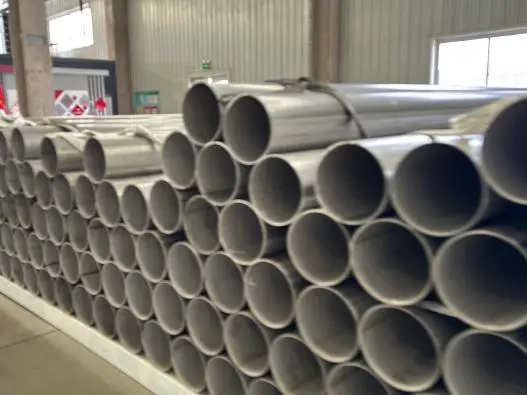
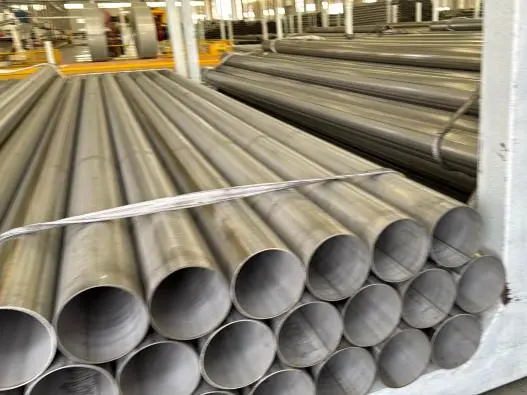
A welded pipe starts out as a flat sheet or plate. It is rolled into a round shape with making tools, and welding fills in the gap. After that, solution annealing and pickling are used to restore the corrosion resistance. Bolts that have been cut and drawn are used to make weld-free pipe. Welded pipe usually comes in more diameters, takes less time to get, and costs less, especially for bigger sizes. People often use pipe that doesn't need to be welded when the walls are very thick, the pressure is very high, or the rules don't allow seams. YOUFA can weld pipes with an outside diameter of up to 1219.2 mm (48"), which means that big chemical lines can fit.
How Does 1.4401 Welded Pipe Perform in Chemical Plants?
Here is how the pipe behaves once it meets real process fluids.
Corrosion Resistance in Process Fluids
Grade 1.4401 works well with deionized water, cooling water, many solvents and organic chemicals, caustic solutions at room temperature, and weak oxidizing acids. Because it doesn't rust as quickly as 304 steel, 316 steel is also used a lot in fine chemical and pharmaceutical lines. The chloride brines, sulfuric acid, and hydrochloric acid that are hot and strong are not good for it. Even small amounts of chloride or acid can change how corrosion works, which makes mixed streams more dangerous than tables with only one chemical. It would be smart to check the corrosion of EN 10217-7 1.4401 Welded Steel Pipe with coupon tests before you agree to a new service.
Temperature, Pressure and Weld Zone Behavior
The rate of rust, the amount of stress that can be applied, and the amount of thermal expansion change as the temperature does in EN 10217-7 1.4401 Welded Steel Pipe. Because austenitic steel stretches more than carbon steel, you need to be careful with pipe loops and supports. There is a process called chloride stress cracking that can happen when chlorides, strain, and moisture come together above 60 °C. Also, watch out for the weld areas. Chromium carbides can form during welding at temperatures between 450 °C and 850 °C. There is a process called sensitization that makes it possible for intergranular attack to happen. This means that grade 1.4401 can handle carbon amounts of up to 0.07% for multi-pass welds on thick walls. There is less of that risk with Grade 1.4404 because it has less carbon.
Surface Finish, Passivation and Cleaning
The steel is protected by a chromium oxide film that is not active. How well it forms depends on the state of the surface. There is a finish from YOUFA that has been pickled and annealed to get rid of scale and heat tint. Fabricators should pickle or passivate again after field cutting or welding if they want to follow ASTM A967. Inside spaces that are smooth are easy to drain and clean. This is important for lines in the food, drug, and fine chemical industries that clean in place. Steel can get rust spots even if it is strong. These spots can be caused by iron particles, oil, or heat tint. To keep grades from getting mixed up, write down in the buy order what the roughness and cleanliness standards are and ask for PMI.
Technical Specifications and Grade Comparison
Specification details decide whether a pipe fits your line, so I check them early.
YOUFA Product Data to Verify
Youfa has grades 1.4301, 1.4306, 1.4307, 1.4401, 1.4404, 1.4541, 1.4539, and 1.4571 of EN 10217-7 1.4401 Welded Steel Pipe for sale. It's 1219.2 mm (48") wide on the outside and has a wall thickness that meets EN standards. It is solution-annealed before being sent out, and the outside finish is pickled and annealed. You can set the lengths or let them go, and the ends can be smooth or rounded. You can pack things in a wooden box with a steel frame, a hexagonal bin, or a woven bag. You should make sure that the chemical makeup, tensile and proof strength, elongation, tolerances, ovality, straightness, and test category all meet the needs of your project before you send out an order.
1.4401 Compared With 1.4404 and 1.4301
1.4404 grade is the same as 316L grade. It can't have more than 0.030 percent carbon, but 1.4401 can have up to 0.07%. In other words, it doesn't get more sensitive after being welded. It has about the same amount of molybdenum, so it doesn't pit as easily. It is the same as grade 304, but grade 1.4301 doesn't have any molybdenum in it, so it pits more quickly in salt service. It may be better for mild water and clean utilities, though, since it costs less. Grade 1.4571 is made stronger with titanium and can also take the heat that comes from welding. It has more copper, nickel, and molybdenum than 1.4539 (904L type), so it can be used in stronger acids. It is important to get up-to-date quotes on the nickel and molybdenum markets before making a choice.
EN 10217-7 Compared With ASTM A312
The US standard for austenitic stainless steel pipe is ASTM A312. These rules are put into the plans of many chemical plants in the United States. Another name for pressure tubes is EN 10217-7, which has EN grade numbers, test categories, and metric measurements. Names like TP316 are used in ASTM A312, along with NPS and plan size. You need to take it slow and read each line as it comes up because the lines between chemistry and other subjects are vague. Others will only want ASTM material, while others will look over EN material. If your specs call for TP316, make sure that your engineer of record signs off on 1.4401 in writing before you place your order.
Applications and Risks in Chemical Plants
Knowing where the pipe works, and where it does not, prevents costly reselection.
Typical Chemical Plant Uses
This kind of product is used in pipe systems for chemicals, power plants, pressure vessels, and factories. It's bought to move liquid chemicals and solvents, set up circulation systems, make process connections, connect instruments, make dose lines, cool water loops, compressed air lines, and do other things. For process lines and rinse water, people who work in electroplating, battery materials, and semiconductor chemical supply also ask for EN 10217-7 1.4401 Welded Steel Pipe. Food and medicine services may need smooth insides, clean weld finishing, passivation, the ability to be tracked, and controlled surface roughness. Still, every fluid needs its own test to make sure it works with everything else.
Services That Need Extra Engineering Review
Some services want people to discover more about 1.4401 before they pick it. Some of these are warm, concentrated acids, solutions with a lot of chlorine, chemicals that oxidize strongly, sour environments, services with hydrogen, high-temperature pressure systems, and erosion and corrosion that are very bad. NACE MR0175/ISO 15156 sets the limits for what can be used in sour service. You can also use 1.4539, duplex stainless steels, nickel alloys, and carbon steel that is lined or coated. With real process data, you can see how each choice changes cost, weldability, and availability. It can cost more in lost time than the price difference between grades when something fails quickly.
Common Selection Mistakes
Most mistakes go wrong because of these few things. People think that the number "316" can be used for any chemical in the first case. Temperature, impurities, chloride level, and contact time are all things that need to be looked at at the same time. Other people don't care about the quality of the weld, don't passivate again after fabrication, accept general certificates, use nominal measurements as proof of pressure capability, or look at the packing. These mistakes lead to corrosion in some places, leaks, tainted goods, installations that are done late, documents that are turned down, replacements that happen too soon, and higher lifecycle costs. Also, make sure you pack well. For instance, wooden boxes, binding, and woven bags keep surfaces from getting iron on them or scratched while they are being shipped.
How to Specify, Buy, and Inspect the Pipe?
A clear order package protects both schedule and budget.
What to Include in Your RFQ?
With every request, I think you should send these things:
• Product details: Write down the EN 10217-7 grade, the outside diameter, the wall thickness, the number, the length, the tolerances, the shipping condition, the surface finish, and the end preparation. They will only price the exact scope because you need to test, check, and package the goods. They won't price a stock item that will need changes later. Add the destination and Incoterms, since freight and duties can change how much it costs to deliver.
• Service conditions: Please tell us what chemical it is, how much chlorine it has, what temperature it works at, how much pressure it is supposed to be under, and what cleaning chemicals it needs. Add the flow rate and the conditions for shutting down if you know them. The technical team can then decide if EN 10217-7 1.4401 Welded Steel Pipe is good for your line or if 1.4404, 1.4539, or another grade needs more work.
• Commercial terms: In business terms, the price per meter depends on the nickel and molybdenum markets, the size, the wall thickness, the finish, the testing scope, the volume, the freight, and the taxes. Not just the unit price, but also the total cost of the goods, the number of items in stock, the wait time, the ability to keep track of them, and the help for shipping. Most of the time, it costs more in the end to accept a low price that doesn't include tests or paperwork.
Certification and Inspection Checklist
It has a list of the pipe's chemical makeup, mechanical test results, standard, grade, and size on an EN 10204 3.1 certificate that was brought to its heat or batch. For a 3.2 license, the work is also reviewed by professionals. YOUFA has reports on TPI, WPS/PQR, MPS, UT/RT, and MTC/MTR (3.1/3.2). The company is also certified by ISO 9001, PED, ISO 17025 lab, and TÜV. To make sure the weld seam on 1.4401 pipe is tight, it is often tested with eddy current or hydrostatic forces, ultrasonic waves to look for flaws inside, intergranular corrosion tests according to ISO 3651-2, measuring the pipe's roughness for sanitary use, and PMI to confirm the molybdenum content. With third-party inspection, witnesses see the tests, look over the paperwork, and check the packing.
Decision Steps and Supplier Check
Five steps will do it. First, make a list of the fluid, its concentration, temperature, pressure, chloride amount, cleaning chemicals, and the conditions under which the system should be shut down. Second, look for the pipe code, pressure rules, customer needs, inspection group, and amount of paperwork. The last thing you should do is compare 1.4401 to 1.4404, 304, duplex stainless steels, nickel alloys, and lining options. Fourth, choose whether the building will have welds or not. Fifth, look into the supplier and make sure you agree with all the technical details before you place your order. The company YOUFA was started in 2017 and is one of the Top 500 in China. It has 15 lines of production that make 50,000 tons of steel a year. More than 200 people work there.
Conclusion
EN 10217-7 1.4401 Welded Steel Pipe is made of molybdenum. This type of steel is less likely to pit than 1.4301, so it can be used in many chemical plant applications. Large sizes can be made with welding at a fair price and in a fair amount of time. It doesn't just depend on the grade mark; it also depends on the chemistry of the fluid, the amount of salt, the temperature, the pressure, the quality of the weld, and the condition of the surface that was fixed. It is less likely that grade 1.4404 will become sensitive when you weld it. On the other hand, grade 1.4539, solid steels, or nickel alloys work best with stronger acids and hot chlorides. A replacement for ASTM A312 might need to be approved by the EN. There are tests, certificates, PMI, and ways to track the pipe that is shipped to make sure it meets the standards. Before you place your order, do a full technical study to get the most reliable result.
FAQ
What is EN 10217-7 1.4401 pipe?
EN 10217-7 1.4401 Welded Steel Pipe is welded for strength; it is the same as 316 stainless steel. Molybdenum is added to grade 1.4401 to make it less likely to get pits. Read the license to find out what it says about the standards and makeup.
Where is it used?
It is used in piping systems in the chemical, power, and pressure vessel industries. Whether it's okay or not depends on the fluid, its content, temperature, and salt level, so check out each service before giving the go-ahead.
How does 1.4404 differ from 1.4401?
1.4404 grade is the same as 316L grade. Since it has less carbon, it is less likely to be difficult to weld. It's used a lot in the marine and chemical fields.
What quality control checks apply?
Different tests will be done to find out how tight the weld seam is, flaws in the material through ultrasonic testing, intergranular corrosion testing according to ISO 3651-2, roughness measurement for clean use, and molybdenum content through PMI. Ask for EN 10204 3.1 certificates, or 3.2 certificates if the project needs them.
How do I request an accurate quotation?
Send an email to info@youfass.com with the size, number, chemical service, working conditions, surface finish, inspection needs, certificate level, destination, and due date. Once they're sure about suitability, stock, and lead time, YOUFA's team will revert.
Request a Quote for EN 10217-7 1.4401 Welded Steel Pipe from YOUFA
Are you looking for a company that sells EN 10217-7 1.4401 Welded Steel Pipe and backs up every order with test certificates? YOUFA is a TÜV-approved manufacturer with ISO 9001, PED, and ISO 17025 lab certifications. They can take orders from as little as one pipe and ship them to Tianjin Port in 7 days. Email info@youfass.com with your size, amount, chemical service, working conditions, certificate level, and where the goods need to go. Our team will look at technical suitability, stock, wait time, and a quote that is tailored to the project. For more information, go to youfass.com.
Online Message