
Sep 17, 2026
How Does ASTM A790 S32750 Duplex Pipe Resist Seawater Corrosion?
When seawater meets steel, the battle begins. Chloride ions penetrate passive layers, trigger pitting, and accelerate structural degradation — often silently, until failure becomes costly. ASTM A790 S32750 Duplex Steel Pipe was engineered specifically to win that battle. Commercially known as Super Duplex 2507, this pipe grade combines a dual-phase microstructure with a precise alloy chemistry that delivers exceptional resistance to the most aggressive marine environments. In this post, I'll walk through the science behind its corrosion resistance, how it stacks up against alternatives, and what procurement teams need to know before sourcing it.
|
|
|
Understanding ASTM A790 S32750 Duplex Steel Pipe
What Is It, Exactly?
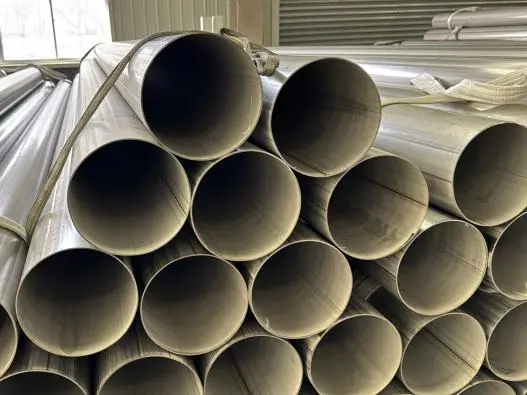
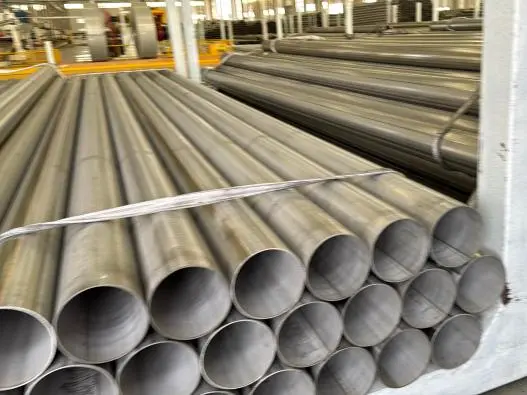
ASTM A790 S32750 Duplex Steel Pipe refers to a standard for ferritic/austenitic stainless steel pipes that are both seamless and welded. They are made to withstand very harsh chemical environments. Its two-phase microstructure, which is made up of about 50% austenite and 50% ferrite, gives it a chemical and mechanical profile that standard 300-series grades just can't match. The alloy is made up of 25% chromium, 4% molybdenum, 7% nickel, and a controlled amount of nitrogen. This gives it a Pitting Resistance Equivalent Number (PREN) that is usually above 42. A very important standard in the industry is PREN. Anything above 40 is called "super duplex," which means it is very resistant to localized corrosion in seawater.
Mechanical Integrity Under Marine Stress
In addition to being resistant to rust, the pipe has a minimum yield strength of 80 ksi (550 MPa), which is about twice as high as normal 316L stainless steel. This high strength-to-weight ratio means that walls don't have to be as thick, which lowers the weight and cost of the system without affecting its performance. It stays tough even at low temperatures, which makes it good for use in cold climates, offshore, and below the sea.
Mechanisms of Corrosion Resistance in Seawater
The pipe doesn't just resist seawater corrosion by chance. A material that stays strong even after being exposed to chloride for a long time is made by a precise set of metallic processes working together.
The Role of the Passive Film
Chromium reacts naturally with oxygen to make a thin, strong film of chromium oxide on the pipe's surface. This film is a barrier that can fix itself; if it gets scratched or worn down, oxygen can help it grow back. Molybdenum makes this film stronger by keeping it more solid in chloride-rich settings. This makes it less likely that the film will break down in one place, which can cause pitting.
Nitrogen's Contribution to Stability
Nitrogen is useful in two ways. It keeps the austenite phase stable and stops pits from forming by gathering at possible erosion sites. This raises the point at which pitting starts. A study in the journal Corrosion Science shows that adding nitrogen to duplex alloys raises the critical pitting temperature (CPT) in a way that can be measured. The CPT is a direct measure of how well the alloy can handle chloride.
Duplex Microstructure and Stress Corrosion Cracking Resistance
Stress corrosion cracking (SCC) is a silent danger in marine piping. High temperatures, chloride ions, and tensile stress are all things that make it easy for cracks to spread. At phase limits, the duplex microstructure breaks crack tracks, which makes cracks change direction and lose energy. When compared to fully austenitic grades like 316L, which are much more likely to suffer from SCC in warm seawater above 60°C, this behavior greatly increases the service life.
ASTM A790 S32750 vs. Alternative Materials for Seawater Applications
Material selection is a problem that procurement teams often have to deal with. Here is an honest look at how the ASTM A790 S32750 Duplex Steel Pipe grade stacks up against other options that are often thought of.
316L stainless steel is cheap, but its PREN is only about 24, which is much lower than what is needed for reliable service in salt water. A lot of research has been done on 316L and crevice corrosion and SCC problems in offshore systems, especially in chloride conditions that are stagnant or warm. With a PREN of around 35, S31803 duplex (Duplex 2205) works better, but it's still not up to the 40+ standard needed for harsh marine conditions.
Carbon steel with epoxy or polymer coatings has a low starting cost, but it needs to be inspected often, have its coatings maintained, and eventually be replaced. Lifecycle costs often go over those of a super duplex system that needs little maintenance over the course of a remote asset's 20-year life.
904L stainless steel is resistant to rust, but it costs more and has more nickel in it. ASTM A790 S32750 Duplex Steel Pipe fills the performance gap between 904L and expensive nickel alloys like Alloy 625. It offers the same level of chloride protection at a more reasonable price for pipeline projects with big diameters or lots of flow.
After looking at these differences, it's clear that the overall cost of owning super duplex 2507 piping usually makes up for the higher price, especially in harsh offshore and desalination environments.
Practical Applications of ASTM A790 S32750 Duplex Pipe in Seawater
The material's success records make it ready for use in the real world in a number of important areas.
Here are the main situations where this pipe grade makes a real difference:
- Offshore Oil & Gas Platforms: ASTM A790 S32750 Duplex Steel Pipes are used to keep chloride-saturated subsea manifold pipes, risers, and injection lines that handle sour gas and high-pressure seawater from failing catastrophically.
- Desalination Plants: High-pressure reverse osmosis membrane housings and brine recycling pipes work even when there is a lot of salt in the water. Because it doesn't rust in concentration cells, the S32750 alloy is often used in the design of new SWRO (Seawater Reverse Osmosis) plants.
- Chemical Processing: Pipes that are used in heat exchangers that work with nitric acid, phosphoric acid, or organic acid streams are good at transferring heat and resisting wear from fast-moving acids.
All of these applications need to be able to work without any planned downtime. One seawater rust failure in an offshore riser or desalination plant costs a lot more than the extra cost of super duplex pipe. It is important to use the right heat treatment during fabrication, which includes solution annealing at 1,025–1,100°C followed by rapid quenching, to keep the balanced microstructure and good corrosion performance in service.
Procurement Insights for ASTM A790 S32750 Duplex Steel Pipe
Finding this grade takes more than just comparing prices. When evaluating sources for marine and industrial projects, procurement teams should stick to a few strict rules.
Material traceability is very important. As required by ASTM A790, each ASTM A790 S32750 Duplex Steel Pipe should have mill test reports (MTRs) that show the chemical makeup, mechanical test results, and heat treatment records. Positive Material Identification (PMI) checking with X-ray fluorescence or optical emission spectrometry adds an extra layer of security at the point of receipt.
If you want to be sure of an alloy's resistance to pitting and crevice corrosion, you can test it for corrosion using ASTM G48 Method A or B, which involves immersing it in ferric chloride. Testing for hardness according to ASTM E18 or E92 makes sure that no harmful sigma-phase precipitation happened during processing, which would lower both toughness and corrosion resistance at the same time.
Standard-sized super duplex pipes usually take between 8 and 16 weeks to arrive, but this depends on how much you order and how thick the walls are. Buying in bulk that fits with the timeline of a project lowers the risk of spot-market price changes, which can be big because the metal contains a lot of molybdenum and nickel.
Conclusion
Because it has a high-PREN alloy chemistry, a self-repairing chromium oxide passive film, nitrogen-enhanced pit suppression, and a duplex microstructure that stops stress corrosion cracking, ASTM A790 S32750 Duplex Steel Pipe doesn't rust in salt water. When all of these parts work together, they provide long-term dependability that regular stainless steels can't match in chloride-filled naval service. This grade is a highly sound and cost-effective choice for buying teams and project experts who work in chemical processing, desalination, or offshore settings.
FAQ
What makes S32750 superior to standard stainless steel in seawater?
It has a PREN above 42, a dual-phase microstructure, and nitrogen alloying, which all work together to make ASTM A790 S32750 Duplex Steel Pipe resistant to pitting, crevice corrosion, and stress corrosion cracking in saltwater that is high in chloride. Standard austenitic grades, like 316L, have a PREN of about 24 and don't have the microstructural barrier that the duplex phase boundary does to stop SCC from spreading.
Can S32750 duplex pipe be welded without compromising corrosion resistance?
Yes, as long as the right rules are in place. When welding, you should use filler metals that match or are over-alloyed, keep the temperatures between passes below 150°C, and then, if needed, do solution annealing. These steps keep the balance of the austenite and ferrite phases and stop the formation of sigma-phase or carbide particles, which would lower the weathering performance.
How does S32750 perform over long-term marine exposure?
Field data from offshore platforms and desalination plants show that super duplex 2507 pipe stays structurally sound and doesn't rust after 20 years or more of service in salt water under the right conditions. Installations in the Gulf of Mexico and the North Sea have seen fewer inspections and almost no unexpected replacement rounds.
Partner With YOUFA for Certified ASTM A790 S32750 Duplex Steel Pipe Supply
YOUFA is a skilled company that makes ASTM A790 S32750 Duplex Steel Pipe. They have 15 production lines that can make 50,000 tons of steel each year. Full material traceability, ASTM-compliant testing, and quality control are built into every step of the process that goes into making our goods. Whether your project needs a large number of parts for offshore pipes or parts that are made to exact specifications, our team can deliver. To get a price, email info@youfass.com or go to youfass.com right now.
Online Message