
Nov 20, 2026
How Does ASTM A249 TP316L Weld Steel Pipe Perform in Chemical Processing?
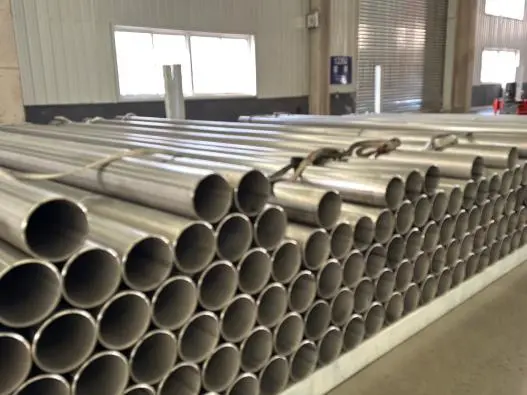
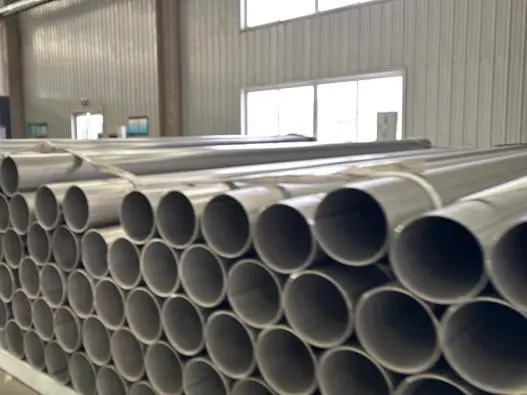
ASTM A249 TP316L Weld Steel Pipe is good for many chemical processing jobs. It works especially well in heat exchangers, condensers, and process coolers that deal with chloride-containing water, slightly acidic streams, and service that is very wet. Low carbon content keeps welds from becoming weak, and molybdenum levels of 2 to 3 percent make it stronger against pitting and crevice attack. What happens in the end is still determined by the flow, temperature, contaminants, and concentration. The hot hydrochloric acid and warm, stressed chloride service needs more attention. This guide was made to help buyers and engineers figure out if a product fits, get a clear quote, and make sure they give the right information.
I'll talk about the standard, how it works, how it's made, what it's used for, and how to choose a supplier below. I also talk about how YOUFA fits into everything.
|
|
|
What Is ASTM A249 TP316L Weld Steel Pipe?
Standard Scope: Tube or Pipe?
Standards ASTM A249 and A249M cover tubes for the boiler, superheater, heat exchanger, and condenser. These tubes are made of welded austenitic steel. A lot of project documents use the word "pipe," but the specification uses "tube." This can change the order of things. When tubes are used to move heat, their outside width and wall thickness are generally used to describe them. Nominal pipe size is used to describe pipes that meet ASTM A312. The grade number is TP316L, which is also written as UNS S31603. It's also known as low-carbon 316 stainless steel pipe in regular speech. I make sure of the exact standard, grade, and size before I look over an inquiry. The purchase order, drawings, and design code are what determine acceptance.
Chemistry and Mechanical Properties
Standards ASTM A249 and A249M cover tubes for the boiler, superheater, heat exchanger, and condenser. These tubes are made of welded austenitic steel. A lot of project documents use the word "pipe," but the specification uses "tube." This can change the order of things. When tubes are used to move heat, their outside width and wall thickness are generally used to describe them. Nominal pipe size is used to describe pipes that meet ASTM A312. The grade number is TP316L, which is also written as UNS S31603. It's also known as low-carbon 316 stainless steel pipe in regular speech. I make sure of the exact standard, grade, and size before I look over an inquiry. The purchase order, drawings, and design code are what determine acceptance.
ASTM A249, ASME SA-249, and ASTM A312
The austenitic stainless steel used to make ASTM A249 TP316L Weld Steel Pipe has a low carbon content, which means it can be used for welded heat exchanger applications. TP316L usually has no more than 0.035 percent carbon, 16.0 to 18.0 percent chromium, 10.0 to 14.0 percent nickel, and 2.0 to 3.0 percent molybdenum. Each part of the material affects how well it works. Nickel makes the structure stronger and more stable, and chromium forms a passive oxide film that protects it. Molybdenum makes things more resistant to pitting and crevice corrosion, especially in places where chlorides are present. ASTM A249 TP316L Weld Steel Pipe has a low carbon content, which helps stop chromium carbide from forming near welding areas. This lowers the risk of intergranular corrosion. The tensile strength should be at least 485 MPa (70 ksi), and the yield strength should be at least 170 MPa (25 ksi). When people buy ASTM A249 TP316L Weld Steel Pipe, they should always check the latest version of the ASTM standard and the material test report to make sure the chemical makeup and mechanical properties are correct. Making sure the supplied ASTM A249 TP316L Weld Steel Pipe meets the needed manufacturing and application standards is important.
How Does TP316L Perform in Chemical Processing Service?
Corrosion Resistance in Real Process Streams
TP316L creates a thin film that is high in chromium and can heal itself when oxygen is present. That film is stronger against chlorine attack because of the molybdenum. This grade is better than 304L at stopping pitting and crevice corrosion. Engineers often think about it when they work with chloride-containing public water, streams that are slightly salty, condensers, and systems that need a lot of water. Some sources, like the Outokumpu Handbook of Stainless Steel, say that 316 grades with molybdenum are better at keeping holes from forming than 304 grades. In spite of this, the outcomes are various and rely on the amount, temperature, contaminants, flow conditions, and contact time. If a tube has been used for years in cool, clean water, it might not last long in hot, dirty brine. I always ask for the full stream chemistry before giving a grade.
Weldability, Sensitization, and Surface Care
It is possible for welding to leave chromium carbides at the ends of the grains when the steel is between 800°F and 1500°F. Being more sensitive to corrosion between grains is what this is called. Thanks to the 0.035 percent carbon cap in TP316L, there isn't much of a risk there. ASTM A249 tubes are made with automatic welding, and no filler metal is added. This means that the weld zone has the same chemistry as the strip. When your maker adds tubes to tube sheets or fittings, they should use a low-carbon filler like 316L, not use too much heat, and get rid of the heat tint. When the process is done, the protective film is put back on. The places where the pitting starts could get weak if you don't clean them.
Limits: Temperature, Pressure, and Aggressive Media
It is clear what TP316L can and can't do. Hydrochloric acid can hurt it even in small amounts. If chloride solutions are too warm, above about 140°F (60°C), stress corrosion cracking might happen. Again, we need to look at acids that are hot or strong, as well as salt exposure that is high and heavy. What makes the pressure and temperature right? The width of the wall, the design pressure, heat cycling, erosion, and the process chemistry are some of the things to consider. Which is the reason an engineer needs to sign off on the plan. If the chemicals are too harsh, it might be better to use titanium, nickel alloys, or duplex stainless steel. I'd rather tell a buyer this now than let a project fail later.
How Is ASTM A249 TP316L Weld Steel Pipe Manufactured, Tested, and Dimensioned?
Production Route
One way that ASTM A249 TP316L Weld Steel Pipe is made is by cutting a stainless steel piece to the right thickness, shaping it into a tube shape, and welding it together along its length. After that, the tube is straightened out and cut to the length that was asked for. Solution annealing may help restore a uniform microstructure, relieve residual stresses, and improve corrosion resistance, but it depends on the purchase order and the needs of the application. Controlled forming processes and skilled welding methods are needed to keep the dimensions of ASTM A249 TP316L Weld Steel Pipe accurate and make sure the weld quality stays the same. YOUFA has 15 production lines and is very careful about which raw materials it uses and how they are chosen. The company helps buyers keep accurate production records for every order of ASTM A249 TP316L Weld Steel Pipe by getting steel from reputable sources and keeping track of all materials. This helps make sure that the quality of the products stays the same, that there is a steady supply, and that the products can be tracked more easily during the whole buying process.
Testing and Documentation
Because of ASTM A249.1, mechanical tests like flange and flattening tests must be done. Also, either a hydrostatic test or an electric test that doesn't damage the tube, like an eddy current exam, is done on each one. If the buyer doesn't pick a method, the maker will. On the order form, write your choice. You can also ask for ultrasonic testing, extra eye inspection, measurement checks, and weld evaluation if the project calls for it. Test reports, heat treatment records, and a material test report with chemical and mechanical results are all common parts of a piece of paper. People who want to buy things also often ask for EN 10204 3.1 certificates. Make sure that all of the documents are included in the RFQ and that you can get them all before you place your order.
Dimensions, Wall Thickness, and Customization
How well heat moves, how the pressure is set up, and how it is put together all depend on the right sizes. What are the outside diameter, wall thickness, length, condition of the end, and how straight it is? Thick walls move heat more quickly, but they still need to be able to handle the design pressure, the corrosion allowance, the mechanical loads, and the manufacturing tolerance. You can choose between random and set lengths, as well as between rounded and square-cut ends. Know ahead of time whether the tubes will be U-shaped or rolled out into tubesheets. This step and the next one both change the wall and range settings. People can look over your RFQ faster if it has a short table of sizes. Delays and extra work are less likely to happen when plans and review needs are sent with the work. YOUFA's technical team can look over your drawing and make sure the sizes and tolerances are right for your project.
Where Is ASTM A249 TP316L Used, and How Does It Compare?
Chemical Processing Applications
With TP316L welded tubes, many kinds of machines are made, including condensers, process coolers, circulation loops, dosing skids, and machines for wet processes. We can see the range in three ways. This grade is used in marine heat exchangers because molybdenum helps the metal stay strong in salt water, where it can split and crack. Because it is low in carbon, it doesn't rust after orbital welding, so it is used in pharmaceutical bioreactor lines. It is used in feedwater heaters and condensers in power plants, where it needs to be good at moving heat over a long time. Often, plants that use electroplating lines, electrolysis systems, or battery materials need the same types of heating and cooling loops. This is because they need to make sure they use the right grade of fluid. Sometimes you need to add passivation, rough surfaces, and clean packing when you work with drugs, food, or very pure materials.
TP316 vs TP304: Which Is Better?
The climate and weathering needs of the ASTM A249 TP316L Weld Steel Pipe have a lot to do with the material choice. Both TP316 and TP304 are types of austenitic stainless steel, but their chemical makeup is very different. About 2–3% of TP316 is molybdenum, but TP304 doesn't have a significant amount of molybdenum added on purpose. In many situations, this makes TP316 more resistant to pitting and crevice corrosion caused by chloride. The amount of carbon in the steel is also very different. The highest amount of carbon in TP316L is 0.035%, while the highest amount in normal TP316 is 0.08%. The lower carbon content of ASTM A249 TP316L Weld Steel Pipe helps lower the risks of sensitization and intergranular corrosion in welded parts that can't be solution-annealed later. Even though TP316L usually costs more than TP304L, the better resistance to corrosion can make the extra cost worth it in harsh environments. For applications that aren't too harsh and don't expose things to a lot of chloride, TP304L may work well enough and help keep costs down. If you need to buy a lot of heat exchanger tubes, these price differences can make your budget look very different. Knowing why ASTM A249 TP316L Weld Steel Pipe costs more than lower-alloy options helps buyers choose the right grade based on the conditions of use, the risk of rust, and the need for long-term upkeep.
Welded Tube, A312 Pipe, and Non-Welded Alternatives
Welded ASTM A249 tube is cheap, easy to find, and always the same size. This is especially true for thin walls needed for heat transfer work. ASTM A312 pipe can be used for many types of high-temperature and corrosion-resistant lines. There are times when drawn tubes that aren't soldered may work for certain design or pressure needs, but they cost more. When you weld something, the quality or stress limits can be different depending on the design code, so your engineer should check the numbers. Along with the grade name, the equipment drawing and code should also help you pick the right item. Any change from A249 to A312 must be agreed upon by engineers and recorded in writing.
How Should Buyers Choose a Supplier and Avoid Procurement Mistakes?
Build a Precise RFQ
A clear RFQ keeps people from having to work for weeks on end. List the ASTM or ASME designation, the TP316L grade, the outside diameter, the wall thickness, the length, the tolerance, the quantity, the surface finish, the nondestructive testing, the design code, the destination, and the Incoterms when you send the goods. Then, give each supplier a score based on their production skills, certifications, proven track record of exporting, and relevant project history. This is true whether you buy from a company that makes, sells, or trades. Ask to see copies of the papers before you sign them. They opened YOUFA in 2017 and have 15 lines that make 50,000 tons of stainless steel pipes every year. We take care of the whole supply line, from giving quotes to delivering goods.
Common Procurement Mistakes
There are many mistakes. A lot of people order "316L" without saying what standard they want. They believe that ASTM A249 and A312 are the same thing. It doesn't take into account what the real chemical composition and temperature are. They look at how much it costs per kilogram, how good the skip weld is, how much checking is needed, the risk of delivery, how dirty the surface is, and how much it will cost over the rest of its life. On the buy order, write the full name of the product, talk to an expert about the process conditions, and get written approval for any changes. This will help you avoid these problems. Before you buy, make sure you know about the surface finish, passivation, packaging, and handling. This is especially important for installations that will be used in areas that are sensitive to contamination or that deal with drugs or food.
Final Decision Checklist
When it comes to heat exchangers, condensers, boilers, process cooling, and chemical processing, TP316L welded tube is often the best choice because it doesn't rust and can be tracked and tested in controlled rooms. Before you decide, make sure you know the standard, the size, the chemistry, the mechanical properties, the surface finish, the heat treatment, the test plan, the supplier's skills, the delivery schedule, and the total cost of the project. More research needs to be done on strong acids, high temperatures, high pressures, clean uses, and ASME-regulated equipment. This is another thing you should look at: the chloride level, thermal cycling, erosion, vibration, and crevice conditions. You can be sure to move on to the quote if all of the items pass.
Conclusion
The ASTM A249 TP316L Weld Steel Pipe is an austenitic tube made of molybdenum and low-carbon steel. It's made to move heat around. Weld zones are safe because it has little carbon in it, and chromium, nickel, and molybdenum make it resistant to pitting and crevice corrosion. It works best in streams that are slightly acidic, water that has salt in it, and condensers. When engineers work with hot hydrochloric acid, warm stressed chloride, high temperatures or pressures, or both, they need to check their work. To get good quality, you need to do things like controlled forming, welding, solution annealing, hydrostatic or electric testing, and keep good records. Chloride doesn't hurt TP316L as much as it hurts TP304L, but it costs more, and you can't switch out A249 tube and A312 pipe. The right match was found after a clear RFQ and a full review of the whole process.
FAQ
Is ASTM A249 TP316L suitable for every chemical process?
No, it can handle many heat-transfer and mildly corrosive tasks. Fluoric acid that is hot and chloride service that is warm and stressed can both damage it. First, look at the real chemistry, temperature, and concentration.
What is the difference between ASTM A249 and ASTM A312?
The boiler, heat exchanger, and condenser tubes that are welded are covered by ASTM A249. When it comes to general corrosive and high-temperature service, ASTM A312 covers both welded and non-welded austenitic stainless steel pipe.
Does ASTM A249 require hydrostatic or eddy current testing?
For each tube to pass, it has to either pass a hydrostatic test or an electric test that doesn't damage it. If the buyer doesn't say which method they want, the manufacturer does, so write your choice on the purchase order.
What documents come with an order?
Buyers usually ask for a certificate of conformity, test reports, heat-treatment records, and dimensional records, along with a material test report with chemical and mechanical results. Write them down on your order.
Request an ASTM A249 TP316L Weld Steel Pipe Quotation From YOUFA
YOUFA at info@youfass.com with your standard, grade, size, quantity, destination, process conditions, and testing needs. As a company that has been making ASTM A249 TP316L Weld Steel Pipe since 2017, we have 15 production lines that make 50,000 tons of stainless steel pipes every year. We also offer technical support, control of raw materials, and project coordination from start to finish. For information on our products, go to youfass.com. Our team will then get back to you with a recommendation and quote that are specific to your project.
Online Message