
Nov 16, 2026
How Does ASTM A249 TP304 Tubing Support Industrial Heat Transfer?
ASTM A249 TP304 Tubing supports industrial heat transfer by carrying hot or cold fluids inside a corrosion-resistant, pressure-containing wall that moves heat from one medium to another. Its 18% chromium and 8% nickel chemistry forms a passive oxide layer. Solution annealing gives the welded tube enough ductility for rolling into tube sheets and bending into U shapes. Boilers, condensers, and heat exchangers use it because it balances thermal performance, durability, and cost. Below, I explain how it works, what to check in the specification, and how to buy it with confidence.
|
|
|
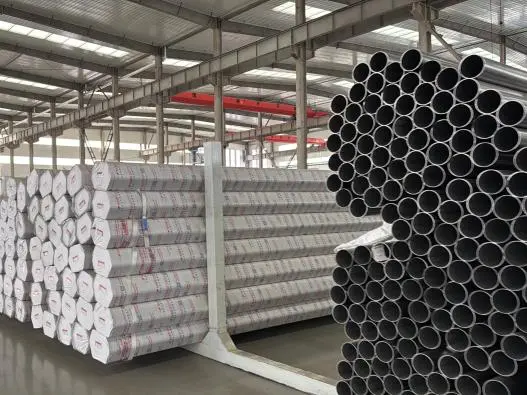
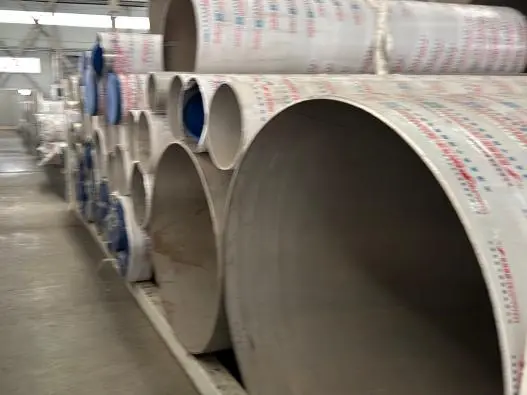
How Does TP304 Tubing Support Efficient Heat Transfer in Industrial Systems?
Corrosion Resistance Protects the Heat-Transfer Surface
Corrosion hurts a heat exchanger in two different ways. It thins out the tube wall and leaves behind scale that keeps heat from moving. Chromium makes up about 18% of ASTM A249 TP304 Tubing, and nickel makes up 8%. It forms a thin, inactive layer when chromium meets oxygen. This layer can stick to air and many fluids that are mostly water-based. After being cleaned, the tube can handle a lot of different biological fluids thanks to that layer. That being said, it does have limits. Deposits, high temperatures, and a lot of salt can cause rust pits or cracks. When you first start, I always say to go over the fluid chemistry. It might be better to use TP316 or a stronger alloy like S31254 if the chloride level is high.
Wall Thickness Balances Heat Flow and Pressure
Since the tube wall lets heat pass through it, a thinner wall makes it less safe against heat. When you handle something, shake it, or wear it down, a wall that is thicker is less likely to break. Which of these two options is better? Walls of our welded tubes are between 0.015" and 0.320" (0.4 to 8.1 mm) thick, and their outside diameter is between 1/8" and 12" (3.2 to 304.8 mm). This lets the builders pick the right wall thickness for the job. ASTM A249 TP304 Tubing can also stretch at least 35%. Since the tube is flexible, it can be bent into U shapes and stretched out into tight sheets. Design pressure, temperature, and building code rules are still used by engineers to figure out the final wall.
Welded Construction and Smooth Surfaces Keep Systems Running
Welded tube is made from a flat strip that is shaped and joined together to make a round piece. For big jobs, this path helps keep supplies steady. A well-kept weld line is important. The wall stays the same thickness, and the amount of rough flow in the area goes down when the weld bead is worked into a smooth transition. That keeps corrosion and erosion at bay. The state of the inside surface is also important. Foul builds up more slowly on smooth surfaces because they don't collect as much gunk and are easier to clean. This keeps flow resistance low. It is possible to buy both solution-annealed and bright-annealed tube from us. In power plants, food processing lines, chemical plants, and chemical plants, this type of tube is often used in cooling loops and process heat exchange groups.
ASTM A249 TP304 Tubing Specification, Dimensions, and Pressure Rating
Chemistry and Mechanical Properties
The tubes in a boiler, superheater, heat exchanger, or condenser that are made of welded austenitic steel are covered by ASTM A249. The strength must be at least 205 MPa (30 ksi) and at least 515 MPa (75 ksi) when stretched. At least 35% of the length must be added. The heat-specific chemical analysis on the mill certificate is what buyers should look at to see how much chromium, nickel, and carbon are in the metal. As per the standard, solution annealing must be used. Once ASTM A249 TP304 Tubing is at least 1900°F (1040°C) hot, it is quickly cooled down. For the weld zone to stay rust-free, this step breaks down chromium carbides around the edges of the grains.
Sizes, Lengths, and Surface Finish
You can tell if the tube fits your exchanger by its size. We make ASTM A249 TP304 Tubing with walls that are 0.015" to 0.320" thick and 1/8" to 12" outside diameter. You can get lengths that are set, random, or U-shaped. It must be either bright annealed or solution annealed before it can be sent. Along with TP304L, we also make TP316, TP316L, S31254, TP321, TP321H, TP317, and TP310. All of these meet the same standard. If someone wants to buy something, they should list the outside diameter, length, end condition, nominal or minimum wall thickness, and tolerances. The tube sheet won't fit right if the numbers are clear at the top.
Why ASTM A249 Has No Single Pressure Rating?
ASTM A249 tells things what they should do. It does not rate the pressure in each tube in the same way. The design temperature, the allowed stress, the weld joint factor, and the code that controls the equipment (like ASME or PED) are all important. The real outside diameter, the wall thickness, and the allowable pressure are also important. An engineer should be the one to do those calculations. Each tube does need to pass either a hydrostatic test or an electric test that doesn't damage the tube in order to meet the standard. Flattening, flare, and joint tests must also be done to make sure the weld is strong and flexible. The goods pass these tests, which means they're good. They don't change how things are made.
Comparing TP304 with Other Tubing Options
TP304, TP304L, and TP316: Matching Grade to Service
ASTM A249 TP304 Tubing can do many different jobs with water, steam, and general process work. There is less carbon in TP304L, so intergranular corrosion is less likely to happen after heavy welding, even though its minimum strength values are a little lower. Since molybdenum is added to TP316, it costs more. Molybdenum generally makes fluids with chloride less likely to pit. TP321 and TP321H are made of titanium, and they work well in hot places where sensitization is a problem. If you need to work in hotter conditions, TP310 has more chromium and nickel, and S31254 is a high-alloy grade for rougher salt conditions. All of these are available to you under ASTM A249. You can get different kinds from the same business this way.
Welded Versus Seamless Tubing
Welded tube starts out as a strip. It can be made in a lot of different sizes and has a consistent wall thickness. Because of this, many projects that use heat exchangers need it. When the user or the design code says so, seamless tube may be the best choice for a certain kind of high-pressure service. It is possible to use a weld joint factor to figure out the pressure for welded tube. Before you place your order, make sure your creator knows this. We can handle both small repair jobs and big project numbers in welded form because we have 15 production lines that make 50,000 tons of steel every year.
ASTM A249 Versus ASTM A269
They both talk about some things that are the same and some things that are different. When you weld the boiler, superheater, heat exchanger, and condenser tubes, you're following ASTM A249. It's called ASTM A269, and it covers both seamless and welded general-use austenitic steel tubes. It is used in a lot of equipment and sample lines. If your equipment's design or drawing code is A249. Send your order to A249. Don't change the rules to save a few days or some money. A different standard can change the tests, heat treatment, and paperwork that are needed, and it can also cause equipment approval to be pushed back.
How to Select TP304 Tubing and Check the Supplier?
Document the Operating Environment
Data is the first step to good selection. Write down the type of fluid, the amount of salt in it, the toxins, the temperature, the pressure, the vacuum, the flow rate, the pH, the cleaning chemicals, and the number of hours the machine runs each year. Next, look at the risks: erosion, vibration, fouling, pitting, crevice corrosion, stress corrosion cracking (caused by chlorides and heat), and stress corrosion cracking. Heat exchangers are also used in new energy, electronics, automotive, chemical, medical, and aerospace work to cool things down and keep the right temperature. Each of these places has its own rules for end users, so make sure you know about any new requirements before you accept a grade. If the review shows a chance of salt, don't hope that ASTM A249 TP304 Tubing will work. Instead, move up to TP316 or S31254.
Plan Inspection and Documents Before Production
Figure out how you'll check the quality of the order before it ships. Some of the most common checks are measurement checking, chemical and mechanical testing, hydrostatic or eddy current testing, and tests for flattening, flaring, and flanges. Third-party inspection (TPI) should be added to projects with a higher risk. We provide TPI, WPS/PQR, MPS, and UT/RT reports when a project needs them, along with MTC/MTR reports to EN 10204 3.1 or 3.2. Make sure that the heat numbers on the certificate match the numbers on the tube and the packing list. A mistake at the receiving end can slow down a whole package.
Evaluate the Supplier's Capacity and Credentials
The first thing you should do is find out if the company makes the tube or just sells it. The YOUFA company began in 2017 and now has 15 lines that make 50,000 tons of goods each year. Our business is one of the Top 500 in China and has more than 200 workers. We are certified to ISO 9001, PED, ISO 17025 laboratory, and TÜV for manufacturing. Controlling raw materials is done with steel from known sources and records that can be tracked, and we use special testing tools. These facts let a buyer directly check systems for capacity and quality instead of relying on what they say they will do.
Avoiding Procurement Mistakes and Building a Buying Checklist
Common Purchasing Errors
People who buy things often think of ASTM A249 as a standard for the whole design of tools. It's not. It describes the tube result but doesn't take the place of calculations for pressure, welding methods, or reviews of the safety of the process. People also often make the mistakes of ordering by grade alone, thinking that all ASTM A249 TP304 Tubing applications corrode at the same rate, and using general pressure tables. A lot of buyers also don't look over the license. Look at the full list of ingredients, the test methods, and the heat numbers. Check the packing list against the number of items you have bought as well. A quick review at the beginning can save you weeks of work in the end.
What Your Purchase Order Should State?
There is less back and forth when there is a clear buy order. Name the ASTM A249 edition, the grade (TP304 or TP304L, for example), the length, the number, the outside diameter, and the wall thickness. Tell them if they need a straight or U-shaped tube, what kind of finish you want, and what tests and paperwork they need. Add the working conditions and the area where corrosion will happen so the seller can see if there is a match. When it comes to business, you should agree on things like price, lead time, Incoterms, partial shipments, export documents, and how to file a claim. It is less likely that nonconformance will happen when this much information is shared between both sides.
Why is YOUFA Tubing a Practical Heat-Transfer Choice?
It's also easy to order when you buy things that are useful. The fact that our MOQ is just one pipe makes it easy to do test runs, changes, and get sample approval. The quickest way to get to Tianjin Port is in seven days. To keep tubes safe during export, we put them in wooden boxes that can have a steel frame added if needed. The boxes are then tied with hexagonal strips and knitted bags. We are a one-stop shop for stainless steel pipes, and we can also help with technical questions and project planning. OEMs, distributors, and contractors need these services because they need a steady supply, records that can be tracked, and clear communication from the quote stage to the handover phase.
Conclusion
ASTM A249 TP304 Tubing moves heat through a welded austenitic wall that resists corrosion in many water, steam, and process fluids. Its 18% chromium and 8% nickel chemistry, minimum 515 MPa tensile strength, 35% elongation, and solution annealing support both thermal service and fabrication. Wall thickness balances heat flow against pressure, while smooth surfaces and controlled weld seams limit fouling and erosion. The standard only lists the requirements for the product and not a general pressure rating, so engineers have to figure out the design limits. If you need to weld TP304, TP304L, TP316, or a better grade of alloy, you should choose a grade based on the amount of chloride, the temperature, and your needs. Project risk is lower when there are clear purchase orders, tests, certificates, and checks on the suppliers.
FAQ
What is ASTM A249 TP304 tubing used for?
ASTM A249 TP304 tubing is used in welded boilers, condensers, heat exchangers, and industrial cooling systems. Power plants, food processing, and chemical plants use it widely.
Is TP316 better than TP304?
TP316 usually resists pitting better in chloride-containing fluids because it contains molybdenum. It generally costs more, so choose it when the fluid chemistry calls for it.
What should a mill test certificate show?
The standard, grade, heat number, chemical make-up, mechanical results, heat treatment results, and test results should all be written down. These must match the marks on the tube and the packing list.
What information do you need for a quotation?
Send the grade, outside diameter, wall thickness, length, quantity, straight or U-bent form, finish, test and paperwork needs, working conditions, and where the item is going.
Request an ASTM A249 TP304 Tubing Quotation from YOUFA
YOUFA is ready to quote your next heat-exchanger project. If you want an ASTM A249 TP304 Tubing supplier with a one-pipe MOQ, solution-annealed or bright annealed stock, and MTC documents, send your grade, OD, wall thickness, length, quantity, and destination to info@youfass.com. Visit youfass.com for more details, and our team will reply with technical and delivery information.
Online Message