
Oct 9, 2026
How Do ASTM A928 Duplex Stainless Steel EFW Pipes Support Chemical Processing?
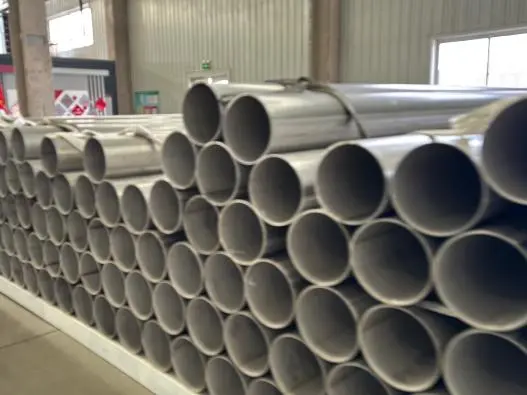
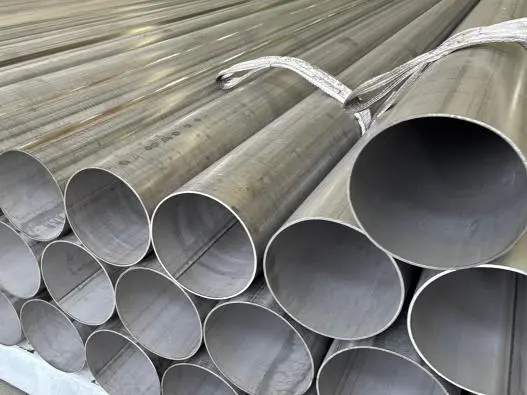
ASTM A928 Duplex Stainless Steel EFW Pipes are engineered specifically for pressure and corrosive service, making them a preferred choice in chemical processing plants across the United States. Manufactured through Electric Fusion Welding with solution annealing and water quenching, these pipes combine a dual-phase austenitic-ferritic microstructure that delivers twice the yield strength of standard austenitic grades. Their resistance to pitting, crevice corrosion, and stress corrosion cracking directly addresses the daily punishment that aggressive acids, chlorides, and high-pressure process streams inflict on piping infrastructure.
|
|
|
Understanding ASTM A928 Duplex Stainless Steel EFW Pipes
Before engineers choose a material for piping, they need to have a clear idea of what the standard actually calls for and what the finished product should look like in terms of size and metal.
What the ASTM A928 Standard Covers?
Large-diameter electric fusion-welded duplex stainless steel pipe must be made according to ASTM A928. Class 1 needs joints that are double-welded and a full X-ray; Class 2 also needs joints that are double-welded but doesn't require X-rays. When setting inspection levels for important chemical service lines, this difference is important.
Grades and Dimensional Range
Duplex 2205 (UNS S32205/S31803) and Super Duplex 2507 (UNS S32750) are the two main grades. Sizes range from 114.3 mm to 2,500 mm on the outside, and wall thicknesses from 3 mm to 50 mm. Because of these sizes, the standard works well for making large-bore process pipes that can't be made economically with seamless methods.
Heat Treatment and Microstructure
First, the pipes are heated in a solution, and then they are cooled in water. This heating cycle breaks down intermetallic phases and restores the 50/50 ferrite-austenite phase balance that was originally set. Chemical plant workers depend on both mechanical strength and corrosion resistance every day. Keeping that balance is what keeps them both in good shape.
Why These Pipes Are Ideal for Chemical Processing?
Through their pipe networks, chemical plants constantly move acids, chloride-rich brines, liquids, and volatile gases. Most of the time, material failures in these conditions are pitting, stress corrosion cracking, and weld zone degradation. Duplex 2205 and Super Duplex 2507 pipes are made to fix these issues at the alloy level.
Superior Corrosion Resistance
The Pitting Resistance Equivalent Number (PREN) for these grades of ASTM A928 Duplex Stainless Steel EFW Pipes is above 34 for 2205 and above 40 for 2507. This is because they contain 22–25% chromium, 3–5% molybdenum, and controlled nitrogen. In real life, this means the pipe can handle weak sulfuric acid, phosphoric acid, and heat exchangers that cool with saltwater, whereas 316L stainless steel would get pitting in certain areas within months.
Mechanical Strength Advantage
The lowest yield strength for duplex grades of UNS S32205 is 450 MPa (65 ksi), which is about twice as strong as 316L. This lets plant designers choose walls that are thinner while still meeting pressure ratings. This lowers the weight of the pipe and the costs of the support structures that go with it without losing safety margins.
Real-World Application Evidence
The Nickel Institute has published field data that shows that duplex stainless steel pipes in chloride-containing chemical service last three to five times longer than 316L pipes of the same size. When Duplex 2205 pipe is used in chemical plants that deal with cleaning chemicals and acidic vapors, like pulp mill recovery lines, replacement cycles are almost nonexistent over ten-year inspection periods.
Comparison with Alternative Materials
To choose the right pipe material, you need to look at how well different options work, how much they cost, and how easy they are to make.
These differences show that lifecycle economics, not just purchase price, should always be taken into account when choosing materials. In contrast to ASTM A789 welded tubing, which is designed for smaller heat exchanger tubes, ASTM A928 is made for large-bore pressure pipe, which sets it apart in the standard landscape.
- Carbon steel offers the lowest initial purchase price, but in chloride or acid service, corrosion rates can exceed 1 mm per year. Replacement frequency and downtime costs typically erase any upfront savings within three years.
- 316L stainless steel resists mild corrosion well, but its PREN of roughly 24 leaves it vulnerable to chloride-induced stress corrosion cracking at temperatures above 60°C—a common condition in many chemical process streams.
- ASTM A928 EFW pipe carries a higher per-foot cost than both options above, but its extended service life, lower inspection frequency, and reduced wall thickness requirements produce a lower total cost of ownership over a 15–20 year plant lifecycle.
These differences show that material selection should always weigh lifecycle economics, not just purchase price. Compared to ASTM A789 welded tubing—which targets smaller-diameter heat exchanger tubes—ASTM A928 is specifically built for large-bore pressure piping, giving it a distinct position in the specification landscape.
Procurement Guide for B2B Buyers
It takes more than just finding a price to find pipe that is legal for chemical service. The final danger level of your order depends on the documentation, proof, and supplier's ability to do the job.
Key Certification Requirements
Buyers of ASTM A928 Duplex Stainless Steel EFW Pipes should ask suppliers to give them MTC/MTR documents at the 3.1 or 3.2 level according to EN 10204, as well as WPS/PQR records and TPI reports from a third party. In the United States, pressure service companies must follow the PED and have ISO 9001 approval. TÜV certification gives you even more peace of mind about important line specifications.
Evaluating Supplier Capability
YOURFA has 15 production lines that make 50,000 tons of products a year and are certified by ISO 9001, PED, ISO 17025, and TÜV. One pipe is the smallest amount that can be ordered, and the fastest supply gets to Tianjin Port in seven days. Every shipment comes with UT/RT reports and hydrostatic test records. This gives procurement teams the paper trail they need for ASME or API project documentation.
Balancing Cost Against Long-Term Value
There is a price premium for Duplex EFW pipe from a certified ASTM A928 Duplex Stainless Steel EFW Pipes seller compared to carbon steel options. However, chemical plant owners regularly report lower upkeep costs and fewer unplanned shutdowns. Don't just look at the first line item when you figure out the total cost; include inspection rounds, corrosion allowance removal, and replacement work as well.
Fabrication, Installation, and Maintenance
Because duplex stainless steel reacts to heat differently than austenitic grades, you can't just use standard carbon steel methods on it.
Welding Techniques
The filler metals must match or be better than the main material. AWS ER2209 filler is often used for UNS S32205. To keep sigma phase precipitation from happening, heat input should stay between 0.5 and 2.5 kJ/mm. The temperature between passes cannot be higher than 150°C. These controls keep the phase balance in the weld zone close to the 50/50 goal set by the solution heating step.
Post-Weld Heat Treatment
When you weld, intermetallic phases can form. PWHT breaks them down and restores corrosion protection in the heat-affected area. The ASTM A923 and G48 pitting corrosion tests make sure that the finished weld is just as resistant to rust as the base metal. If you skip this step, the material's performance guarantee in harsh chemical service will not apply.
Routine Inspection and Storage
Pipes should be kept off the ground on padding racks, away from carbon steel parts that can negatively charge the pipes. Every six months, UT scanning is used for routine inspections in high-chloride service to find wall thinning before it becomes a safety problem. The usual finish on YOUFA's products is pickled and annealed, which reduces the amount of iron contamination on the surface that can cause pitting during storage or early use.
Conclusion
ASTM A928 Duplex Stainless Steel EFW Pipes are a good way to deal with the problems of corrosion, pressure, and the end of their useful life that come up in chemical processing environments. Their two-phase geometry, large size range (OD 114.3–2,500 mm, WT 3–50 mm), and thorough approval paperwork make them a good choice for engineers who need pipe that will last, not just on paper but also in real life.
FAQ
What is the difference between ASTM A928 Class 1 and Class 2?
Class 1 requires joints to be double-welded and the weld seam to be X-rayed 100% of the time. Class 2 is also double-welded, but X-rays are not needed. Class 1 is the safer and more commonly specified choice for critical chemical service lines.
Can ASTM A928 pipes handle sour service?
Yes, as long as the pipe meets the standards of NACE MR0175/ISO 15156, especially the hardness limits, and the solution annealing is certified. If you have the right paperwork, both UNS S32205 and UNS S32750 types can be used in bad service.
How does EFW differ from ERW for duplex applications?
EFW is good for heavy wall thicknesses that are common in chemical plant pipes because it uses filler metal. ERW doesn't use filler, and it's usually not a good choice for high-specification duplex jobs that need to make sure the weld stays strong under pressure and corrosion.
Is a corrosion test required for every production batch?
Yes, ASTM A923 or G48 pitting corrosion tests are done on batch samples to make sure that the methods used during manufacturing have not made the samples less resistant to pitting corrosion. With every shipment, YOUFA sends full UT/RT and hydrostatic test reports.
Are custom lengths and surface treatments available?
Pipes come in random or set lengths and come with a pickled and polished finish on the outside. If you ask, we can add special coatings or other surface treatments.
Request a Quote from YOUFA — Your Trusted ASTM A928 Duplex Stainless Steel EFW Pipes Manufacturer
YOUFA has 15 production lines that make 50,000 tons of goods every year. It is certified by ISO 9001, PED, ISO 17025, and TÜV. People in charge of buying things for businesses can easily get ASTM A928 Duplex Stainless Steel EFW Pipes from YOUFA. The minimum order quantity is just one pipe, and delivery can happen as quickly as seven days to Tianjin Port. You can email the team at info@youfass.com or go to youfass.com to get product details, documentation packages, and a low price that is made just for your project.
Online Message