
Aug 17, 2026
How Do 310S Electric Fusion Welded Pipes Improve Industrial Reliability?
When industrial operations encounter extreme heat and corrosive environments, piping failures aren't just inconvenient—they're costly and dangerous. ASTM A358 310S Electric Fusion Welded Steel Pipes deliver the reliability you need by combining high chromium and nickel content with electric fusion welding technology. This specialized manufacturing process creates homogeneous longitudinal seams that maintain structural integrity under pressure and temperatures up to 1150°C. The result is a piping solution that minimizes downtime, reduces maintenance costs, and extends operational life across chemical processing, power generation, and petrochemical facilities where standard materials simply can't perform.
|
|
|
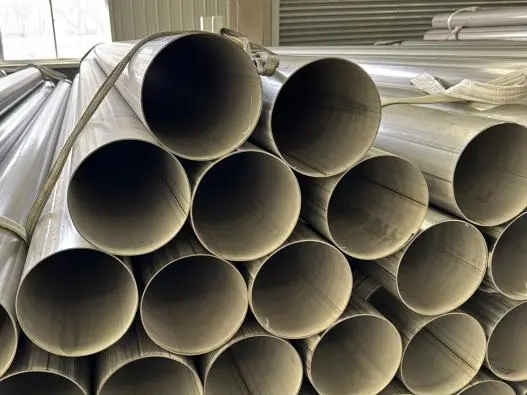
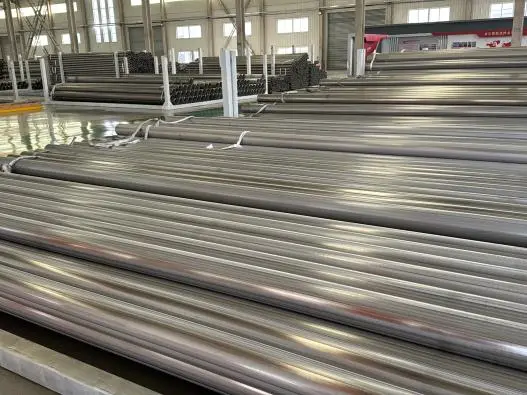
Understanding ASTM A358 310S Electric Fusion Welded Pipes
Understanding what makes ASTM A358 310S Electric Fusion Welded Steel Pipes different from other pipe materials is the first step to building industrial reliability. These lines are designed to work in places where failure is not a choice.
Material Composition and Performance Characteristics
The 310S grade has between 24 and 26% chromium and 19 to 22% nickel. This makes it an austenitic stainless steel that doesn't oxidize or carburize at high temperatures. The letter "S" means that the carbon content has been controlled to be less than 0.08%. This keeps carbides from forming during welding and thermal cycling. This mixture has great creep strength and stays flexible even after being exposed to temperatures close to 1150°C for a long time. 310S is better at resisting sulfidation and thermal fatigue than normal grades 304 or 316. This makes it the best choice for heat treatment ovens and other high-temperature equipment.
Manufacturing Standards and Dimensional Specifications
ASTM A358 specifies how to make austenitic chromium-nickel stainless steel pipes that are welded using electric current and are used in harsh environments with high temperatures. The standard sets out five classes of pipes based on how they should be tested and how they should be used. With outside sizes from 114.3 mm to 2500 mm and wall thicknesses from 3 mm to 50 mm, these pipes can be used in a wide range of industrial settings. To make sure the parts fit together correctly and work well in pressure service, the specification calls for very close tolerances on ovality, straightness, and wall thickness consistency.
Corrosion and Heat Resistance Properties
310S is very resistant to oxidizing and carburizing atmospheres because it has a lot of alloys in it. The material stays structurally sound at temperatures as high as 1150°C when used intermittently and at 1035°C when used continuously. Because it can handle this much heat, it can be used in radiant tubes, heat transfer systems, and burner parts. The chromium-rich inactive layer forms quickly and stays stable across a wide temperature range. This protects the base metal from chemicals that are harsh, sudden changes in temperature, and repeated heating and cooling processes that would break down lower-quality materials.
How Electric Fusion Welding Enhances Industrial Reliability?
The way the pipes are made has a direct effect on how well they work. Electric fusion welding makes joins that are as strong as or stronger than seamless options. It also has a lot of other useful benefits.
The Electric Fusion Welding Process Explained
For electric fusion welding to start, stainless steel plates are carefully cut and shaped into cylinders. The longitudinal sides are brought together and a high electrical current is run thru them. This creates a lot of heat in one area, which melts the joint contact without any filler material. As the melted sides join together, controlled cooling makes the grain structure the same all the way thru the weld zone. Solution annealing and heat treatment after welding remove any remaining stresses and improve the material's ability to fight corrosion. This process makes a seam that is continuous, has few defects, and has the same mechanical qualities as the parent material.
Mechanical Strength and Weld Integrity
ASTM A358 310S Electric Fusion Welded Steel Pipes have a minimum tensile strength of 515 MPa and a minimum yield strength of 205 MPa, which is strong enough for pressure vessels and high-temperature pipe systems. The weld zone is very flexible, which means that the pipe can handle both thermal expansion and mechanical stress without cracking. Electric fusion welding makes a smooth joint that behaves consistently under load, unlike other welding methods that form heat-affected zones with changed microstructures. This level of regularity lowers the chance that rust or stress will build up at the weld line.
Performance Validation Through Testing
For every pipe, 100% ultrasonic testing and x-rays are used to look for internal breaks, lack of fusion, or inclusions. Hydrostatic pressure testing makes sure that the pipe can hold fluids at certain working levels while still leaving enough room for error. Transverse guided-bend tests show that the weld is flexible, and ASTM A262 intergranular corrosion tests make sure that the material wasn't made more sensitive during the manufacturing process. Chemical testing and checking of mechanical properties are proof that each pipe meets the requirements set out in the specifications. This thorough testing procedure gives buying managers peace of mind about long-term performance and following the rules.
Comparative Analysis: ASTM A358 310S vs Other Stainless Steel Pipes
Knowing the different types of materials you can use helps you make smart purchasing choices that balance the costs of the initial purchase with the value over time.
310S vs 304 Stainless Steel Performance
304 stainless steel works well in most settings, but 310S does better where 304 fails. Because it has more chromium and nickel than 304, 310S is better at resisting oxidation at temperatures above 650°C, where 304 starts to break down quickly. When it comes to harmful chemicals, 310S doesn't react with sulfur compounds or acidic condensates that would normally damage 304. During thermal cycling, the carbon control in 310S stops sensitization and intergranular corrosion. Even tho 310S costs more, it has a much longer service life in harsh environments, which means it doesn't need to be replaced as often and doesn't cause as much downtime.
Fusion Welded vs Seamless Construction
When you use seamless pipes, there is no lengthwise weld line at all, which can be helpful in some situations. But seamless manufacturing only comes in a few sizes, and the costs get too high for large diameters. ASTM A358 310S Electric Fusion Welded Steel Pipes from reputable manufacturers have the same mechanical qualities and protection to corrosion, but they cost a lot less. Engineers can make efficient pipe systems with fewer joints and fittings when they can make pipes with large diameters. Fusion-welded pipes work reliably for decades in corrosive environments when they are properly made and tested. This makes them the best choice for most industrial installations.
Lifecycle Cost Considerations
The initial costs of materials are only a small part of the total costs of ownership. When choosing pipe, you should think about how often it needs to be maintained, how much it will cost to stop production for repairs, and how long it should last before it needs to be replaced. A petrochemical plant that used 310S fusion-welded pipes in sulfur recovery units said they had 15 years of service without any corrosion-related problems, while lower-grade alternatives only lasted 5 to 7 years. Millions of dollars in lost production were saved because the operations ran for longer amounts of time between shutdowns. From this lifetime point of view, we can see that premium products often provide better economic value, even if they cost more at first.
Procurement Guide for ASTM A358 310S Electric Fusion Welded Pipes
Comparing prices is not enough to make a good purchase. You need suppliers who know what your application needs and can consistently give you good quality.
Evaluating Supplier Qualifications
For ASTM A358 310S Electric Fusion Welded Steel Pipes, prioritize suppliers with fully certified quality management systems to ISO 9001 standards. ISO 17025-accredited testing laboratories provide reliable material verification and traceable documentation. PED and TÜV certifications demonstrate compliance with international pressure equipment standards. Request evidence of manufacturing capability, including production line count, annual capacity, and prior project experience in similar applications. Suppliers maintaining relationships with reputable steel mills ensure consistent raw material quality and proper alloy production. Third-party inspection services provide additional verification that pipes meet specification requirements prior to shipment.
Understanding MOQ, Lead Times, and Logistics
Timing of orders is affected by production schedules and the supply of materials. To get the most out of their production, many companies set minimum order numbers. However, some suppliers will accept single-pipe orders for testing purposes or in case of an emergency. Lead times are usually between 3 and 8 weeks, but they rely on the size, quantity, and individual needs. Delivery times are longer when custom specifications call for special heat treatment or testing procedures. When thinking about global logistics, you need to think about things like how to package things, how to ship them, and whether the ports can handle pipes with a large diameter. To avoid project delays, plan procurement timelines that take into account production, transit, and customs clearance.
Pricing Factors and Value Optimization
The price of pipes is affected by more than just the cost of raw materials. Thru economies of scale, the number of orders affects the price per unit. There are extra costs for custom specifications that need special testing or paperwork. Wall thickness, width, and pipe class all affect how much material is used and how hard it is to handle. Freight costs and total landing costs are based on the delivery terms. When comparing quotes, look at how the specs are the same and make sure the paperwork that comes with it is correct. Ask for detailed breakdowns that list the parts that go into material, manufacturing, testing, and logistics. Strategic buyers know that the cheapest price doesn't always mean the best value in the long run, so they build relationships with suppliers they can trust to provide consistent quality and quick service.
Why Choose ASTM A358 310S Electric Fusion Welded Pipes for Industrial Applications?
For years or decades, the choice of piping material affects production reliability, operational safety, and the cost of maintenance. If you choose ASTM A358 310S Electric Fusion Welded Steel Pipes, your facility will be able to keep working well even in tough service conditions.
Operational Longevity and Reduced Downtime
Plant access is directly increased by installing pipe systems that don't break down when they're being used. When chemical makers use 310S piping instead of lower-grade options, the time between turnarounds is longer for reactors that work at high temperatures. Thermal fatigue and oxidation can't hurt the material, so it doesn't break down early and force unplanned shutdowns. Maintenance teams do more useful work and spend less time fixing things that need to be fixed right away. It becomes easier to plan output schedules and the general efficiency of the business goes up as equipment reliability goes up.
Adaptability to Evolving Process Requirements
During their useful lives, industrial facilities have to deal with changed process conditions, increased capacity, and altered working parameters. The strong features of 310S pipes allow for operating freedom to adapt to these changes without having to replace expensive pipes. Plants that originally made systems to work in moderate temperatures can raise the operating conditions to the point where the material can still do its job. This ability to change saves investments in capital and helps facilities grow as needs change in the market and in production.
YOUFA's Commitment to Quality and Service
Every order that comes to YOUFASS Stainless Steel Pipe Co., Ltd. is made with care and attention to detail. Our 15 production lines and 50,000-ton yearly capacity make sure that we are always available for jobs of all sizes, from replacing a single pipe to installing a whole system. Over 200 skilled workers make sure that quality is strictly controlled at every stage of production, from checking the raw materials to doing the final review. We offer full traceability paperwork, which includes Mill Test Reports (MTR 3.1/3.2), Welding Procedure Specifications (WPS), Procedure Qualification Records (PQR), and full test reports for ultrasound and x-rays. When needed, our quick technical support team helps with choosing materials, making sure specifications are clear, and finishing on-site. We provide reliable solutions on time for all of our customers, whether they are distributors, project contractors, or end users.
Conclusion
Industrial reliability depends on choosing materials for pipes and ways to make them that work regularly in your specific working conditions. ASTM A358 310S Electric Fusion Welded Steel Pipes have been shown to work well in places with high temperatures and corrosion, where other materials would break down quickly. With a high chromium-nickel alloy makeup and precise fusion welding technology, pipe systems are made that don't rust, keep their structural integrity, and last longer. The better performance of properly made 310S pipes makes the investment worth it when you look at the total costs over their entire life, such as the frequency of upkeep, the cost of downtime, and the number of times they need to be replaced.
FAQ
What industries benefit most from 310S electric fusion welded pipes?
ASTM A358 310S Electric Fusion Welded Steel Pipes are very useful for heat treatment operations, chemical processing plants, petrochemical refineries, and power plants. 310S should be considered by any business that uses high-temperature equipment above 650°C or works with chemicals that eat away at normal stainless grades. 310S is used in electrolysis systems that need to be resistant to corrosion and work well at high temperatures in the new energy sector, which includes companies that make equipment for making hydrogen.
How do fusion welded pipes compare to seamless options for reliability?
When properly made and tested, fusion-welded pipes from reputable sources are just as reliable as seamless pipes in most commercial settings. Comprehensive testing protocols, which include a full radiographic and ultrasonic examination, make sure that the weld is solid before it is shipped. Fusion-welded construction is useful for big sizes where seamless lines are either too expensive or not available, as it allows for efficient system designs with fewer joints.
What delivery timelines should buyers expect for bulk orders?
Standard standards usually ship within 3 to 8 weeks, but this depends on how many orders are placed and when they are made. Lead times may be longer if there are special needs like heat treatment, extra tests, or specific size requirements. International shipping adds transit time, which depends on where the package is going and how the logistics are set up. Suppliers with a lot of experience give realistic delivery dates and manage transportation so that projects stay on plan without affecting the quality control processes.
Partner with YOUFA for Reliable 310S Piping Solutions
YOUFASS stands ready to be your reliable source for ASTM A358 310S Electric Fusion Welded Steel Pipes, giving you the quality and service your important projects need. Our ISO 9001, PED, and TÜV certifications show that we are dedicated to making high-quality products, and our ISO 17025-accredited laboratory makes sure that all of our materials are checked correctly. We know that the success of your project depends on getting the pipes to you on time and with all the necessary paperwork. Our team offers technical advice to make sure that specifications match the needs of the application. We also offer reasonable pricing that shows the real value of the product, and you can buy anything from a single pipe to a whole system installation. You can talk to our procurement specialists right away at info@youfass.com or visit youfass.com to talk about your specific needs, get detailed technical datasheets, and get a quote that fits your budget and time frame.
Online Message