
Oct 9, 2026
How Are EN 10217-7 Stainless Steel Pipes Used in Processing Industries?
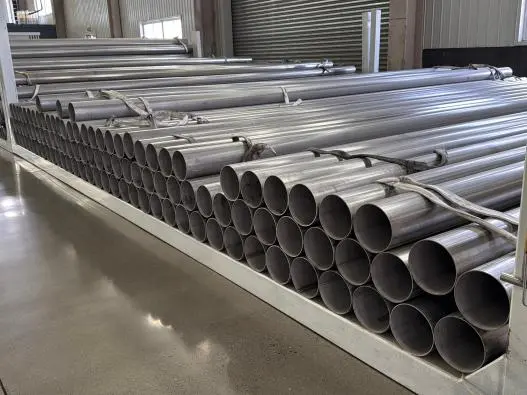
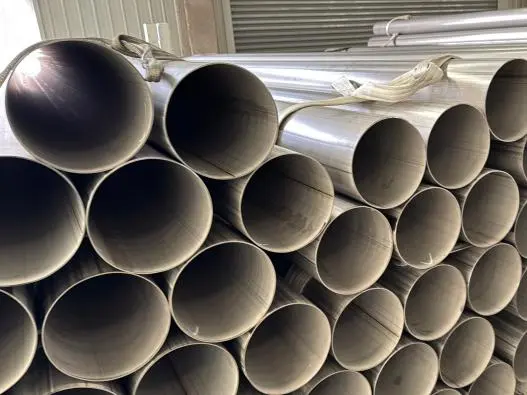
The EN 10217-7 Welded Stainless Steel Pipes are designed to work under pressure in places that are corrosive and hot. This European standard tells us what the chemical make-up, mechanical qualities, size limits, and testing requirements are for welding austenitic and duplex stainless steel tubes. These pipes carry harsh substances like acids, brines, and steam in places like chemical plants, pharmaceutical factories, power plants, and food preparation lines where failure of the material is not an option. The fact that they are soldered, require solution heating, and have a joint efficiency factor of 1.0 makes them a cheaper choice to seamless pipes that doesn't weaken the structure.
|
|
|
Understanding EN 10217-7 Stainless Steel Pipes: Specifications and Standards
What the Standard Covers?
As per EN 10217-7, there are specific rules for the delivery of pressure-service welded round tubes made from austenitic and austenitic-ferritic (duplex) stainless steels. Test Category 1 (TC1) and Test Category 2 (TC2) are the two types of tests it talks about. When you need more pressure, use TC1. If you follow the standard, the weld joint factor should be v=1.0. This means that when pressure is put on the weld zone, it works the same way as the parent metal.
Key Grades and Their Properties
The standard says that each grade must have a certain minimum yield strength (Rp0.2), tensile strength (Rm), and elongation (A) number. For this reason, the material will work as planned when it is put under the loads that were planned for it.
- 1.4301, 1.4307, and 1.4306 are austenitic grades in the 304 family that have good resistance to corrosion and can be used in food, drinks, and mild chemicals. 1.4306 has less carbon, which makes it better at resisting corrosion between grains.
- 1.4401 and 1.4404 are molybdenum-containing grades in the 316 family that are better at resisting chloride pitting and are chosen in chemical, pharmaceutical, and marine processes.
- Types 1.4541 and 1.4571 are titanium-stabilized types that are used in high-temperature situations where carbide precipitation at weld zones is a problem.
- 1.4539 is a high-alloy grade (904L) that is very resistant to acid and is used in places where sulfuric acid and phosphoric acid are present.
YOUFA makes pipes with walls that are between 0.8 mm and 40 mm thick and an outside diameter (OD) that ranges from 10.3 mm to 2,500 mm. All pipes are given after being solution-annealed, which fixes the layer of inactive chromium oxide that was broken during welding. One can pickle and anneal the surface, and the other can leave the ends smooth or bevele them. There is paper work for MTC/MTR (3.1/3.2), WPS/PQR, UT/RT files, and TPI records that can be used to keep track of everything.
Dimensions, Heat Treatment, and Quality Control
YOUFA's EN 10217-7 Welded Stainless Steel Pipes range from 10.3 mm to 2,500 mm OD, with wall thicknesses from 0.8 mm to 40 mm. All pipes are delivered in a solution-annealed condition, which restores the chromium oxide passive layer disrupted during welding. Surface finish is pickled and annealed, and end finishes include plain end or beveled end. Available documentation includes MTC/MTR (3.1/3.2), WPS/PQR, UT/RT reports, and TPI records—covering every traceability requirement a procurement team could need.
Applications of EN 10217-7 Stainless Steel Pipes in Processing Industries
In many areas, these pipes are necessary to keep fluids clean, keep the pressure stable, and last for a long time.
Chemical and Petrochemical Processing
Pipes deal with strong acids, solvents, and chloride-containing streams in reactors, heat exchanges, and scrubber systems. The most popular grades are 1.4404 (316L) and 1.4539 (904L). This is because they contain molybdenum and nitrogen, which prevent chloride-induced stress corrosion cracking. This type of failure has led to expensive plant shutdowns. The controlled weld bead geometry needed by EN 10217-7 also lowers erosion caused by turbulence at pipe joints.
Food, Beverage, and Pharmaceutical
Here, cleaning inside is the most important thing. EN 10217-7 allows for either a bead-on or a bead-off weld setup, and the pickled and annealed surface finish meets the requirements for a clean design. A lot of dairy lines and beverage pipes are made from grade 1.4307. Grade 1.4404 is used in pharmaceutical water-for-injection (WFI) systems. The smooth inside surface allows for CIP (Cleaning-in-Place) processes, which lowers the risk of bacteria sticking around and keeps the product clean.
Power Generation and Energy Systems
These pipes carry very hot steam and high-speed brine in desalination plants and steam systems. Molybdenum-containing grades like 1.4401 have a high PREN (Pitting Resistance Equivalent Number), which means they can withstand long cycles of use in environments close to the ocean. Manufacturers of hydrogen generation equipment and fuel cell systems also use these pipes in places where corrosive electrolytes come in touch with metal surfaces under pressure.
Comparing EN 10217-7 with Other Stainless Steel Pipe Standards
EN 10217-7 vs. ASTM A312
ASTM A312 is the most common standard for both seamless and welded stainless steel pipes in North America. The standards of EN 10217-7 Welded Stainless Steel Pipes are more in line with those of the European PED (Pressure Equipment Directive). For US buyers looking for pipes for export projects or multinational facilities, EN 10217-7 pipes with PED and TÜV approval are a straight regulatory fit for European installations. A312 pipes, on the other hand, may need more paperwork to be reviewed. Both standards make high-quality pipes, but they have very different ways of certifying them.
EN 10217-7 vs. EN 10217-5
EN 10217-5 covers welded tubes made of carbon steel and non-alloy steel for pressure purposes. EN 10217-7 only applies to certain types of stainless steel, which has better resistance to corrosion and better performance at high temperatures than carbon steel. EN 10217-7 is the right choice when there is acid contact, high humidity, or repeated heat loads in a process.
Welded vs. Seamless: A Practical Perspective
Depending on the grade and thickness, seamless pipes cost about 20–40% more than soldered pipes of the same size. Because they have to be heat treated and have a joint factor of v=1.0, EN 10217-7 welded pipes close the performance gap for most pressure uses below critical limits. Youfa's OD range goes up to 1,219.2 mm (48"), so welded construction is the only realistic and cost-effective way to make big runs.
Procurement Considerations for EN 10217-7 Stainless Steel Pipes
Supplier Qualification and Certification
Check to see if the seller is ISO 9001, PED, or TÜV certified before you place an order. YOUFA has all three, plus an in-house laboratory that is ISO 17025-accredited. This means that test results come from a facility whose measurement skills have been checked by a third party, not just a quality control department. Ask for MTC/MTR papers (EN 10204 3.1 or 3.2) right away to make sure that the material can be tracked back to the heat and cast level.
Pricing, Lead Times, and Order Flexibility
Grade choice, OD-to-wall-thickness ratio, and surface finish standard are some of the most important factors that affect cost. The cost per unit goes down when you buy in bulk, but YOUFA only requires a MOQ of 1 pipe, which is helpful when you need a trial or a replacement part for a project that is already underway. For stocked sizes, standard delivery from YOUFA's Tianjin facility to Tianjin Port can take as little as 7 days. Pipes are packed in wooden boxes that can have steel frames, hexagonal binding, and woven bags to protect them during shipping.
Customization and Documentation
We can work with projects using EN 10217-7 Welded Stainless Steel Pipes that have special size needs, like non-standard OD, set cut lengths, or certain end finishes. YOUFA has ends that are straight or curved, and lengths that are random or set. The full documentation package, which includes WPS/PQR, MPS, UT/RT reports, and TPI, is available for regulated industries like power generation and pharmaceuticals. It shows the traceability chain from raw materials to finished pipes.
Ensuring Quality and Performance: Testing, Maintenance, and Guarantees
Testing and Inspection Procedures
Before being shipped, each pipe is tested for hydrostatic pressure, eddy current or ultrasonic (UT) testing, and its size and shape are checked visually. Non-destructive testing (NDT) checks the quality of the weld without destroying the part. Tensile and hardness studies show that the mechanical qualities meet the standards of the EN 10217-7 table. You can ask for third-party inspection (TPI), which lets your own inspector or an outside organization watch tests at the production site.
Maintenance and Corrosion Prevention
The pipe is most resistant to rust when it is delivered in a solution-annealed state. When in use, don't touch carbon steel tools or store things on bare carbon steel racks to keep iron from getting on them and causing surface rust. For chloride settings, passivation processes should be done on a regular basis. Regularly checking the pH of the process stream is helpful for grades like 1.4539 that are used with sulfuric acid because it finds changes in the pH before they cause pitting.
Warranties and After-Sales Support
Youfa offers material approval that is in line with EN 10204 and technical support after delivery. If a problem with the size or material is found when compared to the MTC, it can be traced back to the production heat and fixed right away. This structure for tracking keeps procurement teams safe during audits of projects and plant inspections.
Conclusion
Welded EN 10217-7 Welded Stainless Steel Pipes play a unique and important role in industrial pipelines. They have the rust resistance of austenitic and duplex stainless steel types and the cost-effectiveness of welded construction. They are backed by a strict European standard that supports compliance with PED and pressure vessels. The most important thing is to choose the right grade for the job, whether it's a chemical reactor, a medicinal water system, a desalination plant, or a hydrogen production unit. With the right paperwork, certified testing, and a supplier that can make pipes in both standard and custom sizes, these pipes give processing industries the long life and regulatory compliance they need.
FAQ
Is EN 10217-7 suitable for high-pressure applications?
Yes. As per the standard, there are TC1 and TC2 test groups for pressure service. When the requirements for heat treatment and testing are met, the welded joint has a factor of v=1.0. Because of this, it can be used in heat exchangers, pressure vessels, and industrial pipes that work under high pressure.
How do I verify that a supplier is genuinely EN 10217-7 compliant?
Ask for EN 10204 3.1 or 3.2 material test records that list the exact standard, grade name, and heat number. A manufacturer that is TÜV-certified and has an ISO 17025-accredited lab can give you test certificates that are backed up by measurement systems that have been checked by someone else. YOUFA gives you all the paperwork you need, like the WPS/PQR and UT/RT reports.
Can these pipes be customized for non-standard dimensions?
Yes. YOUFA makes pipes with ODs ranging from 10.3 mm to 2,500 mm and wall thicknesses ranging from 0.8 mm to 40 mm. The lengths can be random or set, and the ends can be straight or rounded. You can talk to their technical team directly about specific project needs, like dimensional or written requirements.
What is the minimum order quantity?
YOUFA can take orders from as little as one pipe, which makes it useful for testing samples, getting replacement parts, or working on small-scale projects. It can also be expanded to handle full production orders.
Get EN 10217-7 Welded Stainless Steel Pipes from a TÜV-Certified Manufacturer — YOUFA
Since 2017, YOUFA has run 15 production lines, making 50,000 tons of stainless steel pipe every year and being one of China's Top 500 companies. Because YOUFA is a real seller of EN 10217-7 Welded Stainless Steel Pipes, they offer grades 1.4301 to 1.4571, full approval paperwork, and delivery to Tianjin Port in as little as 7 days. The minimum order quantity is one pipe. Send your requirements or ask for a sample right now to info@youfass.com. You can also look at the product selection at youfass.com.
Online Message