Nov 17, 2026
How Are EN 10217-7 1.4306 Welded Stainless Steel Pipes Used in Food Processing?
The EN 10217-7 1.4306 Welded Stainless Steel Pipes are used in food and drink factories to move goods, cleaning fluids, process water, and other materials. If you put the low-carbon austenitic grade, which is also written as X2CrNi19-11, in water, food residue, or many mild organic acids, it won't rust. This metal is simple to weld, and the low carbon level keeps the area around the weld from becoming weak. These pipes are used for switch lines and clean-in-place circuits between tanks, pumps, heat exchangers, and fillers. The whole system affects how well it works. Not only is the grade important, but so are the internal finish, the quality of the welds, the layout that lets water drain, and the cleaning chemicals. I'll talk about each point below.
|
|
|
What Are EN 10217-7 1.4306 Welded Stainless Steel Pipes?
What Do the Standard and Grade Mean?
EU standard EN 10217-7 says that welded stainless steel tubes can be used for pressure. The grade number for this stuff is 1.4306, and its name is X2CrNi19-11. It's often compared to 304L by people who buy it in the US. For delivery, testing, and tolerances, the standard tells you what to do, and the grade tells you what chemicals to use. Just because these two things are true doesn't mean that a pipe fits a food line. There are still things to check, like the temperature, the pressure, the finish, and the quality of the weld. People who want to buy something should look at the material test certificate for the exact heat to see if it lists the final chemical and mechanical properties.
How Do Chromium, Nickel, and Low Carbon Help?
According to EN 10088-1, grade 1.4306 has no more than 0.030 percent carbon, 18 to 20% chromium, and 10 to 12 percent nickel. The surface doesn't rust because chromium forms a thin film on it. Steel is easier to bend and weld because nickel makes it flexible. Chromium carbide doesn't form as much in the heated area because there isn't much carbon there. This keeps the weld area from corroding. That's important in food plants, where hot water is used over and over to clean welded joints. It is also made sure that the pipe has a uniform austenitic structure after it has been shaped and joined by solution-annealing it.
Why Do Food Processors Choose 1.4306?
This grade is chosen by food processors because it is a good mix of price, resistance to corrosion, and ease of welding. As long as the levels of chloride, water, and cleaning chemicals are just right, it works well with water, mild organic acids, and food residue. According to the U.S. FDA Food Code, surfaces that touch food must not rust, soak up liquids, be smooth, and be easy to clean. Stainless steel can meet that need if it is finished and welded correctly. People often use transfer lines for drinks and dairy products, as well as sanitation circuits, process water connections, and equipment skids. The grade can handle neutral to slightly acidic materials, but not all harsh ones.
How Are EN 10217-7 1.4306 Welded Pipes Integrated into Food Processing Equipment?
Which Lines Use the Pipe?
These pipes hold things, keep things clean, provide utilities, and help the process go smoothly. These are what connect pumps, valves, heat exchangers, tanks, fillers, and packaging machines together. One set of pipes in a dairy or beverage plant may move goods, while another set may move hot water, clean-in-place solution, or rinse water. Bigger diameters are best for utility and bulk transfer headers. Since EN 10217-7 is about pressure, the pipe can also be used in lines that are hot or have a lot of pressure, like those for hot water and heat exchangers. First, I think you should map each line by medium and temperature. Then, choose the specification that fits the worst case for each line.
How Do Connections and Welds Affect Hygiene?
When they work with the way the equipment is made, sanitary clamps, butt welds, and flanges are often used. For applications requiring corrosion resistance and hygienic performance, EN 10217-7 1.4306 Welded Stainless Steel Pipes can be used in sanitary piping systems. When working with threaded joints, be very careful because water and product can get stuck in the threads. Butt welds should be straight, go all the way through the inside, and have a smooth inside surface. For this reason, cracks and holes let dirt and germs hide. To join tubes, the orbital welding method with inert gas purging is often used. This keeps the heat inside the pipe under control. After the weld, cleaning, and passivation, the protective layer is put back on. You can rinse better with slopes that drain well and short dead legs.
How Do I Size Pipe for Flow, Pressure, and Cleaning?
A pipe's size doesn't tell you everything you need to know about it. You will need to think about the flow rate, pressure, temperature, cleaning cycles, and mechanical loads when picking the ID and wall thickness. When the line is too small, the flow slows down and the pressure drops. It might not clean well if the line is too big and moves too slowly. A good number of clean-in-place programs aim for a flow that is rough, which is usually around 1.5 meters per second. The welds are put under more stress when systems are cleaned, heated, cooled, or pressed many times. This is why it's important to check the thickness of the walls and the welds.
What Specifications Should Buyers Check Before Ordering 1.4306 Welded Pipe?
Which Dimensions and Delivery Conditions Matter?
You should describe the outside diameter, wall thickness, length, tolerances, ovality, straightness, and end preparation before you ask for a quote. The EN standard calls for walls that are at least 1219.2 mm (48 inches) thick. The outside diameter of our welded EN 10217-7 pipes can go up to that size. We can deliver in a solution-annealed state and any length you choose. The ends can be smooth or beveled. If you pickle and anneal the metal, you can get rid of the scale that formed during heat treatment and welding. You can also choose from grades 1.4301, 1.4307, 1.4401, 1.4404, 1.4541, 1.4539, and 1.4571, depending on what your process medium needs.
What Surface Finish Should I Request?
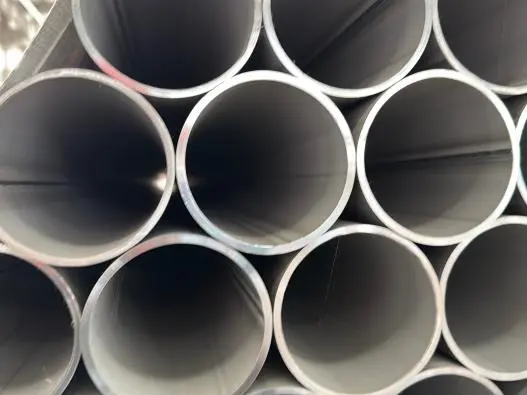
Finish is what makes something clean. Flat surfaces that have been pickled work well for many utility and process lines. You might need brushed, polished, or bright-annealed finishes for lines that touch the product. A lot of rules about cleanliness say that surfaces that touch things should be no rougher than 0.8 micrometers (32 microinches) on average. Find out what limit your customer or auditor uses. You should both agree on where and how to measure roughness, since the base metal and the weld zone often give different readings. When we finish something, we usually pickle it and heat it up. Before you place your order, let us know if the inside of your project needs a different finish. That way, we can make sure it's possible.
Which Tests and Documents Support Compliance?
Find out more about testing the weld without damaging it, testing the weld under pressure, cleaning, passivation, tracking, and more. TC1 and TC2 are the two types of tests in EN 10217-7. More tests are done on the weld by TC2 without damaging it. That's why we can help you with EN 10204 3.1 or 3.2, MTC/MTR, TPI, WPS/PQR, MPS, and UT or RT reports. As proof of our high quality, ISO 9001, PED, ISO 17025 lab, and TÜV have given us labels. When heat numbers on pipes and certificates match up, it's easier to do audits, maintenance, and hand over the project.
How Does 1.4306 Compare with Other Stainless Steel Pipe Options?
How Does It Differ from 1.4301 and 1.4307?
The well-known type of 304 is grade 1.4301, which has no more than 0.07% carbon. 1.4306 and 1.4307 are low-carbon grades that are very close to 304L. About 17.5% to 19.5% chromium and 8.0% to 10.5% nickel are present in grade 1.4307, while grade 1.4306 contains higher amounts of both elements. Both low-carbon grades can be used for clean and process lines, and the choice depends on the specific project requirements. EN 10217-7 1.4306 Welded Stainless Steel Pipes are suitable for applications requiring low-carbon welded stainless steel pipes. As long as no further solution annealing is planned after pipe manufacturing, choosing a low-carbon grade is generally the better option.
When Should I Choose 1.4404 Instead?
In grade 1.4404, molybdenum is present in amounts of around 2.0 to 2.5 percent. Molybdenum makes it less likely for cracks to form or for things to rust, which is helpful when they come in contact with chloride-based brines, sauces, pickling liquids, or cleaning products. In those places, grade 1.4306 has less resistance because it doesn't have molybdenum. Heat makes it more likely that chloride stress corrosion cracks will happen. Find out if grade 1.4404, 1.4571, or another good grade will work for your process if it uses salt, brine, or hot chlorinated cleaners. We also have those grades in EN 10217-7.
How Do EN 10217-7 and ASTM A312 or A270 Compare?
There are times when EN 10217-7 and ASTM standards can't be used together because they have different paperwork, tests, definitions, and measurements. In the U.S., food plants often need pipe or sanitary tubing that is ASTM A270 or A312. Before you order EN pipe, make sure that your engineer, inspector, or customer is okay with it. Many times, welded pipe is less expensive and easier to find. However, seamless pipe may be better for jobs that need to handle high pressure or for specific customer needs. It's not always less clean for welded pipe because the passivation, weld treatment, alignment, and internal finish all change how clean it is.
How Should Buyers Select a Supplier and Avoid Costly Mistakes?
What Should I Check About a Supplier?
Price isn't the only thing you should consider. You should also look at technical skills, quality systems, documentation, experience exporting, and communication. Find out if the company makes things, runs an integrated mill, or sells goods. Then, look at the sizes that are available, the lead times, and the tools that can be used for inspection. In 2017, YOUFA opened its doors. It now has 15 production lines that make 50,000 tons of stainless steel pipe each year. Twenty-one hundred people work for our Top 500 company in China. We have everything you need for piping in one place. Check out the sample certificates, dimensional reports, and weld test results that every supplier gives you before you place an order.
Which Purchasing and Installation Mistakes Should I Avoid?
A lot of people get it wrong when they pick 1.4306 just because it has that name. Some people think that EN 10217-7 guarantees clean performance, but they aren't thinking about the chemistry of cleaning. It is important to check more than just the outside surface. The heat tint, roughness, inclusions, passivation, and tolerances should also be watched. Because heat numbers are hard to keep track of, audits and handovers are hard to do. Iron can get into carbon steel if you store pipe near it. To cut and grind, only use tools made of stainless steel. Any low quote that has a bad finish, welds that don't match up, missing documents, or late delivery can also cause lifecycle costs to go up.
What Procurement Steps Reduce Risk?
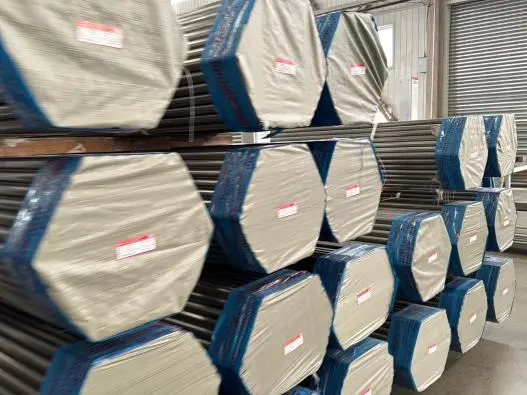
First, find out a lot about EN 10217-7, grade 1.4306, the sizes, lengths, quantities, finishes, tests, certificates, working conditions, and where the goods will be sent. Next, ask for examples and certificates that show what you mean. Compare prices by looking at how they are made, how much stock they have, how they are inspected, how they are packed, and how they are shipped. We can put pipe in wooden boxes with a steel frame if you'd like, or we can put it in bags that are woven and bound in hexagonal shapes. It takes us 7 days to ship to Tianjin Port at our fastest, and for a test order, we only need one pipe. If the project calls for it, check the materials' dimensions, markings, welds, and paperwork before they are sent out. Also, keep track of them until they are used.
Conclusion
In food processing, EN 10217-7 1.4306 Welded Stainless Steel Pipes are used for transporting products, cleaning, and utility systems. This low-carbon austenitic stainless steel grade offers good corrosion resistance in water, food residues, and mild acids, while also providing reliable weldability. Key factors affecting the overall piping system include weld penetration, alignment, internal surface finish, passivation, drainable layout, and cleaning chemistry. To ensure compatibility with a specific production line, buyers should verify the pipe diameter, wall thickness, surface finish, testing category, and EN 10204 certificates. For more demanding or chloride-rich environments, molybdenum-containing grades such as 1.4404 may be more suitable. Additionally, EN and ASTM standards should be confirmed at the project level. A structured procurement process, thorough supplier evaluation, and reliable material traceability can help reduce specification errors and long-term maintenance costs.
FAQ
Is 1.4306 suitable for food and beverage lines?
Most of the time, yes. It works with water, food residues, and mild organic acids. The job is done, and the paperwork and quality of the weld meet the needs of the project. Because it doesn't have much carbon in it, it can be welded together. First, make sure you have the right solvents and cleaning agents. If the media is rough or full of chloride, it might need a grade with molybdenum in it, like 1.4404.
Is welded pipe less hygienic than seamless pipe?
No, it's not by default. It depends on the system design, alignment, passivation, weld treatment, and the finish on the inside how easy it is to clean. A well-finished welded line can be cleaned just as well as a tube that doesn't have any seams.
Which documents should I request?
Ask for EN 10204 3.1 or 3.2 certificates, inspection records, traceability documents, and any other statements your project needs about making contact with food or being under pressure. We have reports on UT/RT, WPS/PQR, MPS, TPI, and MTC/MTR. The numbers on the heat should match the marks on the pipe.
Can I order a small quantity?
Yes. We only need one pipe to begin a sample or test order, and we can get it to Tianjin Port in seven days. Please let us know what you need so we can make sure we're available.
Request a Quote for EN 10217-7 1.4306 Welded Stainless Steel Pipes from YOUFA
Want to buy EN 10217-7 1.4306 Welded Stainless Steel Pipes from a company that helps customers all over the world and answers technical questions? YOUFA is an ISO 9001, PED, ISO 17025 lab, and TÜV-certified company with 15 production lines. They offer full documentation and require at least one pipe to place an order. Please email us at info@youfass.com with your grade, size, finish, quantity, process medium, and destination, and we will send you a technical quote. Go to youfass.com to learn more about the product.
Online Message