
Jul 28, 2026
Exploring the Versatility of ASTM A358 EFW Pipes
When procurement managers, engineers, and OEMs search for large-diameter stainless steel piping solutions that can withstand extreme conditions, ASTM A358 EFW Stainless Steel Pipes consistently emerge as a trusted specification. These electric fusion welded pipes represent a critical bridge between cost-efficiency and performance, particularly for applications demanding diameters exceeding 4 inches in corrosive, high-temperature environments. Their versatility stems from rigorous manufacturing standards, diverse grade availability, and adaptability across multiple industrial sectors—from petrochemical refining to power generation and beyond.
|
|
|

Understanding ASTM A358 EFW Stainless Steel Pipes
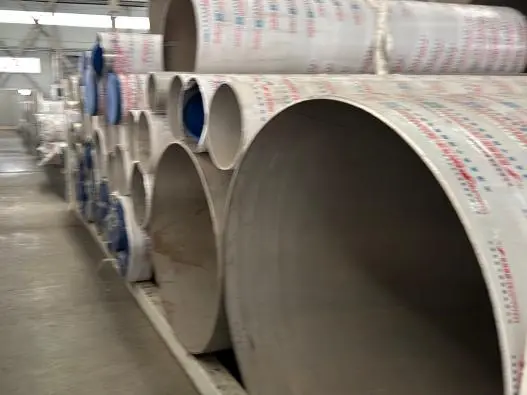
ASTM A358 EFW Stainless Steel Pipes specify the requirements for austenitic chromium-nickel stainless steel pipe that is electric-fusion-welded and made to withstand high temperatures and acidic environments. Unlike seamless pipes, these welded pipes are made from rolled plate using modern fusion welding with filler metal. This makes it possible to make pipes with widths of up to 2500 mm. When engineers need to find large-bore piping, they often have trouble because seamless options are more expensive and take longer to get. This feature solves that problem.
What Defines the EFW Process?
Using electric spark energy and filler material that works with the steel, electric fusion welding joins the edges of stainless steel plates. The process makes a continuous lengthwise weld seam that is heated in a solution to restore resistance to rust and get rid of carbide precipitation. This step of heat treatment makes sure that the performance characteristics of the welded areas match those of the base material. This keeps the structure's integrity under operational stress. Electric Resistance Welding (ERW) methods are easier and don't use filler metal or high pressure. EFW is different because it has a controlled temperature profile.
Grade Selection and Material Properties
The specification includes a wide range of austenitic grades, such as TP304/304L, TP316/316L, TP321, and TP347. Each grade is designed to have a certain level of resistance to corrosion and a certain temperature range. Grade 304L and 316L versions have less carbon in them, which lowers the chance of sensitisation in welded parts that are exposed to harsh media. Higher-alloy choices, such as 309S and 310S, have great resistance to oxidation at temperatures above 1000°C, which is very important for furnace parts and heat treatment systems. Each order comes with a material certificate that lists the tensile strength, yield properties, and chemical composition that have been checked through destructive testing and spectroscopic analysis.
Class System and Performance Expectations
ASTM A358 EFW Stainless Steel Pipes divide pipes into five groups based on how they are welded and how strict the inspections are. Class 1 pipes are double-welded with filler metal and go through a full X-ray examination, which means they can be used in the most dangerous pressure vessels with joint efficiency factors close to 1. Class 2 keeps double welding but loosens the rules on radiography, making it good for general process pipes. Knowing these categories helps procurement teams choose review levels that are right for the project's risk profile and code needs, combining the costs of quality assurance with the needs of the application.
Manufacturing Process and Quality Assurance
From the raw plate to the finished pipe, there are several precise steps. The first thing that is used to choose the material is approved stainless steel plate from well-known mills. This can be done by looking at the heat numbers that are written in the mill test results. Before going into the making process, where it is rolled into a cylinder shape, the plate's edges are prepared by beveling and cleaning them. The next step is fusion welding, where automated welding heads put down several passes of compatible filler metal to make sure the whole joint is welded.
Heat Treatment and Metallurgical Restoration
The post-weld heat treatment is an important quality step, and for ASTM A358 EFW Stainless Steel Pipes, pipes are placed in solution annealing furnaces that gradually heat them to 1900–1950°F followed by rapid cooling, which dissolves carbides and homogenizes the microstructure, raising chromium availability in the heat-affected zone to prevent intergranular corrosion during service, with furnace calibration and thermal profiling documentation essential for critical applications where temperature uniformity and holding time directly affect final corrosion resistance. Pipes are put into solution annealing furnaces. These heat the pipes slowly, between 1900°F and 1950°F, and then quickly cool them down. This breaks down carbides and evens out the microstructure. This heating cycle raises the amount of chromium in the heat-damaged area, which stops intergranular rust while the metal is in use. Temperature uniformity and holding time have a direct effect on the final corrosion resistance. For this reason, furnace calibration and thermal profiling are important pieces of documentation for important uses.
Non-Destructive Testing Protocols
Several NDT methods are used for quality testing. Radiographic testing (RT) uses X-rays to find problems inside the weld, like holes, slag spots, or a lack of fusion. Ultrasonic testing (UT) is another way to find flaws below the surface by using sound waves that bounce off of things. As part of our manufacturing process, we check each pipe 100% through UT/RT, and the standards for acceptance are in line with ASME Section V. After that, each pipe is put under 1.5 times its original pressure in a hydrostatic test to make sure there are no leaks. These thorough checks produce written proof—UT/RT reports and pressure test certificates—that meets the needs of a third-party inspection and gives procurement teams objective quality assurance.
Application Spectrum of ASTM A358 EFW Pipes in Industry
These ASTM A358 EFW Stainless Steel Pipes are workhorses in tough industries where failure of the material has bad results. When you look at specific use cases that take advantage of their unique mix of resistance to corrosion, ability to withstand pressure, and availability in big diameters, you can see how versatile they are.
Petrochemical and Refinery Infrastructure
Large-diameter EFW pipes are used in hydroprocessing units at refineries, where high temperatures and a lot of hydrogen make it hard for materials to work properly. The pipes carry acidic streams of hydrocarbons that have sulphur compounds and chlorides in them that break down carbon steel very quickly. Grade 316L lines with 2% to 3% molybdenum offer better pitting protection in these chloride-containing fluids. Wall thicknesses between 3 mm and 50 mm can handle pressures of up to 600 psi while keeping the structure stable during temperature changes from room temperature to 800°F.
Power Generation Systems
These lines are used in boiler feed systems, steam transfer networks, and equipment that removes sulphur from flue gas in power plants. In superheater areas, the oxidising, high-temperature steam environment calls for materials like TP347H. The niobium stabilisation keeps sensors from becoming sensitive after long exposure to 1000–1100°F temperatures. Large diameters of up to 1200 mm make it possible to move fluids quickly and with little pressure drop, which increases the thermal efficiency of the whole plant. The predictable behaviour of the weld joint under cyclic loads is important for systems that start and stop every day.
Chemical Processing Equipment
Chemical companies use these pipes for feed lines to reactors, distillation columns, and waste handling systems that work with acidic or basic solutions. The solution-annealed finish on the outside keeps crevice rust from starting, and the smooth interior hole keeps deposits from building up that could house acidic concentration cells. A large speciality chemical company recently switched from rubber-lined carbon steel to 316L EFW piping for a sulphuric acid concentration system. The new pipes have a 15-year service life, compared to the old ones' 3–year liner replacement cycles, showing that the overall cost savings are greater, even though the new pipes cost more to buy.
Comparing ASTM A358 EFW Pipes with Alternative Pipe Types
When making a purchase choice, it is helpful to know how ASTM A358 EFW Stainless Steel Pipes relate to other ways of making things and different material requirements. Each method has its own benefits that depend on the needs of the job.
EFW vs. Seamless Building
Since seamless pipes don't have longitudinal weld seams, they should be better at keeping pressure inside. But because of the way they are made, continuous production can only be done in smaller sizes, usually less than 16 inches, and costs go up a lot above 12 inches. Fusion-welded pipes get around these problems because they can have big diameters, stable prices, and wait times that are often 40–60% faster than those for seamless pipes. Modern EFW quality control, which includes 100% volumetric examination and solution annealing, makes weld joints that have the same mechanical properties as the parent material. When design rules allow welded construction for large-bore uses above 10 inches, EFW pipes offer the best value without sacrificing performance.
Grade Difference: Families with 304 and 316
When choosing between austenitic types, you have to weigh the need for corrosion protection against the cost. Grade 304 is less expensive and has great corrosion resistance in both oxidising acids and alkaline solutions. Adding 2 to 3 percent molybdenum to grade 316 makes it much more resistant to pitting and crevice corrosion in chloride environments. This is why marine, coastal, or chloride-process applications are worth the extra 20 to 30 percent cost. These L-grade types (304L, 316L) have carbon contents below 0.03%, which stops sensitisation in as-welded conditions. This means that post-weld heat treatment isn't needed for many uses, which affects the total cost of installation.
Procurement Guide: Sourcing ASTM A358 EFW Stainless Steel Pipes
To do effective sourcing, you need to work with makers who can show they have the technical know-how, quality processes, and supply chain reliability you need. There are a few important things that set qualified suppliers apart from generic vendors who might not meet important requirements for ASTM A358 EFW Stainless Steel Pipes.
Certification and Documentation Requirements
Reputable makers keep their ISO 9001 quality management certification up to date, make sure that European projects follow the PED (Pressure Equipment Directive), and make sure that their labs are ISO 17025 certified. These certifications prove that quality control is done in a planned way, from checking the raw materials to doing the final inspection. There should be EN 10204 3.1 or 3.2 material test certificates, WPS/PQR welding procedure qualifications, and full NDT reports that can be linked to specific pipe serial numbers in the documentation packages. The certificates should list the heat-specific chemical composition and mechanical test results. Third-party inspection (TPI) shows that things are open and honest, and it gives projects that are sensitive to risk objective confirmation.
Evaluating Technical Capability
Some things that show how much a company can make are specialised EFW production lines, in-house heat treatment facilities, and volumetric NDT equipment that is run by certified techs. A company with 15 production lines and a yearly capacity of 50,000 tonnes shows the scale needed to consistently complete big projects while keeping quality in mind. Flexibility in the minimum order quantity, which means taking orders as small as a single pipe, shows that the business is focused on the customer rather than rigid mass production. Production-to-delivery timelines are useful information; for example, being able to deliver to port within 7 days for stock grades and 8–12 weeks for unusual metals helps buyers make realistic plans for their projects.
Pricing and Total Cost Considerations
Price per metre depends on grade, diameter, wall thickness, and order volume. For the same size, 316L usually costs 25–35% more than 304L. But when making a purchase choice, the total installed cost should be looked at. This includes freight, assembly, and expected upkeep over the service life. Large-diameter EFW pipes often have fewer fittings than smaller seamless pipes, which makes installation easier and reduces the risk of leaks. Long-term corrosion resistance keeps things from needing to be replaced too soon, and compatibility with current orbital welding systems cuts down on the time it takes to make things in the field. These are two things that often cancel out differences in the starting cost of materials when looking at lifecycle economics.
Conclusion
ASTM A358 EFW Stainless Steel Pipes have been used successfully in many industrial settings that need corrosion protection, high pressure, and access to big diameters. The electric fusion welding process, along with strict quality control measures like heat treatment and 100% NDT, makes pipes that are just as reliable as seamless alternatives while also giving you more size options and faster delivery. It's helpful for procurement workers to know the differences between classes, how to choose grades, and what kinds of paperwork are needed to make sure that specifications are met and that key process systems work well for a long time.
FAQ
What makes Class 1 different from the other ASTM A358 groups?
It takes two layers of welding with filler metal and a full X-ray of the weld seam to make Class 1 pipes safe for use in pressure vessels with the highest stress levels. Class 2 keeps double welding but doesn't require radiographs, making it better for less important services. In classes 3–5, students learn single-welding methods with a range of checking levels. It has a direct effect on the joint efficiency factors that are used in pressure design calculations and to make sure that the code is followed.
Can EFW pipes replace seamless specifications in high-pressure service?
Full-penetration welds, solution annealing, and volumetric NDT are the right ways to make sure that ASTM A358 EFW Stainless Steel Pipes have joint efficiencies of 0.85 to 1.0, based on the class and inspection level. When the right joint efficiency factors are used, design rules like ASME B31.3 allow welded pipe for most pressure services. When the diameter is more than 12 inches, EFW is usually the best choice because it is cheaper and easier to get.
How do I make sure that something is real before accepting it?
Make sure you can fully track the materials you use by asking for mill certificates with heat numbers, PMI (Positive Material Identification) test results that prove the grade's chemistry, and mechanical test records from recognised labs. Independent verification is provided by third-party inspection during production. Check the NDT results to make sure they include particular pipe serial numbers and meet the requirements set out in ASME Section V.
Partner with YOUFA for Reliable EFW Pipe Solutions
YOUFA is a reliable ASTM A358 EFW Stainless Steel Pipes supplier that combines cutting-edge manufacturing with service that puts the customer first. Our 15 production lines and ISO 17025-certified lab make sure that every pipe meets strict quality standards, which are confirmed by testing it in both UT and RT. With types ranging from TP304 to TP347H and widths up to 2500 mm, we support a wide range of industrial uses, from petrochemicals and power generation to semiconductor and medical device production. Full documentation packages with MTR 3.1/3.2 certificates, WPS/PQR qualifications, and NDT reports give you the clarity you need for the project to succeed. Contact our technical team at info@youfass.com to talk about your specific needs and find out how our flexible MOQ, fast delivery to Tianjin Port, and full quality assurance can help your procurement strategy stand out from the rest.
Online Message