
Sep 20, 2026
EN 10217-7 Welded Stainless Steel Pipes for European Industrial Projects
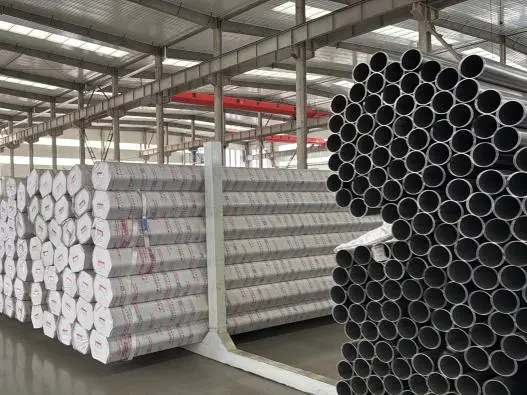
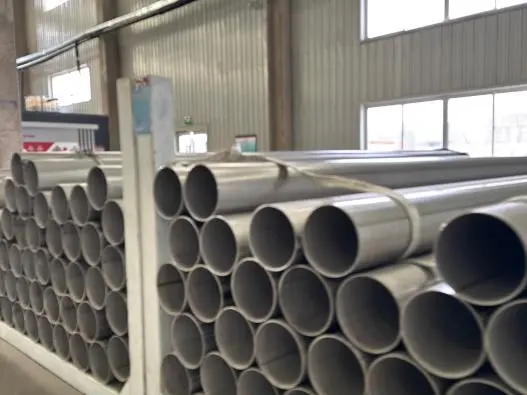
When European industrial projects call for pressure piping that holds up under corrosive media and elevated temperatures, EN 10217-7 welded stainless steel pipes consistently appear on the approved materials list. Covering austenitic and duplex grades from 1.4301 through 1.4571, this standard defines exactly what a pipe must deliver — chemically, mechanically, and dimensionally — before it enters a pressure system. At YOUFA, we manufacture and supply these pipes with full certification backing, offering ODs from 10.3 mm to 2,500 mm and wall thicknesses from 0.8 mm to 40 mm to fit virtually any project specification.
|
|
|
Understanding EN 10217-7 Welded Stainless Steel Pipes
What the Standard Actually Covers?
EN 10217-7 is a European standard that sets rules for welded circular tubes made of austenitic and austenitic-ferritic stainless steels that are meant to be used under pressure. It requires a joint factor of 1.0 (v=1.0), which means that the weld zone has to work as well as the parent material. This makes it different from lower-grade pressure pipe standards and makes it ideal for important fluid transport systems in power plants, chemical plants, and pressure tank construction.
Chemical Composition and Mechanical Requirements
The standard covers eight first-grade levels. Each grade has strict chemical limits that control how it will react to corrosion:
*1.4301, 1.4306, and 1.4307 are standard austenitic grades from the 304 family. They can be used in mildly corrosive settings, food processing, and general industry use.
- 1.4301 / 1.4306 / 1.4307 — Standard 304-family austenitic grades; suitable for mildly corrosive environments, food processing, and general industrial use.
- 1.4401 / 1.4404 — 316-family grades with molybdenum addition; preferred where chloride-induced stress corrosion is a concern.
- 1.4541 / 1.4571 — Titanium-stabilized grades; selected for applications involving prolonged exposure to elevated temperatures.
- 1.4539 — High-alloy austenitic grade with elevated nickel and molybdenum; designed for aggressive acid environments.
Mechanically, pipes need to meet certain values for elongation (A%), yield strength (Rp0.2), and tensile strength (Rm) that depend on the grade and wall thickness.
Manufacturing Process and Heat Treatment
All pipes are made by lengthwise welding with either a TIG, laser, or plasma gun, and then they have to go through solution annealing. EN 10217-7 Welded Stainless Steel Pipes heat treatment after the weld fills in the chromium-depleted area around the weld that would have been vulnerable to intergranular rust otherwise. The delivery condition is solution-annealed, and the surface is pickled and annealed. This makes sure that the passive layer is the same along the whole length of the pipe.
Key Performance Features and Industrial Applications
Corrosion Resistance Under Real Operating Conditions
Grades that contain molybdenum, such as 1.4404 and 1.4539, have a high Pitting Resistance Equivalent Number (PREN), which tells you right away how resistant they are to localized corrosion in chloride-rich environments. This means that repair times will be longer in desalination plants and offshore processing systems. Chemical processing plants that use sulfuric acid, hydrochloric acid, or phosphoric acid often choose 1.4539 for the pipes in their reactors and heat exchangers because it has a high PREN value and smaller metal grades break down too soon.
Pressure and Temperature Performance
The PED (Pressure Equipment Directive) says that European pressure vessels must have written material certification for pipes that work above certain pressure levels. These needs are met by EN 10217-7 pipes that are classified as Test Category TC1 and TC2. In power generation, grades 1.4541 and 1.4571 that are stabilized with titanium can handle continuous temperatures above 400°C without becoming too sensitive. This is something that plain 304 grades can't do.
Sectors Where These Pipes Are Actively Specified
Please find below a list of the main places where this pipe standard is directly used:
- Chemical and petrochemical processing — heat exchanger shells, reactor piping, and transfer lines handling aggressive media.
- Power generation — condenser tubing and steam circuit components requiring long-term thermal stability.
- Shipbuilding and offshore — seawater cooling systems and ballast line piping where salt exposure is constant.
- Hydrogen and fuel cell infrastructure — electrolysis system piping where high-purity fluid paths and corrosion resistance both matter.
In chemical and petrochemical processes, heat exchanger tubes, reactor pipes, and transfer lines that deal with aggressive media are used.
In power production, condenser tubes and steam circuit parts need to be able to withstand high temperatures for a long time.
Comparing EN 10217-7 with Other Stainless Steel Pipe Standards
EN 10217-7 vs. EN 10217-5
EN 10217-5 sets the rules for submerged arc welding (SAW) steel tubes that are used for pressure, but it mostly talks about fine-grain and non-alloy steels, not stainless steels. EN 10217-7 Welded Stainless Steel Pipes , when corrosion protection, performance at high temperatures, or clean media touch are important for the design, EN 10217-7 is the right standard to use. Technically speaking, it would be wrong to specify EN 10217-5 material in an acidic setting.
Welded vs. Seamless Pipe
Under EN 10216-5, seamless pipes don't have a longitudinal weld. Some designers like this because it makes the pipes easier to inspect when they are under very high pressure or when they can't get to the weld. However, pipes that have been welded according to EN 10217-7 have the same v=1.0 joint factor after being heated in a solution and going through full non-destructive testing. The price difference between welded and seamless becomes big for diameters over 168.3 mm, usually between 25 and 40%. This makes welded the best choice for large-bore pressure systems without sacrificing performance.
EN 10217-7 vs. ASTM A312 and A269
In North America, austenitic stainless steel welded and seamless pipe is known as ASTM A3112. Even though some grades are similar—for example, 304/304L and 316/316L are very close to 1.4301 and 1.4404—the limits for dimensions, the number of tests, and the style of the paperwork are all different. For European projects that fall under the PED's control, EN-harmonized standards must be used. Buyers who are looking for goods to use in Europe should make sure that the supplier's paperwork directly refers to EN 10217-7 and not ASTM equivalents. This will help make sure that there are no compliance problems during a third-party inspection.
Guide to Procuring EN 10217-7 Welded Stainless Steel Pipes
Evaluating Supplier Certifications
An EN 10217-7 provider you can trust should have ISO 9001 certification for quality management, PED certification for pressure equipment compliance, ISO 17025 certification for lab testing ability, and TÜV manufacturer certification. These are not marketing names; they are qualifications that have been checked and will directly affect whether your pipe paperwork will pass review by a third party on a European project site. YOUFA has all four, and our papers can be fully tracked back to the mill heat.
Pricing, MOQ, and Lead Times
The price of stainless steel pressure pipe changes based on the nickel and chrome alloy surcharges on the LME. Because EN 10217-7 Welded Stainless Steel Pipes contain molybdenum, grade 1.4404 always costs 15–20% more than 1.4301. At YOUFA, the smallest order that can be placed is just one pipe. This is enough for both testing samples and finishing small projects. Standard delivery gets to Tianjin Port in seven days, and full documentation packages are sent with material certificates.
Custom Fabrication and Packaging
We sell pipes in random or set lengths, and the ends can be plain or polished. Wooden boxes with optional steel frames, hexagonal binding, and woven bag security are all types of packaging that can be used. These are normal designs for long-haul ocean freight. All eight grades can be made to order with ODs ranging from 10.3 mm to 2,500 mm and wall thicknesses of up to 40 mm.
Technical Support and Quality Assurance for EN 10217-7 Pipes
Welding Procedure and Inspection Protocol
Welding Procedure Specifications (WPS) and Procedure Qualification Records (PQRs) are used to back up every production weld. These papers prove that the welding factors used in production have been checked by a third party, which is needed to make pressure pipes that meet PED standards. Fabricators further down the line can't show procedural traceability during building checks without these records.
Non-Destructive and Destructive Testing
Ultrasonic testing (UT) and radiographic testing (RT) are two standard NDT methods used on EN 10217-7 pipe. Results from both are included in paperwork files. According to the standard's test frequency schedule, destructive tests like tensile, flattening, and bend tests are done on heat-representative samples. Hydrostatic testing is done at set test pressures that make sure the weld is solid before it is sent out.
Certification and Traceability Documentation
We give you a full set of documents that includes MTC/MTR in both 3.1 and 3.2 forms, as well as third-party inspection reports (TPI), material process sheets (MPS), and weld test records. This format for the paperwork meets the needs of EN 10204 and supports PED Article 3 compliance reviews. This means that both the procurement team and the engineering sign-off team get what they need without having to make any additional requests.
Conclusion
EN 10217-7 Welded Stainless Steel Pipes play a clear and specific part in European pressure piping. They offer corrosion protection, thermal stability, and proven weld integrity at a cost-effective level for medium and large bore uses. Choosing the right grade from the eight that this standard covers is the first step to making sure that your pipe system works for as long as it's supposed to. This is true whether your project goes through a chemical plant, a power plant, or a hydrogen production facility. The difference between compliant procurement and expensive rework is the choice of materials that are backed up by the right certification and full documentation.
FAQ
Which industries use EN 10217-7 pipes most?
Chemical processing, power generation, shipbuilding, desalination, and hydrogen infrastructure are the primary sectors. Food and pharmaceutical applications also specify these pipes, particularly where bead-off internal weld finish and CIP cleanability are required. In the new energy space, fuel cell and electrolysis equipment manufacturers increasingly specify molybdenum-bearing grades for corrosion-sensitive fluid paths.
Are welded pipes under EN 10217-7 as strong as seamless?
After solution annealing and full NDT verification, EN 10217-7 welded pipes achieve a joint factor of v=1.0 — the same engineering value assigned to seamless pipe. For most pressure applications, this means no design penalty for using welded construction. Seamless pipe may still be preferred in niche cases involving very high cyclic pressure or extremely tight diameter tolerances.
What are typical lead times from a certified supplier?
From a manufacturer with finished stock, standard grades like 1.4301 and 1.4404 in common dimensions can ship within seven to ten business days. Specialty grades such as 1.4539 or custom dimensions may require three to five weeks for production scheduling. Always confirm document preparation time separately, as 3.2 MTC certification requires an independent third-party inspector's signature.
What documentation should I request from the supplier?
Request MTC/MTR in 3.1 or 3.2 format, WPS/PQR records, UT/RT test reports, hydrostatic test records, and a dimensional inspection report. For PED-covered projects, confirm that the supplier's PED certificate covers the pipe product category and pressure class you are ordering.
Partner with YOUFA for Certified EN 10217-7 Welded Stainless Steel Pipe Supply
YOUFA makes riveted EN 10217-7 Welded Stainless Steel Pipes stainless steel pipes that are approved by TÜV and EN 10217-7. They have 15 production lines and make 50,000 tons of steel each year. We ship to Tianjin Port in as little as seven days, and our MOQ is just one pipe. Visit youfass.com or email our technical team at info@youfass.com to get a quote, check on grade availability, or talk directly about the documentation needs of your project.
Online Message