
Nov 18, 2026
EN 10217-7 1.4401 Welded Steel Pipe for Marine Fluid Transport Systems
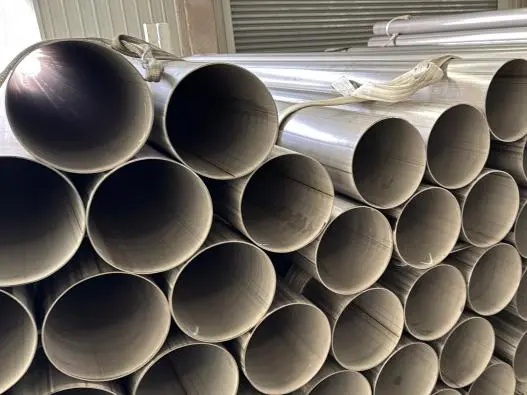
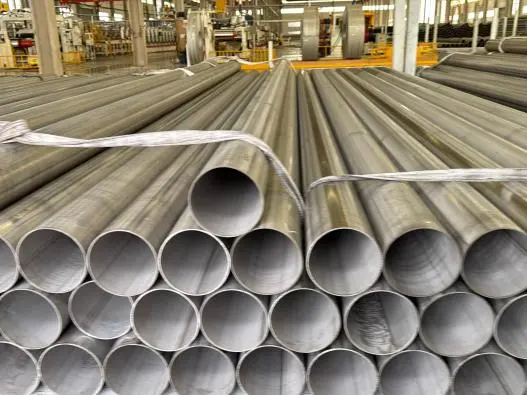
EN 10217-7 1.4401 Welded Steel Pipe can serve many marine fluid transport systems, including cooling water, ballast water treatment, firewater, and chemical dosing lines, when the fluid chemistry and temperature match the grade. Grade 1.4401 is equivalent to 316 stainless steel, and its molybdenum content gives better resistance to chloride pitting than 304. EN 10217-7 sets the delivery rules for welded stainless steel pressure tubes, including testing and inspection documents. Warm or stagnant seawater can still damage this grade, so I recommend checking grade, wall thickness, weld quality, and certificates before you order.
|
|
|
1.4401 Stainless Steel: Material Properties and Marine Suitability
Look at the metal itself before you compare companies that sell it. How far the pipes can go will depend on the grade you pick.
What Sets 1.4401 Apart From 304?
The name for grade 1.4401 in EN 10088-1 is X5CrNiMo17-12-2. Chrome makes up 16.5% to 18.5% of this EN 10217-7 1.4401 Welded Steel Pipe, nickel makes up 10.0% to 13.3%, and molybdenum makes up 2.0% to 2.5%. Chrome makes up the thin layer that tops the surface. The austenitic structure is made up of nickel. This makes the metal strong and easy to shape. It is harder for saltwater to crack when molybdenum is present. Because it doesn't have any molybdenum, grade 1.4301 (304) has a pitting resistance equivalent number (PREN) in the high teens. It's in the 20s for 1.4401. Buyers often use AISI 316 and UNS S31600 as cross-references. What you get, though, will depend on the project standard and the mill certificate.
Where 1.4401 Reaches Its Limits in Seawater?
This grade isn't always good for deep seawater. Ions of chlorine damage the surface and make holes in it where they're not needed. It's possible for cracks to rust in seals that don't drain well or that have small holes under them. There are many sources on corrosion that list austenitic grades above around 60 °C. Cracks can show up in warm chloride water when there is tensile stress. Still water in the ocean is worse for stainless steel than moving water that lets it breathe. Flow holds the silent picture together. They tell me the salt level, temperature, flow rate, and time to rest. I'll know for sure what the score is this way. The service could be very rough, in which case you might need duplex or higher-alloy stainless steel.
Choosing Between 1.4401, 1.4404, and 1.4301
There are three grades for the same request most of the time. On the other hand, since it doesn't have any molybdenum, grade 1.4301 can only be used in warm, fresh water. Grade 1.4401 has molybdenum added to it, and it can be used for many lines that are close to chlorine. In grade 1.4404 (316L), the amounts of chrome, nickel, and molybdenum stay the same, but no more than 0.030 percent carbon can be added. 0.07% of carbon is the most that can be added to grade 1.4401. Less carbon means that sensitization is less likely to happen where weld heat is felt. YOUFA also has 1.4306, 1.4307, 1.4541, 1.4539, and 1.4571 that you can get under EN 10217-7. One question lets you compare grades. For heavy welding or thick walls, 1.4404 is usually the better choice.
EN 10217-7 Requirements and Dimensions for 1.4401 Welded Pressure Pipe
Next, read the standard to find out what size pipe it needs to be and how well it works.
What does EN 10217-7 cover?
For EN 10217-7 1.4401 Welded Steel Pipe, this is the rule book. In Europe, it's known as EN 10217-7. From this list, you can learn about the chemicals used, the mechanical parts, tests to make sure there are no leaks, and records of inspections. The standard sets up different kinds of tests. Test Category 2 checks the weld seam without damaging it, which is more than just the basics. When these pipes are solution annealed, YOUFA sells them. They won't rust as easily and will be easy to shape and join. They work well in hot and acidic places and can handle a lot of pressure. You can use these things in chemical, power, and pressure vessel systems, as well as industrial pipe systems. Always check both the project rules and the classification society's rules to make sure something is safe for the sea.
Welded Pipe Versus Non-Welded Pipe
Two pieces of pipe that have been welded together into an EN 10217-7 1.4401 Welded Steel Pipe are joined together by a lengthwise weld. The pipe starts out as a roll of metal. When you put the strips together, they are all the same width. Any other way that isn't welded costs more than this one to get to big sizes. Tubes that don't have a weld gap are talked about in EN 10216-5. Some engineers choose these tubes for heavy loads or small bores because they don't need to be checked. Because it is small and cheap, welded pipe is often the best choice for gas, water, and ballast mains. On the outside, it starts at 10.3 mm, and the EN 10217-7 standard covers sizes up to 1219.2 mm (48 inches). It doesn't matter which way you pick; you should always look at the design heat, vibration, stress, corrosion limit, and joint method.
Dimensions, Wall Thickness, and Ends
The size determines the flow rate, the pressure grade, and the fit. EN rules say that the walls of a YOUFA pipe should be between 0.8 mm and 40 mm thick. You can choose a time or not. The ends can be straight or bent, and the surface can be heated and pickled. The standard thickness is written on the order, but you should still make sure that the minimum thickness after margin meets your needs. You should also think about getting old and rusty. You can use clamps and joints on the straight ends. You can bolt the pieces together on the bent ends. Before you send the order, make sure you include the outside diameter, wall thickness, length, and type of end. It's easy for pumps, elbows, flanges, and valves to fit together.
Weld Quality, Inspection, and Certification
What's written on stress pipes is just as important as their grade name.
How does welding control corrosion performance?
This is most likely to happen where the weld seam meets the base metal because they are not the same. How well the shape of the EN 10217-7 1.4401 Welded Steel Pipe is made, how much heat is added, and the gas used to keep the heat in can all change it. Over time, the passive film can become less strong if you use irons, heat tints, or other heat sources that heat it up too much. People soak things in a solution to get a scale and heat tint. When you pickle something, you get rid of those. It will be even less likely to rust now. People from YOUFA send pipe that has been pickled, heated, and heated in a solution on the inside. We also keep track of when the WPS/PQR welding was done. This shows that the method was tried and was found to be safe, not just thought to be safe. You can ask for these papers before the order is made.
Testing Methods We Apply
The most important parts are the chemicals and how stable the weld is. Use an eddy current or water pressure test to check the weld joint and make sure it doesn't leak. Building flaws can be found with ultrasound tests, and X-ray reports can be made when a project needs them. The ISO 3651-2 intergranular corrosion test lets you know that welding hasn't made the steel more likely to rust. Knowing how rough a surface is can help you clean it. The amount of molybdenum is verified with positive material identification (PMI). The pipe is a high-quality 1.4401 product, so it doesn't fall short in any way. YOUFA runs an ISO 17025 lab. What kind of test is it, and how many people can take it? Please say in your RFP. It will depend on how dangerous the job is and how it is done.
Certificates and Traceability
There are approvals for EN 10217-7 1.4401 Welded Steel Pipe from YOUFA from TÜV and ISO 9001 and PED for the company. It also has an ISO 17025 lab. You can get TPI reports, WPS/PQR reports, MPS reports, UT/RT reports, and MTC/MTR 3.1 or 3.2 reports. According to EN 10204, a 3.1 certificate must come from a manufacturer representative who is authorized to do so and does not work in the production department. The buyer's agency or an inspector named in the rules can also check out the property if it has a 3.2 certificate. A classification society or a third-party inspector is likely to say 3.2 when they work on projects for them. To keep track of the raw materials, you need steel from well-known sources and management that you can get in touch with. That way, you can check if the numbers on the pipe match the numbers on the bill.
Marine Fluid Transport Applications
The final grade will depend on how well all the lines work in real life.
Cooling Water, Ballast Water, and Firewater Lines
To cool seawater, treat bilge water, or make firewater mains, EN 10217-7 1.4401 Welded Steel Pipe is a good choice when you need bigger sizes. Grade 1.4401 can be used for these lines as long as the design review checks that the salt level, temperature, and flow speed are all right. Bleach or other oxidizers can be added to ballast water to make it better. This makes rusting more possible, so check the amount of chemical as well. It is more likely for cracks and pits to form when there are dead legs and long rest times. This is why pipe structure is just as important as grade. When you launch, keep the water moving, drain any low spots, and run water through the lines. These steps help 1.4401 work and protect the passive film.
Chemical Dosing, Desalination, and Hygienic Utilities
There are small holes in dosing lines that let treatment chemicals go in. The brine is taken care of by desalination equipment, so the grade needs to match the temperature and amount. It takes more work to get a grade of 1.4401 to work with hot chlorides or acids that are stronger. To keep things clean, like giving out water, food, and medicine, surfaces need to be passivated and packed in a planned way. YOUFA sends pipe that has been annealed and pickled in wooden boxes that can have a steel frame added if needed. Triangle-shaped tape and woven bags keep the surfaces safe while they're being shipped. Chemicals, factories, and places that deal with electricity all use our welding pipe for their pipe systems. That is, you can buy lines for both the sea and the plant from the same company.
When to Move Beyond 1.4401?
For heavy-duty use in salt, oil, and gas, or high pressure, you may need duplex or higher-alloy stainless steel, tubes that aren't welded, impact tests, or extra approvals for a certain type of use. Small holes, warm brine, and seawater that doesn't move are all warning signs. YOUFA supplies 1.4539, which is a higher-alloy austenitic grade, and 1.4571, which is a titanium-stabilized grade. Both of these grades can handle tougher chemical service. Following the same EN 10217-7 rules, both are made. First, tell your engineer how you work. Next, get the grade and match it to the data. Getting the right grade the first time is usually cheaper than having to repair a line that has already broken.
How to Select the Right EN 10217-7 1.4401 Pipe Supplier?
A full request and a source who can do what they're supposed to do are the first parts of a good order.
Evaluate Supplier Capability Beyond Price
The unit price doesn't tell the whole story. More than 200 people work at Youfa Stainless Steel Pipe Co., Ltd., which has been in business since 2017 and makes 50,000 tons of EN 10217-7 1.4401 Welded Steel Pipe every year on 15 production lines. This company is one of the 500 biggest in China, and it sells all kinds of stainless steel pipes. The same checks should be done on every service: raw steel from known sources, heat numbers that can be tracked, specialized testing tools, records of welds and NDT, and a measurement check. YOUFA also provides skilled assistance, on-site commissioning, and full project supply planning, so buyers and sellers only need to talk to one person.
Build a Complete RFQ
Less texting back and forth is needed when there is a full request. Include the standard (EN 10217-7) and the grade, outside diameter, wall thickness, length, number, finish, and end type. It is important to add the temperature, chloride level, type of fluid, and working pressure. Then you should name the test group, the NDT method, the hydraulic test needs, and the certificate type (3.1 or 3.2). Write down the address, any Incoterms or rules from the classification society, and the date the goods need to be shipped. YOUFA lets you order just one pipe, which is enough for test runs and extras. Before we give you a price, please let us know if your project standard is based on ASTM or ASME. This way, we can compare it to EN 10217-7.
Check Logistics and Delivery
Read over the wait time, partial shipments, marking, and packing before you sign. In as little as seven days, YOUFA can send to Tianjin Port. Pipe is packed in wooden boxes that can have a steel frame added if needed. They also use hexagonal binding and woven bags. When it gets there, check the order and the certificate for the heat numbers and marks to make sure they match up. Also, look over the surfaces for any scratches or dirt. Steel stores should not have stainless steel pipes near them so that iron doesn't pick them up. You should make a claim right away and include photos and batch numbers so the supplier can figure out what went wrong.
Conclusion
EN 10217-7 1.4401 Welded Steel Pipe is a good choice for many fluid lines in sea and factory settings as long as the grade is right for the job. Molybdenum makes 1.4401 less likely to pit than 304, but seawater that is warm, still, or high in chloride can be too much for it. It might work better with alloys of grade 1.4404, duplex, or higher. EN 10217-7 talks about how to deliver things, test groups, and paperwork. When you use welding, you can make walls that are all the same thickness and wider. The quality of the weld is affected by many things, such as solution annealing, pickling, leak testing, nondestructive testing, and EN 10204 certificates that can be tracked. When buyers have clear measurements, fluid data, and transportation details, they can fairly compare providers and avoid data gaps in the specifications.
FAQ
What is EN 10217-7 1.4401 pipe?
It is made of austenitic EN 10217-7 1.4401 Welded Steel Pipe that was joined along its length after being welded together from a strip. It is made in grade 1.4401 to meet EN 10217-7 standards. It is made of the same stuff as 316 stainless steel and is used for pressure pipes in power, chemical, and industrial systems.
Can 1.4401 handle every seawater system?
No, hollows, cracks, and crevice corrosion can all be caused by chloride water that is warm or still. For heavy-duty applications, engineers need to look over the work, and better alloy grades or duplex grades are sometimes needed.
How does 1.4404 differ from 1.4401?
No more than 0.030 percent carbon can be in grade 1.4404, which is the same as grade 316L. No more than 0.07% carbon can be in grade 1.4401. Because of this, there is less chance of sensitization after welding. A lot of people in the chemical and naval industries use it.
What information does YOUFA need for a quote?
Send the grade level, length, amount, fluid, pressure, temperature, test group, type of certificate, and location. We check the grade, finish, ends, testing, and paperwork, and then we let you know if the item is in stock or when it will be made.
Request a Quote for EN 10217-7 1.4401 Welded Steel Pipe from YOUFA
Want to find an EN 10217-7 1.4401 Welded Steel Pipe company that keeps track of everything? YOUFA has 15 production lines and is certified by ISO 9001, PED, ISO 17025 lab, and TÜV. They only need one pipe to meet their MOQ, and they can ship to Tianjin Port in as little as seven days. Send your needs for size, number, fluid, pressure, temperature, and paper to info@youfass.com. You can also visit youfass.com to learn more.
Online Message