Nov 9, 2026
EN 10217-7 1.4401 Welded Steel Pipe for Corrosive Industrial Environments
EN 10217-7 1.4401 Welded Steel Pipe is an austenitic stainless steel pressure pipe made to the European standard for welded stainless tubes. Engineers choose it for systems that handle moisture, chlorides, and process chemicals. Its molybdenum content gives better pitting resistance than 304-type pipe, while the standard sets chemical, mechanical, dimensional, and testing rules. In this guide, I explain what the grade means, how to read dimensions, how to compare alternatives, and which documents to request. I also describe how YOUFA supplies these pipes, so you can judge the fit before you send an inquiry.
|
|
|
What Is EN 10217-7 1.4401 Welded Steel Pipe?
EN 10217-7 Standard Scope and Application
Stainless steel tubes that are bonded together and used for pressure must meet EN 10217-7 in Europe. It specifies what kinds of steel will be used, how they will be made, what chemicals will be used, how they will behave mechanically, any tolerances that will be used, and the tests that will be done. Category 2 is one of the two types of tests in the standard. It checks the weld line without any damage. It is bought for pipes in chemical plants, power plants, and pressure tanks that need to move fluids under pressure and not rust in hot weather. Your company makes EN 10217-7 pipe that has been heated in a solution. These changes make it less likely to rust and easier to shape and join. The design code will tell you if the pipe is up to code, but you are the only one who can decide if it will work.
1.4401 Stainless Steel Grade and Its Composition
The EN number 1.4401, X5CrNiMo17-12-2 is known. The steel in this case is austenitic. Chrome should be between 16.5% and 18.5%, nickel should be between 10.0% and 13.0%, molybdenum should be between 2.0% and 2.5%, and carbon should be up to 0.07%. Rust doesn't form because of a passive oxide film made of chromium. Nickel makes the metal strong and stable in its austenitic form. When molybdenum is added to fluids that have salt in them, they are less likely to get pits or be damaged. If someone wants to buy, they should look at the grade table and compare it to the mill certificate on the chemicals. Don't take these numbers as gospel; they won't always be true for every heat. Before the welding starts, this check makes sure that the 1.4401 Welded Steel Pipe has the right properties.
Is 1.4401 Equivalent to 316 Stainless Steel?
In business papers, 1.4401 is often written as "316," and the two grades are very similar. It is most often found that 316 (UNS S31600) is the best match, and it also fits into the key metal groups. I don't think the names are always the same, though. It is important to note that the EN 10217-7 and ASTM standards have different limits, test requirements, and certificate language. One of these rules can only be in a project plan. The plans use ASTM or ASME, but the pipe ships to EN 10217-7. This is important for people in the US to know. The change needs to be approved in writing by your expert, and the certificate needs to have the correct standard, grade, and heat number.
Key Properties of 1.4401 Stainless Steel Welded Pipe
Corrosion Resistance in Industrial Service
1.4401 is less likely to pit than 304 because it has molybdenum in it. With Cr + 3.3 × Mo, you can figure out that 1.4401 is equal to 24 and 304 is equal to 18. This gap works well for water with chloride in it, weak acids, and many other types of process fluids. The lines that hold process water and electrolytes are often checked by teams that work with chemicals, electrolysis, and new energy gear. But there are still limits. Too much salt, warm water that doesn't move, and deposits, cracks, and welds that haven't been cleaned properly can still cause localized rust. At higher temperatures, cracks can also form because of chloride stress corrosion. For each question, please write down the fluid, salt level, temperature, and cleaning chemicals so that we can check if 1.4401 works.
Mechanical and Physical Properties
The metal 1.4401 in EN 10217-7 1.4401 Welded Steel Pipe is austenitic, which means that it stays tough, flexible, and mostly non-magnetic even after being quenched in a liquid. It's strong even when it's hot outside and weighs about 8 grams per square centimeter. This is the reason why the high-temperature strengths of austenitic grades are given in pressure codes. It bends more than carbon steel when it's hot and doesn't move heat around as well. This is why builders need to make sure that long pipes can move. Standards state the lowest amount of tension and yield that should be present in each grade. The test results can be seen on the mill certificate. Once you know how much stress your system can handle, use the approved numbers instead of a general datasheet.
Weldability, Fabrication, and Surface Finish
You can join many things together with TIG, plasma, or 1.4401. Because it's safer, don't put carbon steel tools near the pipe and don't let too much heat into it. Also, make sure it is blocked off and removed correctly. Because the weld heat tint makes it less resistant to rust, it's important to pickle and passivate it after that. YOUFA sells EN 10217-7 pipe that has been pickled and annealed to get rid of scale and make the surface ready to be installed. For each use, the surface needs to be different. For chemical lines, any kind of pickled finish will do. For sanitary lines, though, the surface needs to be very rough. Tell them what finish you want on the inside and outside of the pipe when you place your order. When it gets there, it will be ready to go.
EN 10217-7 1.4401 Pipe Dimensions and Wall Thickness Selection
Common Dimensional Parameters
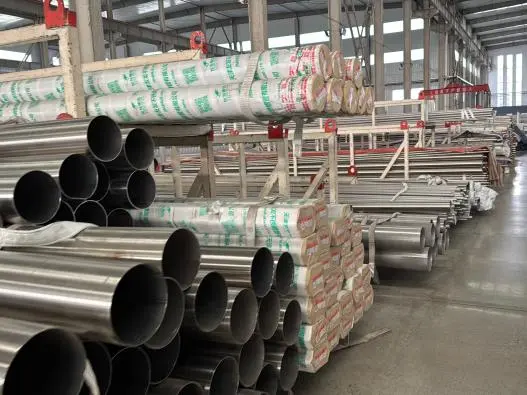
Sizes are the first part of a full study. You know the inside diameter of a pipe if you know its outside diameter and how thick its walls are. All of our EN 10217-7 Welded Steel Pipes are up to the EN standard. Its walls are between 0.8 mm and 40 mm thick, and it can be up to 1219.2 mm (48 inches) wide on the outside. You can choose a set length or let it go, and the ends can be straight or curved so they can fit together. Don't forget to tell them that the ends need to be ready, square, and straight. Tools for orbital welding, fittings, flanges, valves, and other things need to have tight geometry. Compare the 1.4401 Welded Steel Pipe sizes to the ones on your drawing. Then tell us what range of sizes you need for your job.
How to Select Wall Thickness for Pressure Applications
You need to find out how thick a wall is, not just how much pressure there is. The engineer needs to know the outside width, the stress that can't be broken by heat, the weld joint factor, and the rust safety in order to make the design. The need can rise because of voids, vibrations, thermal expansion, and loads from outside the system. The formulas are based on the code name for your project or a pressure number, such as EN 13480 for metal industrial pipes. A bigger wall costs more and weighs more, but a small wall can rust and fall apart fast. What is the thinnest wall you can make, and what is the range of errors you are okay with? We can then make sure that the normal gap and wall work for you.
Dimensional Checklist for a Purchase Inquiry
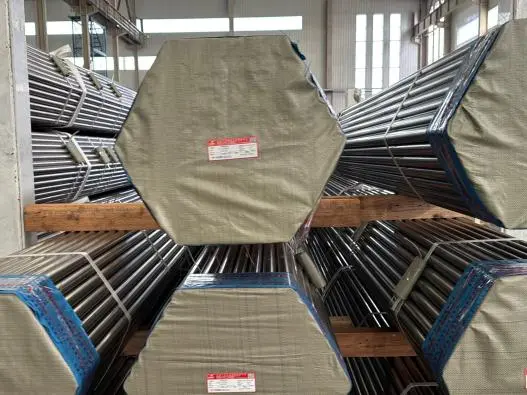
Before you send a quote request, make sure you have the grade, EN 10217-7 and test category, outside diameter, wall thickness, length type, number, end finish, surface finish, any paperwork you need, the shipping port, and the date you want to send the quote. You can get a better idea by adding the fluid, temperature, and pressure. Test and practice sales are fine since we only need one pipe to begin with. When we pack our things, we use square binding, weaving bags, and wooden boxes that can have a steel frame added if we want to. All of the quotes come at once, which makes it easier to get them. It's also less expensive to change the specs after production has started.
EN 10217-7 1.4401 vs. Alternative Stainless Steel Pipes
1.4401 vs. 1.4404/316L Welded Pipe
The fact that both grades have about 2.0 to 2.5% molybdenum means that they are about equally resistant to making holes. Carbon is the most important thing. Up to 0.07% carbon can be found in 1.4401 and up to 0.03% carbon can be found in 1.4404 (X2CrNiMo17-12-2). It is less likely for chromium carbide to form in the heat-affected zone when carbon levels are low. There are times when this can lead to intergranular rust. When they need to weld something heavy-duty or work at temperatures that make the metal more sensitive, many engineers choose 1.4404 or 316L. As long as the service is light and the welds are done right, 1.4401 can work well. Either the user or the design engineer has to agree to move grades.
1.4401 vs. 304 Stainless Steel Pipe
Grade 1.4301 (304) in EN 10217-7 1.4401 Welded Steel Pipe doesn't contain any molybdenum, so it doesn't fight pitting and crevice corrosion as well in fluids that contain chloride. In general, its pitting resistance level is about 18, while 1.4401's is about 24. 304 grade is easier to find and costs less. It can be used for air, mild water, and many food-contact lines. You should choose 1.4401 when chlorides, brines, or chemical cleaners are being used. YOUFA has both of them, as well as 1.4306, 1.4307, 1.4404, 1.4541, 1.4539, and 1.4571, so we can give you a number of choices for a single standard. The price difference tells you how much nickel and molybdenum something has, so think about the extra cost and the chance that you'll need to buy a new one too soon.
EN 10217-7 Welded Pipe vs. Weld-Free Pipe
Welded pipe is made from a strip or a plate that is welded together along its length and then heated in a solution. To make a weld-free pipe, it is poked or pushed out of a lump. When it comes to price, lead times, and diameters, welded pipe usually has shorter lead times and bigger diameters. Most of the time, weld-free pipe can handle either very small holes or high pressures. However, as the width gets bigger, it can't handle as many sizes. Safety tests are done on EN 10217-7 pipes to make sure they don't leak and to see if the weld seams are safe to touch. Which way is best for you will depend on your design code, pressure, and width. There are times when welding 1.4401 pipe up to 1219.2 mm is the best way to do acidic work with a large hole.
Compliance, Inspection, Testing, and Supplier Selection
Certificates and Documents
It's tough to take a pipe that doesn't have boxes. The company that made the item can give you an EN 10204 3.1 certificate. The heat number, chemical makeup, mechanical test results, and shipping state are all written on this certificate. With a 3.2 certificate, a third-party inspector checks the work as well. YOUFA provides MTC/MTR (3.1/3.2), TPI, WPS/PQR, MPS, and UT/RT. We are an approved manufacturer by TÜV and have lab certificates for ISO 9001, PED, and ISO 17025. When the goods arrive, compare the information on the certificate with the heat numbers, pipe marks, and packing lists. In case there are any problems, fix them before you install.
Testing and Weld Seam Inspection
EN 10217-7 says that there must be a leak-tightness test. Either a hydraulic test or an eddy current test can be used to do this. Non-destructive weld seam testing is now part of Test Category 2. Other ways to check the quality of 1.4401 are through ultrasonic or radiographic inspection, intergranular corrosion tests according to ISO 3651-2, and positive material identification (PMI) to see how much molybdenum is in the material. You need to check that the test pressure, holding time, test medium, and acceptance criteria are correct in your order. The package comes with checks for sight and size. The ISO 17025 test was passed by YOUFA. We will not surprise you with tests you need for your project; just tell us what tests you need.
Supplier Evaluation, MOQ, and Lead Time
Check out a provider's information first. In 2017, YOUFA opened its doors. It now has 15 production lines that make 50,000 tons of stainless steel pipe each year. More than 200 people work for the company. We are one of the 500 largest businesses in China, and we offer full solutions for stainless steel pipes. We know where our steel comes from and keep track of all of our raw materials. To place an order, we need at least one pipe, and it takes us seven days to get it to Tianjin Port. Make sure you get the lead time in writing because it changes based on the size, grade, and stock. Look at some sample certificates, check list records, and written notes about any changes that were made. If the seller is honest, they will answer these questions quickly and clearly.
Conclusion
EN 10217-7 1.4401 Welded Steel Pipe is made from an austenitic 316-type steel. It meets pressure-pipe standards and can be used in many tough industrial systems. Even though molybdenum makes steel stronger against pitting than 304, the amount of chloride, temperature, layers, and state of the weld still affect how well it works. The design calculations must tell us how thick the walls should be. The most similar steels are 1.4404 and 316L. The main difference is how much carbon they can hold, which is important after a lot of welding. Welded pipe can handle large sizes, but weld-free pipe can handle high pressures or very small holes. To get the project approved, you need EN 10204 certificates, tests to make sure there are no leaks, weld seam checks, and full data. It's best to set the conditions for the service first, then match the grade, size, and papers to those conditions.
FAQ
Is EN 10217-7 1.4401 welded pipe the same as 316 stainless steel?
It is connected to 316 and is often used as a link. But different tests have different standards, tolerances, and requirements, so check the grade and standard of the certificate before letting someone else take its place.
What is the difference between 1.4401 and 1.4404?
In 1.4404, carbon can't be more than 0.03%. In 1.4401, it can be up to 0.07%. A lot of engineers choose 1.4404 for heavy welding because it has less carbon, which keeps bonded systems from corroding between the grains.
Is EN 10217-7 1.4401 suitable for pressure applications?
There is talk about pressure in EN 10217-7. To find out if it works, you still have to look at the dimensions, wall thickness, temperature, building codes, tests, and technical math.
What certificate should I request?
Get a certificate that says EN 10204 3.1 or 3.2 if you need an outside check. YOUFA has MTC/MTR (3.1/3.2) and can give you results for TPI, UT/RT, and other papers.
Request EN 10217-7 1.4401 Welded Steel Pipe from YOUFA
YOUFA is ready to look over your delivery, drawing, and fluid data. You can get all the stainless steel pipes you need from us. We make EN 10217-7 1.4401 Welded Steel Pipe. We only need one pipe to place an order, and we can get it to Tianjin Port in seven days. Send us an email at info@youfass.com with the test grade, size, quantity, and requirements, and we'll get back to you with a quote and technical review. To find out more about this item, visit youfass.com.
Online Message