Nov 11, 2026
EN 10217-7 1.4306 Welded Stainless Steel Pipes for Industrial Piping
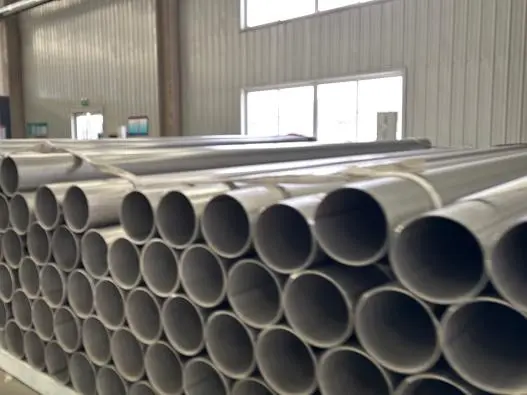
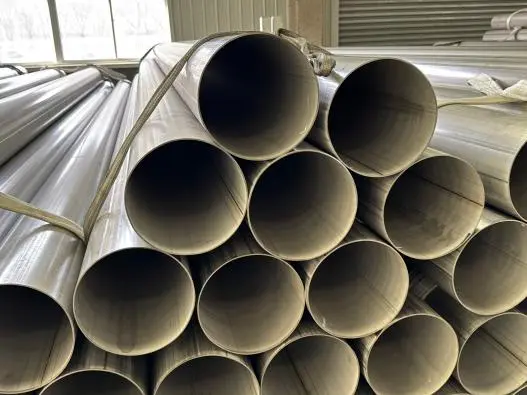
EN 10217-7 1.4306 Welded Stainless Steel Pipes are low-carbon austenitic pipes that are often paired with 304L. They are made to be used in pipes in factories that are under a lot of stress. They are made from strips that are welded together, heated in a solution, and checked to make sure they meet the EN 10217-7 standard. Because it doesn't contain much carbon, it helps weld zones resist intergranular corrosion. The pipes can be used for chemical lines, water treatment, food and drug systems, utility loops in power and electronics companies, and more. You can write a clear definition and send YOUFA a clear request after reading this guide. It tells you about the grade, the standard, how to choose, and how to buy.
|
|
|
1.4306 Stainless Steel Explained: Grade, Equivalents, and Typical Uses
What EN 1.4306 and X2CrNi19-11 Mean?
This grade is marked by the number EN 1.4306. There is not much carbon in this steel. It is called X2CrNi19-11, and it has about 19% chromium and 11% nickel. This grade is often paired with AISI 304L and UNS S30403 because it is an austenitic metal. Why do I say "matched"? Different types of paper, like EN, ASTM, and ASME, have different chemical limits, size rules, test standards, and certificates. This means that two pipes whose names sound alike can't always be switched out. You should read the whole set of standards and get written permission from your project engineer before you make any changes. As a safety measure, this keeps shipments from being turned down later.
Chemical Composition and Mechanical Properties
According to EN 10088-1, the 1.4306 grade can only have up to 0.030 percent carbon, 18.0 to 20 percent chromium, and 10.0 to 12 percent nickel. Because the metal only has a small amount of carbon, chromium carbide is less likely to form when it is heated to 450–850 °C during welding. This stops intergranular rust in the area next to the weld. The EN 10217-7 standard and the individual mill license tell us about the pipe's mechanical qualities, like its tensile strength, length, and proof strength. These numbers change based on how the package was sent. A general data sheet might not be the best choice. Instead, I think you should look at the most recent version of the standard and the heat-specific certificate. The design pressure is found by looking at the width, thickness, temperature, and quality of the weld.
Typical Uses Across Industries
Austenitic 1.4306 pipe is often used in chemical process piping, water treatment plants, stores that sell medicines, food and drink lines, and tanks. Many fields that need stainless steel water lines ask for this grade. In hydrogen and fuel cell plants, these pipes are used for loops of service water and process water. In places that make PCBs and semiconductors, chemical supply and rinse water loops are used. Companies that make batteries and cars need them for cooling and compressed air lines. Other businesses that use stainless steel pipes are those that make medical tools and test stations for aeroplanes. You might need grades like 1.4404, 1.4571, or 1.4539 instead if there are chlorides, strong acids, or a lot of heat in the air. You can save a lot of time and money by taking a quick look at the way.
EN 10217-7 Standard Explained for Industrial Procurement
What the Standard Covers?
This is EN 10217-7, which is part 7 of the EN 10217 series. It talks about pressure-weld steel tubes. Stainless steel is discussed a lot in Part 7. For example, it says what kind of steel should be used, how it should be made, how it should be heated, how big it should be, any limits, and what testing, writing, and checking need to be done. It also sets up two types of tests, which are known as TC1 and TC2. For TC2 testing, you have to look at the weld without damaging it. When you place your order, you have to say what version of the standard you want, what test category it is for, and how you'd like it sent to you. These pipes are sold by YOUFA after they have been solution-annealed, and their wall widths have been set to meet EN standards. This makes the quote clear right away.
Pressure Rating and the ASTM A312 Question
A lot of people who buy EN 10217-7 1.4306 Welded Stainless Steel Pipes want to know how it compares to ASTM A312. Both cover austenitic stainless steel pipe, but they have different rules about how to test, accept, and pay attention to the pipe. ASTM A312 is for pipes that don't have a weld joint. EN 10217-7 is for tubes that are soldered and will be used under pressure. Meeting the requirements of EN 10217-7 does not set a maximum working pressure on its own. For that number, an engineer needs to use the governing code, such as ASME B31.3 for process piping, along with the temperature, pressure, wall thickness, weld factor, and corrosion allowance that were planned. If the job calls for U.S. codes, make sure that the code authority and the engineer of record agree with the EN information before you buy it.
Certification and Documents to Request
The paperwork is just as important as the pipe itself. YOUFA has an ISO 17025 lab and is a TÜV-certified supplier. They are also ISO 9001 and PED-certified. You can get MTC/MTR paperwork from us under EN 10204 type 3.1 or 3.2. We also offer TPI, WPS/PQR, MPS, and UT/RT records. Type 3.1 certificates are given out by a manufacturer representative who is authorised to do so and is not part of the production department. Type 3.2 adds verification by a buyer's agent or a government inspector. When you ask, be clear about the level of check that you need because third-party witnessing can change lead times. Each certificate should be linked to a heat number and a pipe mark so that every length can be fully tracked.
Performance of 1.4306 Welded Stainless Steel Pipe Against Other Options
Corrosion and Weld Performance
Corrosion doesn't happen in Grade 1.4306 when exposed to air, water, and many clean process fluids. It works well for welding because it doesn't contain much carbon. This is because the shop deals with heat tint, contamination, and surface damage. Pickling and passivation are ways to get rid of oxides and restore the protective layer of chromium oxide. The finish on our pipes is pickled and annealed. Still, things like acidity, temperature, flow rate, salt levels, and cleaning chemicals can affect how well it works. As important as the steel grade is in hygienic systems, the internal weld profile, drainage, and ability to be cleaned are also very important. Before deciding whether to use 1.4306 in marine air, hot chloride water, or harsh chemical environments, it is best to think about the project at hand.
1.4306 vs. 1.4301, 1.4404, and 1.4571
Grades like 1.4301, 1.4306, 1.4307, 1.4401, 1.4404, 1.4541, 1.4539, and 1.4571 that are in line with EN 10217-7 are what we make. Grade 1.4301 (304) has more carbon than grade 1.4306, and grade 1.4307 also has carbon. There is about 2.0 to 2.5% molybdenum in Grade 1.4404 (316L), which makes it stronger against chlorides and pitting. Titanium stabilises types 1.4541 and 1.4571, just like it does for 321 and 316Ti. The best grade is 1.4539 (904L), since it is made to work with stronger acids. The grade 1.4306 is a cheap choice that can be welded in simple places. If the heat, acidity, or salt levels go up, you should pick a metal grade that is higher on the list.
Welded Pipe vs. Pipe Made Without a Weld Seam
When you heat a solution, you join strips of pipe together along their length to make welded pipe. If you need a wider width, it usually has a better price, more sizes, and thicker walls. You can get our EN 10217-7 stock in sizes up to 1219.2 mm (48"). Because of a design code or a client standard, pipes made without a weld seam may need to be used for certain high-pressure or important services. The choice is often based on how well the weld was made, so you should ask for the test group, the WPS/PQR, and the results of the non-destructive tests. When the rules allow it, many power, chemical, and process lines can use tested bonded pipe.
How to Select the Right EN 10217-7 1.4306 Welded Pipe?
Define Your Service Conditions First
In order to understand EN 10217-7 1.4306 Welded Stainless Steel Pipes better, write down their fluid, pressure, temperature, environment, and duty cycle. Note down how much chloride was used, the pH, and any cleaning products that were used. These will help you choose whether 1.4306 is enough. Next, find the test group and the design code that needs to be run. The same grade is used in different ways, like in chemical transfer lines, PCB rinse lines, and deionised water loops in hydrogen plants. Making sure the grade is okay before setting the price is done by giving this information to the technical team. This way, changes to the design don't have to be made after the order has been placed.
Dimensions, Finish, and Ends
Next, pick out the size you need. In line with the EN standard, our stock has walls that are the same width and a diameter of up to 1219.2 mm (48"). We can weld a wider range of sizes, from 10.3 mm to 2500 mm in diameter and from 0.8 mm to 40 mm in thickness across the walls. It comes in random or fixed lengths, with smooth or bevelled ends, and with either a pickled or an annealed finish. When getting ready to weld in the field, bevelled ends save time. Things are sent out in wooden boxes that can have steel frames added if needed. Bands and bags made of hexagonal shapes seal the boxes.
Common Purchasing Mistakes to Avoid
They often make the same mistakes when they buy things. Many buyers don't check to see if 1.4306 meets all the requirements for 304L but think it does. There are people who pick a grade before making sure it works with the gel. Also, some people don't think about how important it is to clean, passivate, and condition the weld or believe that meeting standards is enough proof. To stay away from these problems, be clear about the chemicals and how they should be used, check that all the maths is right, make a list of what needs to be inspected and recorded, and get written permission before making any cross-standard changes. Before you start making anything, look over an example certificate, the tracking method, the packing guidelines, and the shipping schedule. This will help you avoid delays that could have been avoided.
Procurement Guide: Working with a Certified Manufacturer
Price, Stock, Custom Sizes, and Delivery
There are many things that affect the price, such as the size, the number, the finish, the testing standards, the paperwork, the packaging, and the goods. For a correct quote, you need to let them know the grade, standard, OD, wall thickness, length, quantity, destination, Incoterms, and inspection needs. You can order as little as one pipe at a time from YOUFA, which is great for test runs, samples, and repair parts. It takes seven days at most to get to Tianjin Port, but the total lead time is different for each order. Making things in special sizes needs to be planned ahead of time, so make sure you check the plans early. The best thing to do is to look at the whole supply area, not just the unit price. This includes packaging and papers.
Why Choose YOUFA as Your Stainless Steel Pipe Manufacturer?
In 2017, Youfa Stainless Steel Pipe Co., Ltd. was established. More than 200 people work for us and run 15 production lines that make 50,000 tonnes of goods every year. Our company is one of the 500 largest in China, and we offer a full range of stainless steel piping services, including heat exchanger tubes, industrial welded pipes, and thin-wall pipes for building services. We use steel from reliable sources that can be tracked to keep our quality promise. We then add testing tools and clear inspection steps. We also offer technical support and the chance to start projects right where they are needed.
Final Buyer Checklist
Before you place your order, look over these six things. First, the standard and version (EN 10217-7) and the grade (1.4306 or X2CrNi19-11). Second, the OD, its length, its finish, and the type of end it has. Third, there's the design code and rules for how to use it. Fourth, the testing rules, the test type, the paperwork, and a way to keep track of the tests. Fifth, the amount, the status of the stock, the Incoterms, the terms of payment, and the way the goods will be shipped. Finally, the rules for marking and packing. Being able to keep to a written plan and making sure that the price fits the needs of the job are both important.
Conclusion
In EN 10217-7 1.4306 Welded Stainless Steel Pipes, the austenitic steel type 304L and the pressure-rated welded tube standard are paired. This grade welds well and doesn't rust when used moderately. High heat, acids, or chlorides, on the other hand, may call for higher metal types like 1.4404, 1.4571, or 1.4539. The standard talks about grades, tests, and paperwork, but it doesn't say how hard work should be. It's in the project code that engineers have to figure that out and give their approval for any cross-standard replacements, like ASTM A312. The first thing you need to do to make the right choice is to know about the fluid and the working conditions. After that, the test group, permits, size, finish, and ends are added. Written specs and a checklist make sure that the pipe delivered is the same as what was planned.
FAQ
What is EN 10217-7 1.4306 pipe?
In line with EN 10217-7, this is a low-carbon, austenitic stainless steel pipe of grade X2CrNi19-11 that has been welded and is ready to be used under pressure. Some of these pipes have been solution-annealed and are sold by Youfa. They have papers from MTC/MTR 3.1 or 3.2 and walls that are thick enough to meet the EN requirement.
Why choose 1.4306?
Grade 1.4306 has less carbon than grade 1.4301. This makes it easy to weld and protects the weld areas from rust. Since it's not as expensive as grades with molybdenum, like 1.4404, it can be used in moderate settings with clean or mildly corrosive media.
Where is it used?
Pipes are often used in chemical, power, food, medicine, water treatment, and general industry settings. Higher metal grades, like 1.4404 or 1.4539, should be considered before a grade is chosen in places that get hot saltwater, strong acids, or are near the sea.
Request a Quote for EN 10217-7 1.4306 Welded Stainless Steel Pipes
Looking for an EN 10217-7 1.4306 Welded Stainless Steel Pipes supplier? YOUFA offers a minimum order of one pipe, the fastest delivery to Tianjin Port in 7 days, and documents including MTC/MTR 3.1/3.2, TPI, WPS/PQR, MPS, and UT/RT reports. Send your grade, size, quantity, and destination to info@youfass.com, and our team will review the specification with you. Visit youfass.com for more product details.
Online Message