Nov 10, 2026
EN 10217-7 1.4306 Pipes for Hygienic Fluid Handling Applications
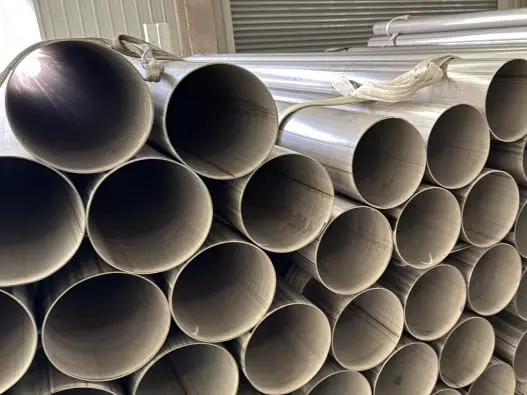
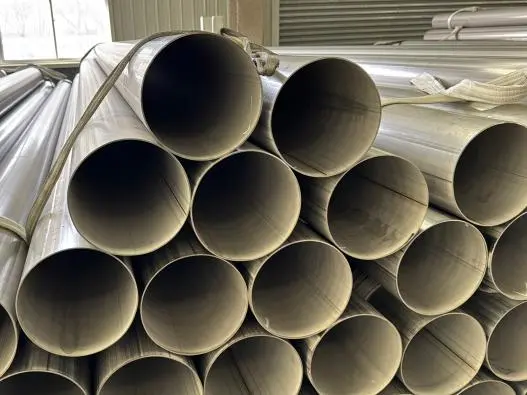
EN 10217-7 1.4306 Welded Stainless Steel Pipes are suitable for hygienic fluid handling when the grade, finish, welds, and documents match the process. The EN 10217-7 standard covers welded stainless steel tubes for pressure purposes. Grade 1.4306 is a low-carbon austenitic steel, close to 304L, and it resists corrosion in many food, beverage, pharmaceutical, and water systems. Its low carbon content helps weld zones keep their corrosion resistance. The standard does not set a sanitary finish, so buyers must also specify surface roughness, weld treatment, and cleaning conditions. In this guide, I explain what to check before you order.
|
|
|
Why 1.4306 Welded Stainless Steel Pipes Suit Hygienic Fluid Handling?
What EN 10217-7 and Grade 1.4306 Mean?
In Europe, EN 10217-7 is the standard for welded stainless steel tubes that are used for pressure. It lists the technical details of delivery, like the chemicals used, the mechanical properties, the tests, and the records of inspections. 1.4306, which is also written as X2CrNi19-11, is the steel grade from EN 10088. People in the US often compare it to 304L, but the limits can be a little different between standards, so make sure you look at the certificate. Each of these three things tells you something different. The rule tells you how to make and test the tube. The grade tells you about the metal. Standards for cleanliness can come from the project design or cleaning rules like ASME BPE. Some examples are how rough the surface is and how easy it is to clean.
Low Carbon Content and Weld Performance
Carbon is what makes them different. The most carbon that can be in grade 1.4306 is 0.030%, and the most carbon that can be in grade 1.4301 is 0.07%. Chromium carbides can form at the ends of the grains of austenitic steel when it is heated to between 450 and 850 °C during welding. It's called sensitization, and it makes these areas less chromium-rich and more likely to rust. When the carbon amount drops, that risk goes down. Rusty welds can hold germs and dirt in a clean line. Low carbon is important, but it's not enough to make something bond well. It's still important to add heat, protect with gas, and clean up after welding. Before we ship our welded pipes, we solution anneal them. This breaks down carbides and lowers the stress that comes from welding and joining.
Where Hygienic Buyers Use These Pipes?
Systems for food, drinks, dairy, drugs, and water are all part of handling hygienic fluids. From this point of view, the metal shouldn't flake off or rust because the pipe wall touches the thing being cleaned or the answer. In places with a lot of heat and pressure, like power plants, chemical plants, and pressure vessels, EN 10217-7 lines are also used. Power, process water, and cleaning lines that need the same kind of rust control are often found in plants that make new energy, electronics, cars, medical devices, and airplanes. A lot of mild media can work with level 1.4306. If you want to find chloride in hot, acidic, or salty fluids, I think you should look at 1.4404 or 1.4571 instead. The grade is based on what was done, not on who you are in the business.
EN 10217-7 1.4306 Pipe Specifications Buyers Should Check
Chemical Composition and Mechanical Data
First, look at the chemicals. Carbon shouldn't make up more than 0.030 percent of 1.4306, chromium should make up 18.0 to 20 percent, and nickel should make up 10.0 to 12 percent. Iron, silicon, phosphorus, sulfur, and nitrogen all have their own limits. Nickel keeps the austenitic structure steady, and chromium makes the film that covers the top and keeps it safe. The standard has tables that show mechanical properties such as elongation, yield strength, and tensile strength. These values change based on the item's shape. I believe the numbers on the mill test certificate should be used instead of general grade information. Make sure that the marks on the pipe and the amounts of heat written on the certificate match. Before the pipe gets to the shop where it's made, this simple check makes sure that the grades are correct.
Dimensions, Wall Thickness, and Tolerances
What you move, clean, and how well it fits with valves and joints depends on its size for EN 10217-7 1.4306 Welded Stainless Steel Pipes. YOUFA sells EN 10217-7 welding pipes that are up to 1219.2 mm (48 inches) in diameter. There is a set wall thickness for the walls, or the EN standard tells us how thick the walls should be. There are two kinds of ends: plain and beveled. If your crew is going to butt weld on the job site, bevels will help. About the tolerances in EN 10217-7, this is what your order should say. They change based on the size and tolerance class. Before production starts, you should agree in writing on things like tighter standards and a certain cut length. Send us your picture, and we'll see what we can do.
Grade Range, Delivery Condition, and Packaging
In line with EN 10217-7, we also have 1.4301, 1.4307, 1.4401, 1.4404, 1.4541, 1.4539, and 1.4571 available. You can get normal, low-carbon, molybdenum-containing, and stabilized options from the same source, thanks to this range. Pipes are solution-annealed and have a surface finish that is both pickled and annealed before they are shipped. To get rid of the oxide scale and make the surface ready to use, pickle it. Outside of the United States, pipes are sent in wooden boxes that can have a steel frame added if needed, or they are wrapped in triangle-shaped woven bags. Water, dirt, and damage from hits should not get on the pipe. This will help keep the work area clean.
Hygienic Surface Finish, Welding, and Corrosion Resistance
Surface Finish and Internal Roughness
Just because something meets the requirements of EN 10217-7 doesn't mean it is fully sanitary. Most of the time, clean projects add a surface requirement, such as an internal Ra value, a mechanical shine, or electropolishing. It is easier to clean a wall that is smoother because germs don't have as many places to stick to it. A lot of books, like the ASME BPE and EHEDG ones, have rules about what food, drug, and bioprocess equipment should have on its outside and how it should be built. Many times, we boil and anneal these pipes to make them smooth. In your request, be clear about what you need if your project needs a room that is clean or a certain Ra value. Before you place an order, we'll see how it matches up with what we can make.
Weld Quality and Weld Treatment
The weld seam runs the length of the pipe. This is what makes welding pipe different from pipe that doesn't have a seam. Too much of a weld bead in clean service can catch waste and make clean-in-place (CIP) processes take longer. So, projects need controlled weld beads that are either smooth on the inside and free of cracks or flush on the inside. Heat tint is the name for the change from green to blue near welds. It shows that there is a layer that has been oxidized and is less resistant to rust. Damage to that level is limited by proper procedures, steady heat intake, and inert gas protection. You can look over the welding process and its approval record by looking at the WPS/PQR papers we give you. Both orbital welding and field welding work the same way. Because the results are always the same, orbital welding is often best for pharmaceutical tube runs.
Chlorides, Temperature, and Cleaning Chemicals
Grade 1.4306 doesn't rust in mild water, food, or dairy, but it doesn't contain any molybdenum either. Chloride ions can cause pitting and fissure rust, and heat speeds up the attack. Another thing to think about is cleaning products that are hot, acidic, or harsh. Water that is high in chloride can pool in one spot because of dead ends and still areas. Before you sign off on the material, write down the chlorine level, the highest temperature, the cleaning chemicals, and the sterilization cycle. There is a number called PREN that makes it easy to see the differences. Because it has 2.0 to 2.5% molybdenum, grade 1.4404 is better than grade 1.4306. If you have proof of chlorine exposure, talk to us about 1.4404 or 1.4571.
Testing, Documentation, and Grade Comparison
Testing and Inspection
EN 10217-7 sets up two types of tests, which are called TC1 and TC2. The tighter non-destructive testing used by TC2 makes it the best choice for high-risk pressure service. Ultrasound (UT) testing, X-ray (RT) testing, eye and measurement checking, and hydraulic testing are all common types of tests. The risk and the goal will tell you which plan is best. Check to see if the test is done on each pipe, each batch, or just a part of the batch. Each one makes you feel more or less confident. A UT/RT report is on file with us, and our ISO 17025 lab can do testing. This test should match the planned pressure. It should also show how much a leak would cost, not just the price.
Certificates and Records
The EN 10217-7 1.4306 Welded Stainless Steel Pipes seem to be what they say they are. An EN 10204 Type 3.1 certificate comes from a manufacturer-approved inspection agent who does not work in the production area. In Type 3.2, the buyer's agent or a third-party inspector must sign off on the deal. We can send MTC/MTR in either form 3.1 or 3.2, and we can also help with TPI (third-party inspection). The other files include WPS/PQR, MPS, and UT/RT statistics. On a good certificate, you can find the heat number, chemical analysis, mechanical results, test results, readings, and ways to ship the goods. The company YOUFA has been approved by ISO 9001, PED, and TÜV. For customers who are going through quality checks or projects that use pressure tools, this is helpful.
Comparing 1.4306 with Other Stainless Steel Options
Because it has less carbon than 1.4301 (304), 1.4306 is better for welding and building over and over again. Because it doesn't have as much molybdenum as 1.4404 (316L), 1.4404 can handle chlorides better, but it costs more. The highest amount of carbon in Grade 1.4307 is 0.030 percent, and it's very close to that level. A lot of people in the US also want to know how EN 10217-7 compares to ASTM A312 for pipes and ASTM A270 for sanitary tubing. It's important to know which standard your code or customer needs because they have different names, sizes, tests, and certifications. If the plan calls for it, welded pipe is often smaller, cheaper, and easier to find than pipe that isn't welded. This is because the welds are of better quality, finish, and inspection.
How to Select and Buy EN 10217-7 1.4306 Pipes?
A Practical Selection Checklist
The fluid comes first in a sound selection, followed by the supplier. Making a list of the fluid's make-up, quantity, temperature, flow rate, cleaning chemicals, and chloride contact is the first step. The next step is to set the pressure code, temperature code, and design pressure code. The standard wall thickness should not be used as a pressure number. You should also think about how rough the inside is, how well it drains, and whether it works with instruments, pumps, valves, connections, and fittings. In the picture, make sure to mark any possible dead legs. They are tough to clean. Last but not least, write the RFQ that includes information about the grade, standard, size, number, level of tests, certificates, packaging, location, delivery date, and something else. The quote process goes faster when there is a complete RFQ.
Price, MOQ, and Delivery
Things' prices depend on many things, such as their width, wall thickness, volume, surface finish, testing, approval, shipping, packing, and more. Things that aren't standard sizes or shapes might go faster, but first they need to be planned out in terms of production. You can order at least one pipe from YOUFA. This is helpful for people who want to check out the store before they buy a lot. It takes seven days to get to Tianjin Port at the fastest. Plan your project so that the times for getting a quote, making the product, inspecting it, and shipping it are all separate. Also, learn the Incoterms as soon as possible. Some of the things you need to get goods through customs are a packing list, a commercial invoice, a certificate of origin, mill certificates, and inspection records. If you give us your idea, we'll make sure it works.
Why Work with YOUFA?
With 15 production lines, YOUFA has been around since 2017 and makes 50,000 tons of stainless steel pipes every year. In China, more than 200 people work for this Top 500 company. It has everything you need for stainless steel pipes. We work with industrial welding pipes, thin-wall pipes for building services, and heat exchanger tubes. We use well-known steel suppliers and management that makes it easy to keep an eye on the raw materials. Then we use special tools to make sure everything is okay. The teams for building, buying, quality, and shipping can all see things the same way if they work together. Anyone can help you set up the system right there if you want to. TÜV, ISO 9001, PED, and ISO 17025 lab have also given their approval.
Conclusion
It is safe to use EN 10217-7 1.4306 Welded Stainless Steel Pipes to handle fluids when the project needs more than just the standard and grade. By following EN 10217-7, you can make and test welded pressure tubes. 1.4306 is a low-carbon austenitic steel that stops weld zones from becoming sensitive. How the welds are handled, how the inside is finished, and how the item is cleaned can also change how clean it is. This grade might not work as well with chlorides, heat, and harsh cleaners. Use 1.4404 or 1.4571 instead. Anyone can be sure of the quality if there are TC1 or TC2 tests, EN 10204 certificates, and science that has been checked. If people carefully compare 1.4301, 1.4404, ASTM A312, and ASTM A270, along with a full RFQ, they can find the right pipe and avoid delays.
FAQ
Is 1.4306 the same as 304L?
A lot of the time, 304L is used to find grade 1.4306. As the rules change, the chemical limits may also change. Check the license to make sure the limits given are correct.
Can 1.4306 pipe handle food and pharmaceutical service?
It is clean enough for the job because of the paperwork, the quality of the welds, and how well they are done. First, make sure there is enough salt and stuff to clean up.
Does EN 10217-7 give a pressure rating?
Not at all. It tells you how to follow the rules for service. To find the pressure values, you need to know the right code, how thick the wall is, and how much stress can be handled at a certain temperature.
When should I choose 1.4404 instead?
If heavy chemicals, high temperatures, or strong cleaners make pitting more likely, you should pick 1.4404 instead. It is less likely to pit because it has molybdenum in it.
Which documents should I request?
Once you have an EN 10204 3.1 or 3.2 certificate, you can join records like WPS/PQR. Of course, we also do updates for UT and RT.
Request a Quote for EN 10217-7 1.4306 Welded Stainless Steel Pipes from YOUFA
Send an email to info@youfass.com with the grade, length, number, surface finish, testing level, and address where the product should be sent. We will then give you a price and tell you how to get it. We can send you EN 10217-7 1.4306 Welded Stainless Steel Pipes in as little as seven days. This is possible because we have 15 assembly lines. Our business also has the ISO 9001, PED, and TÜV marks. To find out more, go to youfass.com.
Online Message