
Sep 20, 2026
EN 10217-7 1.4301 Pipes for Reliable Industrial Fluid Systems
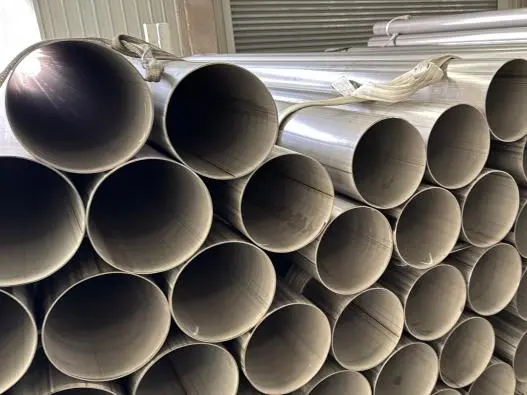
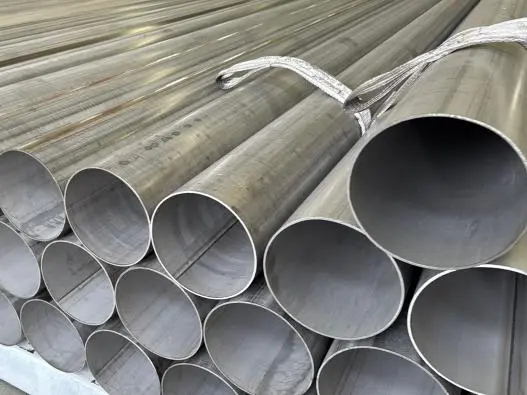
The European standard for welded circular stainless steel tubes made for pressure is EN 10217-7 1.4301 Welded Stainless Steel Pipes. Grade 1.4301, which is the European version of AISI 304, is a chromium-nickel austenitic metal that is widely used in power generation, chemical processing, and industrial pipes. These pipes fix common problems in business-to-business (B2B) communication: welds that don't stay together, corrosion that starts too soon in aggressive media, and not meeting the requirements of the Pressure Equipment Directive (PED). If your project needs to make sure that the pressure is safe and that the materials can be tracked back to their source, then 1.4301 soldered pipes under EN 10217-7 are the only way to go.
|
|
|
Understanding EN 10217-7 1.4301 Stainless Steel Pipes
What does the EN 10217-7 Standard Cover?
When it comes to pressure-service welded stainless steel tubes, the rules are set by EN 10217-7 1.4301 Welded Stainless Steel Pipes. The standard lists requirements for mechanical testing, weld quality, and dimensional tolerances. It works for several austenitic grades, such as 1.4301, 1.4404, 1.4541, and 1.4571. This means it can be used in a lot of different types of fluid system designs where keeping pressure in check and resisting rust are important.
Key Properties of Grade 1.4301
About 18% of Grade 1.4301 is chromium, and 8–10.5% is nickel. These two metals combine to make a passive oxide layer that protects against oxidation and light chemical attack. Its minimum yield strength is 210 MPa, and its tensile strength is usually between 520 and 720 MPa. The substance works well in temperatures ranging from very cold (cryogenic) to around 870°C (intermittent service), which makes it a good choice for many types of process fluids.
Manufacturing Process and Dimensional Range
YOUFA makes these pipes by continuously TIG or plasma welding them together and then solution heating them to recover the austenitic microstructure and get rid of any leftover weld stress. The outside diameter can be anywhere from 10.3 mm to 2,500 mm, and the wall thickness can be anywhere from 0.8 mm to 40 mm. The surface is pickled and hardened, and the ends can be left plain or bevelled. Pipes can be sent in either random or fixed lengths, depending on the needs of the project.
Comparing EN 10217-7 1.4301 Pipes with Alternative Stainless Steel Grades
Welded vs. Seamless: Performance and Cost Trade-offs
Some engineers think that higher pressure ratings come from longitudinal weld seams, but EN 10216-5 seamless pipes don't have them. In real life, current automatic welding and full non-destructive testing (NDT) can make structures that are just as strong but cost less to make. Although they are more expensive, EN 10217-7 1.4301 Welded Stainless Steel Pipes are the safer option for most industrial fluid applications that work within standard pressure-temperature ranges.
1.4301 vs. 1.4404: Choosing the Right Grade
Some engineers think that higher pressure ratings come from longitudinal weld seams, but EN 10216-5 seamless pipes don't have them. In real life, current automatic welding and full non-destructive testing (NDT) can make structures that are just as strong but cost less to make. Although they are more expensive, EN 10217-7 1.4301 Welded Stainless Steel Pipes are the safer option for most industrial fluid applications that work within standard pressure-temperature ranges.
Why ISO-Certified Sourcing Matters?
When you buy from makers that are ISO 9001-approved and run an ISO 17025-accredited lab, you can be sure that the mechanical test results, chemical makeup data, and weld inspection records can all be tracked down and checked by someone else. As standard, buyers should ask for Mill Test Certificates (MTC 3.1 or 3.2), Welding Procedure Specifications (WPS/PQR), and reports from ultrasonic or radiographic (UT/RT) inspections. These papers are needed to comply with the PED and get imports through customs, especially for projects in the US and Europe.
Procuring EN 10217-7 1.4301 Welded Stainless Steel Pipes: A B2B Buyer's Guide
Documentation and Certification Requirements
People who want to bring EN 10217-7 1.4301 Welded Stainless Steel Pipes into the US or an EU member state should make sure that the seller can give them the complete set of paperwork. As usual, YOUFA provides MTC/MTR (3.1/3.2), Third-Party Inspection (TPI) reports, WPS/PQR reports, Material Property Sheets (MPS) reports, and UT/RT reports. There is also TÜV certification and PED compliance paperwork available, which directly helps with project approval and customs handling delays.
MOQ, Lead Times, and Customization
One useful thing about YOUFA is that you only need to order one pipe to get started. This is great for pilot projects, repair orders, and specific engineering needs. Everyday orders can be sent out from Tianjin Port in as little as 7 days. YOUFA has 15 production lines and a yearly output of 50,000 tons, which helps make sure that big contracts are always met. Custom OD, wall thickness, and length configurations can be made to fit specific project needs without forcing buyers to use standard stock sizes.
Evaluating Suppliers for Long-Term Reliability
In addition to certificates, buying workers should look at a supplier's ability to produce, history of quality audits, and track record with similar projects. YOUFA is one of China's Top 500 companies and has more than 200 employees. They offer a complete service for buying stainless steel pipes, including expert help and project management. This structure lowers the chance of problems in the supply chain and makes managing vendors for big industrial contracts easier.
Technical Standards and Compliance Essentials for EN 10217-7 Pipes
Non-Destructive Testing and Weld Integrity
All EN 10217-7 1.4301 Welded Stainless Steel Pipes that are rated for pressure must go through non-destructive testing. Ultrasonic testing (UT) and radiographic testing (RT) are both acceptable methods that can find problems inside a weld that can't be seen with the naked eye. The tests are done in-house by YOUFA's ISO 17025-accredited laboratory, which sends written UT/RT reports with every shipment. For fuel cell pipe systems, chemical reactors, and pressure tank links, where a failed weld could be very dangerous, this level of testing tracking is very important.
Pressure Ratings and Traceability Marking
The standard reference, steel grade name, heat number, and maker identification are permanently marked on each pipe that is provided under EN 10217-7. This marking lets you fully track each batch from the final fitting all the way back to the steel heat that started it all. The standard's allowable stress tables are used to figure out the pressure ratings, and if needed, hydrostatic testing is used to confirm them. Buyers who work with PED-classified systems should ask for the relevant Declaration of Conformity to be sent along with the goods.
Global Compliance and Cross-Border Projects
Alignment between EN 10217-7 and ASME B36.19 dimensional standards is something that should be looked at for projects that need to follow rules from more than one jurisdiction. The standards have different ways of measuring and writing up information, but the mechanical qualities of 1.4301 meet the same performance standards. YOUFA's technical team can help with paperwork linking for projects that need to follow two different sets of rules. This cuts down on the time needed for review during the project clearance stages.
Applications and Performance of 1.4301 Welded Pipes in Industrial Fluid Systems
Chemical, Power, and Process Industries
EN 10217-7 1.4301 Welded Stainless Steel Pipes are reliable for long periods of time in power plants and chemical processing plants where they handle pressurized water, steam, and light chemical streams. The solution-annealed delivery condition and checked weld integrity mean that these pipes keep their shape and don't rust even after being heated and cooled many times, which is a problem that often happens in heat exchanger and reactor piping circuits.
Food, Pharmaceutical, and Water Treatment
The pickled and annealed surface finish of 1.4301 welded pipes meets the needs for clean fluid movement in the medicinal and food preparation industries. You can choose the internal weld bead shape to work with CIP cleaning methods. In city water treatment and HVAC cooling loops, the chromium-nickel mix stops rusting and cracking in settings with pressurized water. This means that carbon steel options don't need to be maintained as often, which saves money.
New Energy and Advanced Manufacturing
More and more, electrolyzer parts, battery module kits, and tools for making hydrogen need stainless steel pipes that can handle both acidic media and pressure loads at the same time. Grade 1.4301 meets the needs for rust protection and mechanical strength in systems that handle mildly acidic hydrogen. Under the same EN 10217-7 standard framework, YOUFA also offers grades 1.4404 and 1.4571 for uses that need higher chloride resistance, like some fuel cell cooling circuits.
Conclusion
EN 10217-7 1.4301 Welded Stainless Steel Pipes are a useful and well-known option for industrial fluid systems used in food production, power generation, chemical processing, and new energy. They are a good choice for procurement teams that need both performance and compliance because the weld integrity has been checked, documentation can be tracked, and they come in a wide range of sizes. Choosing a certified manufacturer with direct production capabilities and a full documentation package lowers the risk of buying something and keeps the project on schedule.
FAQ
What does EN 10217-7 1.4301 mean?
The European standard for welded circular stainless steel tubes used for pressure is EN 10217-7. The European number for grade 1.4301 is the same as the AISI 304 number for stainless steel. Together, they refer to EN 10217-7 1.4301 Welded Stainless Steel Pipes made of austenitic 18/8 chromium-nickel steel that can handle fluids that are acidic and high in temperature.
Is 1.4301 suitable for corrosive fluid systems?
Yes, in places where there isn't a lot of chloride. The passive chromium oxide layer in 1.4301 is very strong against oxidation, organic acids, and mild chemical attacks. For places with a lot of chloride, like seawater or concentrated salt solutions, grade 1.4404 or 1.4571 with molybdenum added is better.
What certifications should I request from a supplier?
For pressure-rated uses, you should at least ask for an MTC 3.1 or 3.2, WPS/PQR paperwork, UT/RT inspection records, and a PED Declaration of Conformity. The manufacturer's ISO 9001 and TÜV approvals show that the quality management system and production checks have been checked and approved by outside groups.
Are welded pipes comparable to seamless pipes in pressure service?
When it comes to the pressure and temperature ranges that most industrial fluid systems work in, EN 10217-7 welded pipes with full NDT are just as safe as seamless pipes. For purposes with very high-pressure applications, seamless pipes may be chosen, but PED rules allow confirmed welded pipes under EN 10217-7 for most industry uses.
Partner with YOUFA for Certified EN 10217-7 1.4301 Welded Stainless Steel Pipes
With 15 production lines, 50,000 tons of annual output, and a MOQ starting at one pipe, YOUFA is a TÜV-certified producer of EN 10217-7 1.4301 Welded Stainless Steel Pipes. We provide full paperwork (MTC, TPI, WPS/PQR, UT/RT), and we can ship from Tianjin Port in as little as 7 days. Contact our team today at info@youfass.com or visit youfass.com to request a quote or technical consultation.
Online Message