
Sep 21, 2026
Duplex S32205 Stainless Steel Pipe Supports Long-Term Industrial Operation
When industrial operations depend on piping that holds up under pressure, heat, and corrosive media, material selection becomes a defining decision. ASTM A928 Duplex S32205 Stainless Steel Pipe has earned a strong reputation across oil and gas, chemical processing, offshore, and marine industries precisely because it delivers where conventional stainless steels fall short. With a dual-phase microstructure—roughly equal parts austenite and ferrite—this alloy combines high tensile strength with strong resistance to pitting, crevice corrosion, and stress corrosion cracking, making it a dependable choice for systems that run for decades under demanding conditions.
|
|
|
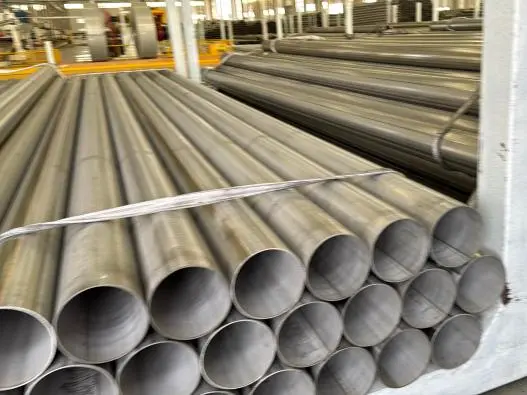
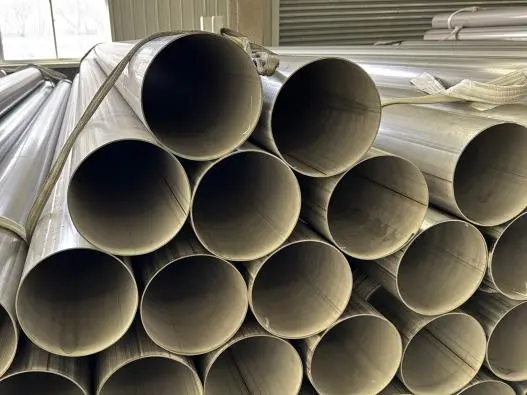
Understanding ASTM A928 Duplex S32205 Stainless Steel Pipe
What Is S32205 and How Is It Classified?
A type of duplex stainless steel, S32205, which is also called UNS S31803, is what ASTM says it is. ASTM A928 is for austenitic-ferritic stainless steel pipe that has been electric fusion welded (EFW) and is meant to be used in harsh and high-pressure settings. Its microstructure is balanced, which gives it qualities that neither pure austenitic nor pure ferritic metals can match on their own.
Chemical Composition and Mechanical Strength
Chromium makes up about 22% of S32205, nickel makes up 5–6%, and molybdenum makes up 3%. There is also 0.14 to 0.20% nitrogen in it. This mix makes steel that is at least 620 MPa strong in tension and 450 MPa strong in yield. It is about twice as strong as regular 316L stainless steel. When used in high-pressure systems, these numbers right away mean thinner walls and lighter materials.
Heat Treatment and Long-Term Durability
ASTM A928 Duplex S32205 Stainless Steel Pipes made to ASTM A928 are heated in a solution and then cooled in water. This heat process gets rid of the secondary stages that form when you weld, evens out the austenite and ferrite, and lowers any stress that is still there. This means that the pipe keeps its mechanical and corrosion resistance for a long time, even when it is in places with a lot of chloride or when the temperature at work changes.
Advantages of Duplex S32205 Stainless Steel Pipes in Industrial Applications
Resistance to Pitting, Crevice Corrosion, and SCC
Pitting Resistance Equivalent Number (PREN) for S32205 is usually around 34 to 36. ASTM A928 Duplex S32205 Stainless Steel Pipe makes it much better than 316L (PREN 24), and it can stop some rusting in saltwater, acid chloride, and seawater. It is common for high-temperature austenitic grades to fail in a way called stress corrosion cracking. This type of failure is well controlled by the ferritic phase in the twin structure.
Performance Comparison Against Common Alloys
This is how S32205 compares to other grades that are often used in industrial pipes:
- S32205 vs. 304 Stainless Steel: When you compare S32205 to 304 stainless steel, S32205 has almost twice the yield strength and is much less likely to rust when salt is present. Because of this, 304 shouldn't be used in chemical or offshore settings, where S32205 is the standard.
- S32205 vs. S31803: S32205 is a better version of S31803 because it has less nitrogen and chromium, which makes it more stable in real life when it comes to weathering. A lot of buy orders these days specifically ask for S32205.
- S32205 vs. Super Duplex 2507 (UNS S32750): You can choose between S32205 and Super Duplex 2507 (UNS S32750). Super Duplex 2507 has a PREN above 40 and works best in the toughest situations, but S32205 is still the cheapest option for most business uses.
Real-World Application Areas
ASTM A928 Duplex S32205 Stainless Steel Pipes are used in a lot of dangerous scenarios. Oil and gas offshore flowlines use these pipes to move high-pressure fuels in salty places where they need to be resistant to CO2 and H2S. In plants that process chemicals and evaporate water, large-diameter S32205 lines move brine and process fluids where 316L grades would break down in months. Marine scrubber systems and cleaning circuits for paper and wood also depend on this grade to handle acidic condensate and corrosive process liquors over long service periods.
Manufacturing and Quality Standards of ASTM A928 S32205 Pipes
Electric Fusion Welding and Material Traceability
A controlled electric fusion welding method is used by YOUFA to make S32205 EFW pipes from checked plate stock. There are protocols in place to make sure that the raw materials can be tracked, and each heat is checked for chemical compliance before it is formed. Between runs, this method lessens the differences and helps with full material approval from the plate mill to the finished pipe.
Testing and Inspection Protocols
Every pipe is checked several times before it is sent out. ASTM A928 Duplex S32205 Stainless Steel Pipe: The strength of the weld is checked with ultrasonic testing (UT) or radiographic testing (RT). Hydrostatic tests show that the pressure holds. It has been shown through chemical and mechanical tests that each pipe meets the requirements of ASTM A928. Reports from the MTC/MTR (3.1/3.2), WPS/PQR, TPI, MPS, and UT/RT projects are among the documents that are available. This is enough for most international projects.
Certifications That Procurement Teams Can Rely On
YOUFA's labs are approved by TÜV, ISO 9001, PED, and ISO 17025. All of these qualifications do more than just look good; they mean that a third party is actively watching over the making and testing process. You can quickly check out sources with this stack of certifications. It also gives project managers the audit trail they need for big building projects in North America or Europe.
Procurement Insights: How to Choose and Source Duplex S32205 Pipes?
Key Supplier Qualification Criteria
Selecting an ASTM A928 Duplex S32205 Stainless Steel Pipe supplier based on price alone is not advisable. People who want to buy should make sure that the seller has up-to-date third-party certifications, can send full paperwork packages, and has sent large-diameter EFW pipe to foreign projects in the past. Before you buy something, you should also make sure that it can be made with different OD ranges, wall thicknesses, or end styles.
Product Specifications to Confirm Before Ordering
The following are things that YOUFA's S32205 EFW pipes can do:
- Grades: Super Duplex 2507 (UNS S32750) and Duplex 2205 (UNS S32205/S31803)
- OD: 114.3 mm to 2,500 mm
- Wall Thickness: 3 mm to 50 mm
- Surface Finish: Pickled and then heated
- End Finish: Plain end or beveled end
- Length: Random or fixed length
- Packaging: Wooden box (with steel frame as an option), hexagonal binding, and woven bag
MOQ, Lead Time, and Delivery Options
Good thing about working with YOUFA is that you only need to order one pipe to begin. ASTM A928 Duplex S32205 Stainless Steel Pipe is suitable for both small projects and big purchases. There are 15 production lines that can make 50,000 tons of goods every year. The best way to get to Tianjin Port is in seven days. This means that service limits don't slow down the plan for projects.
Industry Best Practices and Future Outlook for Duplex S32205 Pipes
Maintenance and Inspection Intervals
It is good to check S32205 pipes that are already in use visually and audibly on a regular basis. This is especially important at welds and joints where flow turbulence and mechanical stress build up. When there is a lot of chloride in the air, skilled workers check the equipment every 12 to 18 months. Taking measurements of wall thickness over time can help maintenance teams find signs of wall failure before they happen.
Repair and Re-Heat Treatment Guidelines
Re-solution annealing and water cooling should be done on a piece of S32205 pipe that has been welded to fix it and bring back the duplex microstructure. The heat-affected zone could turn into the sigma phase if you don't do this step. This makes the material less tough and less resistant to rust. You should always follow a qualified WPS/PQR that the maker keeps on file when you weld on a fix.
Growing Demand in Renewable Energy and Sustainable Industries
More duplex stainless steel lines are being bought because of the push around the world for infrastructure for making green hydrogen, offshore wind, and desalination. Materials that don't rust or wear out quickly are needed for electrolysis systems and hydrogen transfer lines, and S32205 always meets these needs. As the construction and food businesses grow in North America and Europe after 2025, the need for approved EFW duplex pipe is likely to slowly rise.
Conclusion
Duplex S32205 stainless steel pipe works better than other types of pipe when rust, pressure, and service life are the most important things. At the moment, it is one of the most sought-after pipe materials in the industrial world thanks to its high PREN value, dual-phase structure, and track record in the chemical, marine, oil and gas, and new green energy industries. ASTM A928 Duplex S32205 Stainless Steel Pipe is less risky and costs less overall if it comes from a certified manufacturer that can give full documentation. Teams that want to make their pipe systems last for a long time should always use S32205.
FAQ
What is ASTM A928 S32205 pipe used for?
Chemical processing equipment, ocean flowlines, purification systems, and marine scrubbers are just a few of the things that ASTM A928 Duplex S32205 Stainless Steel Pipe is used for. It is often used in places where 316L or 304 grades would break down too quickly because it is strong and doesn't rust.
How does S32205 resist corrosion better than 304 stainless steel?
About 22% of S32205 is chromium, 3% is molybdenum, and 0.14 to 0.20% is nitrogen. 304, on the other hand, has only 18% chromium and no molybdenum. Because it has molybdenum and nitrogen, it is much less likely to pit and crack rust in salt environments, where 304 is known to fail.
What do solution annealing and water quenching do for this pipe grade?
When you join, intermetallic phases form. The heat treatment gets rid of them, brings austenite and ferrite back to the desired 50/50 balance, and lowers the stress inside the metal. In this way, a pipe is made that doesn't rust and has the same mechanical properties all the way through.
What certifications should I require from my supplier?
At the very least, you should look for certifications from ISO 9001, PED, ISO 17025 labs, and TÜV. For the records of your project, you should get results on MTC/MTR (3.1/3.2), WPS/PQR, TPI, and UT/RT that test and tracking.
Partner with YOUFA for Certified Duplex S32205 Pipe Supply
YOUFA is one of the top 500 companies in China. Each year, its 15 production lines make 50,000 tons of stainless steel pipe. YOUFA is a qualified ASTM A928 Duplex S32205 Stainless Steel Pipe maker that offers full paperwork, flexible order numbers starting at one pipe, and the fastest shipping to Tianjin Port in just seven days. You can get a price and talk about your project needs at youfass.com or info@youfass.com.
Online Message