
Oct 12, 2026
Duplex 2507 EFW Pipe Delivers Reliable Performance in Chemical Plants
When chemical plants face aggressive media, high pressures, and the constant threat of corrosion, the piping material they choose can determine whether operations run safely for decades — or fail prematurely. The ASTM A928 Electric Fusion Welded Duplex 2507 Pipe has earned a strong reputation in chemical processing environments for exactly this reason. With a balanced duplex microstructure and a proven electric fusion welding process, this pipe grade handles what standard stainless steels simply cannot.
|
|
|
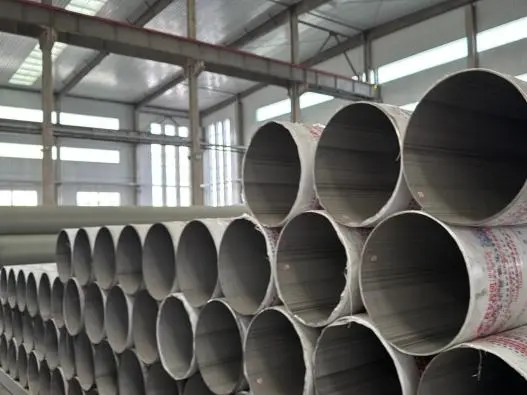
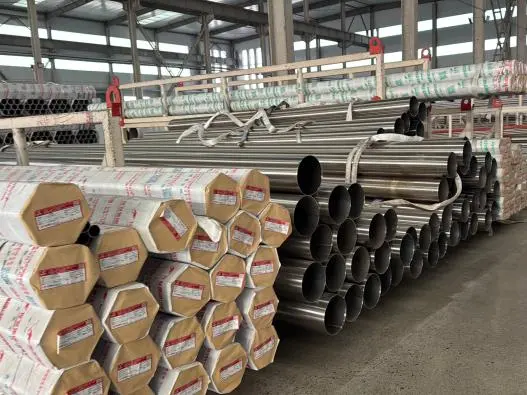
Understanding ASTM A928 Electric Fusion Welded Duplex 2507 Pipe
What Does ASTM A928 Actually Cover?
ASTM A928 Electric Fusion Welded Duplex 2507 Pipe is the standard for pipe made of austenitic and duplex stainless steel that is welded using electric fusion. It's not the same as ASTM A790, which covers both seamless and regular welded pipe. Under A928, the EFW method uses filler metal and controlled heat to make weld joints with consistent depth and metallurgical integrity. This is especially important for chemical service pipes with bigger diameters.
Chemical Composition and Microstructure
About 25% of Super Duplex 2507 (UNS S32750) is chromium, 7% is nickel, 4% is molybdenum, and 0.28% is nitrogen. There are equal amounts of ferrite and austenite phases in this mixture. The austenite phase makes the metal tough, and the ferrite phase makes it very strong. They make a material that is much stronger than normal duplex grades like 2205 because its Pitting Resistance Equivalent Number (PREN) is higher than 42.
Why the EFW Method Matters?
Electric fusion welding joins two pieces of plate material together using automated arc welding and filler that is added under very strict controls. The pipe has a full-penetration weld and a heat-affected zone that can be fixed by annealing it in a solution after the weld and quenching it with water. This thermal treatment fixes the imbalance of the duplex phases that was thrown off during welding. This keeps the corrosion resistance high all along the weld zone.
Why Choose Duplex 2507 EFW Pipes for Chemical Plants?
Corrosion Resistance That Holds Under Pressure
Chemical companies often work with media that are high in chloride, streams of sulfuric acid, and liquids of phosphoric acid. ASTM A928 Electric Fusion Welded Duplex 2507 Pipe is much better at stopping stress corrosion cracking (SCC), pitting corrosion, and crevice corrosion than 316L or even 2205 duplex types. It has a lot of molybdenum and nitrogen, which actively stop localized rust, which is the most common way that chemical pipe systems fail.
Mechanical Strength in High-Temperature Service
The minimum yield strength of ASTM A928 Electric Fusion Welded Duplex 2507 Pipe is about 550 MPa, which is about twice as high as the minimum yield strength of austenitic 316L stainless steel. This lets engineers ask for thinner wall sections while keeping the same pressure ratings. This lowers the weight of the material without putting safety at risk. This strength-to-weight ratio leads to measurable design benefits in heat exchanger and reactor piping.
EFW Weld Integrity vs. Seamless and TIG Welded Alternatives
Here are three reasons why EFW construction works well for large-diameter chemical plant pipe:
- Consistent weld geometry: Automated EFW creates regular bead profiles along the entire length of the pipe. This lowers the chance of partial fusion that can happen when TIG welding by hand on large sizes.
- Post-weld heat treatment compliance: ASTM A928 says that EFW pipes need to be solution annealed and water quenched. This gets rid of sensitization and restores corrosion resistance in the weld metal and heat-affected zone.
- Large diameter availability: OD ranges for EFW manufacturing go from 114.3 mm to 2500 mm, which are sizes that seamless manufacturing can't afford to go to.
Because of these factors, EFW construction is the best choice for main process headers, reactor feed lines, and high-flow chemical transfer systems.
ASTM A928 Duplex 2507 Pipe vs. Other Duplex and Stainless Steel Pipes
Duplex 2507 vs. Duplex 2205
Duplex 2205 (UNS S32205) is a common grade of duplex steel that has a PREN of 34 to 36. It works well in places with modest salt levels. But ASTM A928 Electric Fusion Welded Duplex 2507 Pipe is clearly better because it has more molybdenum and chromium, which makes it better in acidic chemical streams or strong chloride service above 40°C. There is a cost trade-off: 2507 usually costs 20–30% more than 2205. For important chemical service, this extra cost is worth it because the parts will last longer and need less upkeep.
Duplex 2507 vs. Stainless Steel 316L
The PREN for stainless steel 316L is between 24 and 26. It works well in mild chemical conditions, but it can be damaged by SCC in chloride-containing liquids at high temperatures. Chemical plants that put 316L pipes in aggressive service at the start often have to replace them too soon. Even though the material cost is higher at first, switching to Super Duplex 2507 piping lowers the number of times it needs to be replaced and the total cost over its lifetime.
EFW vs. Seamless: Which Process Fits Your Project?
If you need a certain diameter and a certain pressure class, you can choose between EFW and seamless pipe. Seamless pipe works well for uses with small sizes and very high pressures. When the diameter gets bigger and seamless production is either not possible or too expensive, EFW becomes the best choice. As per ASTM A928, there are five classes of weld quality (Class 1 through Class 5). These classes let engineers fit the amount of radiographic inspection and the shape of the weld to the needs of the service.
Procurement Guide for ASTM A928 Electric Fusion Welded Duplex 2507 Pipes
Key Specifications to Confirm Before Ordering
Before buying ASTM A928 Electric Fusion Welded Duplex 2507 Pipes from any supplier, procurement teams should make sure of the following:
- Grade and UNS number: Make sure that Super Duplex 2507 has the UNS number S32750.
- OD and wall thickness: OD ranges from 114.3 mm to 2500 mm, and wall thickness ranges from 3 mm to 50 mm.
- Heat treatment: solution annealed and water cooled, as ASTM A928 says it must be done.
- Testing: RT/UT, X-rays, a hydrostatic test, mechanical tests, and chemical tests according to ASTM standards.
- Documentation: For proof, you need a Mill Test Certificate (MTC/MTR) 3.1 or 3.2, a WPS/PQR, TPI inspection reports, and UT/RT reports.
By confirming these points up front, you can avoid specification errors and delivery delays.
Certifications and Supplier Credibility
A good provider of ASTM A928 Electric Fusion Welded Duplex 2507 Pipe should have ISO 9001 quality management certification, PED compliance for European markets, ISO 17025-approved laboratory testing, and TÜV certification. The supplier's qualifications show that their manufacturing process, testing methods, and recording practices are in line with international standards, not just what they say on their own website.
MOQ, Delivery, and Packaging
One useful thing about buying from YOUFA is that you only need to order one pipe to start. This helps with smaller project needs and test orders that don't require big cash investments. It is possible to get to Tianjin Port as quickly as seven days. For safety during shipping, wooden boxes with steel frames are sometimes used, along with hexagonal bound and woven bags.
Technical Support and Best Practices for Duplex 2507 EFW Pipes
Welding and Heat Input Control
When installing ASTM A928 Electric Fusion Welded Duplex 2507 Pipe in the field, the welding steps must be in line with approved WPS/PQR documentation. To keep heat input in a limited range (usually 0.5 to 2.0 kJ/mm), either too little or too much ferrite or sigma phase must not form. Both of these things make things less tough and resistant to rust. The temperature between passes shouldn't be higher than 150°C. Filler metals should only be used if they have the same composition or a slightly higher amount of an alloy.
Inspection and Maintenance Protocols
Once everything is set up, the people who run chemical plants should set up a basic inspection schedule that includes:
- Visual weld inspection and dimensional verification at commissioning: Checking the dimensions and visually inspecting the welds during commissioning.
- Periodic UT or RT checks on weld zones in high-flow or turbulent service areas: Regular UT or RT checks on weld areas in service areas with a lot of flow or rough air.
- Corrosion monitoring at chloride-exposed sections: Checking for corrosion in areas exposed to salt, especially when process temperatures are higher than 60°C.
Finding rust start points early on stops isolated failures from spreading and shutting down the whole system.
Operating Temperature Limits
In chemical service, Super Duplex 2507 works well between -50°C and +300°C. Above 300°C, the formation of the sigma phase increases over time, which lowers the hardness against impact. Austenitic grades are better for use in cold situations below -50°C. If you keep the pipe in the recommended operating range, it will keep working well for a long time without needing any extra care.
Conclusion
When made to ASTM A928 standards, ASTM A928 Electric Fusion Welded Duplex 2507 Pipe really does perform better in chemical plants where corrosion, pressure, and thermal stress are always problems. It can be used for process headers, heat exchanger lines, and reactor feed systems because it has a high PREN value, a duplex microstructure, and controlled EFW manufacturing. This grade has longer service intervals and lower lifecycle costs in aggressive media compared to 316L or 2205 grades. With the right installation, heat treatment, and inspection methods, Super Duplex 2507 piping can keep a chemical plant running safely and continuously for a long time.
FAQ
What is the difference between ASTM A928 and A790 for Duplex 2507?
Standard welded and seamless pipe are covered by ASTM A790. Electric fusion-welded pipe with filler metal is covered by ASTM A928. This is usually for larger diameters and defined weld quality classes.
Why is heat input control critical during EFW welding of Duplex 2507?
When too much heat is applied, the sigma phase precipitates, which makes the material less tough. Too little heat input leads to too much ferrite content. Both of these conditions make corrosion resistance and mechanical performance worse.
Can Duplex 2507 EFW pipes be used in cryogenic service?
It is common for these lines to be rated to -50°C. For real cryogenic uses below that temperature, austenitic types are the best choice.
How is PREN calculated and verified for supplied pipe?
The formula for figuring out PREN is %Cr + 3.3(%Mo + 0.5%W) + 16%N. It is based on the chemical analysis given in the Mill Test Certificate (MTC).
What ASTM A928 weld classes are available?
Class 1 is fully X-rayed and double-welded. Class 2 is welded twice without X-rays. Class 3 is fully X-rayed and has only one weld. Different amounts of spot radiography and heat treatment are needed for Classes 4 and 5.
Get Your ASTM A928 Duplex 2507 EFW Pipe Quote from YOUFA Today
Youfa Stainless Steel Pipe Co., Ltd. has 15 production lines that make 50,000 tons of steel each year. They are certified by ISO 9001, PED, TÜV, and ISO 17025. If you need an ASTM A928 Electric Fusion Welded Duplex 2507 Pipe, we can send you one right away, and it will be at Tianjin Port in seven days. You can email our technical team at info@youfass.com or go to youfass.com to get price information, specs, or a unique quote.
Online Message