
Oct 10, 2026
Duplex 2205 EFW Steel Pipe Supports Chemical and Energy Applications
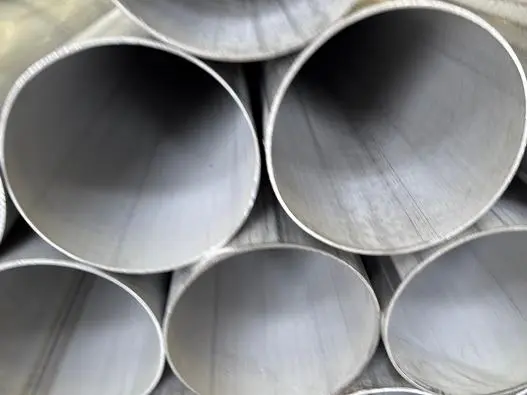
When engineers and procurement managers face the challenge of selecting piping for aggressive chemical or high-pressure energy environments, material choice directly affects system safety, maintenance costs, and service life. ASTM A928 Duplex 2205 EFW Steel Pipe has become a preferred specification in these sectors precisely because it addresses the three most common failure drivers—chloride-induced stress corrosion cracking, localized pitting, and mechanical fatigue. With a balanced ferritic-austenitic microstructure and Electric Fusion Welded construction, this pipe grade delivers roughly twice the yield strength of standard 316L stainless steel while maintaining reliable performance in chloride-rich or chemically active process streams.
|
|
|
Understanding Duplex 2205 EFW Steel Pipe Properties
Chemical Composition and Alloying Logic
About 22% of Duplex 2205 (UNS S32205 / S31803) is chromium, 5% is nickel, 3% is molybdenum, and 0.17% is nitrogen. Chromium and molybdenum form an oxide layer that doesn't pit when chloride is present. Nitrogen makes the austenite phase more stable and raises the pitting resistance equivalent number (PREN) to over 34, which is a lot higher than the normal PREN of 24 for 316L. Because of this, the alloy works well in places where regular grades don't work, like acid-wash systems, brine pipes, and remote process lines.
Mechanical Performance
According to ASTM A928 standards, the duplex microstructure gives it a minimum yield strength of 450 MPa and a tensile strength of 620 MPa. These are about twice as high as the values for 304 stainless steel. Impact toughness is still good down to about -46°C, and fatigue resistance in corrosive media is better than that of single-phase austenitic grades. Because of these mechanical qualities, engineers can specify smaller wall sections without lowering the pressure rating. This lowers the weight of the materials and the total cost of installation for large-diameter systems.
Heat Treatment and Microstructure Stability
Solution: Any intermetallic phases, like the sigma phase, that form during welding can be broken up by heating and then cooling in water. After Electric Fusion Welding, YOUFA's production method uses this heat treatment to make sure the end pipe has a stable 50/50 ferrite-austenite phase balance. Without this step, the formation of the sigma phase above 475°C can make the material less tough by more than 50%. Certified UT/RT weld inspection and hydraulic tests make sure that the material is sound before shipment.
How Duplex 2205 EFW Pipes Support Chemical and Energy Applications?
Operating Conditions That Demand This Grade
In chemical processing plants and energy facilities, pipes are put under a lot of mechanical stress, high temperatures, and aggressive media all at the same time. This makes lower-grade alloys break down too soon. In desalination brine circuits, the amount of chlorine can be higher than 35,000 ppm. Gas and oil flowlines in the ocean move CO2 and H2S at pressures above 100 bar. Marine scrubbers deal with vapor that is acidic and has a pH level below 2. In each case, you need a material that can stand up to both general rust and targeted attack at the same time.
Real-World Application Examples
These needs are met by ASTM A928 Duplex 2205 EFW Steel Pipe in many fields. This specification works consistently in the following three areas, as shown in the documentation:
- Subsea and offshore flowlines: The pipe manages high-pressure hydrocarbons in saline environments where H₂S and CO₂ partial pressures exceed NACE MR0175 thresholds. Its stress corrosion cracking resistance eliminates the premature failures seen with 316L in sour service.
- Desalination and chemical reactors: Large-diameter brine piping and heat exchanger headers in reverse osmosis plants experience both high flow velocity and elevated chloride concentration. The 2205 grade withstands both without wall thinning, whereas 316L grades would corrode within 18–24 months.
- Pulp/paper bleaching and marine scrubbers: The pipe handles corrosive white liquor and acidic flue gas condensate. Its higher yield strength allows thinner walls compared to 317L, reducing structural weight in complex vessel designs.
All of these uses have one thing in common: the pipe has to work without stopping for no reason. That need is met by Duplex 2205 EFW pipe, whose material qualities are checked at every stage of production.
EFW Manufacturing Process and Quality Assurance
When filler metal is added under controlled conditions during electric fusion welding, plate edges are joined. This creates a full-penetration joint that fits the chemistry of the parent material. YOUFA makes EFW pipe with walls that are 3 mm thick up to 50 mm thick and ODs that range from 114.3 mm to 2500 mm. Every pipe goes through an RT or UT weld check, hydraulic testing, and chemical and mechanical checks. There is documentation available for MTC/MTR (3.1/3.2), WPS/PQR, TPI reports, and UT/RT records. These are the kinds of records that project engineers and third-party inspectors usually need.
Comparing Duplex 2205 EFW Pipe with Alternatives
Duplex 2205 vs. 304 and 316 Stainless Steel
Many people use Grade 316L, but its PREN of about 24 makes it easy for pitting to happen at chloride levels above 1,000 ppm and for stress corrosion cracking to happen above 60°C. Grade 304 is even weaker and less resistant to rust. Duplex 2205 weighs more and costs more per kilogram, but because it is stronger, the wall thickness can be lessened. When you add up the total cost of each job, including the weight of the materials, the work needed to install them, and how often they need to be replaced, 2205 usually has a lower lifecycle cost in corrosive service.
EFW vs. Seamless vs. ERW
Seamless pipe doesn't have a weld line and can be used in high-pressure situations with smaller sizes. Because the heat-affected zone composition is different from the parent metal, ERW (Electric Resistance Welded) pipe isn't good for aggressive corrosive service. This is because it doesn't use a filler metal. Adding filler metal and solution heating to EFW pipe fixes the chemistry and phase balance of the weld zone. EFW, according to ASTM A928, is the best and most cost-effective choice for large-diameter acidic work, especially above OD 300 mm.
Duplex 2205 vs. Super Duplex 2507
It is made of Super Duplex 2507 (UNS S32750), which has a PREN above 42 and works well in harsh conditions like subsea injection lines with high levels of salt and hydrogen sulfide. 2507, on the other hand, costs 20–30% more than 2205. In most chemical processes and onshore/nearshore energy uses, ASTM A928 Duplex 2205 EFW Steel Pipe is the best choice because it is resistant to corrosion, strong, and cheap to buy. YOUFA sells both types, so buyers can choose the one that best fits their needs based on how the product will be used.
Procurement Guide for ASTM A928 Duplex 2205 EFW Steel Pipe
Defining Requirements Before Ordering
Before calling a supplier, procurement managers should make sure they know the OD, wall thickness, length, end finish (plain or beveled), and heat treatment needs. The amount of chloride present, the temperature, the pressure, and the pH of the medium all affect whether 2205 is enough or 2507. YOUFA's MOQ is just one pipe, so project teams can order sample sizes before committing to full project numbers.
Supplier Verification and Certifications
Technical and business risk are lower when you choose a certified supplier. Check that the company has ISO 9001 quality management certification, PED compliance for pressure equipment sold in Europe or other countries, ISO 17025 laboratory accreditation for testing done in-house, and TÜV certification. YOUFA has all four and can show full proof of where every order came from for every customer. Standard things can be delivered from Tianjin Port in as little as 7 days, which helps meet tight project deadlines.
Logistics and Quality Verification
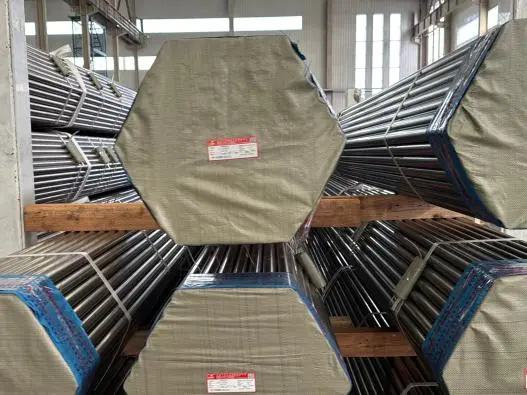
If possible, ask for MTC/MTR reports (3.1 or 3.2 according to EN 10204), WPS/PQR paperwork, and UT/RT weld test records. Pipes are kept safe during ocean freight by putting them in wooden boxes with steel frames or hexagonal binding. Early in the procurement process, make sure you know the INCOTERMS, the port of arrival, and any export license needs. This will help you stay on schedule.
Installation and Maintenance Best Practices for Duplex 2205 EFW Pipes
Welding and Post-Weld Procedures
When you weld duplex stainless steel in the field, you need to use an over-alloyed filler metal. For 2205, the usual choice is ER2209 with 7–9% nickel. To keep the sigma phase from forming, the interpass temperature must stay below 150°C. After the weld, pickling and passivation are used to restore the passive oxide layer on the weld zone and heat-affected area. ASTM A380 and A967 go into more detail about this step.
Handling and Storage
Keep pipes off the ground on supports that won't get dirty. Stay away from carbon steel because it contains iron and leaves rust stains on the surface. Keep the end caps in place until they are installed to keep the inside clean. Youfa's pickled and annealed surface finish doesn't need any extra surface preparation before fitting in most chemical settings.
Inspection and Corrosion Monitoring
Set up a baseline inspection within the first year of service that uses ultrasonic thickness measurement at known points of reference. Every six months, in places with a lot of chloride, the flange sides and support points should be looked at visually for crevice rust. Record all readings of wall thickness to keep track of corrosion rates and get a good idea of how much service life is left.
Conclusion
Standard austenitic stainless steels can't handle high chloride concentrations, stress corrosion cracking risks, and loads that are both mechanical and corrosive. ASTM A928 Duplex 2205 EFW Steel Pipe can. It is a good choice for chemical processing, desalination, offshore energy, and marine uses because it has a balanced microstructure, a solution-annealed weld joint, and known mechanical properties.
FAQ
What is the difference between ASTM A928 and ASTM A790?
ASTM A790 covers seamless and standard welded stainless pipe in duplex grades. ASTM A928 specifically governs Electric Fusion Welded pipe with filler metal addition, generally applied to larger diameters. A928 includes classification by weld examination class—Class 1 requires full radiographic testing, while Class 2 does not. The choice between them depends on diameter, pressure rating, and the inspection level required by the project specification.
Does the EFW weld seam reduce corrosion resistance?
A properly solution-annealed and water-quenched EFW seam matches the parent metal's corrosion resistance. The risk arises when welding produces intermetallic sigma phase that depletes chromium in adjacent zones. Post-weld solution annealing dissolves sigma phase and restores the correct austenite-ferrite balance, which is why this heat treatment step is not optional for corrosive service.
Can Duplex 2205 EFW pipe be used above 315°C?
No. Prolonged exposure above 300–315°C risks 475°C embrittlement, which reduces toughness significantly. For higher temperature service, alternative alloys should be evaluated. Duplex 2205 remains a strong choice for the temperature range that covers most chemical and offshore energy applications.
Is Duplex 2205 suitable for hydrogen production equipment?
Yes, within temperature and pressure limits. Its resistance to chloride-induced corrosion makes it suitable for electrolysis system piping exposed to process water and aggressive electrolyte environments, provided operating temperatures remain within the alloy's safe range.
Get a Quote for ASTM A928 Duplex 2205 EFW Steel Pipe from YOUFA
Youfa Stainless Steel Pipe Co., Ltd. has 15 production lines that make 50,000 tons of steel each year. The company is certified by ISO 9001, PED, ISO 17025, and TÜV. We are a certified provider of ASTM A928 Duplex 2205 EFW Steel Pipe and offer full paperwork, such as MTC/MTR 3.1/3.2, WPS/PQR, and UT/RT reports. The MOQ is just one pipe, and you can get it delivered to Tianjin Port in as little as seven days. To get a reasonable price right away, email your requirements to info@youfass.com or go to youfass.com.
Online Message