Oct 23, 2026
Does EN 10217-7 1.4571 Stainless Steel Pipe Provide the Durability Needed for Corrosive Media?
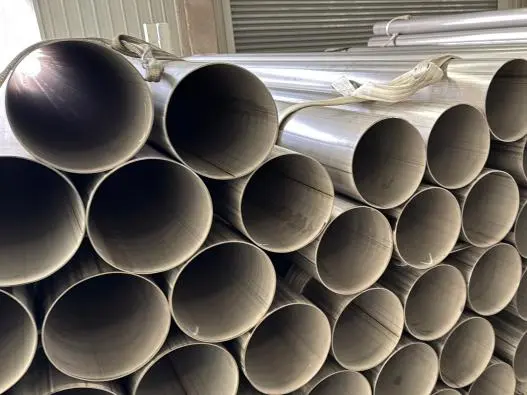
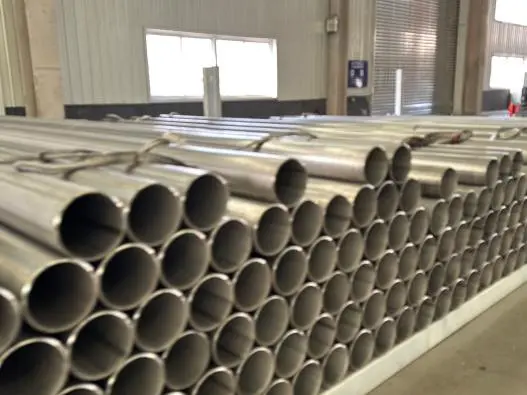
Yes — the EN 10217-7 1.4571 stainless steel pipe delivers genuine durability in corrosive media. Grade 1.4571, also called AISI 316Ti or X6CrNiMoTi17-12-2, is a titanium-stabilized austenitic steel designed specifically for welded pressure pipe applications. Its chemistry — 16.5–18.5% chromium, 10.5–13.5% nickel, 2.0–2.5% molybdenum, and titanium at 5×C to 0.70% — produces a Pitting Resistance Equivalent Number (PREN) of roughly 23–26. That combination resists chloride pitting, intergranular attack, and elevated-temperature creep in ways that standard 304 or even 316L cannot match.
|
|
|
Understanding EN 10217-7 1.4571 Stainless Steel Pipe and Its Properties
What the EN 10217-7 Standard Actually Covers?
In Europe, EN 10217-7 is the standard for welded stainless steel tubes that are used for pressure. It has a list of technical standards, the size tolerances that are allowed, and the types of tests that can be done. For general use, there is TC1, and for full non-destructive testing (NDT) of the weld seam to get v = 1.0, there is TC2. When working out pressure, pipes made under TC2 are the same as pipes that are not joined together. This is very important when a lot is at stake, like in chemical or energy work.
Chemical Composition and Mechanical Performance
Only 1.4571 has one titanium atom, which is what makes it unique. When titanium joins free carbon during welding, chromium carbide doesn't form at the edges of grains. This stops intergranular rust (sensitization) from happening. The pipe has a base yield strength (Rp0.2) of 210 MPa and a maximum tensile strength (Rm) of 500–700 MPa when it is by itself. It can still be used in places where temperatures change a lot because its creep strength is good up to 800°C.
How Does 1.4571 Compare With 304 and 1.4435 in Corrosive Media?
Grade 304 doesn't work well against chlorides because it doesn't have any molybdenum in it. Most of the time, Grade 1.4435 (316L low-carbon) doesn't rust, but it doesn't have any titanium stabilization, so weld zones can become sensitive to repeated heat cycles. The score of 1.4571 is in the middle. It is less expensive than high-nickel alloys but lasts longer than 304. In welded parts that will be in acidic, alkaline, or salty environments, it works just as well as, or even better than, 316L.
Comparing EN 10217-7 1.4571 With Alternative Stainless Steel Pipe Standards
EN 10217-7 Welded vs. EN 10216-5 Seamless Pipes
Pressure tubes made of smooth stainless steel are discussed in EN 10216-5. Because it doesn't have any weld seams, some engineers like seamless construction for use in very high-pressure jobs. But EN 10217-7 TC2 pipes that have been fully inspected by NDT and welded have the same pressure values but cost less per meter. Because of this, they are the best choice for most chemical, energy, and process plumbing jobs that need to be done quickly and cheaply.
Grade 1.4571 vs. Grade 1.4435: Choosing the Right Alloy
Molybdenum is added to both types, but 1.4435 only needs a very small amount of carbon (≤0.020%) to keep it from being too sensitive. The chemical fix in EN 10217-7 1.4571 Stainless Steel Pipe, on the other hand, is titanium stabilization. This works better when the pipes are fixed in the field or welded more than once. For machines that make hydrogen, fuel cell systems, or electroplating lines that go through a lot of temperature changes, 1.4571 is the more stable choice.
EN 10217-7 vs. ASME Standards for Global Procurement
Anyone from the US who knows about ASME B36.19 or ASTM A312 TP316Ti will know that EN 10217-7 1.4571 is the same thing over in Europe. They have a lot of the same chemical makeup. The main difference is in the paperwork, inspection records, and third-party certification that is needed. Having suppliers who are certified by both EN and ISO 9001 makes this problem very easy to solve. This makes it easy for U.S. buying teams to get pipes that meet European standards without losing traceability or compliance.
Evaluating Durability and Suitability of 1.4571 Pipes in Corrosive Environments
Heat Treatment and Its Role in Long-Term Performance
Solution annealing, which is usually done at 1,020–1,100°C and then cooling quickly in water, gets rid of any leftover stresses in the weld and makes the microstructure fully austenitic again. For tough service, you need to follow these steps. Without it, stress concentrations that are still there can make stress corrosion cracking happen faster in places where there is a lot of chloride. When buyers make an offer, they should always make sure that the seller solution anneals every production lot and keeps track of it.
Real-World Applications Across Key Industries
Here are some of the main places where 1.4571 welding pressure pipe always works well:
- Chemical and petrochemical plants: Pipe systems carrying dilute sulfuric acid, phosphoric acid, or chloride-bearing process streams benefit from the combined protection of molybdenum and titanium, which together limit both uniform and localized corrosion.
- Hydrogen production and fuel cell systems: Electrolysis equipment and bipolar plate assemblies operate in strongly alkaline or acidic electrolytes. Titanium stabilization keeps weld zones intact through thousands of electrochemical cycles, reducing unplanned downtime.
- Food, beverage, and pharmaceutical processing: Regulatory bodies require materials that resist repeated CIP (clean-in-place) chemical cleaning. Grade 1.4571 tolerates hot caustic and acidic cleaning agents without surface degradation.
Tin and molybdenum work together to protect pipe systems in chemical and industrial plants that carry process streams containing sulfuric acid, phosphoric acid, or chloride. Both uniform and localized corrosion can't happen with these metals.
Verifying Authenticity and Certification
Making changes to drinks, foods, and medicines: The people in charge of regulations need materials that can be cleaned with chemicals over and over again. Chemicals that are hot, harsh, or acidic will not hurt the surface of Grade 1.4571.
Procurement Considerations for EN 10217-7 1.4571 Stainless Steel Pipes
Cost Factors and Minimum Order Quantities
Item number 1.4571 welding pressure pipe, or EN 10217-7 1.4571 Stainless Steel Pipe, costs different amounts depending on its outside diameter, wall thickness, and surface finish (bright annealed vs. pickled and passivated). If you pay the same amount for welded pipe and seamless pipe, you can save 15 to 25 percent. Most certified makers need at least one to five tons of each size as a minimum order. But when you order more for a job, you get better prices per meter and shorter wait times.
Choosing a Certified Supplier With Global Distribution
Find a supplier of EN 10217-7 1.4571 Stainless Steel Pipe that has ISO 9001 quality management certification, EN 10217-7 product certification, and proof that they have exported to your area before. Big orders can be handled by a seller with several production lines and a lot of work to do each year. This way, the seller can keep the wall thickness tolerances and surface quality the same. People in the U.S. who buy from manufacturers overseas are less likely to have their packages delivered on time if the logistics infrastructure is weak. For example, sea freight consolidation and help with export paperwork can make this happen.
Welded vs. Seamless: A Practical Decision Guide
Which one to make depends on how much pressure there is, how much money you have, and what's available. Waxed pipe that has been tried at TC2 can be used for most chemical processes and energy needs. People who want to buy should use EN 10216-5 instead of the code when the code calls for standard building, like in some nuclear or ultra-high-pressure service classes. Even though it costs less, EN 10217-7 TC2 pipe works just as well as everything else.
Why Choose YOUFA's EN 10217-7 1.4571 Stainless Steel Pipes?
Youfa Stainless Steel Pipe Co., Ltd. (YOUFASS) has been manufacturing stainless steel piping systems since 2017, operating 15 production lines with an annual output of 50,000 tons. Every pipe we produce follows documented raw material traceability, dedicated in-house testing, and a quality management system centered on continuous process control.
We supply:
- EN 10217-7 1.4571 welded pressure pipes in a range of outer diameters and wall thicknesses, with solution annealing and TC1/TC2 options available
- Custom sizing and surface finishes — pickled-passivated or bright annealed — to match your specific process requirements
- Full documentation packages including EN 10204 3.1 MTCs, dimensional inspection reports, and hydrostatic test records
Clients in the hydrogen production, electroplating, food processing, and chemical sectors have worked with us on repeat orders because consistent quality across production lots reduces their own quality inspection burden. Our technical team supports specification review, material comparison, and export documentation, so your procurement process moves without unnecessary delays.
Conclusion
It is known that Grade 1.4571 welded pressure pipe made according to EN 10217-7 1.4571 Stainless Steel Pipe has good mechanical performance, titanium stability, and molybdenum-assisted pitting resistance. This makes it a good choice for use in acidic media service. When it comes to welded parts that will be in chloride, acid, or alkaline environments, it works as well as or better than 316L. When purchasing teams are looking for the best deal between price and performance, TC2-tested welded pipe from a licensed manufacturer is a good choice because it has pressure-rated integrity without the higher cost of seamless options.
FAQ
How do I verify that a pipe is genuinely grade 1.4571?
You should ask for an EN 10204 3.1 mill test certificate that shows the results of the mechanical test, the chemical analysis, and the heat number. The amounts of chromium (16.5% to 18.5%), nickel (10.5 to 13.5%), molybdenum (2% to 2.5%), and titanium should all be compared to the levels that are recommended. The grade number X6CrNiMoTi17-12-2 and the standard number EN 10217-7 should be written on the pipe.
Is 1.4571 more corrosion-resistant than standard 316 stainless steel?
Yes, when parts are put together. The standard 316 (1.4401) steel doesn't have any titanium stability, so intergranular corrosion can still happen in the places where the weld was heated up. As part of Grade 1.4571, titanium is used to chemically fix any extra carbon. This keeps the edges of the grain rich in chromium and keeps them from rusting, even after many cycles of heat or welding.
Is solution annealing always required for 1.4571 pressure pipe?
A state of pipes called "solution-annealed and pickled" is what they are sent out in for general service. People who re-weld pipes on-site in harsh chloride or high-temperature environments should use a post-weld solution anneal. Based on the specifics of your application, this should be checked by your material engineer or pipe provider.
Ready to Source EN 10217-7 1.4571 Stainless Steel Pipe? Contact YOUFA Today
You can trust the company that makes EN 10217-7 1.4571 Stainless Steel Pipe: YOUFA. With 15 lines, they can make 50,000 tons of steel a year, and they have all the forms you need to get permission. The people on our team are ready to help you whether you need a fair price, a document, or professional help with picking products. Send your question to info@youfass.com or go to youfass.com to begin. Every question from one business to another business is answered within one business day.
Online Message