
Sep 20, 2026
Choosing ASTM A928 Duplex Stainless Steel EFW Pipes for High Pressure Applications
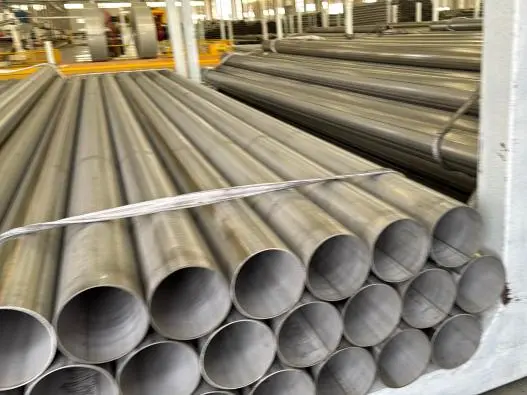
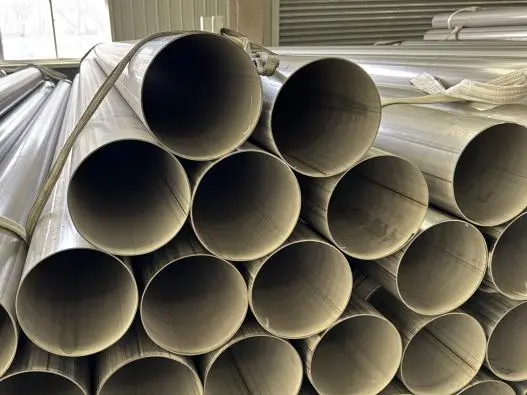
When engineers and procurement teams face the challenge of selecting piping for aggressive, high-pressure environments, ASTM A928 Duplex Stainless Steel EFW Pipes consistently rise to the top of the shortlist. These electric fusion welded pipes combine a balanced austenitic-ferritic microstructure with proven resistance to pitting, crevice corrosion, and stress corrosion cracking — three failure modes that routinely compromise carbon steel and standard austenitic grades. Available in Duplex 2205 (UNS S32205/S31803) and Super Duplex 2507 (UNS S32750), they serve oil & gas, chemical processing, offshore, and marine piping systems where pressure tolerance and long service life are non-negotiable.
|
|
|
Understanding ASTM A928 Duplex Stainless Steel EFW Pipes
It's helpful to know what makes this standard different from others in the same field before you decide to buy.
What the Standard Actually Requires?
ASTM A928 covers duplex stainless steel pipe that has been electron-beam welded and is meant to be used in corrosive or high-pressure environments. The standard calls for double-welded joints with filler metal, then solution annealing and water quenching to get rid of intermetallic phases and get the target 50/50 balance of ferrite and austenite phases back. In Class 1, all welds must be X-rayed, but in Class 2, they don't have to be. A lot of the time, Class 1 is the right specification for applications with critical pressure.
Mechanical and Chemical Performance
Duplex 2205 has a minimum yield strength of 450 MPa (65 ksi) and a tensile strength of 620 MPa (90 ksi), which is about twice as strong as 316L austenitic stainless steel. Because it has a lot of chromium (22%), molybdenum (3%), and nitrogen, it has a Pitting Resistance Equivalent Number (PREN) above 34, which is much higher than most austenitic grades. Super Duplex 2507 raises PREN above 42, which makes it the best choice for marine settings with a lot of chloride.
EFW Manufacturing and What It Means for Quality
The electric fusion welding method uses filler metal and controlled heat to make a fusion zone with the same metal properties all the way through the wall thickness. After that, the pipes are heated in a solution to about 1040°C and then cooled in water to freeze the right microstructure. This method makes it possible to make things with big diameters. YOUFASS offers ODs from 114.3 mm to 2500 mm and wall thicknesses from 3 mm to 50 mm, which is a size range that can't be reached with seamless making.
Comparing ASTM A928 with Other Pipe Options: Making the Right Choice
A lot of time is wasted by procurement teams when they have to choose between specifications and manufacturing methods. Here is a clear analysis to help you make your choice.
ASTM A928 vs. ASTM A790
ASTM A790 covers both seamless and welded duplex stainless steel pipe, but it doesn't address large-diameter EFW production with the same standards for weld examination. ASTM A928 Duplex Stainless Steel EFW Pipes is the relevant and useful standard for widths greater than about 600 mm or wall thicknesses greater than what a seamless mill can handle. Both cover grades that are similar, but A928 gives a more organized way to check the quality of welds in large-bore pressure service.
EFW vs. Seamless vs. ERW
Here's how the three ways of making things compare on some important performance measures:
- EFW (A928): Uses filler metal, full-penetration double weld, and mandatory heat treatment. Suitable for heavy walls and large diameters. Full RT/UT inspection available. Preferred for critical pressure and corrosive service where weld integrity documentation is required.
- Seamless: No weld line, which eliminates weld zone variability. However, size range is limited, lead times are longer, and cost per unit rises sharply above OD 400 mm. Best for smaller-bore, ultra-high-pressure service.
- ERW: No filler metal; pressure-forged bond. Common for carbon steel but rarely specified for high-grade duplex applications where weld zone corrosion resistance must match the base metal.
Each method has its place, and the best one to use depends on the diameter, the pressure class, and the level of corrosion.
Duplex vs. Carbon Steel: Total Lifecycle Cost
At first glance, carbon steel costs less per meter, but the comparison quickly changes when you take into account how much rust is allowed, how often the coating needs to be maintained, and how often it needs to be replaced in salt or acid service. A 2017 study in the journal Corrosion Science showed that duplex stainless steel pipes in offshore saltwater service had a 40–60% lower total 20-year lifetime cost than coated carbon steel pipelines. This was mostly because they didn't need to be replaced as often and didn't need to be chemically inhibited as often.
Key Procurement Considerations for ASTM A928 EFW Duplex Pipes
It's not just about price per kilogram when you're looking for these lines; you also need to pay attention to paperwork, operations, and the supplier's abilities.
Certifications and Required Documents
Without fail, any reputable supplier should give you the following:
- MTC/MTR 3.1 or 3.2 (material test certificate per EN 10204) confirming chemical and mechanical results
- WPS/PQR (welding procedure specification and qualification record) validating weld process control
- UT/RT report confirming non-destructive examination results per ASTM E213 or equivalent
- Hydrostatic test certificate per ASTM A928 requirements
- ISO 9001, PED (Pressure Equipment Directive), and TÜV certification from the manufacturer
YOUFASS has ISO 9001, PED, ISO 17025 lab approval, and TÜV certification, and as usual, they provide all of the above papers.
MOQ, Lead Times, and Customization
It's easier to plan purchases when the supplier can handle small orders at first. YOUFASS puts the MOQ at just one pipe. ASTM A928 Duplex Stainless Steel EFW Pipes, project engineers can make sure the specs are correct before committing to full production numbers. Items that are in stock can be delivered to Tianjin Port in 7 days. Pipes can be random or set lengths, have a pickled or annealed surface finish, and have a plain or beveled end finish. They can be packed in wooden boxes with steel frames and woven bags for export protection.
Export Documentation and Compliance
Buyers should make sure that the seller can give them a business invoice, packing list, certificate of origin, and any necessary inspection reports for shipments going to the US. Third-party inspection (TPI) is something YOUFASS offers. It makes clearing customs a lot easier and meets most project owners' needs for tracking materials.
Trusted Suppliers and Manufacturer Insights: Ensuring Quality and Reliability
Not all companies that offer duplex EFW pipe have the manufacturing facilities to back up their prices. Look for these things.
What Separates a Capable Manufacturer?
If you want to work with a good maker, they should run their own production lines instead of selling stock that comes from other companies. YOUFASS has 15 dedicated production lines that make 50,000 tons of goods every year. It has more than 200 employees and is one of China's Top 500 companies. On that level of scale, it's possible to get consistent raw materials, keep track of heat numbers, and make production schedules that can fit in last-minute orders.
The Value of Factory-Direct Sourcing
When you buy from the maker directly, you avoid the markups that distributors add, you can see the production records directly, and it's easy to talk about customization. Working directly with the plant makes it easier to meet project needs like a non-standard OD, a specific wall tolerance, or a review by a third party while staying on budget and on time.
Verifying Supplier Credibility
Ask for mill test certificates for past orders, customer references from companies in the field you want to work in, and proof that the supplier's lab is recognized by a third party. YOUFASS runs an ISO 17025-accredited laboratory, which means that test data is just as reliable as results from a third-party lab. This is a big deal for oil and gas and chemical project audits.
Making the Decision: Why These Pipes Suit High-Pressure Applications?
Duplex 2205 EFW pipe that meets ASTM A928 has been used in three high-stakes situations and has a history of being used. Offshore underwater flowlines depend on it to handle fuels at high pressure in salty settings where H2S and CO2 make weaker materials rust faster. Chemical processing plants use it for large-diameter pipes that carry acid and brine, since 316L stainless steel breaks down in just a few months. It is used in marine scrubber systems to handle acidic condensate. Because it is so strong, the walls can be smaller, which makes complex vessel designs lighter.
This type of product is really hard to replace in high-pressure applications because it has a yield strength of more than 450 MPa, a PREN of more than 34, full weld paperwork, and widths up to 2500 mm.
Conclusion
ASTM A928 Duplex Stainless Steel EFW Pipes perform better in high-pressure, corrosion-prone environments. Buying them is easy if you can find a supplier who can back up your requirements with certified documentation, traceable production, and quick delivery. The first and most important step in any project, whether it's marine, chemical, desalination, or industrial fluid handling, is to make sure that the grade, class, and size requirements match the design pressure and rust environment. This standard says that the technical profile of Duplex 2205 and Super Duplex 2507 always meets those needs in a lot of different industries and service conditions.
FAQ
What is the difference between ASTM A928 Class 1 and Class 2?
Class 1 needs parts that are double-welded with filler metal and a full X-ray of the weld seam. Class 2 is also double-welded, but it doesn't need to be X-rayed. For uses that need to withstand high pressure or bad conditions, Class 1 is the standard.
Can these pipes be used in sour service environments?
Yes, as long as they meet the standards of NACE MR0175/ISO 15156 for hardness limits and proven solution annealing. At the right partial pressures, duplex 2205 is commonly used in service with H2S.
Why is post-weld heat treatment mandatory?
After welding, solution annealing gets rid of the intermetallic phases that form and restores the goal 50/50 ferrite-austenite balance. If it's not there, the corrosion resistance in the weld zone goes well below that of the parent metal.
Is a corrosion test required for every production batch?
Yes, ASTM A923 or G48 pitting corrosion tests are usually done on production samples to make sure that the process of making them hasn't made them less resistant to pitting corrosion. These tests are done in YOUFASS's ISO 17025-certified lab.
Are custom lengths and surface coatings available?
Pipes can be bought in either set or random lengths. If you ask, you can get surface treatments, coatings, and other types of special finishing. Talk to the YOUFASS expert team about the needs of your particular project.
Request a Quote from YOUFASS — Your Trusted ASTM A928 Duplex Stainless Steel EFW Pipes Supplier
YOUFASS Stainless Steel Pipe Co., Ltd. has 15 production lines that can each make 50,000 tons of steel every year, and they are fully certified by TÜV, ISO 9001, and PED. They can provide ASTM A928 Duplex Stainless Steel EFW Pipes that meet the paperwork and performance standards your projects need. The MOQ is just one pipe, and it can be sent to Tianjin Port in as little as seven days. You can email our technical team at info@youfass.com or go to youfass.com to get pricing information, specifications, or a custom quote.
Online Message